2027 How to Compare Career Outcomes by Major

Co-Founder and Chief Data Scientist
Choosing a major is also choosing a likely labor market, debt profile, and first career path. BLS data published in 2024 shows bachelor's degree holders had median weekly earnings of $1,493 in 2023, but outcomes vary sharply by field, school, region, and experience.
This guide is for students, parents, transfer students, and working adults who want a practical way to compare majors. You will learn which data sources to trust, which metrics matter, and how to turn salary, employment, debt, licensing, and job outlook information into a smarter education decision.
Key Things You Should Know
- Do not compare majors by salary alone; use earnings, unemployment, underemployment, debt, licensure requirements, job growth, and internship access together.
- BLS data published in 2024 shows bachelor's degree holders had a 2.2% unemployment rate in 2023, but major-specific risk can be higher or lower depending on the field and occupation.
- The most useful sources are program-level College Scorecard data, BLS occupational wage and outlook data, state labor market dashboards, school career outcome reports, and alumni employment data.
How can I systematically compare career outcomes across different college majors?
A systematic comparison starts by treating a major as a career pathway, not just an academic subject. The goal is to connect the major to realistic occupations, required credentials, expected pay range, employment stability, program cost, and the amount of work experience you can gain before graduation.
Use the following process when comparing two or more majors so you do not overvalue a single attractive number, such as a high median salary:
- Identify the common occupations connected to each major, including entry-level roles and advanced roles that may require graduate school or licensure.
- Check program-level earnings and debt data rather than relying only on university-wide averages.
- Compare the labor market for each occupation using BLS and state workforce data, especially projected growth and regional hiring concentration.
- Estimate total education cost, including tuition, fees, books, commuting, housing, lost work hours, and graduate school if the field commonly requires it.
- Review experiential learning access, such as internships, clinical placements, co-ops, research labs, portfolios, student teaching, or apprenticeships.
- Check accreditation and licensing rules before enrolling if the major leads to regulated work, such as nursing, teaching, engineering, counseling, accounting, or social work.
- Make a side-by-side "best fit" judgment based on your strengths, risk tolerance, preferred work environment, and willingness to relocate.
If your primary goal is financial return, compare your options against resources on the best degrees to make money, but remember that high-paying majors often require strong quantitative, technical, clinical, or professional skills to reach those outcomes.
The table below shows how to frame the decision. It is not a ranking; it is a way to compare the same outcome categories for any major you are considering:
| Comparison factor | What to look for | Why it matters |
| Early-career earnings | Median earnings for graduates 1 to 5 years after completion | Shows whether the degree can support loan repayment soon after graduation |
| Mid-career earnings | Pay for experienced roles, promotions, or licensed positions | Captures long-term upside that may not appear in first-job data |
| Employment stability | Unemployment, underemployment, and job posting consistency | Helps estimate risk if the market slows or local hiring is limited |
| Debt burden | Median debt by program and school | High earnings can still be a weak outcome if debt is excessive |
| Credential requirements | Licensure, certification, graduate degree, or supervised hours | Some majors do not lead directly to the target job without extra steps |
| Experience access | Internships, co-ops, clinicals, portfolios, or capstones | Employers often weigh applied experience heavily for entry-level hiring |
What data sources show reliable salary and employment rates by major?
The most reliable data sources are those that report actual outcomes, define their methodology, and let you compare programs or occupations consistently. No single database answers everything, so the strongest approach is to combine federal, state, school, and employer-facing sources.
Use these sources for different parts of the decision:
- College scorecard: Use it to compare median earnings and median debt by school and field of study where available.
- BLS Occupational Outlook Handbook: Use it to review typical education requirements, median pay, job duties, and projected employment growth by occupation.
- BLS Occupational Employment and Wage Statistics: Use it to compare wages by occupation, industry, and region.
- State labor market information systems: Use them to see whether the jobs connected to a major are actually hiring in the state where you plan to work.
- School career outcome reports: Use them to review placement rates, top employers, graduate school enrollment, and internship participation, but check the response rate and definition of "employed."
- Professional licensing boards and accreditors: Use them to confirm whether a program meets education requirements for regulated careers.
BLS wage and outlook data published in 2024 is especially useful because it reflects national occupational patterns, but it does not directly tell you how graduates from a specific school perform. College Scorecard is better for program-level return-on-investment questions, while BLS is better for understanding the broader job market connected to a major.
The table below summarizes which source is best for each question. This matters because many students make weak comparisons by using a salary ranking for a question that actually requires program-level debt or licensing data:
| Question | Best source type | Limitation to watch |
| How much do graduates from this program tend to earn? | College Scorecard program data | Data may be suppressed for small programs or may not capture all career paths |
| What does this occupation pay nationally? | BLS wage data | Occupation data is not the same as major-specific graduate data |
| Will jobs be available in my area? | State workforce dashboards and regional job postings | Job postings can overcount duplicate or evergreen listings |
| Does this program qualify me for licensure? | State licensing board and accreditor information | Requirements can change and may differ by state |
| Where do alumni work? | School career services and alumni reports | Reports may depend on voluntary graduate responses |
Which metrics matter most when evaluating career outcomes for a major?
The best metrics depend on your goal. A student aiming for a licensed healthcare role should weigh accreditation and clinical placement more heavily than a student comparing business analytics, computer science, or communications programs, where internships, portfolios, and technical skills may have more influence.
For most students, these are the outcome metrics that deserve the most attention:
- Median earnings after completion: Use this to estimate whether the major supports your expected cost of attendance and loan repayment.
- Debt-to-earnings relationship: A lower-cost program with moderate earnings may be a better choice than a high-cost program with only slightly higher pay.
- Employment rate and unemployment risk: Look for whether graduates are working and whether they are working in jobs that use the degree.
- Underemployment: A major may show employment, but graduates may be working in roles that do not require a degree.
- Job growth and replacement demand: Growth shows expanding demand, while replacement demand reflects openings caused by retirements or career changes.
- Credential pathway: Some majors have a clear occupation attached, while others require strategic electives, internships, graduate school, or certifications.
- Geographic portability: Nursing, accounting, engineering, teaching, and counseling may involve state-specific licensing or local employer preferences.
BLS data published in 2024 reported a 2.2% unemployment rate for bachelor's degree holders in 2023, compared with 3.9% for workers whose highest credential was a high school diploma. That broad advantage is useful, but it should not be treated as a promise for every major because field, location, experience, and school connections still shape individual outcomes.
A common mistake is using only first-year salary. Early earnings matter for cash flow, but some majors, such as accounting, engineering, nursing, education, and computer science, can change significantly after licensure, specialization, or several years of experience.
How do job prospects and unemployment rates differ by college major?
Job prospects differ by major because majors connect to different labor markets. Some fields map directly to high-demand occupations, such as nursing to registered nurse roles or computer science to software development.
Others are broader, such as psychology, English, history, or sociology, and often require internships, graduate study, or a deliberate skills strategy to produce strong employment outcomes.
The following table uses representative occupations to show how major-to-career alignment can affect outcomes. These BLS figures are occupational indicators, not guarantees for every graduate in the related major:
| Major area | Common related occupation | BLS median annual pay | BLS projected growth | Decision takeaway |
| Computer science | Software developer | $132,270 | 17% | Strong demand, but students need demonstrable coding, project, and problem-solving skills |
| Nursing | Registered nurse | $86,070 | 6% | Clear pathway, but licensure, clinical placement, and state approval are essential |
| Accounting | Accountant or auditor | $79,880 | 6% | Good structure for business-minded students, especially those planning for CPA eligibility |
| Civil engineering | Civil engineer | $95,890 | 6% | Outcomes depend heavily on ABET accreditation, internships, and licensure progression |
| Graphic design | Graphic designer | $58,910 | 2% | Portfolio quality and software proficiency may matter as much as the degree title |
These numbers come from BLS occupational data available in 2024 and should be used as a market signal, not a personal forecast. If a major has a weaker direct job connection, the student should compensate with internships, technical electives, employer-recognized credentials, or a graduate-school plan.
AI and automation also affect job prospects by changing task demand. Majors that teach adaptable analytical, technical, communication, clinical, managerial, or domain-specific skills are generally easier to reposition than majors that rely on narrow tools without broader problem-solving training.
How can I compare lifetime earnings potential and debt levels by major?
Lifetime earnings potential is not just about the highest salary on a ranking list. It depends on how quickly you enter the workforce, whether you need graduate school, how much debt you take on, how stable the occupation is, and whether the field offers advancement into management, specialization, consulting, or entrepreneurship.
To compare lifetime value, separate the numbers into short-term affordability and long-term payoff. College Board's 2024 pricing data reported average published tuition and fees of $11,610 for in-state students at public four-year institutions and $43,350 at private nonprofit four-year institutions for 2024-25, before grants and scholarships. That gap means the same major can have very different ROI depending on the school price and aid package.
Use this practical sequence when comparing debt and earnings by major:
- Find the net price, not just tuition, for each school after grants and scholarships.
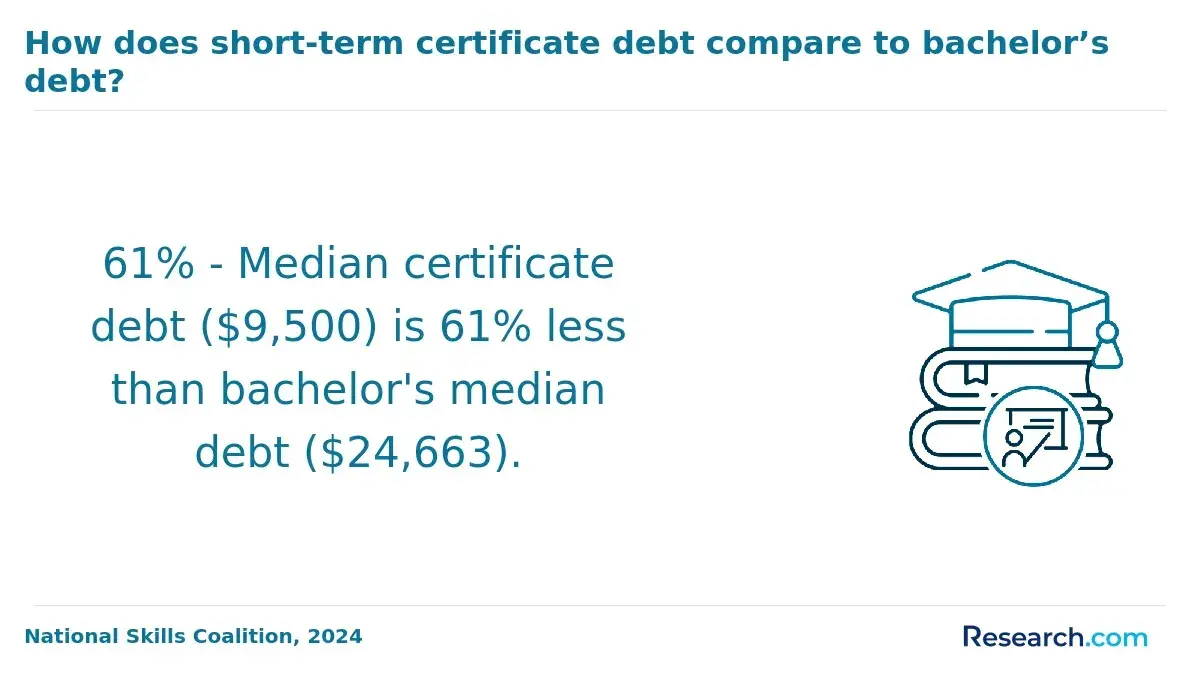
- Check median debt for the specific program when available, not only institution-wide debt.
- Compare expected early-career earnings with monthly loan payments under federal repayment options.
- Account for graduate school if the major commonly requires it for the target career, such as physical therapy, counseling, law, medicine, or many psychology roles.
- Estimate opportunity cost if one program takes longer to complete or requires unpaid clinical, practicum, or student-teaching hours.
- Look for paid experience, employer tuition assistance, transfer credits, and accelerated pathways that reduce borrowing.
Students who need federal aid should prioritize accredited programs and verify Title IV eligibility; a list of online colleges that accept FAFSA can be useful when comparing lower-cost options that still support federal financial aid access.
A major can be financially worthwhile even if it is not among the highest-paying fields, but the debt must fit the expected income. The red flag is a program with high borrowing, weak completion support, unclear career pathways, and no transparent graduate earnings data.
What tools and reports link specific majors to common career paths?
Many majors lead to multiple occupations, so tools that connect fields of study to real job titles are essential. They help you avoid assuming that a degree title automatically equals a specific career outcome.
Use the following reports and tools to map majors to careers:
- College Scorecard field-of-study pages for earnings and debt by program.
- BLS Occupational Outlook Handbook for duties, pay, education requirements, and projected growth.
- O*NET for skills, tasks, work activities, and related occupations.
- State workforce dashboards for local demand and wage ranges.
- University first-destination reports for employers, job titles, graduate school enrollment, and placement patterns.
- Professional association career guides for specialized pathways in fields such as engineering, accounting, healthcare, education, human resources, and information technology.
If a degree feels too broad, compare it with shorter credentials that can add job-ready skills. For example, some students use 12 month certificate programs that pay well to build a faster pathway into IT, healthcare support, business operations, or skilled technical roles before or instead of a full degree.
The key is to verify whether employers in your target field value the credential. A certificate can strengthen a major when it adds an in-demand skill, but it is not a substitute for licensure or an accredited degree when the occupation legally requires one.
How do online, hybrid, and campus-based programs influence career outcomes by major?
Online, hybrid, and campus-based formats can lead to strong outcomes when the program is accredited, well supported, and aligned with the career pathway. The format itself is less important than whether the program provides the labs, clinical hours, internships, employer access, faculty support, and career services needed for the major.
NCES data released in 2024 shows that distance education remains a major part of U.S. higher education, with more than half of postsecondary students taking at least one distance education course in fall 2022. For students, this means online learning is no longer unusual, but quality and career support still vary widely.
The table below shows how format can influence outcomes by major type. Use it to identify which questions to ask before enrolling:
| Program format | Best fit | Outcome risk to check |
| Fully online | Business, IT, accounting, general education, psychology, communication, and programs for working adults | May require extra effort to secure internships, networking, and hands-on projects |
| Hybrid | Nursing, education, social work, counseling preparation, lab sciences, and some engineering technology programs | Clinical, practicum, lab, or residency requirements may limit location flexibility |
| Campus-based | Engineering, performing arts, lab-heavy sciences, residential honors programs, and highly networked career pathways | Higher housing and commuting costs can reduce ROI if career support is weak |
Students comparing online options should also consider application costs, transfer policies, and start dates; schools with an online college free application can make it easier to compare admissions and financial aid offers without paying multiple application fees.
A common mistake is assuming an online program is automatically cheaper. Always compare total cost, including technology fees, proctoring fees, required campus visits, clinical travel, books, and the cost of reducing work hours.
How should I factor accreditation and licensing requirements into major choice?
Accreditation and licensing can determine whether a major actually qualifies you for the career you want. Institutional accreditation affects transfer credits, federal aid eligibility, and graduate school recognition. Programmatic accreditation affects specific professional pathways, especially in fields where public safety, professional standards, or state licensing boards are involved.
Before choosing a major tied to a regulated career, verify these items directly with the school and the relevant state board:
- Whether the institution holds recognized accreditation.
- Whether the specific program holds required programmatic accreditation, if applicable.
- Whether the curriculum meets education requirements in the state where you plan to work.
- Whether the program includes required clinical, practicum, student teaching, supervised fieldwork, or lab hours.
- Whether graduates are eligible to sit for required exams, such as NCLEX, CPA-related exams, teacher certification exams, engineering fundamentals exams, or counseling and social work exams.
- Whether online or out-of-state students face placement restrictions.
Licensure-sensitive majors include nursing, teaching, engineering, architecture, counseling, social work, accounting, dietetics, and many allied health fields. A degree from a nonqualifying program can delay employment, force you to take extra coursework, or make you ineligible for a required exam.
The safest approach is to save written confirmation from admissions, the department, and the licensing board before enrolling. Do not rely only on marketing language such as "career-ready" or "professional preparation" unless it clearly states licensure eligibility.
What role do internships, alumni networks, and region play in outcomes by major?
Internships, alumni networks, and region often explain why graduates from the same major can have very different outcomes. A computer science student with two internships, a strong GitHub portfolio, and local employer connections is not in the same market position as a student with the same major but no applied experience.
Evaluate each school's career ecosystem with these questions:
- Does the program require or strongly support internships, co-ops, clinical placements, research projects, portfolios, or capstones?
- Which employers regularly recruit from the department, not just the university overall?
- Where do graduates work by city, industry, and job title?
- How large and active is the alumni network in your target field?
- Does the career center provide major-specific coaching, resume review, interview preparation, and employer events?
- Are internships paid, credit-bearing, remote, local, or competitive?
Region matters because many entry-level jobs are filled through local networks. A strong regional public university can outperform a more expensive school if it has better connections to local hospitals, school districts, accounting firms, engineering employers, tech companies, or government agencies.
For working adults and career changers, flexibility can be just as important as campus recruiting. Programs designed for adult learners, including options listed among the best degrees for older adults, may offer part-time pacing, transfer credit, prior learning assessment, and career services tailored to students who already have work experience.
How can I use labor market and job outlook data to choose a major strategically?
Labor market data helps you choose a major strategically by showing where demand is growing, which skills employers request, and whether a field is concentrated in certain regions. The smartest use of this data is not to chase a trend blindly, but to match credible demand with your strengths and the education pathway you can realistically complete.
Follow these steps to use job outlook data well:
- Start with three to five occupations connected to the major instead of assuming there is only one career path.
- Check BLS projected growth and median pay for each occupation.
- Review state and metro-area wages because national medians can hide local differences.
- Scan job postings for recurring skills, software, certifications, and experience requirements.
- Compare entry-level requirements with advanced requirements so you know whether graduate school or licensure is likely.
- Ask the program how its curriculum, internships, labs, and employer partnerships match those requirements.
- Build a backup pathway using electives, minors, certificates, or transferable skills if the primary path is competitive.
Be careful with short-term hype. AI, cybersecurity, data analytics, healthcare, advanced manufacturing, education staffing, and infrastructure-related fields all influence major choice, but employer demand still depends on specific skills, credentials, and location. A strong major decision combines labor data with evidence that the program can help you build the required experience.
The best final test is simple: if you can name the target roles, required skills, expected cost, likely debt, internship plan, licensure steps, and local hiring market, you are comparing majors strategically rather than guessing.
Other Things You Should Know About
Compare each major using the same categories: median earnings, employment rate, debt, job outlook, licensing requirements, internship access, and regional demand. Program-level data is more useful than general school rankings.
No. A high-paying major may be a poor fit if you dislike the work, struggle with required coursework, need expensive graduate training, or attend a program with weak career support. ROI depends on cost, completion, skills, and job access.
They can be useful, but you should check the methodology. Look for response rates, whether part-time and graduate school outcomes are counted, whether salaries are self-reported, and whether the report is specific to your major.
Job growth should influence your decision, but it should not be the only factor. Also consider wages, credential requirements, competition, location, work environment, and whether the program helps you gain practical experience before graduation.
References
- How to Maximize the Impact of Alumni Networks https://www.careeros.com/resources/how-to-maximize-the-impact-of-alumni-networks
- Putting your major to work: Career paths after college | Brookings https://www.brookings.edu/articles/putting-your-major-to-work-career-paths-after-college/
- Major decisions: How labour market opportunities affect students’ choice of subjects https://cepr.org/voxeu/columns/major-decisions-how-labour-market-opportunities-affect-students-choice-subjects
- Leveraging Alumni Networks for Career Development Programs and Internships https://alumninations.com/leveraging-alumni-networks-for-career-development-programs-and-internships/
- College majors with the best and worst job prospects — art history beats finance https://www.cnbc.com/2025/05/16/college-majors-with-the-best-and-worst-employment-prospects.html
- The Importance of Business School Accreditation https://www.allbusinessschools.com/how-to-get-into-mba-program/accreditation/
- Planning for Higher Ed’s Digital-First, Hybrid Future | EAB https://eab.com/resources/insight-paper/plan-digital-first-hybrid-future-higher-ed/
- 13 best free salary data sources in 2026 https://ravio.com/blog/free-salary-data