2027 What Career Planning Really Means for Students

Co-Founder and Chief Data Scientist
Students are being asked to choose programs, loans, majors, and careers before they have enough labor-market context. That matters because the U. S. Bureau of Labor Statistics reported 2024 median weekly earnings of $1,543 for workers with a bachelor's degree, compared with $930 for those with only a high school diploma.
This guide is for high school students, college students, adult learners, and families who want a smarter plan. You will learn how to connect interests to careers, compare education options, check accreditation, estimate costs, and evaluate outcomes before enrolling.
Key Things You Should Know
- It connects interests, strengths, values, education requirements, costs, work experience, and labor-market demand before you commit time or money.
- BLS 2024 data shows workers with a bachelor's degree had median weekly earnings of $1,543, but outcomes still vary widely by field, location, experience, licensure, and employer.
- Before enrolling, verify accreditation, total cost, transfer policies, program length, licensure alignment, experiential learning, and entry-level job outcomes.
What does effective career planning mean for students choosing education and training paths?
Effective career planning means choosing an education or training path based on evidence, not just a favorite subject, family advice, or a job title that sounds appealing. A strong plan answers five questions: what work fits you, what credentials are required, how long the path takes, what it costs, and what entry-level opportunities are realistically available after completion.
For students, the most useful definition is practical: career planning is the process of matching your personal fit with market demand and then selecting the least wasteful education route that keeps future options open. This matters because the "best" path is not always the longest one. Some careers require a license and a specific degree; others reward skills, portfolios, apprenticeships, certificates, or work experience.
Students comparing traditional degrees with accelerated or flexible options should be especially careful about timelines. Resources on fast degrees online can help you understand when a shorter pathway may make sense, but speed should never replace accreditation, employer recognition, or required clinical, lab, practicum, or internship hours.
The table below summarizes the major decisions that make up a real career plan. Use it to see whether you are making a complete decision or only choosing a major.
| Planning question | What it helps you decide | Common mistake to avoid |
| What work fits my interests and strengths? | Whether the day-to-day tasks are realistic for you | Choosing a career only because the title sounds prestigious |
| What credential is actually required? | Whether you need a certificate, associate degree, bachelor's degree, master's degree, license, or experience | Overpaying for a degree when a shorter credential would qualify you |
| What is the total cost? | Whether the education investment fits your expected earning potential and budget | Looking only at tuition and ignoring fees, books, commuting, housing, and lost wages |
| What jobs can I get first? | How you will enter the field and build experience | Planning only for the dream job and skipping the entry-level step |
| What could change in the field? | How AI, regulation, licensing, automation, or employer expectations may affect your path | Assuming today's job description will stay the same for the next decade |
A good plan should stay flexible. You may start with one goal, then adjust after a class, internship, job shadow, or conversation with someone in the field. That is not failure; it is exactly how informed planning works.
How do I connect my interests, strengths, and values to specific career options?
Connecting interests to careers starts with separating what you like from what the job actually requires. A student who enjoys helping people might thrive in nursing, counseling, teaching, human resources, user experience research, or nonprofit program work, but each path has different education, emotional demands, schedules, salaries, and licensing rules.
A useful approach is to compare three layers of fit: interests, strengths, and values. Interests show what attracts your attention; strengths show what you can build into a skill; values show what trade-offs you are willing to accept, such as schedule flexibility, income potential, public service, independence, stability, or creative freedom.
Use the following steps to turn self-reflection into a shortlist of career options. The goal is not to find a perfect answer immediately; it is to narrow your options enough to research them seriously.
- Write down recurring interests: include school subjects, hobbies, problems you enjoy solving, causes you care about, and tasks that hold your attention without constant pressure.
- Identify evidence of strengths: look at grades, projects, feedback from teachers or supervisors, volunteer work, part-time jobs, competitions, and situations where others ask for your help.
- Rank your work values: decide whether you care most about income, stability, autonomy, creativity, remote work, public impact, predictable hours, advancement, or hands-on work.
- Match your profile to job families: group options by broad fields such as healthcare, business, education, technology, skilled trades, public service, design, science, or communications.
- Test the match before committing: interview a professional, take an introductory course, volunteer, shadow, complete a short project, or review real job postings.
The table below shows how different student profiles may point to different career clusters. It is not a personality test; it is a starting point for research.
| If you enjoy... | And you are strong at... | Consider exploring... | Check carefully for... |
| Solving logical problems | Math, systems, coding, analysis | Software development, data analytics, cybersecurity, engineering technology | Portfolio expectations, rapid skill changes, internship competition |
| Helping people directly | Communication, patience, emotional awareness | Nursing, social work, counseling, teaching, occupational therapy support | Licensure, clinical hours, emotional workload, background checks |
| Organizing information | Writing, detail work, research, planning | Accounting, project coordination, paralegal work, operations, technical writing | Credential requirements, software skills, advancement path |
| Building or repairing things | Hands-on work, spatial reasoning, troubleshooting | Skilled trades, manufacturing technology, aviation maintenance, construction management | Apprenticeships, physical demands, safety standards, union or licensing rules |
| Creating visual or digital products | Design, storytelling, user empathy, software tools | Graphic design, UX design, marketing, media production, product design | Portfolio quality, freelance risk, client expectations, AI-assisted workflows |
One common mistake is confusing a favorite class with a career plan. Liking biology does not automatically mean medical school is the right path; it could also point toward lab technology, public health, biotechnology sales, environmental science, or health data analytics. The better question is: what tasks do you want to do repeatedly, under real workplace conditions?
What education and degree pathways best align with my long-term career goals?
The best education pathway is the one that meets the requirement for your target role without adding unnecessary cost, delay, or risk. Some careers have strict academic requirements, such as nursing, teaching, engineering, architecture, counseling, accounting licensure, and many healthcare roles. Others are more flexible and may prioritize skills, work samples, certifications, internships, or experience.
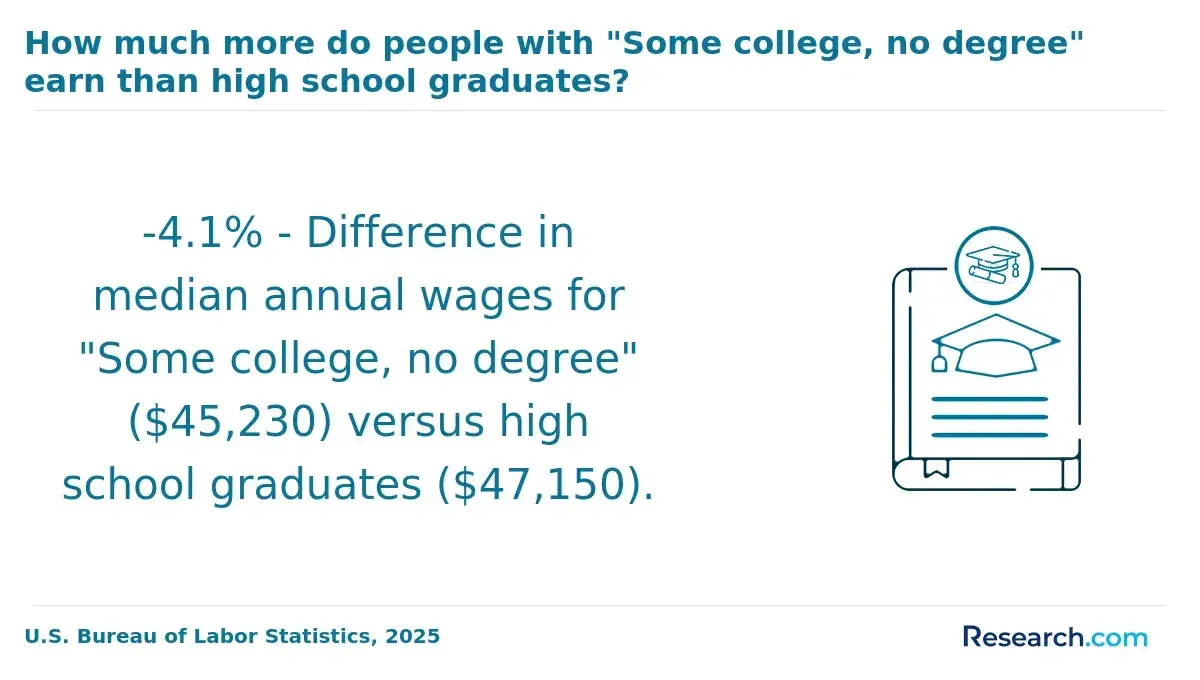
Students often assume a bachelor's degree is automatically the safest option. BLS 2024 earnings data supports the broad value of higher education, but the return is not equal across majors. If your main goal is income potential, compare programs by field, completion time, debt risk, and actual job options; lists of highest paying bachelor degrees can be useful when paired with your own interests and tolerance for the coursework required.
The table below compares common education routes. Use it to identify the pathway that fits your goal before you start comparing schools.
| Pathway | Typical fit | Common timeline | Decision trade-off |
| Certificate or diploma | Students targeting a specific technical, healthcare support, IT, or trade skill | Several months to about one year | Fast entry, but may limit advancement if the field later requires a degree |
| Associate degree | Students seeking lower-cost entry, transfer options, allied health roles, technical careers, or general education credits | About two years full time | Lower upfront cost, but transfer and licensure alignment must be checked early |
| Bachelor's degree | Students targeting professional, technical, business, education, science, or graduate-school pathways | About four years full time | Broader career access, but higher cost and major choice matter significantly |
| Master's degree | Students pursuing advanced practice, leadership, counseling, analytics, education administration, or specialized fields | One to three years depending on format | Can improve specialization, but ROI depends on field requirements and employer demand |
| Apprenticeship | Students who want paid, structured training in skilled trades or technical occupations | Varies by trade and state | Earn-while-learning model, but availability and physical demands vary |
To choose well, start with job postings for the role you want and work backward. Look for repeated requirements: degree level, major, license, software, portfolio, internship, clearance, physical requirements, or years of experience. If 20 postings consistently ask for the same credential, treat that as stronger evidence than a school's marketing page.
Students should consider a different path if the program is much more expensive than alternatives, does not lead to the credential required for the job, lacks practical experience, or has poor transfer value. A prestigious-sounding program is not a good investment if it does not move you toward the work you actually want.
How should I compare online vs campus programs for my chosen career field?
Online and campus programs can both be strong choices, but they fit different students and fields. The right format depends on your schedule, learning style, career requirements, access to labs or clinical placements, need for networking, and ability to stay organized without daily in-person structure.
Online learning is now common across higher education, but quality varies. Students comparing formats should look beyond convenience and ask whether the program offers real faculty access, career support, internships, proctored assessments, licensure preparation, and transparent outcomes. If you want an online option with a mission-driven institutional structure, researching non profit universities in USA may help you compare accredited providers, but nonprofit status alone does not prove quality or affordability.
The table below compares online and campus formats by decision factor. Use it to identify which format is more likely to support your success, not just which one sounds easier.
| Factor | Online program may fit if... | Campus program may fit if... |
| Schedule | You work, care for family, live far from campus, or need asynchronous courses | You can attend set class times and benefit from a structured weekly routine |
| Learning style | You are self-directed, organized, and comfortable using digital tools | You learn better through face-to-face discussion, immediate feedback, and campus resources |
| Career field | Your field can be taught through readings, projects, simulations, remote collaboration, or local placements | Your field requires labs, studios, clinical spaces, equipment, or frequent in-person practice |
| Networking | You will actively attend virtual events, contact faculty, and build professional connections | You want easier access to clubs, career fairs, peer groups, and local employers |
| Cost | You can reduce commuting, housing, or relocation expenses | You qualify for local tuition rates, campus scholarships, or employer-connected opportunities |
Do not assume online means easier or cheaper. Some online programs have technology fees, limited course availability, or out-of-state tuition rules. Also check whether online students receive the same career services, library access, tutoring, disability accommodations, and internship support as campus students.
For licensed fields, format deserves extra scrutiny. An online teacher preparation, counseling, nursing, or social work program may be accredited and still not meet every state's licensure requirements. Always verify the program's state authorization and licensure disclosures for the state where you plan to work.
Why is accreditation important, and how do I verify a school or program is accredited?
Accreditation is a quality review process that helps show whether a school or program meets recognized educational standards. It matters because accreditation can affect federal financial aid eligibility, credit transfer, graduate school admission, employer acceptance, and licensure eligibility.
There are two major levels to understand. Institutional accreditation applies to the school as a whole. Programmatic accreditation applies to a specific program, usually in fields where professional standards are especially important, such as nursing, engineering, business, education, counseling, social work, law, public health, and allied health.
Before enrolling, verify accreditation directly rather than relying only on an advertisement or admissions conversation. Follow these steps so you can document what you checked.
- Find the school's accreditor: look on the institution's accreditation page and write down the accrediting agency name exactly as listed.
- Confirm recognition: check whether the accreditor is recognized by the U.S. Department of Education or the Council for Higher Education Accreditation.
- Check programmatic accreditation: for licensed or professionally regulated careers, confirm whether the specific program has the accreditation expected by employers or boards.
- Review accreditation status: look for warnings, probation, teach-out plans, recent changes, or pending loss of accreditation.
- Ask about outcomes tied to accreditation: request information about licensure exam eligibility, board approval, transfer credit acceptance, and graduate school recognition.
Red flags include vague phrases such as "fully approved" without naming an accreditor, pressure to enroll before you verify status, missing licensure disclosures, unclear ownership information, or promises that credits will transfer anywhere. Credits are never universally transferable; the receiving school decides what it will accept.
Accreditation is not a guarantee that a program is affordable, supportive, or right for your goals. It is a minimum checkpoint. After confirming accreditation, still compare cost, graduation support, faculty access, placement assistance, practical training, and student outcomes.
What admission requirements, program length, and costs should I expect when planning?
Admission requirements, program length, and costs vary widely by credential level and field. Planning early helps you avoid missed prerequisites, delayed graduation, unexpected fees, and debt that does not match your expected career path.
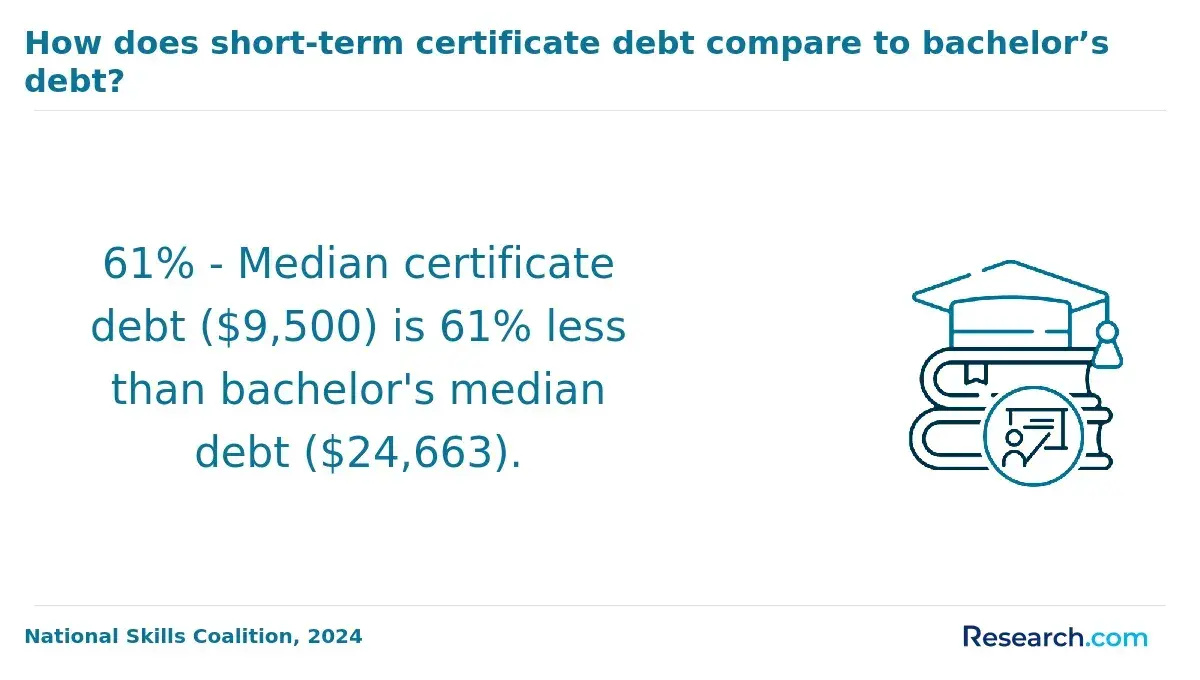
For cost context, the College Board reported average published tuition and fees for the 2024-25 academic year of $11,610 at public four-year in-state institutions and $43,350 at private nonprofit four-year institutions. Those are sticker prices, not what every student pays after grants and scholarships, but they show why total cost comparison matters before you choose a school.
Admission requirements usually become more specific as the career path becomes more regulated or advanced. Students should review these requirements before submitting applications, especially if the program has clinical placements, cohort admission, background checks, portfolio review, or minimum GPA rules.
- Certificate and associate programs: may require a high school diploma or GED, placement tests, prerequisite courses, immunizations, background checks, or technical standards depending on the field.
- Bachelor's programs: commonly review high school coursework, GPA, transcripts, essays, test scores if required, extracurriculars, transfer credits, and major-specific prerequisites.
- Graduate programs: may require a bachelor's degree, minimum GPA, recommendations, resume, statement of purpose, prerequisite coursework, work experience, portfolio, or licensure.
- Selective professional programs: nursing, education, counseling, engineering, architecture, and health programs may have separate admission after general university admission.
Students considering graduate study should compare total program cost, not just per-credit tuition. Lists of affordable masters degrees can be a helpful starting point, but the best value depends on accreditation, employer recognition, financial aid, course availability, and whether the degree is required for your target role.
When estimating cost, include every expense that affects your budget. The following items are often missed during early planning.
- Direct academic costs: tuition, mandatory fees, books, software, equipment, lab supplies, exam fees, graduation fees, and professional testing fees.
- Living and attendance costs: housing, food, transportation, parking, childcare, health insurance, internet access, and relocation if needed.
- Time-related costs: reduced work hours, unpaid internship time, delayed full-time earnings, and extra semesters caused by unavailable courses or lost transfer credits.
- Credentialing costs: background checks, fingerprinting, certification exams, state license applications, continuing education, uniforms, tools, or liability insurance.
A practical planning rule is to build three timelines: ideal, realistic, and delayed. The ideal timeline assumes full-time study and no setbacks. The realistic timeline accounts for work, family, course sequencing, and financial aid. The delayed timeline prepares you for repeated courses, waitlists, transfer issues, or clinical placement availability.
What coursework, skills, and experiential learning matter most for future employability?
Employability depends on more than completing required courses. Employers look for evidence that you can apply knowledge, communicate clearly, solve problems, use current tools, and learn as the field changes. That is especially important as AI and automation reshape entry-level work in business, technology, design, writing, data, customer service, and administrative roles.
Your coursework should build both technical competence and transferable skills. Technical skills help you qualify for specific roles; transferable skills help you adapt when tools, employers, or job titles change.
The table below shows the kinds of learning experiences that usually matter most. Use it to evaluate whether a program prepares you for work or only for passing classes.
| Employability factor | Why it matters | Examples to look for |
| Core coursework | Builds the foundation employers or licensing boards expect | Anatomy, accounting, programming, statistics, pedagogy, research methods, ethics, technical writing |
| Applied projects | Shows you can use knowledge in realistic situations | Case studies, capstones, simulations, design briefs, business plans, software builds, research posters |
| Experiential learning | Connects classroom learning to workplace expectations | Internships, practicums, clinical rotations, student teaching, apprenticeships, fieldwork, co-ops |
| Career-ready tools | Helps you match current employer workflows | Spreadsheets, data tools, electronic health records, CAD, CRM systems, coding platforms, learning management systems |
| Professional communication | Affects teamwork, client trust, leadership, and advancement | Presentations, writing-intensive courses, group projects, client simulations, peer review |
Students should also develop AI literacy without assuming AI replaces expertise. In many fields, employers increasingly expect workers to use AI tools responsibly for drafting, analysis, coding support, research organization, customer insights, or workflow automation. The valuable skill is not simply "using AI"; it is knowing how to check outputs, protect privacy, avoid bias, and apply human judgment.
To strengthen employability before graduation, take deliberate action each year. These steps are especially important for students in broad majors where the career outcome is not tied to a single license.
- Build a portfolio of proof: save projects, reports, code, designs, presentations, lab work, lesson plans, or case analyses that show what you can do.
- Get workplace exposure early: pursue internships, part-time roles, volunteering, job shadowing, undergraduate research, or campus employment related to your field.
- Learn the tools in job postings: track software, platforms, methods, and certifications that repeatedly appear in entry-level listings.
- Practice explaining your value: prepare examples that show problem-solving, teamwork, ethical judgment, resilience, and measurable contributions.
- Use career services before senior year: get resume feedback, mock interviews, employer contacts, internship leads, and salary negotiation guidance early enough to act.
A common mistake is waiting until graduation to think about experience. In competitive fields, the student with a relevant internship, portfolio, certification, or strong project record may be more marketable than a student with only coursework.
What entry-level roles, advancement pathways, and alternative careers can my degree support?
Most careers are built in stages. Your degree or credential may qualify you for an entry-level role, but advancement usually depends on experience, performance, additional skills, certifications, leadership ability, and sometimes graduate education or licensure.
Career planning should include a first job, a three-year development path, and at least one backup option. This reduces risk if the market changes, your interests shift, or your first-choice role is more competitive than expected.
The table below shows how a degree area can support multiple outcomes. Use it to avoid planning around only one job title.
| Degree or training area | Possible entry-level roles | Advancement pathways | Alternative directions |
| Business | Operations assistant, sales coordinator, HR assistant, financial services associate | Manager, analyst, project lead, operations director | Entrepreneurship, nonprofit administration, supply chain, recruiting |
| Computer science or IT | Help desk analyst, junior developer, QA tester, systems support specialist | Software engineer, cybersecurity analyst, cloud administrator, technical lead | Data analytics, product management, technical sales, UX research |
| Psychology or social science | Case aide, research assistant, behavioral technician, HR assistant | Counselor, social worker, researcher, program manager with further credentials | Market research, student services, public health, user research |
| Health sciences | Medical assistant, lab assistant, health educator, patient coordinator | Nurse, therapist, administrator, public health specialist depending on further education | Healthcare technology, insurance, compliance, community health |
| Education | Teacher assistant, tutor, substitute teacher, classroom teacher if licensed | Lead teacher, instructional coach, administrator, curriculum specialist | Corporate training, edtech, youth programs, academic advising |
Students should also consider work environment fit. For example, some people want constant collaboration, while others do better with independent analysis, structured tasks, or quieter settings. If you are exploring lower-social-drain options, resources on jobs for introverts that pay well can help you compare careers by environment, not just salary.
When evaluating advancement, ask what the second and third jobs look like. A role may be easy to enter but hard to grow from without additional credentials. Another may require a harder start but offer clearer advancement once you gain experience. Neither is automatically better; the right choice depends on your tolerance for time in school, debt, competition, and long-term work style.
Backup planning is not pessimistic. It is responsible. A biology student might prepare for healthcare, lab work, public health, and regulatory roles. A communications student might prepare for marketing, technical writing, public relations, and content strategy. A computer science student might prepare for software, data, cybersecurity, and IT operations.
What salary ranges and job outlook should I consider when choosing a career path?
Salary and job outlook should inform your decision, but they should not be the only factors. The right way to use labor-market data is to compare likely pay against education cost, time to completion, geographic demand, licensure requirements, and your willingness to do the work long term.
For a national baseline, BLS reported a May 2024 median annual wage of $49,500 for all U.S. occupations. A career with median pay above that level may still be a poor fit if it requires expensive training you dislike, while a lower-paid field may be reasonable if the education cost is low, employment is stable, and the work aligns strongly with your values.
The table below gives a practical way to interpret salary and outlook information. It avoids treating national medians as promises, because actual pay depends on location, employer, experience, credentials, industry, and economic conditions.
| Data point to review | How to interpret it | Limitation |
| Median wage | Shows the middle of the pay distribution for an occupation | Does not show entry-level pay or regional cost of living |
| Entry-level wage range | Helps estimate your first few years after graduation | May vary sharply by city, employer, and internship experience |
| Projected job growth | Indicates whether an occupation is expected to expand, shrink, or remain stable | Growth does not guarantee easy hiring in your local market |
| Annual openings | Captures replacement needs as well as new jobs | Openings may require experience that new graduates do not yet have |
| Education premium | Helps compare whether additional schooling may improve access or pay | Field of study and credential quality matter more than degree level alone |
BLS 2024-2034 projections show total U.S. employment is expected to increase by about 5.2 million jobs. That broad growth does not mean every field will expand equally, so students should look at occupation-level data rather than assuming all "high-demand" claims are reliable.
To evaluate salary responsibly, compare three numbers: expected first-job pay, total net program cost, and the pay range after several years of experience. If the program is expensive and the field has modest entry-level wages, you may need scholarships, transfer credits, employer tuition support, part-time study, or a lower-cost school to make the plan financially safer.
Also consider non-salary factors. Benefits, schedule stability, remote work, overtime, union protection, pension access, travel requirements, burnout risk, and physical demands can make two jobs with similar salaries feel very different in real life.
How do licensing, certification, and professional standards affect my career planning?
Licensing, certification, and professional standards can determine whether you are legally allowed to work in a field. This is especially important in healthcare, education, counseling, social work, accounting, engineering, architecture, aviation, real estate, public safety, and many skilled trades.
A license is usually government-issued and may be required by state law. A certification is often issued by a professional organization or vendor to show competence in a specific skill or body of knowledge. Some certifications are optional but valuable; others are effectively required by employers even if they are not a legal license.
Students should verify credential rules before choosing a program because requirements can vary by state, employer, and specialization. Use this checklist before enrolling in any program that claims to prepare you for a regulated career.
- Identify the exact job title you want: licensing rules may differ for similar titles, such as counselor, therapist, social worker, teacher, nurse, or technician.
- Find the state board or licensing authority: confirm education, exam, supervised experience, background check, and renewal requirements for the state where you plan to work.
- Match the program to the requirement: verify that the degree level, accreditation, practicum, clinical hours, or student teaching hours meet the board's standards.
- Ask about exam outcomes: request licensure exam pass-rate information when relevant, and ask how the program supports students who do not pass the first time.
- Check portability: if you may move, ask whether the credential transfers easily or whether additional coursework, exams, or supervised hours may be required.
The table below shows how credential rules can affect planning in common fields. It is a general guide; always confirm current rules with the relevant board or employer.
| Field | Credential issue to check | Why it matters |
| Nursing and allied health | Program approval, clinical hours, licensure exam eligibility | An unapproved program may not qualify you for the exam or state license |
| Teaching | State-approved educator preparation, student teaching, subject exams | Teacher certification rules vary by state and grade level |
| Counseling and social work | Accreditation, supervised hours, graduate degree requirements | Independent practice often requires a master's degree and post-degree supervision |
| Accounting | CPA education hours, accounting coursework, exam rules | A bachelor's degree alone may not satisfy CPA eligibility in every state |
| Skilled trades | Apprenticeship, journeyman requirements, state or local licensing | Rules can vary by trade, municipality, and union or employer pathway |
The biggest mistake is assuming a school's program name is enough. A "pre-licensure," "professional," or "career-ready" label does not automatically mean the program meets your state's requirements. Get written confirmation, save documentation, and verify independently.
Other Things You Should Know About
The main purpose is to help students choose education and training options that match their interests, strengths, values, budget, and career goals. It reduces guesswork by connecting school decisions to real job requirements and labor-market conditions.
Students can start in high school, but it is never too late. Early planning helps with course selection, internships, scholarships, and college choice, while adult learners can use career planning to change fields or choose a more efficient credential.
Salary should be one factor, not the only factor. Compare pay with program cost, job outlook, required education, work environment, stress level, advancement options, and whether you can realistically succeed in the coursework and job tasks.
The biggest mistake is choosing a program before checking the career requirements. Always verify accreditation, licensure rules, total cost, transfer policies, internship opportunities, and entry-level job options before enrolling.
References
- Start Planning to Study Abroad? Step-by-Step Timeline for Students https://www.universityliving.com/blog/admission-guide/study-abroad-planning-timeline/
- Employability Skills: Essential Skills for the Future https://formthefuture.org.uk/employability-skills-essential-skills-for-the-future/
- How to Choose the Right Degree for Your Career Goals https://www.odljain.com/blog/how-to-choose-the-right-degree-program-for-your-career-goals.html
- CourseCareers https://coursecareers.com/blog-posts/college-vs-online-career-training
- Confluence Educational Services https://www.confluenceedu.com/blog/university-planning-timeline-for-studying-abroad/VA0225
- Navigating Career Progression Paths: From Entry-Level to Leadership https://careers.intuitive.com/en/employee-stories/career-growth-advice/navigating-career-progression-paths-from-entry-level-to-leadership/
- Unlocking the Power of Experiential Learning: Preparing Students for the Future of Work https://easttennessee.ja.org/news/blog/unlocking-the-power-of-experiential-learning-preparing-students-for-the-future-of-work
- Five Reasons Why College and Career Planning is an Equity Strategy in US Schools | MaiaLearning https://www.maialearning.com/blog/five-reasons-why-college-and-career-planning-is-an-equity-strategy-in-us-schools
- About Accreditation | Council for Higher Education Accreditation https://www.chea.org/about-accreditation
- Choosing the Right Career Path: Tips for Students - Manochikitsa Online Counseling & Therapy https://manochikitsa.com/choosing-the-right-career-path-tips-for-students/