2027 Career Planning for Students Who Feel Behind

Co-Founder and Chief Data Scientist
Feeling behind can make every career decision seem urgent, but urgency is not the same as strategy. The U. S. Bureau of Labor Statistics reported a May 2024 median annual wage of $49,500 across all occupations, which means the path you choose can materially affect long-term earnings and mobility.
This guide is for high school, college, adult, and returning students who need a realistic reset. You will learn how to choose a direction, close gaps, compare education options, manage costs, and build experience without wasting time.
Key Things You Should Know
- Start with a 90-day plan, not a lifelong plan: choose one target field, identify the minimum credential or experience needed, and test the fit through coursework, projects, volunteering, or informational interviews.
- Short credentials can help, but they work best when tied to a specific role; BLS May 2024 wage data shows large pay differences by occupation, so compare salaries, hiring demand, and advancement requirements before enrolling.
- Accreditation, transfer credits, total cost, internship access, and career outcomes matter more than speed alone; a fast program that does not qualify you for your target role can leave you further behind financially.
How can students who feel behind start a realistic career planning process now?
The fastest way to stop feeling behind is to replace vague pressure with a short, measurable plan. Career planning is the process of matching your interests, strengths, constraints, education options, and labor market opportunities to a realistic next step. It does not require knowing your entire future; it requires choosing a direction you can test.
A realistic plan starts by separating three things: what you want, what the role requires, and what you can do in the next few months. Students often lose time because they try to make a perfect decision before gathering evidence. A better approach is to run a focused career experiment.
Use this sequence to create a practical 90-day reset plan:
- Choose one broad field to investigate, such as healthcare, business, education, technology, skilled trades, public service, or creative work.
- Pick two entry-level roles in that field and read recent job descriptions to identify recurring degree, certification, software, writing, communication, or experience requirements.
- Compare your current profile with those requirements and mark each item as already met, learnable in 90 days, or requiring a longer credential.
- Complete one proof-of-interest activity, such as a beginner course, job shadow, volunteer shift, portfolio project, student club project, or informational interview.
- Meet with a career advisor, academic advisor, mentor, or workforce counselor to verify whether your plan is aligned with actual hiring pathways.
This process works because it turns anxiety into evidence. If a field still interests you after you test the daily work, skill requirements, and entry routes, you can invest more confidently. If it does not, you have lost weeks instead of years.
It also helps to define what "behind" actually means. You may be behind a peer group's timeline, but not behind the labor market. Many roles accept multiple pathways: associate degrees, bachelor's degrees, certificates, apprenticeships, military experience, portfolios, internships, or employer training. Your goal is to find the shortest credible route to competence, not the path that looks most traditional.
What steps help you clarify interests, strengths, and values when you feel lost?
When you feel lost, "follow your passion" is usually too vague to help. A better method is to look for overlap among tasks you can tolerate daily, skills you can build, values you do not want to compromise, and work environments where you can function well.
The table below summarizes common self-assessment signals and how to interpret them. Use it to narrow choices, not to label yourself permanently.
| Signal to examine | What it can reveal | Example career planning use |
| Tasks that energize you | Types of work you may sustain over time | Writing, troubleshooting, organizing, teaching, designing, analyzing, or helping customers |
| Tasks you avoid | Work conditions that may drain motivation | Heavy phone work, solitary analysis, unpredictable schedules, public speaking, or repetitive procedures |
| Strengths others notice | Marketable abilities you may undervalue | Problem solving, empathy, reliability, technical curiosity, leadership, or attention to detail |
| Nonnegotiable values | Constraints that should shape your options | Income stability, flexibility, mission-driven work, creativity, independence, or geographic mobility |
| Preferred learning style | Program formats that may fit better | Hands-on labs, asynchronous online study, classroom discussion, coaching, or structured apprenticeships |
After reviewing these signals, gather outside evidence. Your self-perception may be distorted by stress, family expectations, grades, or comparison with peers. Ask instructors, supervisors, coaches, or classmates what they see you doing well and where they think you could improve.
To make the process concrete, answer these questions in writing before choosing a major, certificate, or job path:
- What problems do I enjoy solving enough to practice repeatedly?
- Which subjects or tasks have I improved in after feedback?
- What work conditions would make me quit, even if the salary looked attractive?
- Do I need a stable schedule, remote options, fieldwork, teamwork, or clear supervision to perform well?
- What is the minimum income I need after training, and how much debt can I reasonably manage?
The goal is not to discover one perfect calling. It is to reduce bad fits and identify a small set of career options that deserve deeper research.
How can you quickly close academic or skills gaps that delay your career goals?
Skill gaps are not moral failures; they are planning inputs. A gap may involve academic readiness, workplace experience, technical tools, communication skills, professional confidence, or prerequisite courses. The key is to close the smallest gap that unlocks the next opportunity.
Start by identifying whether your gap is blocking admission, hiring, or performance. Those require different solutions. A student missing algebra prerequisites needs a different plan from a student who has coursework but no experience, or a student who understands the field but lacks software skills.
Here are targeted ways to close common gaps without overcommitting:
- If your grades are weak, retake high-impact prerequisite courses, use tutoring early, and ask advisors whether grade replacement or academic renewal policies apply.
- If you lack technical skills, build one job-relevant tool at a time, such as Excel, Python, QuickBooks, AutoCAD, Salesforce, electronic health record software, or data visualization tools.
- If you lack experience, pursue micro-internships, campus jobs, volunteering, student organization leadership, freelance projects, or job simulations that create evidence for a resume.
- If your writing or communication is holding you back, use your school's writing center, speech lab, or career services office before submitting applications.
- If you are unsure whether a field fits, take a low-cost introductory course before enrolling in a full degree program.
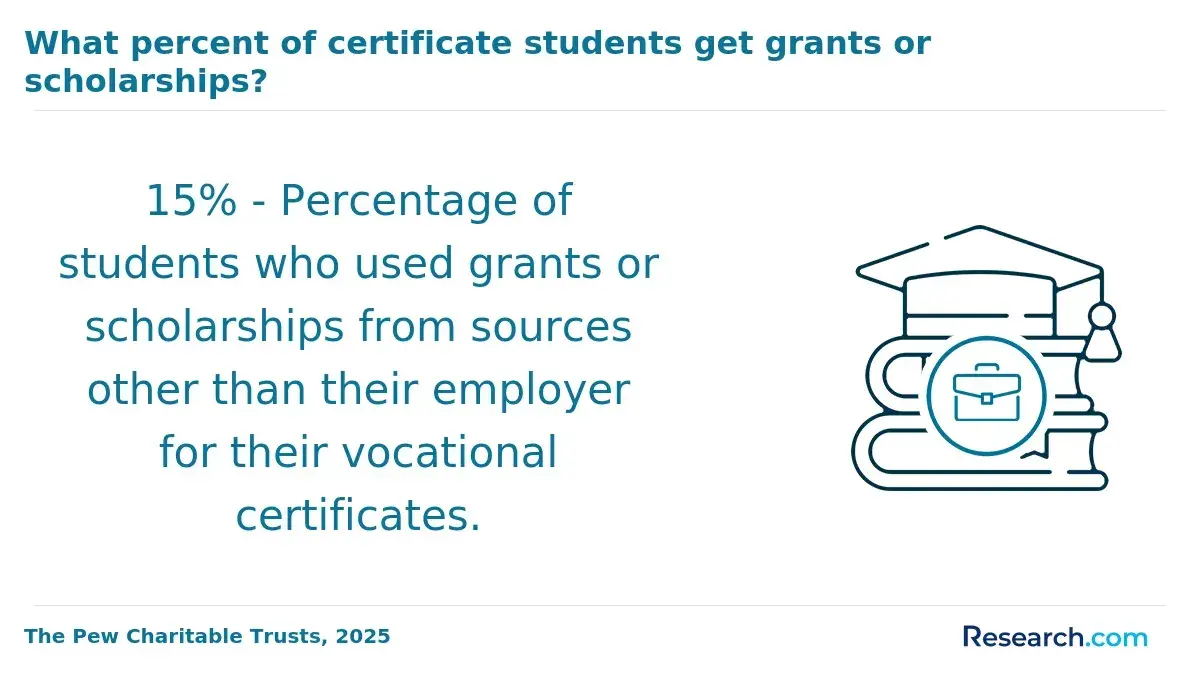
Short programs can be useful when they build a specific, employer-recognized skill. For example, carefully chosen online certificates may help students explore fields such as project management, data analytics, cybersecurity, healthcare administration, or digital marketing before committing to a longer program.
Be careful with the phrase "job-ready." No short course can replace every requirement for a licensed or highly technical profession. Use short credentials to supplement a degree, prepare for entry-level work, or test a field. Do not assume a certificate alone will qualify you for roles that typically require licensure, supervised clinical hours, apprenticeships, or a bachelor's degree.
Which degrees, certificates, or short programs best support a late-start career pivot?
The best credential depends on your target role, your prior credits, your timeline, and whether the career is regulated. A late-start pivot does not always require a new bachelor's degree, but some goals do. Healthcare licensure, teaching, engineering, accounting, counseling, and many advanced technical roles often have specific education requirements.
The table below compares common education options for students who feel behind. It focuses on when each option makes sense, not on ranking one credential as universally better.
| Option | Best fit | Typical time frame | Main trade-off |
| Career certificate | Students targeting a specific entry-level skill or industry tool | A few weeks to one year | Fast and focused, but may not carry much value outside the target role |
| Associate degree | Students seeking lower-cost college credits, technical training, or transfer preparation | About two years full time | Often affordable, but some careers require a bachelor's degree for advancement |
| Bachelor's degree | Students entering fields where employers commonly require a four-year degree | About four years full time, less with transfer credits | Broader opportunity, but higher cost and longer time commitment |
| Postbaccalaureate certificate | Degree holders changing fields without completing a second bachelor's | Several months to two years | Efficient for some pivots, but not always enough for licensure |
| Master's degree | Students who need advanced credentials for leadership, specialization, or licensure | One to three years | Can improve access to advanced roles, but ROI depends heavily on field and cost |
| Apprenticeship | Students who learn best through paid, supervised work | One to five years depending on trade | Strong hands-on training, but openings can be competitive and schedules may be rigid |
If your goal requires advanced research, academia, or certain leadership tracks, doctoral study may eventually be relevant. However, students who already feel behind should be especially cautious about debt and opportunity cost. Comparing cheapest PhD programs can be useful only after confirming that a doctorate is truly required for the role you want.
In general, choose the shortest credential that is respected for your target job. Choose a longer degree when it is required, when it opens multiple career paths you would actually consider, or when it provides supervised experience, labs, clinical placement, networking, or licensing eligibility that a short program cannot.
How do online programs compare with campus options for students catching up?
Online learning can help students catch up because it often reduces commuting time and allows more schedule flexibility. Campus programs may be stronger when you need labs, clinical placements, studio work, equipment, structured accountability, or face-to-face networking. The better option is the one that fits your target role and your ability to persist.
The National Center for Education Statistics reported that in fall 2022, more than half of U.S. college students took at least one distance education course. That matters because online learning is no longer unusual, but quality still varies widely by school, program design, support services, and field requirements.
The table below compares online and campus formats across decision factors that matter most for students trying to regain momentum.
| Factor | Online program | Campus program |
| Schedule flexibility | Often stronger, especially with asynchronous courses | More fixed class times and commuting requirements |
| Accountability | Requires strong self-management | More built-in routine and in-person reminders |
| Hands-on learning | May require local labs, simulations, practicums, or intensives | Often easier for lab, studio, shop, and clinical work |
| Networking | Possible through virtual events, group projects, and alumni platforms | Often easier through campus events, clubs, and informal contact |
| Cost structure | May reduce commuting and housing costs | May provide stronger local employer pipelines or campus resources |
| Best fit | Working students, caregivers, rural students, and self-directed learners | Students needing structure, equipment, labs, or local professional networks |
Students who need maximum flexibility can also explore a self-paced bachelor's degree online, especially if they already have transfer credits or can move faster through familiar material. The risk is procrastination, so self-paced formats work best for students who can set weekly deadlines and ask for help before falling behind.
Before choosing online or campus study, ask whether the format affects licensure, internships, clinical placements, lab access, exam preparation, or employer recognition in your field. In regulated careers, the delivery format matters less than whether the program meets state and professional requirements.
What should you look for in accredited programs to avoid wasting time and money?
Accreditation is a quality review process that helps determine whether a school or program meets recognized standards. For students who feel behind, accreditation is not a technical detail. It can affect transfer credits, financial aid eligibility, employer recognition, graduate school admission, and licensure.
Institutional accreditation applies to the college or university. Programmatic accreditation applies to specific fields, such as nursing, counseling, social work, teacher education, business, engineering technology, or allied health. Some careers require graduation from a program with specific accreditation, while others do not.
Use this checklist before submitting an application or deposit:
- Confirm the institution is accredited by an agency recognized by the U.S. Department of Education or the Council for Higher Education Accreditation.
- Check whether your specific major needs programmatic accreditation for licensure, certification, or employer acceptance.
- Ask how many of your previous credits will transfer and whether they apply to your major requirements or only count as electives.
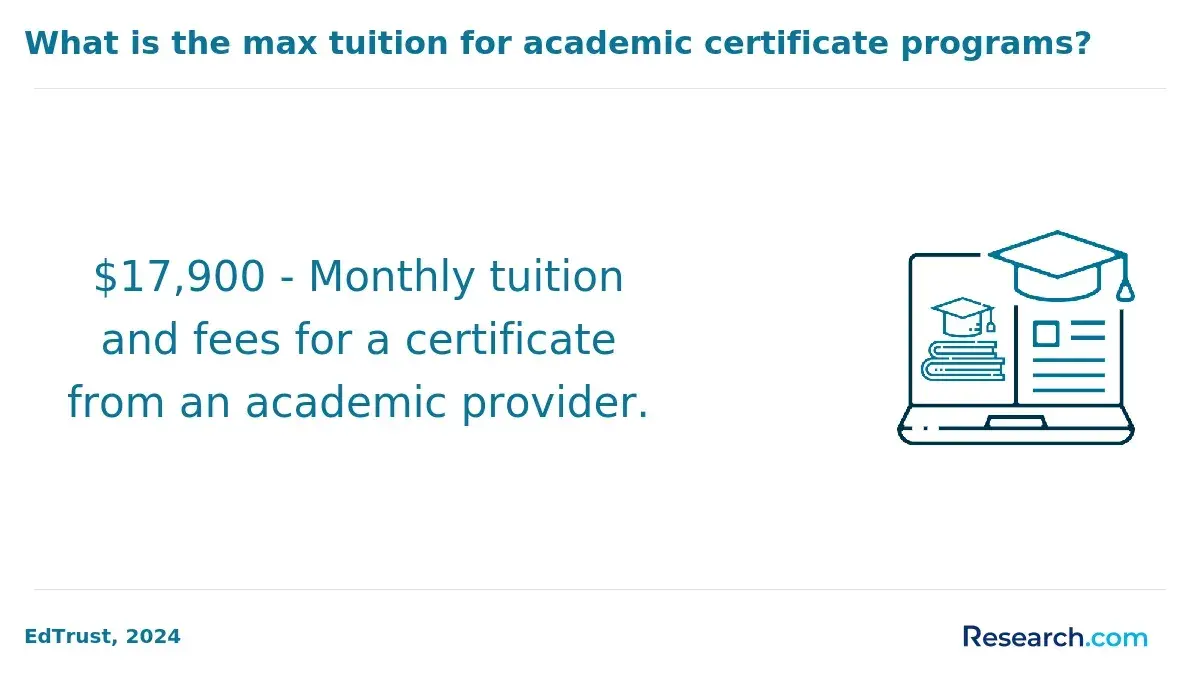
- Review total cost, including fees, books, technology, supplies, transportation, background checks, exam fees, and clinical or lab expenses.
- Request recent career outcomes, internship access, licensure exam pass rates where applicable, and graduate school placement information.
- Ask whether online students receive the same advising, tutoring, library, disability, mental health, and career services as campus students.
Red flags include pressure to enroll immediately, unclear tuition, vague job placement claims, credits that rarely transfer, no transparent faculty information, missing licensure disclosures, and promises of guaranteed employment. A credible school should be willing to explain limitations, not just benefits.
If your goal is remote work, accreditation still matters. Many remote-friendly employers screen for recognized degrees, job-ready portfolios, and reliable communication skills. Students comparing online degrees for remote jobs should still verify program quality, employer relevance, and the kinds of projects or internships built into the curriculum.
How long will it take to reskill, and what program costs should you expect?
Reskilling time depends on the gap between your current preparation and the role you want. A student learning one software tool may need weeks. A student preparing for nursing, teaching, engineering, or counseling may need years because the field requires structured coursework, supervised practice, and sometimes state licensure.
Cost also varies by credential type and institution. The College Board reported that average published tuition and fees for full-time in-district community college students were about $4,050 for the 2024-2025 academic year. That figure does not include every expense, but it shows why many students use community colleges to reduce the cost of prerequisites, associate degrees, or transfer pathways.
The table below gives a practical cost-and-time comparison. Use it as a planning framework, then request exact figures from schools because tuition, fees, and aid vary widely.
| Path | Common timeline | Cost factors to compare | Good use case |
| Single skill course | Several weeks to one term | Course fee, software, exam fee, subscription access | Adding a tool or testing interest before a larger commitment |
| Short certificate | Several weeks to one year | Tuition, platform fees, textbooks, certification exam costs | Preparing for a narrow entry-level role or promotion requirement |
| Community college pathway | One to two years for many certificates or associate programs | Tuition, transportation, lab fees, transferability, supplies | Lower-cost credentials, technical training, or transfer credits |
| Bachelor's completion | One to four years depending on prior credits | Transfer credit policy, tuition per credit, residency requirements, financial aid | Students who need a four-year degree for advancement or career entry |
| Graduate credential | One to three years for many master's or graduate certificates | Tuition, employer reimbursement, licensing costs, opportunity cost | Specialization, leadership, licensure, or advanced professional roles |
Students trying to move quickly may consider accelerated options, including 6-week courses. These can help you accumulate credits or test a subject faster, but the workload is compressed. They are best for students with stable schedules, strong reading habits, and a clear plan for how each course fits degree or career requirements.
To avoid cost surprises, calculate total cost before enrolling. Include tuition, mandatory fees, books, equipment, exam fees, commuting, childcare, lost work hours, and interest if you borrow. Then compare that cost with the typical entry wage, advancement path, and whether the credential is required or simply "nice to have."
Which early career roles, internships, or apprenticeships help you gain experience fast?
Experience is often the missing piece for students who feel behind. The fastest experience-building roles are those that expose you to real workplace expectations while letting you develop transferable skills: communication, reliability, problem solving, documentation, customer service, teamwork, and basic technology use.
You do not need to wait until you feel fully qualified to start gaining evidence. Many students build momentum through bridge roles that are adjacent to their target field. These roles may not be the final goal, but they help you learn the industry, meet people, and strengthen your resume.
Consider these experience routes based on your target direction:
- For healthcare, look at patient care technician, medical assistant, pharmacy technician, medical scribe, home health aide, or hospital volunteer roles.
- For business, consider administrative assistant, sales development representative, customer success assistant, bookkeeper trainee, operations assistant, or campus office roles.
- For technology, build a portfolio through help desk work, QA testing, web projects, data cleanup projects, cybersecurity labs, or open-source contributions.
- For education and human services, seek tutoring, after-school programs, paraprofessional roles, camp counseling, peer mentoring, or community nonprofit work.
- For skilled trades, research registered apprenticeships, pre-apprenticeship programs, union training centers, and employer-sponsored trainee roles.
The U.S. Department of Labor reported continued expansion of Registered Apprenticeship activity in recent years, which reflects employer interest in earn-while-you-learn models. For students worried about taking on debt, apprenticeships can be attractive because training is connected directly to paid work, although availability varies by region and occupation.
When applying, frame your story around direction and evidence rather than apology. Instead of saying you are behind, say you are building toward a specific field and have taken concrete steps: coursework, projects, volunteer hours, job shadowing, certifications, or relevant work experience.
What salaries and job outlook can late starters expect in different career fields?
Late starters can enter many fields, but salary and growth vary by occupation, location, education, experience, licensing, and industry. Use wage data as a comparison tool, not as a promise. A median wage means half of workers in that occupation earned more and half earned less, and entry-level pay may be lower.
The table below uses BLS May 2024 median annual wage data for selected U.S. occupations that students commonly consider when planning a career reset. It pairs wages with general education context so you can compare opportunity against preparation time.
| Field or role | BLS May 2024 median annual wage | Common preparation route | Decision note for late starters |
| Medical assistant | $44,200 | Certificate, diploma, or on-the-job training depending on employer | Good healthcare entry route, but advancement may require additional credentials |
| Paralegal or legal assistant | $61,010 | Associate degree, bachelor's degree, or paralegal certificate | Can fit detail-oriented students interested in law without attending law school |
| Computer support specialist | $61,550 | Certificate, associate degree, bachelor's degree, or demonstrated technical skills | Useful bridge into IT if you build troubleshooting and customer support experience |
| Registered nurse | $93,600 | Approved nursing program and state licensure | Strong option for service-oriented students, but admission, clinical hours, and licensure matter |
| Accountant or auditor | $81,680 | Bachelor's degree; CPA requirements vary by state | Good fit for analytical students, especially if they verify state CPA education rules early |
| Software developer | $133,080 | Bachelor's degree, portfolio, experience, or alternative technical pathway depending on employer | High earning potential, but competition rewards strong projects and continuous learning |
AI and automation are changing skill expectations, especially in business, technology, marketing, design, writing, and administrative work. This does not mean students should avoid those fields. It means they should learn how to use AI tools responsibly, verify outputs, protect data privacy, and combine technical fluency with human judgment.
Students who feel behind should compare three labor market factors before committing: entry requirements, advancement requirements, and resilience of the skill set. A role with a modest starting wage may still be a good choice if it offers paid training and advancement. A high-wage role may be a poor short-term fit if it requires years of preparation you cannot finance or sustain right now.
How can mentorship, networking, and campus career services support students who feel behind?
Students who feel behind often try to solve everything alone, which makes the process slower. Mentors, career services staff, faculty, alumni, supervisors, and peers can help you interpret options, avoid dead ends, and find opportunities that are not obvious from job boards.
Networking does not have to mean asking strangers for jobs. It means gathering career information, building professional trust, and learning how people actually enter a field. A 20-minute conversation with someone in the role you want can prevent months of guessing.
Use support systems in a structured way:
- Ask career services to review your resume for a specific role rather than giving general feedback.
- Request mock interviews based on actual job descriptions in your target field.
- Ask faculty which employers, graduate programs, certifications, or internships are respected in your area.
- Use alumni platforms or LinkedIn to find people who completed similar majors or changed careers from similar starting points.
- Join one professional association, student organization, or community group related to your field and attend consistently.
- Track every conversation, referral, application, and follow-up so networking becomes a system rather than a vague intention.
A strong mentor can also help you avoid common mistakes. These include choosing a major only because it sounds impressive, ignoring math or writing prerequisites, borrowing heavily for a low-ROI credential, assuming online means easy, waiting too long to get experience, or applying only after you feel perfectly ready.
The best next step is simple: choose one target role, identify the required credential and first experience opportunity, and speak with one person who knows that field. Career momentum usually returns after action creates evidence.
Other Things You Should Know About
No. It is not too late, even if you are close to graduation or changing majors. Start by choosing one target field, reviewing job requirements, meeting with career services, and building experience through a project, internship, part-time role, or volunteer opportunity.
Choose a certificate when it clearly matches a specific job skill or helps you test a field. Choose a degree when the role requires it, when it improves long-term mobility, or when it is needed for licensure, graduate study, or advancement.
Focus on direction, growth, and evidence. You can say you clarified your goal, completed relevant coursework or projects, and are now building experience in the field. Employers usually care more about readiness and reliability than a perfect timeline.
The biggest mistake is rushing into an expensive program without checking accreditation, transfer credits, total cost, job requirements, and career outcomes. A slower decision based on evidence is usually faster than recovering from the wrong program.
References
- I Don't Know What to Do in My Life: Finding Direction https://ifctherapists.com/blog/i-dont-know-what-to-do-in-my-life/
- Students and Entry Level Start a Career of Purpose | Northrop Grumman https://www.northropgrumman.com/careers/students-and-entry-level-careers-start-a-career-of-purpose
- Why You're Feeling Lost in Life—and How to Find Direction Again https://thriveworks.com/help-with/feelings-emotions/feeling-lost/
- Three Ways to Get Students Excited About Creating Their Own Career Paths https://blog.definedlearning.com/three-ways-to-get-students-excited-about-creating-their-own-career-paths/
- The Ultimate Cost-Benefit Analysis of Reskilling & Upskilling https://www.managementconcepts.com/resource/the-cost-benefit-analysis-of-reskilling-vs-upskilling/
- Career Seekers | Apprenticeship.gov https://www.apprenticeship.gov/career-seekers
- 5 Ways Alumni Mentorship Supports Graduate Student Success https://www.mentorcollective.org/blog/5-ways-alumni-mentorship-supports-graduate-student-and-university-success
- 5 Strategies to Stop Wasting Time with Training https://trainingmag.com/5-strategies-to-stop-wasting-time-with-training/
- Reskilling Your Workforce for the Future: An HR's Guide https://www.aihr.com/blog/reskilling/
- Career Mentoring for College Students: Building Career-Ready Graduates https://www.qooper.io/blog/career-mentoring-for-college-students