2027 Professional Certification: Career Guide for Students and Graduates

Co-Founder and Chief Data Scientist
Choosing a professional certification can shape your first job, promotion path, or graduate-school plans. The stakes are higher as employers shift toward skills-based hiring and job-specific credentials. The U.S. Bureau of Labor Statistics reports that the median annual wage for all workers was $49,500 in May 2024, but many certified technical, healthcare, business, and IT roles sit above that benchmark.
This guide helps students and graduates compare certification options, understand requirements, avoid low-value programs, and choose a credential that fits their career goal.
Key Things You Should Know
- Professional certification is best when it is tied to a specific job function, employer requirement, license pathway, or industry standard-not when it is chosen only because it is short or inexpensive.
- College Board data for 2024-2025 shows average published tuition and fees of about $4,050 at public two-year colleges and $11,610 for in-state public four-year institutions, before books, exams, and living costs.
- Certification can support entry into growing fields such as healthcare support, cybersecurity, project management, accounting, human resources, and skilled trades, but salary outcomes depend on occupation, location, experience, and whether certification is required or merely preferred.
What is professional certification in higher education?
Professional certification in higher education is a formal credential that confirms you have met a defined standard of knowledge or skill in a field. It is usually awarded by a professional association, industry body, vendor, licensing-related organization, or approved training provider. Unlike a college degree, certification is narrower and more job-focused; unlike a school certificate, it often requires an external exam or professional review.
The terminology can be confusing, especially for students comparing degrees, certificates, licenses, and certifications. The table below separates the most common credential types so you can understand what each one does and when it matters:
| Credential type | What it means | Best fit | Important limitation |
| Professional certification | Industry-recognized proof of competency, usually exam-based | Students or graduates targeting a specific role, tool, skill set, or advancement path | May need renewal, continuing education, or work experience |
| College certificate | Academic program from a college or university, often for credit | Learners who need structured coursework or credits that may transfer into a degree | May not equal industry certification unless it prepares you for an external exam |
| License | Legal permission to work in a regulated occupation | Fields such as nursing, teaching, counseling, real estate, and some trades | Requirements vary by state and are usually stricter than voluntary certification |
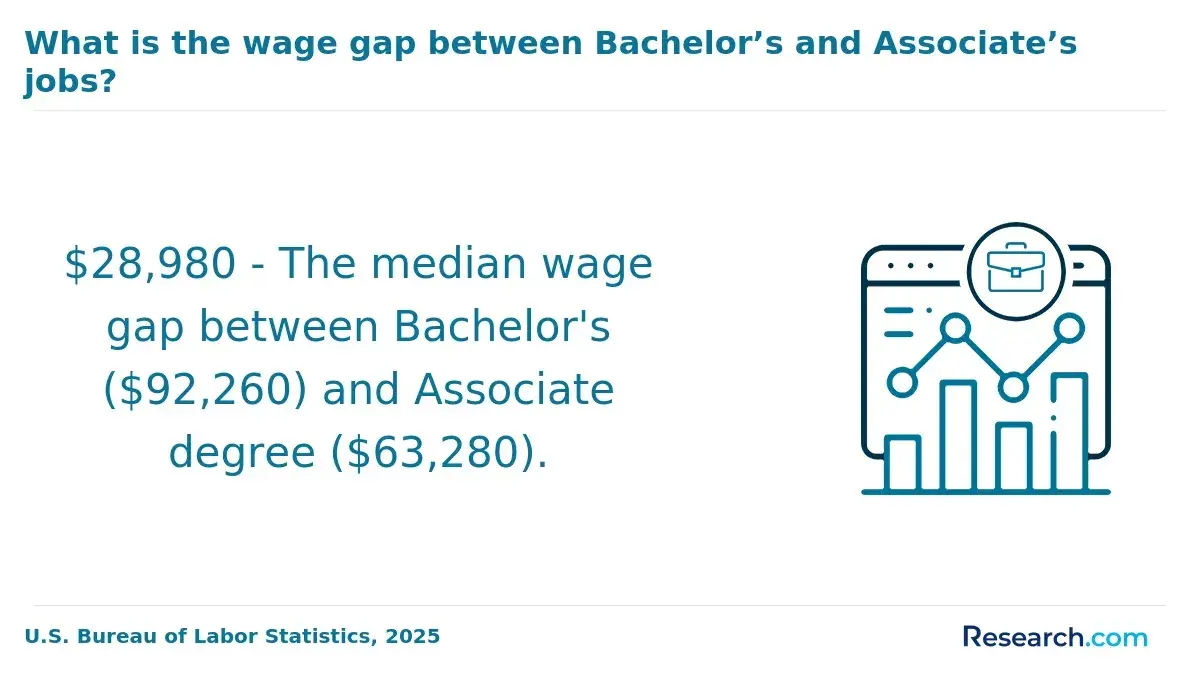
| Degree | Broad academic credential such as an associate, bachelor's, or master's degree | Careers requiring a broad educational foundation or long-term advancement | Takes longer and costs more than most certifications |
A useful rule is this: a certification should connect directly to a job description you can find in the labor market. If employers in your target role rarely mention it, the credential may still build skills, but it may not improve your hiring odds enough to justify the cost.
Which certifications match your career goals?
The right certification depends on your career target, current education level, and whether the role is regulated. Start by identifying the job title you want, then check whether employers ask for a certification as required, preferred, or optional.
The table below compares common certification categories by career goal. Use it to narrow your search before comparing individual programs or exam providers:
| Career goal | Certification category to consider | Who it fits best | Decision tip |
| Enter IT or cybersecurity | Vendor-neutral or vendor-specific IT certifications | Students with technical interest, help desk experience, coding exposure, or security coursework | Choose entry-level certifications first if you lack hands-on experience |
| Move into business leadership | Project management, operations, analytics, or quality certifications | Graduates with internships, team projects, or early professional experience | Check work-experience rules because some advanced credentials are not designed for beginners |
| Work in healthcare support | Clinical, administrative, billing, coding, or technician certifications | Students seeking practical roles with clear task-based training | Confirm whether your state, employer, or clinical site requires licensure or background checks |
| Build finance or accounting credibility | Bookkeeping, payroll, tax, auditing, or accounting certifications | Business students, accounting graduates, and career changers with quantitative strengths | Separate short-term certifications from advanced credentials that require a degree or exam sequence |
| Prepare for skilled technical work | Trade, manufacturing, safety, or equipment certifications | Learners who prefer applied training and hands-on assessment | Ask whether the program includes labs, equipment access, and local employer connections |
| Qualify for regulated public-service roles | Education, counseling, emergency services, or public safety credentials | Students planning state-regulated careers | Use the state licensing board as the final authority, not the school brochure |
Be cautious about choosing a credential only because it appears on a "top certification" list. A cybersecurity certification, for example, may be valuable for one student but irrelevant for another student pursuing healthcare administration. The best match is the one that removes a real barrier between you and your next role.
What are the education requirements for certification?
Education requirements range from no degree to a graduate degree, depending on the certification and the career it supports. Some entry-level technology and administrative credentials allow high school graduates to sit for an exam, while advanced accounting, teaching, nursing, counseling, and management credentials may require college coursework, supervised experience, or a completed degree.
Cost should be part of your education planning because certification training may sit on top of tuition, textbooks, exam fees, and renewal fees. College Board's 2024-2025 pricing data shows that published tuition and fees are substantially lower at public two-year colleges than at four-year institutions, which can make community college a practical starting point for many certification pathways.
Before enrolling, compare the credential level to your long-term goal. These common education pathways show when each route usually makes sense:
- Short noncredit training is usually best for a job-specific skill, software tool, safety credential, or entry-level exam that does not require college credit.
- Credit-bearing certificate programs are useful when you want structured coursework that may later apply toward an associate or bachelor's degree.
- Associate degree pathways can make sense for technical, healthcare support, criminal justice, business operations, and applied technology roles that value both coursework and certification readiness.
- Bachelor's degree pathways are often expected for accounting, teaching preparation, engineering technology, healthcare administration, human resources, and management-track roles.
- Graduate-level preparation may be necessary for advanced licensure, leadership roles, specialized clinical practice, or fields where an online master degree can combine academic advancement with certification preparation.
A common mistake is assuming that a certification can replace a degree in every field. In some technology roles, certifications can help compensate for limited formal education, especially when paired with projects and experience. In regulated fields, however, certification rarely overrides degree, clinical, or licensing requirements.
How do accreditation and licensing affect certification eligibility?
Accreditation and licensing affect whether your training counts. Accreditation is a quality review of schools or programs, while licensing is the legal approval to practice in a specific occupation or state. Certification eligibility may depend on one or both, especially in healthcare, education, counseling, public safety, and trades.
If you are comparing colleges, start with institution-level accreditation and then check whether the specific program has any required specialized accreditation. Students comparing non profit universities in USA should still verify the exact program, not just the school's general reputation.
Use this practical sequence before you pay an application fee or enrollment deposit:
- Identify the exact job title you want and the state where you plan to work.
- Check the state licensing board or official professional board for education, exam, supervised-hour, and background-check requirements.
- Confirm that the school is institutionally accredited by a recognized accreditor.
- Ask whether the program holds any specialized accreditation required for certification, licensure, clinical placement, or employer acceptance.
- Request written confirmation that the program meets certification or licensure requirements in your state.
- Ask what happens if you move states before or after completing the program.
Red flags include vague claims such as "certification-ready" without naming the exam, programs that cannot state whether they meet your state's requirements, and schools that pressure you to enroll before answering accreditation or licensure questions. When requirements vary by state, the safest source is the licensing board, not a marketing page.
What coursework and training are typically required?
Certification coursework is usually more focused than degree coursework. Instead of broad general education, training emphasizes the knowledge, tools, procedures, and applied skills tested by the certifying body or used on the job.
Typical training areas vary by field, but most strong certification programs combine concepts, practice, and assessment. Look for the following elements when comparing options:
- Core technical or professional knowledge aligned with the certification exam blueprint or competency framework.
- Hands-on practice through labs, simulations, case studies, clinical tasks, software platforms, or supervised fieldwork.
- Professional standards such as ethics, compliance, documentation, privacy, safety, or risk management.
- Exam preparation that includes practice questions, performance tasks, portfolio review, or mock exams.
- Career preparation such as resume language, interview practice, employer-recognized skills, and internship or apprenticeship support.
AI and automation are changing what "certified" means in several fields. In business, data, healthcare administration, and cybersecurity, employers increasingly want workers who can use digital tools responsibly rather than simply memorize procedures. A strong program should teach judgment, troubleshooting, documentation, and ethics because those skills remain valuable even as software changes.
One mistake to avoid is enrolling in a program that teaches only to the exam. Passing an exam may help you earn the credential, but employers often look for proof that you can apply the skill. Projects, labs, portfolios, supervised practice, and internships can make the certification more credible.
Can you earn certification online or on campus?
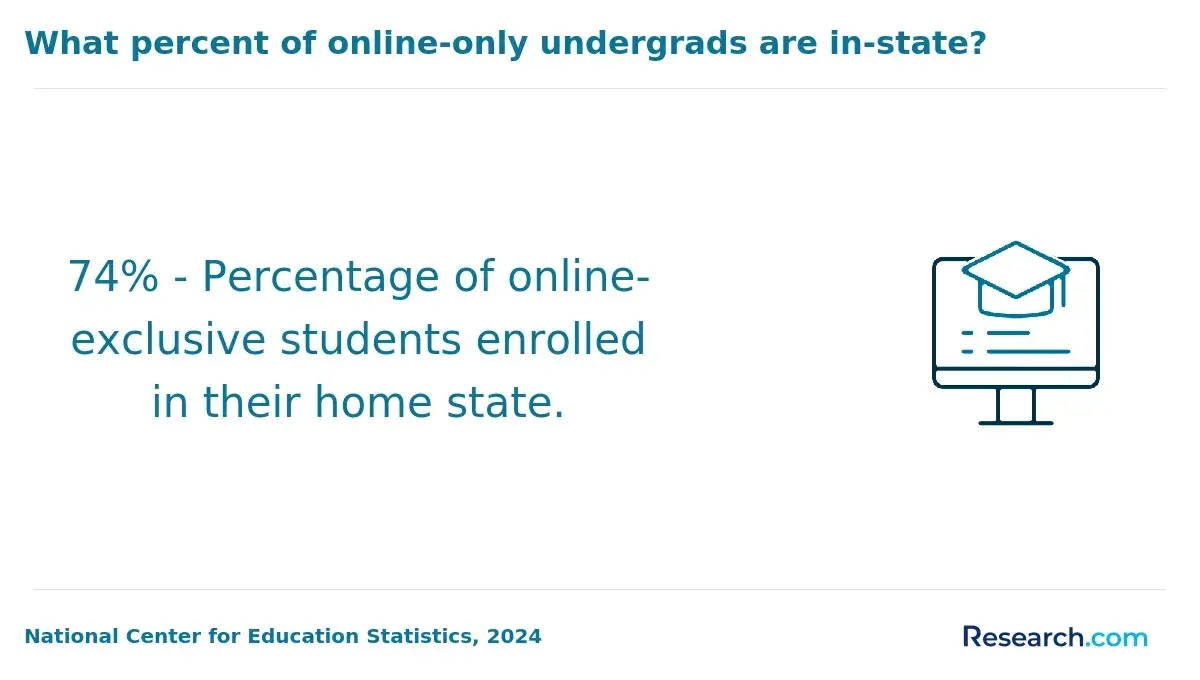
You can earn many certifications online, on campus, or through a hybrid format. The better choice depends on the credential's hands-on requirements, your schedule, your learning style, and whether the program includes local placements, labs, or proctored exams.
Online learning can be a strong fit for students who need flexibility, especially when the certification is knowledge-based or software-based. If you are starting with an associate degree online, check whether embedded certificates or industry exam preparation are included in the curriculum.
The table below compares online and campus-based certification training. Use it to decide which format fits the way you learn and the type of credential you need:
| Format | Best for | Strengths | Watch-outs |
| Fully online | IT, business, data, bookkeeping, project management, healthcare administration, and test-prep-heavy credentials | Flexible schedule, broader school choice, easier to combine with work | May not include hands-on labs, clinical placements, or in-person testing support |
| On campus | Clinical, lab-based, trade, equipment-based, and performance-assessed credentials | Direct practice, instructor feedback, equipment access, local employer connections | Less scheduling flexibility and may require commuting or relocation |
| Hybrid | Programs with online theory and required in-person labs, practicums, or simulations | Balances flexibility with practical training | Requires careful planning around required campus or clinical dates |
The main trade-off is flexibility versus access to supervised practice. If your credential depends on clinical hours, lab work, or physical equipment, a fully online program may not be enough. If your certification is based on software, compliance, project management, or business knowledge, online training may be efficient and appropriate.
What admissions requirements do certification programs usually ask for?
Admissions requirements for certification programs are usually lighter than degree admissions, but they still matter. Some programs are open enrollment, while others require prior coursework, a minimum age, a background check, immunizations, work experience, or proof of a completed degree.
Students looking for a faster academic starting point sometimes compare the easiest associate degree to get online, but "easy" should not mean low-value. The better question is whether the program's admissions requirements, transfer policy, certification alignment, and employer relevance fit your goal.
Before applying, gather the documents and eligibility details most programs commonly request. This list can help you prepare without missing requirements that delay enrollment or exam eligibility:
- Proof of prior education, such as a high school diploma, GED, college transcript, or completed degree.
- Placement tests or prerequisite coursework in areas such as math, writing, biology, anatomy, accounting, or computer basics.
- Professional experience documentation if the certification is designed for working adults rather than beginners.
- Background check, drug screening, immunization records, or CPR certification for clinical and public-facing roles.
- Technology requirements for online learning, including webcam access, secure testing software, and reliable internet.
- English proficiency documentation for applicants whose prior education was not completed in English.
Ask admissions advisors specific questions rather than relying on general promises. Good questions include: Does this program prepare me for a named exam? What is the exam pass policy? Are exam fees included? Are credits transferable? Does the program meet requirements in my state? What student support is available if I fail the exam on the first try?
How long does certification training usually take?
Certification timelines vary from a few weeks to several years. The length depends on whether the credential is a short exam-prep course, an academic certificate, a degree-embedded pathway, or a license-connected program with supervised hours.
The table below shows common timelines. These are planning ranges, not guarantees, because scheduling, prerequisites, clinical placements, part-time study, and exam availability can change the total time:
| Pathway | Typical time commitment | Common examples | Best fit |
| Exam-prep course | Several weeks to a few months | Software, entry-level IT, bookkeeping, project management foundations, safety training | Learners with some background who need focused preparation |
| Noncredit workforce certificate | One semester or less in many cases | Healthcare support, office technology, manufacturing, logistics, basic technical skills | Students seeking a fast job-readiness credential |
| Credit certificate | One to three semesters in many programs | Accounting, cybersecurity, medical billing, data analytics, paralegal foundations | Learners who may later stack credits into a degree |
| Associate-degree pathway | About two years full time, longer part time | Health information technology, computer networking, criminal justice, engineering technology | Students who need both academic preparation and certification readiness |
| Degree plus advanced certification | Four years or more, depending on degree and experience rules | Accounting, teaching, counseling preparation, advanced management credentials | Students pursuing regulated or higher-responsibility roles |
To shorten the timeline responsibly, ask about transfer credits, credit for prior learning, prior military or workplace training, accelerated terms, and whether exam preparation is embedded in required courses. Avoid programs that promise unrealistic completion times without explaining clinical hours, practicums, exam scheduling, or prerequisite courses.
What jobs can certification help you qualify for?
Certification can help you qualify for roles where employers need evidence of specific skills. It is most useful when it either satisfies a requirement, helps you stand out in a crowded entry-level market, or supports a promotion into a more specialized role.
Remote and hybrid work also influence certification choices. Students asking what degrees allow you to work from home should consider certifications in fields where work can be documented digitally, such as IT support, cybersecurity, data analysis, accounting, medical coding, project coordination, and business operations.
The table below connects certification-friendly career areas with typical responsibilities. It can help you see whether the work itself fits your strengths, not just whether the credential sounds appealing:
| Career area | Common roles | Typical responsibilities | How certification may help |
| Information technology | Help desk technician, network support specialist, cybersecurity analyst, cloud support associate | Troubleshoot systems, secure accounts, monitor networks, support users, document incidents | Shows baseline technical knowledge and tool familiarity |
| Healthcare administration and support | Medical assistant, medical coder, health information technician, patient access representative | Document patient information, code services, support clinical teams, manage records and compliance tasks | May be required or preferred for clinical, coding, or records roles |
| Business and project operations | Project coordinator, operations associate, quality analyst, business analyst assistant | Track timelines, coordinate teams, analyze workflow, report progress, manage documentation | Signals structured knowledge of project methods, analytics, or process improvement |
| Accounting and finance support | Bookkeeper, payroll specialist, tax preparer, accounting clerk | Maintain records, process payroll, prepare reports, support tax and compliance tasks | Helps demonstrate accuracy, software knowledge, and regulatory awareness |
| Skilled trades and technical services | HVAC technician, manufacturing technician, safety coordinator, equipment operator | Install, maintain, inspect, repair, operate equipment, follow safety procedures | May verify safety training, equipment competency, or employer-required standards |
Certification is not always the best first move. If job postings consistently require a degree, license, apprenticeship, or portfolio, start there. If postings say certification is preferred, you may be able to apply while studying and use the credential to strengthen your case during interviews.
What salary and job outlook can certified professionals expect?
Salary and job outlook depend more on the occupation than on the certification alone. A credential can improve eligibility or competitiveness, but it does not create a salary floor. Use wage data as a benchmark, then compare it with local job postings, employer requirements, and your expected education costs.
BLS May 2024 wage data shows wide differences among certification-friendly roles. The table below uses selected U.S. occupations where certification, licensure, or exam-based credentials often appear in training pathways or job postings:
| Occupation example | May 2024 median annual wage | How certification fits | Outlook context |
| Information security analyst | $124,910 | Security certifications can support credibility, especially with hands-on experience | Demand is influenced by cyber risk, cloud adoption, and regulatory compliance |
| Project management specialist | $100,750 | Project credentials may help experienced workers document formal methods | Openings often depend on industry growth and business investment |
| Registered nurse | $93,600 | Licensure is required; specialty certifications can support advancement after experience | Demand varies by state, care setting, and population health needs |
| Accountant or auditor | $81,680 | Advanced credentials can matter for public accounting, auditing, tax, and promotion paths | Automation changes routine tasks, but compliance and advisory work remain important |
| Medical assistant | $44,200 | Certification is commonly preferred and sometimes required by employers | Demand is tied to outpatient care, clinics, and healthcare access |
Use these numbers carefully. A new graduate with no experience may start below the median, while experienced professionals in high-cost regions or specialized industries may earn more. Certification can be part of a strong ROI case when it is affordable, employer-recognized, and connected to a role with clear openings.
To evaluate whether a certification is worth it, compare total cost against likely career value. Include tuition, exam fees, prep materials, renewal costs, lost work time, commuting, technology, and any required background checks or clinical supplies. Then review local job postings to see whether the credential appears often enough to matter.
Other Things You Should Know About
It can be worth it when the credential is recognized by employers in your target field and helps you qualify for a specific role, exam, license, internship, or promotion. It is less useful when it is unrelated to job postings or duplicates skills you can already prove through coursework or experience.
A certificate is usually awarded after completing a school or training program. A certification is typically awarded by an external professional or industry organization after you meet eligibility rules and pass an exam or assessment.
Yes, some entry-level certifications do not require a college degree, especially in IT, office technology, skilled trades, safety, and some healthcare support roles. However, regulated or advanced fields may require a degree, supervised experience, licensure, or state approval.
Start with job postings for your target role, then verify the certifying body, accreditation, state rules, exam pass support, total cost, time commitment, and employer recognition. Avoid programs that cannot clearly name the certification exam or explain eligibility requirements.
References
- How to Choose Cybersecurity Courses Aligned with Your Career Goals | Cybrary https://www.cybrary.it/blog/choose-cybersecurity-courses-aligned-career-goals
- Accreditation vs. Certification: What’s the Difference? https://www.pjlabs.com/accreditation-vs-certification-whats-the-difference
- Certificate in Learning and Teaching in Higher Education - Advance HE UK https://www.advance-he.ac.uk/consultancy-and-enhancement/teaching-learning/certificate-learning-and-teaching-higher-education
- Online Certificate Programs | Certifications Programs https://www.uscareerinstitute.edu/online-certificate-programs
- What is a professional certificate? Learn about its benefits and types https://mdit.edu.sa/en/blog/what-is-a-professional-certificate
- Training for Job Entry and Career Development | Infobase https://infobase.com/blog/facts-on-file/fergusons-career-guidance-center/training-for-job-entry-and-career-development/
- Continuing Education Requirements: Ensuring You Stay Relevant in Engineering https://www.pdh-pro.com/pe-resources/continuing-education-requirements/
- How Long Does It Take to Complete the Certificate IV in Training and Assessment? | Fortress Learning Articles & Insights https://www.fortresslearning.edu.au/blog/how-long-does-it-take-to-complete-the-certificate-iv-in-training-and-assessment
- Short Courses vs. Traditional Training: A Comparison | Boundless Learning https://www.boundlesslearning.com/news/short-courses-vs-traditional-training-results
- 10 Questions to Ask Before Choosing a Certification Program - Accelerated Pathways Career College https://apc.college/10-questions-to-ask-before-choosing-a-certification-program/