2027 Career Planning FAQ for Students

Co-Founder and Chief Data Scientist
Choosing a major, school, or first career path can feel expensive and risky. The National Center for Education Statistics reported that undergraduate enrollment increased in fall 2024 after years of disruption, signaling renewed competition for programs, internships, and entry-level roles.
This guide is for high school, college, transfer, online, and returning students who want a practical career plan. You will learn how to compare majors, education pathways, costs, accreditation, experience-building options, salaries, and job outlook so you can make a more confident decision.
Key Things You Should Know
- A strong student career plan connects one target career, required credentials, program quality, costs, experience, and entry-level job options instead of choosing a major based only on interest or rankings.
- For financial planning, the 2024-25 maximum federal Pell Grant is $7,395, but students should still compare total cost of attendance, transfer credits, program length, and likely borrowing before enrolling.
- Salary expectations should be based on occupation-level data, not school marketing; for example, the U.S. Bureau of Labor Statistics reported a May 2024 median annual wage of $49,500 for all U.S. workers, with wide variation by field, location, and credential.
What are the key steps in creating a successful career plan as a student?
A successful career plan is a written decision map that connects what you want to do, what employers require, how you will qualify, and how you will test the fit before committing too much time or money. It should be flexible because majors, labor markets, and personal circumstances can change, but it should still be specific enough to guide your next semester.
Use the following sequence to turn a broad interest into an actionable plan. Each step should produce evidence, not just a feeling.
- Choose one or two target roles to investigate, such as registered nurse, software developer, teacher, accountant, dental hygienist, data analyst, or marketing coordinator.
- Review job postings and occupational profiles to identify required degrees, licenses, technical skills, soft skills, and common entry-level titles.
- Match the role to an education pathway, including certificates, associate degrees, bachelor's degrees, graduate programs, apprenticeships, or licensure preparation.
- Compare programs by accreditation, curriculum, cost, completion time, student support, transfer policy, internship access, and employment outcomes.
- Build proof of skill through projects, internships, clinical hours, research, volunteering, part-time jobs, portfolios, or industry certifications.
- Set review points each term to update your plan based on grades, finances, completed experience, advisor feedback, and changes in the job market.
The common mistake is treating career planning as a one-time choice made before college. A better approach is to treat it as a cycle: research, test, evaluate, and adjust. If your first choice becomes less realistic because of cost, grades, location, or licensing requirements, you can still use the information you gathered to pivot into a related path.
| Planning question | What to verify | Why it matters |
| What job do I want first? | Entry-level titles and minimum qualifications | Prevents choosing a degree that does not lead to realistic first jobs |
| What credential is required? | Degree, certificate, license, exam, or portfolio expectations | Helps you avoid undertraining or overpaying for unnecessary credentials |
| Can I afford the path? | Total cost, aid, work schedule, borrowing, and time to completion | Shows whether the plan is financially sustainable |
| How will I prove experience? | Internships, practicums, projects, labs, clinicals, or work samples | Improves competitiveness for internships and entry-level jobs |
How do I choose the right major or program to match my career goals?
The right major is the one that fits your target career, learning strengths, financial limits, and backup options. A major does not need to define your entire life, but it should help you qualify for specific roles or graduate programs without adding unnecessary time or debt.
Start by separating careers into three groups: careers with strict credential requirements, careers with preferred but flexible degrees, and careers where skills and portfolios matter as much as the major. This distinction keeps you from choosing too narrowly or too broadly.
| Career type | Major choice strategy | Examples |
| Licensed or regulated careers | Choose an approved program that meets state or professional requirements | Nursing, teaching, social work, accounting licensure tracks, allied health |
| Technical careers | Choose a major with strong lab, project, software, or quantitative training | Engineering, computer science, cybersecurity, data analytics |
| Business and communication careers | Choose a major plus internships, writing samples, analytics tools, or sales experience | Marketing, human resources, public relations, operations |
| Exploratory or interdisciplinary careers | Choose a flexible major with electives, minors, and transferable skills | Public policy, nonprofit work, media, entrepreneurship |
If you are undecided, do not pick a major only because it sounds easy. Instead, look for a program that keeps doors open while letting you test career interests early through introductory courses, shadowing, and projects.
Use these checks before declaring or changing a major. They are especially useful for students comparing several realistic options.
- Review at least 10 current entry-level job postings and note the degrees, skills, software, and experience they request.
- Ask whether the major has prerequisites that could delay graduation if you start late, such as lab sciences, calculus, clinical placement, or sequential studios.
- Check whether the major supports internships, undergraduate research, licensure preparation, portfolios, or employer partnerships.
- Estimate whether you can complete the major on time with your transfer credits, work schedule, and financial aid limits.
- Identify at least two backup roles that use the same coursework in case your first-choice career changes.
A major is a tool, not a guarantee. Strong outcomes usually come from combining the right coursework with advising, work experience, networking, and evidence of job-ready skills.
What education pathways lead to my target career, including degrees and training?
Education pathways vary by field. Some careers require a specific degree and license, while others accept multiple routes if you can show skills and experience. The smartest pathway is usually the shortest accredited route that meets your target role's requirements and still leaves room for advancement.
The table below compares common U.S. education pathways students use to reach career goals. Use it to decide whether you need a certificate, degree, graduate study, or work-based training.
| Pathway | Typical purpose | Best fit | Key limitation |
| Certificate or diploma | Focused training for a specific skill or occupation | Students seeking faster entry into fields such as medical assisting, coding, IT support, welding, or bookkeeping | May not transfer easily into a degree or qualify for advancement |
| Associate degree | Career preparation or transfer into a bachelor's program | Students seeking lower-cost general education, allied health, technical, or transfer pathways | Some careers still require a bachelor's degree for advancement |
| Bachelor's degree | Broad academic and career preparation | Students targeting professional, technical, business, education, or graduate-school pathways | Higher total cost and longer time commitment than shorter credentials |
| Master's degree | Advanced specialization, licensure, leadership, or career change | Students entering fields such as counseling, public administration, analytics, education leadership, or specialized business roles | Return on investment varies widely by field and employer |
| Apprenticeship or work-based training | Paid training tied to an occupation | Students who want hands-on preparation in skilled trades, manufacturing, healthcare support, or technology roles | Availability depends on region and employer demand |
For students who already know they need graduate-level credentials but want a shorter timeline, some 1-year online master's programs may be worth comparing. The key is to confirm that the accelerated format still includes the courses, practicum hours, capstone work, or licensure preparation your career requires.
Be careful with shortcuts. A fast credential can be valuable when it matches employer requirements, but it can be costly if credits do not transfer, the program lacks required accreditation, or the credential does not qualify you for the job you want.
How do I compare online vs. campus programs for quality, flexibility, and outcomes?
Online and campus programs can both be high quality, but they serve different students. The right choice depends on your schedule, learning style, need for hands-on training, access to local employers, and whether the program meets licensure or placement requirements in your state.
The comparison below summarizes the main trade-offs. Use it to identify which format supports your academic and career needs rather than assuming one format is automatically better.
| Factor | Online program | Campus program |
| Flexibility | Often better for working students, parents, military students, and commuters | Usually better for students who want a fixed schedule and in-person structure |
| Hands-on learning | May require local labs, clinical placements, residencies, or internships | Often easier to access campus labs, studios, clinics, and equipment |
| Networking | Depends on virtual advising, alumni access, employer events, and cohort design | Often stronger for students who use campus events, faculty office hours, and local recruiting |
| Cost | Can reduce housing and commuting costs, but technology and distance fees may apply | May include more campus-based fees and living costs, but local scholarships may help |
| Learning fit | Best for self-directed students who manage deadlines well | Best for students who benefit from face-to-face accountability and immediate support |
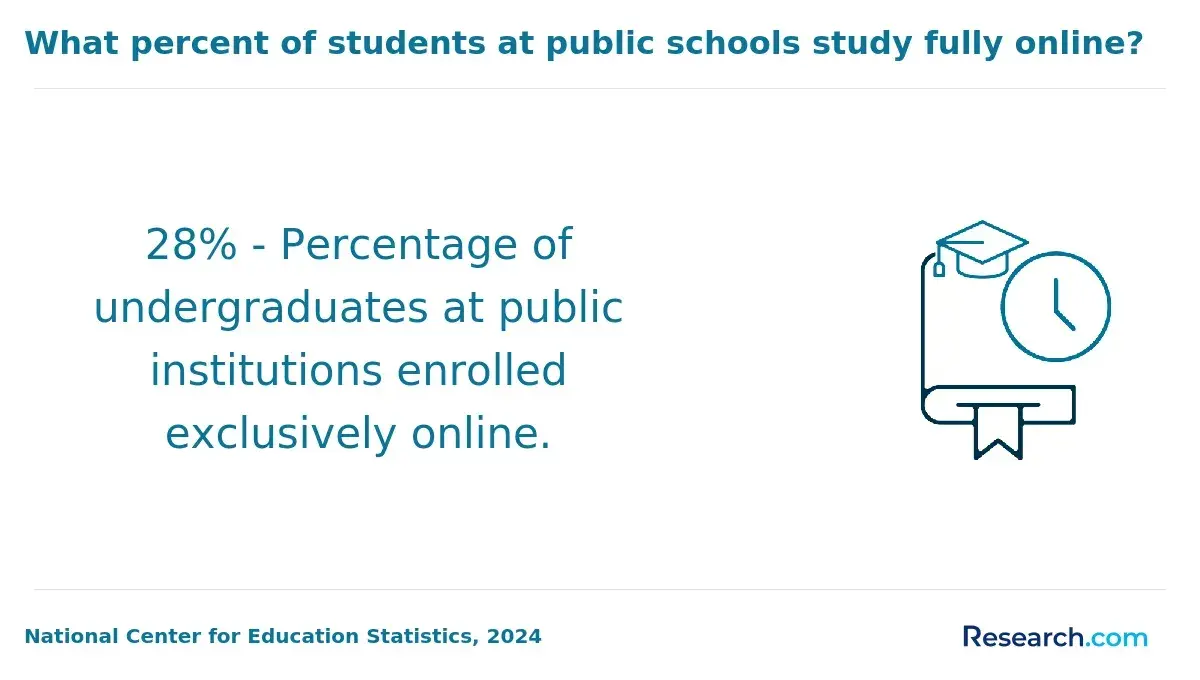
Online education keeps expanding because many students need flexible schedules. The National Center for Education Statistics reported in 2024 that distance education remains a major part of U.S. higher education, which means students now need to judge online programs by outcomes and support, not novelty.
If you want a flexible route but are worried about academic difficulty, comparing an easiest online degree list can help you understand workload differences. Still, "easier" should not mean "less useful"; the program should match your career goal and provide marketable skills.
Before choosing online or campus, ask admissions and the academic department the same direct questions. You are looking for evidence that the format supports completion and career readiness.
- Are online and campus students taught by similarly qualified faculty?
- Are tutoring, advising, library access, career services, disability services, and technical support available in the format I will use?
- If the field requires clinicals, student teaching, labs, internships, or residencies, who arranges the placement?
- Does the program meet licensure or certification requirements in my state?
- What are the retention, graduation, transfer, and employment outcomes for students in this format?
What accreditation and program quality indicators should I check before enrolling?
Accreditation is a quality review process that helps confirm whether a school or program meets recognized standards. It matters because accreditation can affect federal financial aid eligibility, transfer credit, graduate admission, employer recognition, and licensure eligibility.
There are two levels to check. Institutional accreditation applies to the school as a whole, while programmatic accreditation applies to specific fields such as nursing, business, education, counseling, social work, engineering, or allied health.
Use the following quality checks before you enroll. This is especially important for online, accelerated, career-focused, and licensure-track programs.
- Confirm the institution is accredited by an agency recognized by the U.S. Department of Education or the Council for Higher Education Accreditation.
- For licensed fields, verify programmatic accreditation or state approval directly with the licensing board or professional regulator.
- Check whether credits are likely to transfer to public universities, graduate schools, or professional programs you may attend later.
- Review faculty qualifications, student support services, curriculum currency, clinical or internship placement processes, and exam pass-rate disclosures when available.
- Look for transparent outcome data, including graduation rates, licensure exam results, job placement methods, and debt information.
Red flags include pressure to enroll immediately, vague accreditation claims, unclear total costs, promises of guaranteed employment, very limited faculty access, and refusal to explain licensure eligibility. A school can be legitimate and still be a poor fit if it does not meet the requirements for your specific career or state.
Accreditation does not guarantee a job, but missing or inappropriate accreditation can close doors before you even graduate.
How can I estimate program length, total costs, and potential financial aid options?
To estimate the real cost of a program, look beyond tuition. Total cost of attendance can include fees, books, supplies, housing, transportation, technology, licensure exams, background checks, uniforms, lost work hours, and interest on loans.
College Board's 2024 pricing data reported average published tuition and fees of $11,610 for in-state students at public four-year institutions and $43,350 at private nonprofit four-year institutions for 2024-25. Those figures are not your final price, but they show why comparing net cost after grants and scholarships matters more than comparing sticker price alone.
Use this cost framework to build a realistic budget. It helps you compare programs with different timelines and formats.
| Cost factor | What to include | Decision impact |
| Direct school charges | Tuition, mandatory fees, course fees, online fees, lab fees | Shows the minimum billed cost |
| Living and access costs | Housing, food, transportation, parking, childcare, internet, computer | Can make a lower-tuition program more expensive overall |
| Program-specific costs | Books, tools, uniforms, exam fees, background checks, clinical requirements | Important for healthcare, education, technical, and lab-based programs |
| Time costs | Reduced work hours, delayed earnings, internship availability | Helps compare full-time, part-time, and accelerated routes |
| Financing costs | Loan interest, repayment timeline, borrowing limits | Affects long-term affordability after graduation |
If affordability is your main constraint, compare community college transfer pathways, public universities, employer tuition assistance, scholarships, grants, and cheap online colleges. Lower cost can improve return on investment, but only if the program is accredited, transferable when needed, and aligned with your career goal.
Before committing, complete these financial steps in order. They can prevent surprises after enrollment.
- File the FAFSA and review federal, state, institutional, and private aid options before assuming you cannot afford college.
- Ask each school for a net price estimate that separates grants and scholarships from loans.
- Calculate the cost to finish, not just the cost of the first term.
- Confirm whether transfer credits, prior learning credit, military credit, or exam credit can shorten the program.
- Compare monthly loan repayment estimates with conservative entry-level salary expectations for your target field.
What admission requirements and application materials do most programs expect?
Admission requirements vary by level, selectivity, major, and school type. Open-admission community colleges may require placement steps rather than competitive review, while selective universities and professional programs may require prerequisites, minimum grades, exams, interviews, portfolios, or background checks.
The table below shows common materials by program level. Requirements can change, so always confirm with the specific school and department.
| Program type | Common requirements | What students should watch |
| Certificate or diploma | Application, proof of high school completion, placement assessment, program prerequisites | Some programs have limited seats or required background checks |
| Associate degree | Application, transcripts, placement or readiness steps, financial aid forms | Transfer-focused students should follow an articulation plan |
| Bachelor's degree | High school or college transcripts, application essay, recommendations, test scores when required, activity list | Impacted majors may have higher GPA or prerequisite requirements |
| Graduate degree | Bachelor's degree, transcripts, statement of purpose, recommendations, resume, prerequisites, exam scores when required | Licensure programs may require field experience or state-specific checks |
Many schools have become test-optional, but test-optional does not mean requirement-free. Your transcript, course rigor, grades in prerequisite subjects, writing, recommendations, and demonstrated interest in the field may carry more weight.
Prepare application materials around your career goal, not just your academic history. Admissions readers should understand why the program fits your plan and how you are prepared to succeed.
- Request official transcripts early, especially if you attended multiple schools or earned dual-enrollment credits.
- Build a resume that includes work, volunteering, leadership, projects, certifications, caregiving, military service, or community experience.
- Write essays that explain your goals with specific evidence rather than broad claims about passion.
- Ask recommenders who can describe your reliability, academic readiness, problem-solving, or field-related potential.
- For selective majors, complete prerequisite courses as early as possible and track minimum grade requirements.
A common mistake is applying to a school without being admitted to the desired major. For nursing, engineering, education, business, computer science, and some health programs, general university admission may not equal program admission.
What internships, projects, or experiences strengthen my resume during school?
Employers often want evidence that students can apply what they learned. Internships are valuable, but they are not the only form of experience. Projects, part-time jobs, clinicals, research, volunteering, campus leadership, freelancing, and portfolios can all strengthen a resume when they show relevant skills.
National Association of Colleges and Employers research released in 2024 continued to show that internship experience is a major signal in college hiring. The practical takeaway is that students should begin building experience before senior year, not wait until graduation.
The best experience depends on your field. Use the table below to match activities to the type of career you are exploring.
| Career direction | High-value experience | Resume evidence to produce |
| Healthcare | Clinical hours, patient-care volunteering, certifications, lab experience | Documented competencies, supervisor feedback, certification records |
| Technology | Coding projects, hackathons, help desk work, cybersecurity labs, open-source contributions | GitHub portfolio, project summaries, technical tool list |
| Business | Internships, sales roles, student consulting, analytics projects, entrepreneurship | Metrics, dashboards, campaign results, process improvements |
| Education and human services | Tutoring, youth programs, practicums, service learning, classroom observation | Reflection logs, lesson materials, supervisor evaluations |
| Creative fields | Portfolio projects, campus media, freelance work, competitions, client work | Portfolio website, samples, briefs, testimonials |
If you are in an accelerated pathway, planning experience early becomes even more important because you have fewer semesters to build a resume. Students comparing fast track programs should ask how internships, capstones, labs, or clinical placements fit into the shortened schedule.
To turn experience into career value, focus on proof. A job title alone is less persuasive than a clear description of what you did, what tools you used, and what changed because of your work.
- Keep a running document of projects, tasks, tools, results, supervisors, and skills after every course or work experience.
- Ask supervisors for permission to describe projects and use nonconfidential work samples in a portfolio.
- Translate class projects into employer language, such as data cleaning, client presentation, lab documentation, lesson planning, or budget tracking.
- Use your college career center early for resume reviews, mock interviews, internship searches, and employer introductions.
- Apply for roles before you feel fully ready if you meet most requirements and can explain your learning progress.
What entry-level jobs, career paths, and advancement opportunities can I expect?
Entry-level jobs are the first roles that help you build field-specific experience after, or sometimes during, your education. They may not be your dream job, but they should create a path toward stronger responsibilities, higher pay potential, licensure hours, advanced credentials, or specialized skills.
The table below shows how early roles often connect to advancement. Actual titles vary by employer and region, so focus on responsibilities and required skills.
| Field | Common entry-level roles | Possible advancement path |
| Business | Administrative coordinator, sales development representative, operations assistant, junior analyst | Manager, account executive, operations analyst, project manager |
| Technology | Help desk technician, junior developer, QA tester, data technician | Systems administrator, software engineer, cybersecurity analyst, data analyst |
| Healthcare | Medical assistant, patient care technician, licensed practical nurse, clinical support roles | Registered nurse, care coordinator, health services manager, specialized technician |
| Education | Teacher assistant, substitute teacher, tutor, classroom aide | Licensed teacher, instructional coach, curriculum specialist, school administrator |
| Public service and social impact | Case aide, program assistant, community outreach coordinator, nonprofit assistant | Case manager, program manager, policy analyst, social services administrator |
Advancement usually depends on a mix of performance, credentials, networking, and timing. Some fields reward certifications or licenses; others reward portfolios, leadership results, technical specialization, or graduate education.
Plan your first job search around progression, not just the first offer. These questions help you judge whether an entry-level role can lead somewhere useful.
- Will this role build skills that appear in postings for the next job I want?
- Does the employer offer mentorship, training, tuition assistance, promotion ladders, or licensure supervision?
- Can I produce measurable accomplishments within 6 to 12 months?
- Is the schedule compatible with finishing school, certification exams, or graduate applications?
- Will the role expose me to professionals who can recommend, refer, or advise me?
Nontraditional students should also count prior experience. Military service, caregiving, small business work, trade experience, and community leadership can translate into management, logistics, communication, budgeting, or problem-solving skills. Students exploring degrees for seniors should look for programs that recognize prior learning and provide career services for adult learners, not only traditional-age students.
How do salary ranges and job outlook data shape realistic career expectations?
Salary and job outlook data help you set realistic expectations, compare paths, and decide how much education debt is reasonable. Use salary data as a planning tool, not a promise, because pay varies by location, industry, employer, experience, licensure, shift, and economic conditions.
The U.S. Bureau of Labor Statistics reported a May 2024 median annual wage of $49,500 for all workers. This benchmark is useful because it lets you compare whether a target occupation typically pays below, near, or above the national median before you commit to a program.
The table below shows how to interpret salary and outlook information when comparing careers. It does not replace occupation-specific research, but it helps you avoid misleading conclusions.
| Data point | What it tells you | How to use it |
| Median annual wage | The midpoint of wages for an occupation | Use it to estimate typical pay, not best-case pay |
| Lowest and highest wage ranges | Variation by experience, employer, region, and specialization | Check whether entry-level pay can support your expected loan repayment |
| Projected job growth | Expected employment change across the projection period | Compare demand, but also review local hiring conditions |
| Annual openings | Expected job opportunities from growth and replacement needs | Useful for judging opportunity in large occupations with moderate growth |
| Required education and training | The typical credential needed to enter the field | Helps you avoid paying for more education than the first role requires |
AI and automation are changing expectations in many fields. Rather than assuming technology will eliminate or create a job for you, look at how tools are changing tasks: data analysis in business, documentation in healthcare, tutoring tools in education, coding assistants in software, and automation in administrative work. Students who combine field knowledge with digital literacy, communication, ethics, and problem-solving are generally better positioned than students who learn only narrow tool use.
When comparing salary with education cost, use conservative assumptions. If a program's marketing emphasizes high-end salaries, ask for recent, program-specific outcome data and how it was collected. A responsible decision weighs median pay, entry-level pay, completion rate, debt, licensure pass rates, and whether you can realistically finish the program.
Other Things You Should Know About
Students should start as early as possible, ideally in high school or the first year of college. Early planning does not mean locking into one career forever; it means testing interests, choosing courses strategically, and avoiding unnecessary credits or debt.
Many students change direction. The key is to act quickly: meet with an advisor, map how completed credits apply to another program, compare career outcomes, and choose a path that preserves as much progress as possible.
No. Some careers require degrees or licenses, while others value certificates, apprenticeships, portfolios, military training, or work experience. The right choice depends on the occupation's requirements and your long-term advancement goals.
Compare total program cost, likely borrowing, completion time, entry-level pay, median salary, job outlook, and required credentials. A career path is more financially realistic when the credential is necessary, the program is accredited, and expected debt is manageable.
References
- How to make a career decision https://tahatu.govt.nz/plan-your-future/making-a-career-decision/how-to-make-a-career-decision
- How to Create a Career Development Plan That Works https://www.cesarritzcolleges.edu/en/news/how-to-create-a-career-development-plan/
- Developing a Career: 5 Steps to Effective Career Planning https://ascendleadership.ca/post/developing-a-career-5-steps-to-effective-career-planning/
- Career Pathways: A Strategy to Boost College Completion and Economic Mobility | MDRC https://www.mdrc.org/work/publications/career-pathways-strategy-boost-college-completion-and-economic-mobility
- Grad School Funding Calculator: How to Estimate Your Costs and Close the Gap - Ascent Funding https://www.ascentfunding.com/blog/grad-school-funding-calculator-how-to-estimate-your-costs-and-close-the-gap/
- Study Abroad Budget Calculator - Calculate Total Cost https://www.drshrutimehta.com/study-abroad-budget-calculator
- What major should I choose? Take our career match test - Blog https://getmarlee.com/blog/what-major-should-i-choose
- Entry-Level Jobs That Lead to Long-Term Careers https://www.hedyholmesstaffing.com/post/entry-level-jobs-that-lead-to-long-term-careers
- Interns Insider- How to Leverage Your Internship Experience on Your Resume https://gardnerinstitute.org/interns-insider-how-to-leverage-your-internship-experience-on-your-resume/