Most Affordable Diagnostic Medical Sonographer Schools & Training - Budget-Friendly Sonography Trade Programs in Connecticut for 2026

Co-Founder and Chief Data Scientist
If you're considering a rewarding career as a medical sonographer in Connecticut, finding the right trade school is essential. This article introduces a carefully crafted medical sonographer trade school programs ranking developed by the Research.com team of data scientists to support your decision-making process.
By exploring these affordable programs, you can discover options that fit your budget and career goals. Earning a diploma or certification in this field opens doors to meaningful work and stability.
Reading on will help you take confident steps toward a bright future in healthcare.
Key benefits of finishing medical sonographer trade school in Connecticut
- Graduates of medical sonographer trade schools in Connecticut can expect starting salaries around $40,000 per year, with experienced sonographers earning up to $142,823 annually, showing strong income potential.
- Career paths include diagnostic sonography, specialized imaging, and advanced certification roles like Registered Diagnostic Medical Sonographer (RDMS), offering diverse and rewarding job opportunities.
- Finishing an online medical sonographer program provides flexibility and convenience, allowing students to balance work and study while gaining practical skills recognized by employers in Connecticut's healthcare sector.
- Most Affordable Diagnostic Medical Sonographer Schools & Training - Budget-Friendly Sonography Trade Programs in Connecticut for 2026
- What can I expect from medical sonographer trade schools in Connecticut?
- Where can I work after finishing medical sonographer trade schools in Connecticut?
What can I expect from medical sonographer trade schools in Connecticut?
Enrolling in a medical sonographer trade school program in Connecticut means committing to a structured and intensive learning journey. Graduates often reflect on the demanding schedule, such as the 24-month daytime-only associate degree at Connecticut State Community College, which requires full attendance in both classroom lectures and clinical practicums. These practicums, often held at hospitals and clinics across the state, provide invaluable hands-on experience, immersing students in real healthcare environments where they learn to operate ultrasound equipment and produce diagnostic images.
Students appreciate the comprehensive curriculum that covers abdominal, obstetrical, gynecological, and vascular sonography, preparing them for diverse patient needs. The competitive admissions process encourages focused study habits early on, with prerequisites like biology and physics setting a solid foundation.
Graduates often describe a sense of accomplishment in mastering both technical skills and patient care, feeling well-prepared to pass national certification exams and confidently step into entry-level sonography roles in Connecticut's healthcare facilities.
Where can I work after finishing medical sonographer trade schools in Connecticut?
After completing a medical sonographer trade school program in Connecticut, graduates find themselves welcomed into a wide variety of healthcare settings. Many begin their careers in hospitals like Yale Health or Danbury Hospital, where the fast-paced environment offers a rewarding challenge and the chance to work alongside experienced professionals. Others choose outpatient clinics or physician offices, enjoying close patient interaction and a more predictable schedule.
Graduates often share how rewarding it feels to specialize as ultrasound technologists, OB/GYN sonographers, or vascular sonographers. These roles allow them to directly contribute to patient care by capturing critical images that help doctors make informed decisions. In urban areas such as Hartford and Stamford, job opportunities abound, providing flexibility between full-time, part-time, or even per diem positions, which many find ideal for balancing work and personal life.
Many recent graduates appreciate the ability to further specialize in fields like cardiology or vascular medicine, often within dedicated vein centers or specialized clinics. The diverse paths and steady demand across Connecticut make this career both stable and fulfilling.
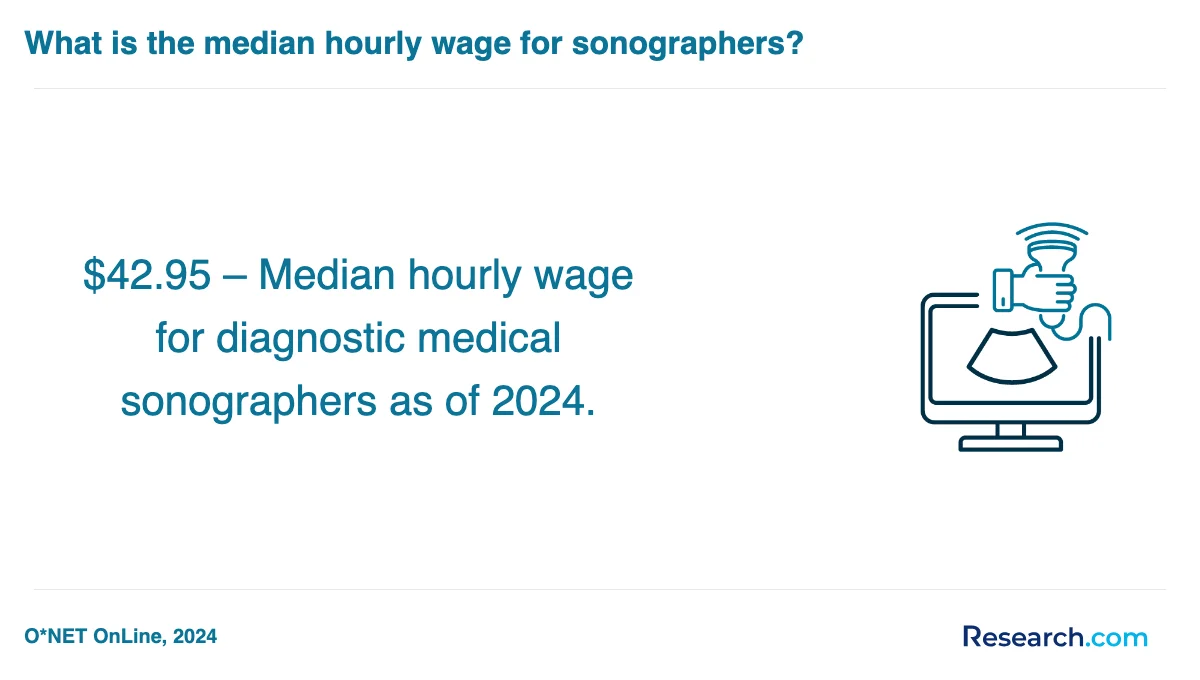
After finishing a medical sonographer trade school program in Connecticut, graduates often find themselves stepping into roles with promising pay. Many report starting at around $32 per hour, which feels rewarding after the hard work spent at well-known local schools. One graduate shared how, after completing their program, the average hourly wage of $38.55 allowed them to comfortably cover living expenses in Connecticut while gaining valuable experience.
As skills and certifications grow, so does the paycheck. Experienced sonographers can see wages climb to $41 or more per hour, sometimes even reaching $84 in specialized settings. Graduates working in hospitals or imaging centers often note how their weekly earnings of approximately $2,000 reflect both their dedication and the demand for their expertise.
These pay ranges demonstrate that investing time in a trade school here can lead to a fulfilling career with steady income, especially when paired with certifications or subspecialties like cardiac sonography. Many alumni feel proud knowing their training in Connecticut's respected programs directly translates to solid financial stability.
- Programs must be accredited by CAAHEP or JRC-DMS to qualify for national certification exams.
- Most associate degrees take 24 months of full-time study with no evening, weekend, or online classes.
- Applicants need prerequisite courses like English, algebra or statistics, physics, and biology, and may face interviews and exams.
- Total program costs range from $12,000 to $20,000, including tuition, fees, and supplies.
- Graduates can take ARDMS or ARRT certification exams 60 days before graduation.
- Starting salaries in Connecticut range from $65,000 to $75,000, with experienced sonographers earning over $90,000 annually.
Completing a medical sonographer trade school program in Connecticut typically takes about 18 to 24 months. Graduates often recall the balance between intensive hands-on training and classroom learning that these programs offer. For example, those attending well-known Connecticut trade schools find the schedule demanding but rewarding, appreciating how quickly they move from theory to practicing ultrasound techniques in real clinical settings.
Many students reflect on the supportive environment that helps them stay motivated through the roughly two-year journey. They often share stories of early mornings and late evenings spent mastering sonography equipment, feeling a growing confidence with each completed module.
This timeframe allows students to gain sufficient experience to meet certification requirements while still entering the workforce relatively quickly. The focused curriculum in Connecticut's trade schools ensures that graduates leave prepared, both technically and emotionally, for careers helping patients through diagnostic imaging.
The key difference between online and on-campus medical sonographer trade school programs in Connecticut lies in how instruction and clinical training are delivered. Graduates from programs like Connecticut State Community College often reflect on the immersive experience of attending full-time, daytime classes, where every lecture, lab, and clinical rotation demands their physical presence. They appreciate the immediate feedback from instructors during hands-on scanning practicums and the structured clinical assignments across local hospitals, which build confidence and technical skill in real time.
In contrast, students enrolled in hybrid programs at private schools such as AIHT Education share that while some theory classes can be completed online, the essential lab and clinical work must be done in person. This balance offers flexibility without sacrificing the tactile learning critical to sonography. Many recall the challenge and reward of commuting to clinical sites after online lectures, valuing the opportunity to apply knowledge directly under supervision.
For those in Connecticut, the experience of physically engaging with patients and equipment in on-campus or hybrid settings feels indispensable, nurturing both competence and a deep sense of readiness for professional practice.
The average tuition fees for sonography programs in Connecticut typically hover around $36,248, though students should also prepare for additional expenses such as books and supplies, which can average about $1,750. Graduates from well-regarded trade schools in Connecticut often mention the balance between program length and cost as a key factor in their decision-making process. For example, a program at a Stratford-based institute offers tuition around $34,500 with a 24-month completion time, allowing students to build their skills steadily while managing expenses. Conversely, another popular school in West Hartford charges about $37,995 but compresses the training into 18 months, appealing to those eager to enter the workforce sooner while handling a slightly higher tuition cost.
Many students find themselves reflecting on how understanding the full cost of diagnostic medical sonography education in Connecticut was essential to planning their journey effectively. Beyond tuition, practical costs like living expenses and transportation come into play, making it vital for prospective sonographers to explore all avenues of support. Scholarships, grants, and loans often ease the financial burden, helping students focus on mastering material and clinical training. Experiencing firsthand the encouraging atmosphere within these programs, graduates frequently highlight how educational quality and strong accreditation foster confidence and open doors to employment.
Those researching options often compare programs not only by cost but by curriculum rigor and clinical opportunities, knowing these elements heavily influence career readiness. For a clear guide on navigating requirements, students interested in understanding more about the pathway can explore resources on ultrasound technicians education requirements. Embracing such insights helps ensure that the investment in sonography training in Connecticut aligns with both personal goals and professional success.
Many medical sonographer students in Connecticut find financial aid to be a vital support during their studies at trade schools like the Connecticut State Community College system. Federal student aid, especially the Federal Pell Grant, often eases the burden by providing up to $6,895 annually for those with financial need. Graduates recall how completing the FAFSA opened doors to this essential funding, making tuition and books more manageable.
Beyond federal grants, state scholarships offer targeted relief. For instance, Hispanic students pursuing sonography appreciate the $1,000 Connecticut Association of Latinos in Higher Education Scholarship, which rewards academic dedication and residency. Others have benefited from the Healy Foundation Scholarship, which acknowledges unexpected hardships with $3,000 awards, a meaningful gesture for those balancing education with personal challenges.
Trade school financial aid offices frequently guide students through loans, payment plans, and specialized scholarships tied to CAAHEP-accredited Diagnostic Medical Sonography programs. These resources often help cover extra expenses like uniforms and certification fees, lifting stress and allowing students to focus on mastering sonography skills.
Enrolling in a medical sonographer trade school program in Connecticut typically requires a solid foundation that prepares students for the technical and compassionate nature of this healthcare field. Most trade schools in Connecticut expect applicants to have completed a high school diploma or GED, ensuring they possess basic academic skills. Graduates often reflect on how this prerequisite gave them confidence to tackle anatomy, physiology, and physics courses essential to sonography.
Additionally, many programs ask for prerequisites such as:
- Completion of coursework in biology, chemistry, and algebra to build critical thinking skills
- Proof of immunizations and a background check, highlighting the responsibility needed for patient safety
- Sometimes, healthcare experience or volunteering is encouraged to cultivate empathy and bedside manner
Students from popular Connecticut trade schools often share how meeting these prerequisites made them feel prepared and motivated. One graduate described their early science classes as eye-opening, turning curiosity into passion. Another valued prior volunteer work, which made clinical rotations less intimidating. These real experiences reveal how prerequisites in Connecticut's sonographer programs are thoughtfully designed to support both skill development and emotional readiness.
Medical sonographer trade school programs in Connecticut provide a well-rounded curriculum that blends science, technical knowledge, and hands-on clinical training. Graduates often recall the challenge and satisfaction of mastering core science courses like Anatomy and Physiology, General Physics, and College-level Math, which build a solid foundation for understanding the human body and ultrasound technology.
The technical courses are where students truly connect theory with practice. Common classes include:
- Ultrasound Physics - exploring sound wave behavior and tissue interaction
- Introduction to Sonography - offering a comprehensive overview of the profession
- Abdominal, OB/GYN, and Vascular Sonography - specialized imaging techniques essential for diverse clinical applications
One graduate from a popular Connecticut trade school described how clinical practicums at local hospitals transformed their learning experience, turning classroom concepts into real patient care skills. These practicums, often integrated throughout a 24-month full-time study schedule, provide invaluable exposure to operating ultrasound equipment and performing diagnostic exams under expert supervision.
Additionally, professional development courses in medical ethics, cultural diversity, and patient care foster confidence and compassion, preparing students to thrive in Connecticut's diverse healthcare settings.
Medical sonographer trade school programs in Connecticut offer a broad range of specializations that prepare students for specialized diagnostic roles. Common areas include:
- General Sonography
- Vascular Sonography
- Cardiac Sonography
- Obstetric and Gynecologic Sonography
- Pediatric Sonography
- Musculoskeletal Sonography
Graduates from these programs often describe how the focused curriculum in Connecticut ultrasound technician training programs boosted their confidence and skill set. For example, Gateway Community College's Associate of Science degree covers abdominal, obstetric, gynecologic, and vascular sonography in depth, allowing students to engage with hands-on clinical experiences that feel both challenging and rewarding.
Similarly, Yale-New Haven Hospital's certificate programs deepen expertise in General Sonography and Adult Echocardiography, among others, helping students feel well-prepared for real-world healthcare settings where adaptability is key. These medical sonography specializations in Connecticut align well with the diverse needs of local hospitals and clinics.
Many students find themselves excited by the unique career paths each specialization opens. If you're wondering what jobs can i get with an associate's degree in radiology, these trade schools provide clear pathways to fulfilling roles in the field. This focused training helps graduates step confidently into their roles, knowing they've developed practical skills that matter.
Choosing the best accredited sonography programs in Connecticut means prioritizing accreditation from CAAHEP, as graduates consistently report feeling confident their education meets national standards and opens doors for certification exams. For example, those attending the Connecticut State Community College - Gateway Campus emphasize how the structured 24-month full-time day program prepared them well, while graduates from Yale New Haven Hospital appreciate the intensive 13-month certificate's focus on clinical skills.
Compare Connecticut sonographer trade school costs carefully, but also factor in the program's format and clinical opportunities. Graduates often mention the value of hands-on training across various clinical sites throughout the state, even though managing transportation is a personal challenge. Some students find hybrid options, like those at AIHT Education, offer a good balance of flexibility and rigor.
Finally, be sure to explore prerequisites and admission requirements thoroughly, as many successful students recommend exceeding minimum standards to stand out in competitive admissions. Those seeking alternatives might consider two year programs in medical field for similarly efficient pathways to certification and employment.
Graduates from medical sonographer trade school programs in Connecticut often find themselves stepping into vital roles across hospitals, outpatient clinics, and medical offices, where their ultrasound imaging skills directly impact patient care. Many who complete programs at well-regarded institutions like CT State Community College recall how clinical training prepared them to confidently assist physicians in diagnosis. These graduates typically pursue opportunities reflecting the diverse nature of medical sonographer job opportunities in Connecticut.
Some choose to specialize in diagnostic medical sonography specialties in Connecticut, focusing on areas such as obstetric and gynecological, abdominal, vascular, cardiac, or musculoskeletal sonography. Specialization not only deepens their expertise but also often leads to more competitive roles and stable career paths. Beyond clinical work, experienced sonographers might explore positions as travel ultrasound technologists, department managers, or clinical instructors, where leadership and flexibility bring personal fulfillment.
For those exploring educational options, there are numerous programs available, including best online associate in sonography programs, which can further enhance career mobility and specialization opportunities.
The job outlook for medical sonographers in Connecticut reflects a healthy and growing demand that benefits recent trade school graduates. Many recent graduates from popular Connecticut trade schools report finding rewarding opportunities within months of completing their training. These roles range from busy hospital settings in Hartford to outpatient clinics in suburban New Haven, where sonographers work alongside experienced professionals interpreting critical diagnostic images. The state's network of healthcare facilities consistently posts over 100 openings for sonography positions, signaling strong regional employment prospects.
Connecticut's medical sonographer salary Connecticut is notably competitive, with average earnings around $104,711 annually and hourly rates near $50.34. Entry-level sonographers often start near $42,849 but quickly advance through skill acquisition and certification. Graduates appreciate the financial stability that comes with certification and specialization, encouraging many to continue advancing their credentials.
Graduate experiences commonly highlight key factors for success:
- Hands-on training from well-regarded programs that simulate real clinical settings
- Strong connections between schools and local healthcare employers
- The steady increase in healthcare facility expansions and aging populations boosting demand
Those exploring career paths can explore the top schools for ultrasound technician to understand which Connecticut programs provide the most effective preparation for this promising field.
Most Affordable Diagnostic Medical Sonographer Schools & Training - Budget-Friendly Sonography Trade Programs in Connecticut for 2026
# 1 position
Connecticut State Community College - Diagnostic Medical Sonography/Sonographer and Ultrasound Technician.
associateThe Diagnostic Medical Sonography/Sonographer and Ultrasound Technician program at Connecticut State Community College offers a hybrid format with some distance-education options. The curriculum trains students to operate ultrasound equipment and analyze sonographic data under physician supervision. Topics include patient care, data integration, and professional ethics. The program is accredited by the New England Commission on Higher Education. Annual in-state tuition is $5,092, and median earnings one year after completion reach $65,724.
# 2 position
American Institute of Healthcare & Technology - Diagnostic Medical Sonography/Sonographer and Ultrasound Technician.
certificate or diplomaThe Diagnostic Medical Sonography/Sonographer and Ultrasound Technician program at the American Institute of Healthcare & Technology offers a hybrid format with some distance-education options. It prepares students to use medical ultrasound techniques under physician supervision to diagnose various conditions. The curriculum includes patient care, data recording, sonographic processing, and professional ethics. The program is accredited by the Middle States Commission on Secondary Education.
# 3 position
University of Hartford - Diagnostic Medical Sonography/Sonographer and Ultrasound Technician.
certificate or diplomaThe University of Hartford offers a Diagnostic Medical Sonography/Sonographer and Ultrasound Technician program with a hybrid format, including some distance education. The program trains students to use medical ultrasound techniques for diagnosing various conditions, emphasizing patient care, data processing, and professional ethics. Annual in-state tuition is $47,647. The program is accredited by the New England Commission on Higher Education.
Frequently Asked Questions about medical sonographer
After completing a medical sonographer trade school in Connecticut, preparing for the job market involves several key steps. First, obtaining professional certification, such as the American Registry for Diagnostic Medical Sonography (ARDMS) credential, is crucial. Certification enhances employability and is often required by healthcare employers in Connecticut.
Networking with local hospitals and clinics can open job opportunities. Connecticut's healthcare sector is growing, with the Bureau of Labor Statistics projecting a 17% increase in diagnostic medical sonographer jobs nationwide through 2031.
Additionally, gaining hands-on experience through internships or clinical rotations during training is essential for building practical skills and confidence.
Finally, staying informed about Connecticut's specific licensing requirements and job market trends supports a successful transition to employment.
Employers in Connecticut seek medical sonographer graduates who demonstrate strong technical skills, including proficiency with ultrasound equipment and imaging software. According to the Bureau of Labor Statistics, accuracy in capturing diagnostic images is critical, as errors can affect patient outcomes.
Communication skills are also highly valued. Graduates must effectively explain procedures to patients and collaborate with healthcare teams. The Connecticut Department of Labor highlights that employers prioritize candidates who show professionalism and empathy in patient care.
Additionally, knowledge of anatomy, physiology, and medical terminology is essential. Employers prefer graduates who complete accredited programs, as these schools ensure comprehensive training aligned with industry standards set by the American Registry for Diagnostic Medical Sonography (ARDMS).
Finding internships relevant to medical sonographer trade school programs in Connecticut involves several practical steps. Start by consulting the career services office at your trade school, as many programs have established partnerships with local hospitals and imaging centers. Connecticut's healthcare system includes major providers like Yale New Haven Health and Hartford HealthCare, which often offer clinical internship opportunities.
Additionally, explore listings on statewide job boards such as the Connecticut Department of Labor's website, which sometimes posts medical imaging internships. Networking through professional organizations like the Society of Diagnostic Medical Sonography (SDMS) Connecticut chapter can also provide leads and mentorship.
Because clinical experience is a mandatory part of most accredited sonography programs, schools typically assist students in securing internships that comply with accreditation standards.
A diploma from a medical sonographer trade school in Connecticut significantly enhances career mobility and advancement opportunities in the state's healthcare sector. Graduates gain specialized skills required to operate ultrasound equipment, making them eligible for entry-level positions in hospitals, clinics, and diagnostic centers. According to the U.S. Bureau of Labor Statistics, Connecticut's employment of diagnostic medical sonographers is projected to grow by 17% through 2030, well above the national average.
Completing an accredited program is essential, as it often leads to certification eligibility through the American Registry for Diagnostic Medical Sonography (ARDMS), a key credential favored by Connecticut employers. Certified sonographers typically earn higher salaries and have better chances for promotion.
Additionally, the state's healthcare facilities value hands-on training provided by trade schools, which improves practical competence and adaptability. This combination of formal education and certification boosts graduates' prospects for upward mobility within Connecticut's competitive healthcare job market.
Students enrolled in medical sonographer trade schools in Connecticut can benefit from part-time jobs that provide hands-on experience and complement their education. Positions such as ultrasound technician assistant or medical imaging aide are common. These roles often involve supporting licensed sonographers with patient preparation and equipment maintenance, helping students apply theoretical knowledge.
The Connecticut Department of Labor notes that healthcare support roles in the state are projected to grow by 10% through 2028, which improves job availability for students. Additionally, some outpatient clinics and hospitals in Connecticut offer part-time internships or externships specifically designed for sonography students, providing valuable clinical exposure.
Working in these roles not only enhances practical skills but also strengthens resumes, improving employability after graduation.
To find the most affordable Medical Sonographer degree program "near me" in Connecticut, consider exploring community colleges and technical institutions, which often offer competitive tuition rates. Researching programs "near Connecticut" using resources like Research.com can help identify budget-friendly options. Additionally, contacting local universities can provide insights into available financial aid, scholarships, and grants to further reduce educational costs.
- Most Affordable Diagnostic Medical Sonographer Schools & Training - Budget-Friendly Sonography Trade Programs in New York for 2026
- Most Affordable Diagnostic Medical Sonographer Schools & Training - Budget-Friendly Sonography Trade Programs in Massachusetts for 2026
- Most Affordable Diagnostic Medical Sonographer Schools & Training - Budget-Friendly Sonography Trade Programs in Pennsylvania for 2026
- Most Affordable Diagnostic Medical Sonographer Schools & Training - Budget-Friendly Sonography Trade Programs in Maryland for 2026
- Most Affordable Diagnostic Medical Sonographer Schools & Training - Budget-Friendly Sonography Trade Programs in Maine for 2026
- Most Affordable Diagnostic Medical Sonographer Schools & Training - Budget-Friendly Sonography Trade Programs in Ohio for 2026
- Most Affordable Diagnostic Medical Sonographer Schools & Training - Budget-Friendly Sonography Trade Programs in West Virginia for 2026
- Most Affordable Diagnostic Medical Sonographer Schools & Training - Budget-Friendly Sonography Trade Programs in North Carolina for 2026
- Most Affordable Diagnostic Medical Sonographer Schools & Training - Budget-Friendly Sonography Trade Programs in South Carolina for 2026
- Most Affordable Diagnostic Medical Sonographer Schools & Training - Budget-Friendly Sonography Trade Programs in Indiana for 2026
- Ultrasound Technician Schools in Connecticut for 2024 https://www.ultrasoundschoolsinfo.com/connecticut/
- Diagnostic Medical Sonography - CT State https://ctstate.edu/programs/diagnostic-medical-sonography
- BS in Diagnostic Medical Sonography https://www.qu.edu/schools/health-sciences/programs/bachelors-degree/diagnostic-medical-sonography/
- Medical Sonography (Ultrasound) Program in NJ & CT - American Institute https://www.americaninstitute.edu/diagnostic-medical-sonography/
- Diagnostic Medical Sonography Programs - AIHT Education https://aiht.edu/programs/diagnostic-medical-sonography/
- Diagnostic Medical Sonography https://gatewayct.edu/dms
- How to Become a Medical Sonographer in Connecticut (2024) | Dreambound https://dreambound.com/blog/how-to-become-a-medical-sonographer-in-connecticut
- profile icon https://www.niche.com/colleges/search/best-colleges-with-sonographer-and-ultrasound-technician/s/connecticut/
- Sonographer Salary and Job Opportunities: Is It Worth It? | Ultrasound Technician, Diagnostic Medical Sonography, Bachelor and Associate Programs - Los Angeles, Glendale, Pasadena https://amsc.edu/sonographer-salary-and-job-opportunities-is-it-worth-it/
- Diagnostic Medical Sonographers and Cardiovascular Technologists and Technicians : Occupational Outlook Handbook: : U.S. Bureau of Labor Statistics https://www.bls.gov/ooh/healthcare/diagnostic-medical-sonographers.htm