
Most Affordable Diagnostic Medical Sonographer Schools & Training - Budget-Friendly Sonography Trade Programs in North Carolina for 2026

Co-Founder and Chief Data Scientist
Choosing the right medical sonographer trade school in North Carolina can be overwhelming. This article introduces a carefully crafted ranking of medical sonographer trade school programs, developed by the Research.com team of data scientists.
It is designed to help you make an informed decision about which programs offer the best opportunities and value. Earning a diploma or certification in this field can open doors to a rewarding healthcare career with growing demand.
Explore your options confidently and take a meaningful step toward a fulfilling future.
Key benefits of finishing medical sonographer trade school in North Carolina
- Graduates from medical sonographer trade schools in North Carolina can expect an average salary around $75,000 per year, with entry-level positions starting near $60,000 and experienced sonographers earning up to $90,000.
- A graduate from a popular North Carolina trade school may pursue diverse career paths, including specialized roles like vascular or travel ultrasound technologists, which offer higher earning potential and exciting work environments.
- Completing a medical sonographer trade school online provides flexibility for busy students, allowing them to balance work and study while gaining skills through practical training, as many online graduates report positive career outcomes and job readiness.
- Most Affordable Diagnostic Medical Sonographer Schools & Training - Budget-Friendly Sonography Trade Programs in North Carolina for 2026
- What can I expect from medical sonographer trade schools in North Carolina?
- Where can I work after finishing medical sonographer trade schools in North Carolina?
What can I expect from medical sonographer trade schools in North Carolina?
Students enrolling in medical sonographer trade school programs in North Carolina can expect a comprehensive curriculum that blends classroom learning with hands-on clinical experience. Graduates from well-regarded programs like Wake Tech and Forsyth Tech often describe their studies as immersive, covering essential subjects such as anatomy, ultrasound physics, and patient care. These programs typically last around 21 months, providing a focused yet thorough pathway to competency.
Clinical rotations at local hospitals and clinics are a cornerstone of the training, allowing students to apply their knowledge in real healthcare settings. Many recall the challenge and excitement of working alongside experienced sonographers, gaining confidence by performing ultrasounds on diverse patients, including those with complex conditions. This practical experience is crucial for developing both technical skills and professional bedside manner.
Admission is competitive, requiring a strong foundation in biology and math, and often includes interviews or site visits. Completing an accredited program in North Carolina prepares students to sit for the ARDMS national certification exam, opening doors to rewarding careers in hospitals, clinics, and physician offices.
Where can I work after finishing medical sonographer trade schools in North Carolina?
After completing a medical sonographer trade school program in North Carolina, graduates find diverse employment opportunities across the state's healthcare landscape. Many join hospitals, working in radiology or imaging departments alongside physicians to create diagnostic images critical for patient care. Graduates from popular trade schools report feeling fulfilled contributing directly to patient diagnoses in these fast-paced environments.
Outpatient clinics are another common workplace. For example, sonographers trained at well-known North Carolina trade schools often work in cardiology or obstetrics clinics, performing detailed ultrasound exams and supporting minimally invasive procedures. These settings offer a collaborative atmosphere that many graduates appreciate for its blend of technical skill and patient interaction.
Private practices and specialty centers, such as OB/GYN or vascular surgery offices, also employ sonographers. Here, graduates enjoy roles involving equipment operation, patient preparation, and diagnostic reporting, often feeling a strong sense of purpose in supporting personalized patient care.
Diagnostic imaging centers focusing solely on sonography provide high-volume experiences, while advanced credentials open doors to mammography technologist positions. Across these roles, graduates highlight steady job availability and rewarding career paths throughout North Carolina.
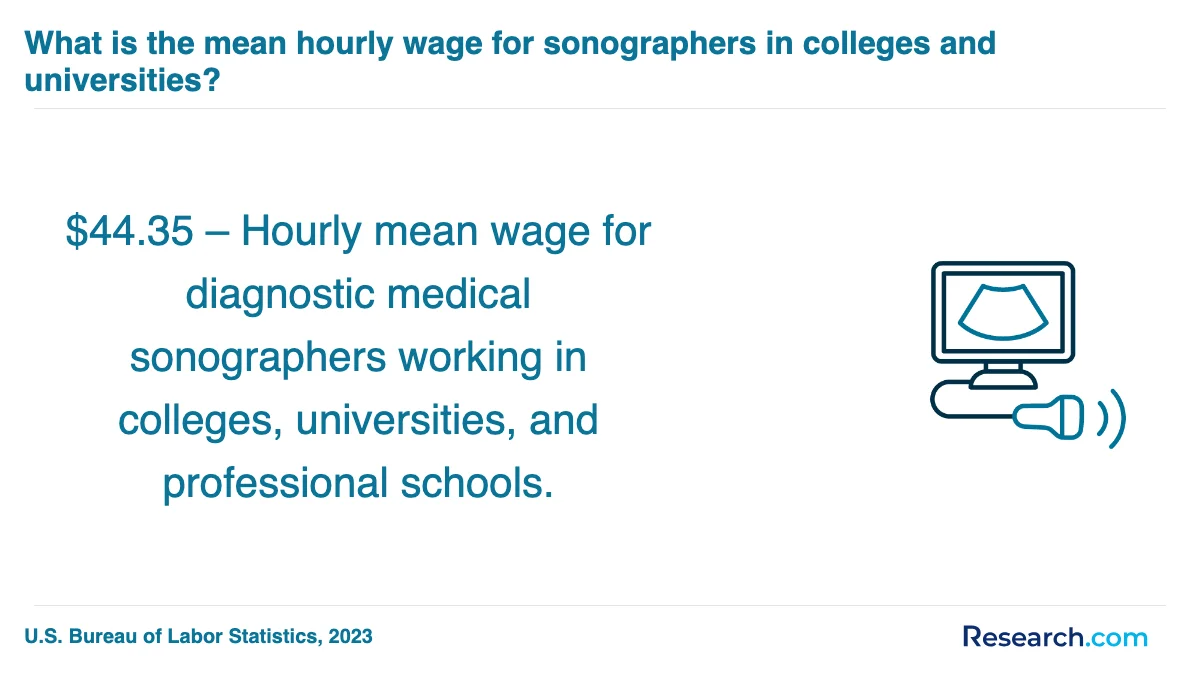
Graduates from medical sonographer trade schools in North Carolina can expect to earn an average hourly wage of about $36.83 starting out, which equates to roughly $76,606 annually for full-time work. Many new graduates from well-known programs in the state report starting salaries within the range of $30.58 to $39.33 per hour, depending on the city, employer, and any previous healthcare experience.
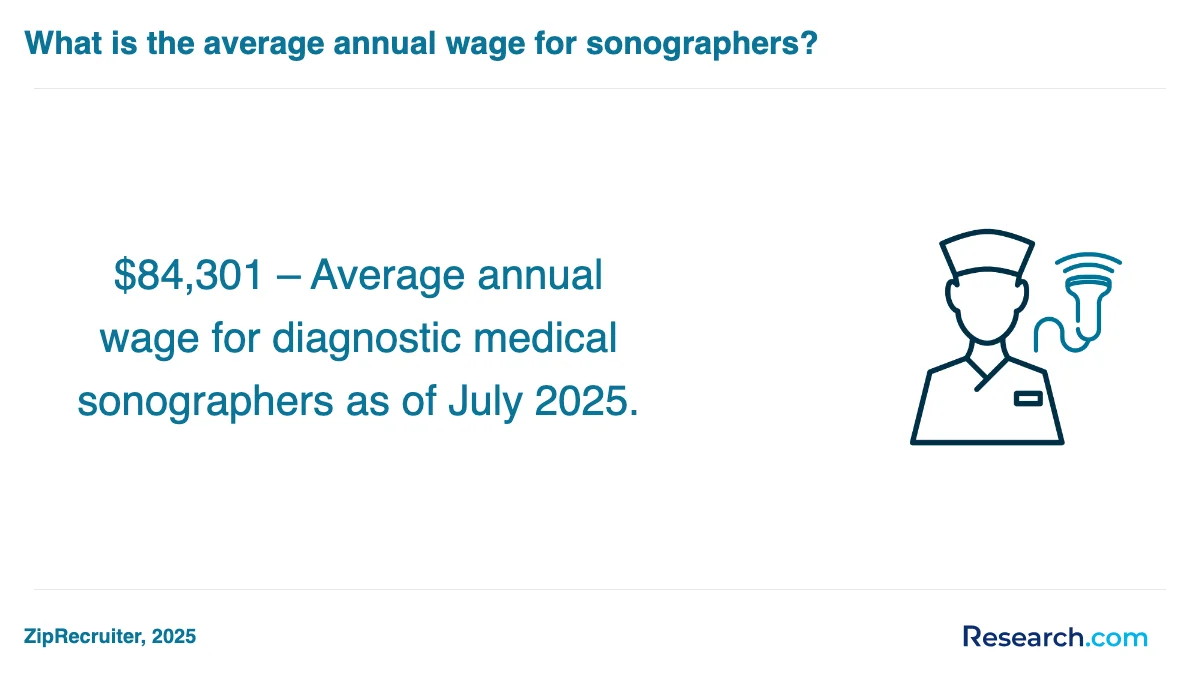
With experience and certification, these earnings can increase significantly. Registered diagnostic medical sonographers typically earn around $80,500 yearly, with many making between $71,000 and $90,100. Some specialized or highly experienced sonographers reach salaries close to $98,840 annually.
For example, graduates from popular North Carolina trade schools often find higher-paying opportunities in urban areas like Raleigh, where hourly wages average about $48.04. Despite a currently slow hiring market, many graduates feel optimistic about their financial future as skills and experience grow in this rewarding healthcare field.
- Admission to programs in North Carolina requires a high school diploma or GED, prerequisite courses in biology, math, and English, and passing scores on tests like the ATI TEAS.
- Programs typically lead to an Associate in Applied Science (A.A.S.) degree, taking about 21 months or five semesters to complete.
- Tuition usually ranges from $5,000 to $8,000 for in-state students, excluding additional costs for textbooks, uniforms, and clinical fees.
- Programs are accredited by CAAHEP, making graduates eligible for the ARDMS certification exam, which most employers require.
- Entry-level medical sonographers in North Carolina earn between $55,000 and $65,000 annually, with experienced professionals earning $70,000 or more.
Completing a medical sonographer trade school program in North Carolina typically takes about 18 to 24 months. Many trade schools in the state, known for their hands-on training and close industry connections, structure their programs to be intensive yet manageable for students balancing work or family commitments. Graduates often describe the experience as challenging but rewarding, emphasizing how the focused curriculum allowed them to quickly gain the essential skills needed to enter the workforce.
For example, students at popular North Carolina trade schools report that the blend of classroom instruction and clinical practice is designed to build confidence early on, making the transition to real-world sonography smoother. One graduate shared how completing the program within two years gave them a sense of accomplishment and readiness to start their career without unnecessary delay.
These programs often include flexible scheduling options, which is a big plus for those who need to work while studying. The relatively short completion time compared to traditional four-year degrees is a major benefit cited by students eager to begin their professional journey in diagnostic medical sonography.
The key difference between online and on-campus medical sonographer trade school programs in North Carolina lies in how instruction and clinical training are delivered. Graduates from on-campus programs at schools like Wake Tech or Fayetteville Technical Community College often describe their experiences as immersive and hands-on, with direct access to instructors and real patients during clinical rotations. This in-person approach builds confidence through immediate feedback and practical skill development in authentic medical settings.
In contrast, online options are extremely limited due to strict accreditation requirements by CAAHEP, which mandate supervised clinical training that cannot be fully replicated remotely. Students interested in online study usually find that only theoretical courses, such as ultrasound physics, may be completed virtually. However, the essential clinical hours must be fulfilled on-site at approved medical facilities, making fully online completion impossible as of 2025.
Many graduates emphasize that the on-campus environment fosters a supportive community and hands-on learning critical to mastering sonography. While online coursework offers flexibility for prerequisites, the core clinical experience remains irreplaceable and vital for certification pathways like ARDMS.
The average tuition for medical sonography programs in North Carolina varies depending on the institution and residency status. For in-state students, the cost typically ranges from around $2,000 to $10,000. For example, graduates from South Piedmont Community College have reported paying approximately $2,022 in tuition, reflecting an affordable entry into the field. Meanwhile, Wake Technical Community College's in-state program tuition is about $5,700 for their 75-hour sonography program, illustrating a moderate investment for comprehensive training.
Many students appreciate the balance between cost and quality at community colleges like Central Carolina Community College and Asheville-Buncombe Technical Community College, where in-state tuition is roughly $9,912 and $9,026 respectively. These graduates often share positive experiences about gaining hands-on skills in a supportive learning environment without accruing overwhelming debt.
The cost of medical sonography associate degrees in North Carolina also includes additional expenses such as textbooks, uniforms, and background checks, which students find manageable within their budgets. Forsyth Technical Community College reports an average net price near $4,831, making it another popular choice for affordable education.
Prospective students looking for medical degrees 2 years or less in duration can explore these programs with confidence, knowing the costs align realistically with career goals. Thoroughly researching each school's official site and considering personal financial planning ensures readiness for this promising healthcare pathway.
Medical sonographer trade school students in North Carolina often rely on a variety of financial aid options to manage tuition and related costs. Federal aid programs like the Pell Grant, which can award up to $6,895 annually, provide critical need-based support without requiring repayment. Graduates from well-known community colleges in North Carolina recall applying through FAFSA to access these funds, making their education more affordable and less stressful.
Some students also benefit from the Federal Supplemental Educational Opportunity Grant (FSEOG), though availability depends on the school's participation. State aid programs offer additional assistance, including need-based grants and merit scholarships targeted at in-state learners. Several community colleges with CAAHEP-accredited sonography programs, such as those in the Triangle region, provide institutional scholarships that helped students cover supplies and certification exam fees.
Professional organizations like the Society of Diagnostic Medical Sonography and employer tuition reimbursement programs further ease financial burdens. Many students express relief knowing these layered resources exist, allowing them to focus on mastering sonography skills rather than worrying about debt.
To enroll in a medical sonographer trade school program in North Carolina, students must typically meet several key prerequisites designed to ensure readiness for this specialized healthcare field. Most trade schools require applicants to have a high school diploma or GED, demonstrating foundational knowledge essential for advanced study.
Beyond academic qualifications, schools often expect students to have completed coursework in biology, anatomy, and sometimes physics, reflecting the technical nature of sonography. For example, graduates from popular North Carolina trade schools recount how strong backgrounds in science helped them quickly grasp ultrasound technology during hands-on training.
Many programs also require students to pass a background check and meet health and immunization standards to ensure patient safety during clinical rotations. Additionally, some students share that completing a basic healthcare provider CPR certification before starting the program was a prerequisite, which boosted their confidence in clinical environments.
Common prerequisites include:
- High school diploma or GED
- Completion of science courses such as biology and anatomy
- CPR certification
- Background check clearance
- Health and immunization records
These requirements prepare students for the rigorous curriculum and meaningful patient interactions typical at North Carolina's well-regarded medical sonographer trade schools, contributing to a rewarding educational experience.

Medical sonographer trade school programs in North Carolina typically include a well-rounded curriculum designed to equip students with both theoretical knowledge and practical skills. Graduates from institutions like Wake Technical Community College and Central Carolina Community College recall intensive coursework that prepared them for real clinical environments.
Core courses generally include:
- Sonographic Physics and Instrumentation: Understanding how ultrasound technology works and how to produce clear diagnostic images.
- Sectional and Cross-Sectional Anatomy: Learning to identify anatomical structures on sonograms, essential for accurate diagnosis.
- Pathology and Physiology: Studying disease processes and their sonographic appearances to recognize abnormalities confidently.
- Abdominal Sonography: Focusing on scanning techniques for organs like the liver and kidneys, a highlight for many students eager to apply hands-on skills.
- Obstetrical and Gynecological Sonography: Covering fetal development and women's health, this course resonates deeply with students passionate about maternal care.
- Vascular Sonography (Introductory): Introducing blood flow imaging, sparking interest for those considering further specialization.
- Patient Care and Professional Practice: Emphasizing ethical patient interaction and clinical safety, preparing students for compassionate, professional roles.
These courses are reinforced by clinical rotations in local hospitals and clinics, where students gain invaluable hands-on experience, often including challenging night and weekend shifts. This combination ensures graduates feel confident and ready to enter the workforce as skilled diagnostic medical sonographers in North Carolina.
Medical sonographer trade school programs in North Carolina typically offer several focused paths, catering to the state's healthcare demands. The main specializations include abdominal and obstetric sonography programs North Carolina students commonly pursue, which train graduates to skillfully image organs like the liver, kidneys, and gallbladder, or monitor fetal development and female reproductive health. Schools such as Wake Tech and Pitt Community College provide comprehensive hands-on training that many students find rewarding and confidence-building as they practice real-world scanning techniques in clinical rotations.
Additionally, vascular sonography is available at some programs like Robeson Community College as an introductory specialty, preparing students to diagnose conditions involving blood flow and vessel health. Graduates often highlight the advantage of exposure to diverse imaging technologies and patient scenarios, which enhances their readiness for the ARDMS certification exams.
The best programs balance rigorous coursework with clinical experience, fostering skills that lead to successful employment. Students interested in exploring career pathways can refer to the list of careers in radiology to better understand opportunities beyond sonography.
Choosing the best medical sonographer trade school program in North Carolina involves evaluating accreditation, specialization options, and clinical training opportunities. Graduates from Wake Technical Community College praise its CAAHEP accreditation, which enables them to confidently sit for ARDMS certification exams. Programs like those at Johnston Community College, offering specializations in cardiac and vascular sonography alongside general sonography, help students align studies with career goals. Affordable sonography schools in North Carolina, such as Forsyth Technical Community College, provide valuable hands-on experience through partnerships with local healthcare facilities, offering a real-world setting that graduates describe as essential for skill-building.
Additionally, consider program length and structure to fit your lifestyle; most associate degree programs take about two years. Financial factors are crucial-graduates often highlight the manageable average net price of $4,831 at Forsyth Technical. Employment outcomes strengthen a program's reputation, with many grads reporting strong job placement thanks to established healthcare connections. For more detailed rankings and options, prospective students can review the best ultrasound technician schools online.
Graduates of medical sonographer trade school programs in North Carolina have access to diverse sonography career opportunities in North Carolina. Many find rewarding roles in hospitals, collaborating closely with physicians in departments such as obstetrics, vascular imaging, and emergency medicine. These dynamic environments provide hands-on experience with cutting-edge ultrasound technology and the satisfaction of impacting patient care directly.
Others pursue medical sonographer jobs in North Carolina within outpatient clinics, physician offices, or medical laboratories where schedules tend to be more predictable. Mobile imaging services also offer unique chances to bring crucial diagnostics to rural communities, expanding healthcare access.
Popular trade schools in the state prepare graduates for specialty areas like cardiology or maternal-fetal medicine, while some become instructors, sharing their knowledge with future sonographers. Many graduates describe their training as empowering and practical, enabling smooth transitions to professional roles.
For those seeking flexible learning, options include online school ultrasound technician programs that support balancing study with work.
The job market for medical sonographer trade school graduates in North Carolina is notably strong, with over 300 positions currently available statewide. Graduates from well-known programs like Gaston College often find themselves quickly employed in diverse settings such as hospitals, outpatient imaging centers, and specialized clinics. This positive outlook reflects the broader medical sonographer job outlook North Carolina professionals experience, driven by an aging population and advancements in imaging technology.
Many graduates share stories of smooth transitions into careers, supported by the partnerships their schools maintain with local healthcare providers. Employers prioritize candidates with certification and practical skills, which trade schools emphasize rigorously.
- Competitive wages around $35 per hour for staff positions
- Steady demand across multiple healthcare environments
- Strong certification and job placement support from schools
For students exploring options, considering a diagnostic medical sonography program in North Carolina can greatly enhance employment prospects and provide access to a thriving job market characterized by positive diagnostic medical sonographer employment trends North Carolina-wide.
Most Affordable Diagnostic Medical Sonographer Schools & Training - Budget-Friendly Sonography Trade Programs in North Carolina for 2026
# 1 position
Forsyth Technical Community College - Diagnostic Medical Sonography/Sonographer and Ultrasound Technician.
associateForsyth Technical Community College offers a Diagnostic Medical Sonography/Sonographer and Ultrasound Technician program with a hybrid format, including some distance education. The program trains students to use medical ultrasound techniques for diagnosing various conditions under physician supervision. Tuition for in-state students is $2,256 annually. Graduates have median earnings of $54,726 one year after completion. The program is accredited by the Southern Association of Colleges and Schools Commission on Colleges.
# 2 position
Johnston Community College - Diagnostic Medical Sonography/Sonographer and Ultrasound Technician.
associateJohnston Community College offers a Diagnostic Medical Sonography/Sonographer and Ultrasound Technician program with a hybrid format that includes some distance education. The program trains students to use ultrasound technology under physician supervision to collect and analyze sonographic data for diagnosing various conditions. It covers patient care, data processing, equipment operation, and professional ethics. Annual in-state tuition is $2,657, and median earnings one year after completion are $52,281. The program is accredited by the Southern Association of Colleges and Schools Commission on Colleges.
# 3 position
Johnston Community College - Mammography Technology/Technician.
certificate or diplomaThe Mammography Technology/Technician program at Johnston Community College prepares registered radiographers to become registered mammographers. It includes instruction in anatomy and physiology, mammography instrumentation, positioning, principles, procedures, and quality assurance. The hybrid program features some distance-education options. Annual in-state tuition is $2,657. Graduates have median earnings of $52,281 one year after completion. The program is accredited by the Southern Association of Colleges and Schools Commission on Colleges.
# 4 position
Caldwell Community College and Technical Institute - Diagnostic Medical Sonography/Sonographer and Ultrasound Technician.
associateThe Diagnostic Medical Sonography/Sonographer and Ultrasound Technician program at Caldwell Community College and Technical Institute offers a hybrid format with some distance education options. It prepares students to use ultrasound techniques for diagnosing medical conditions under physician supervision. The program includes training in patient care, data processing, and professional ethics. Annual in-state tuition is $2,537. Graduates earn a median salary of $52,283 one year after completion. The program is accredited by the Southern Association of Colleges and Schools Commission on Colleges.
# 5 position
Cape Fear Community College - Diagnostic Medical Sonography/Sonographer and Ultrasound Technician.
associateCape Fear Community College offers a Diagnostic Medical Sonography/Sonographer and Ultrasound Technician program with a hybrid format that includes some distance education. The program prepares students to use ultrasound techniques for diagnosing medical conditions under physician supervision, covering patient care, data recording, and equipment operation. Annual in-state tuition is $2,748. Graduates have median earnings of $42,061 one year after completion. The program is accredited by the Southern Association of Colleges and Schools Commission on Colleges.
# 6 position
Wake Technical Community College - Diagnostic Medical Sonography/Sonographer and Ultrasound Technician.
associateWake Technical Community College offers a hybrid program in Diagnostic Medical Sonography/Sonographer and Ultrasound Technician, preparing students to perform medical ultrasound techniques under physician supervision. The curriculum covers patient care, sonographic data collection and processing, equipment operation, and professional ethics. Annual in-state tuition is $2,336. Graduates have a median earning of $51,707 one year after completion. The program is accredited by the Southern Association of Colleges and Schools Commission on Colleges.
# 7 position
Wake Technical Community College - Mammography Technology/Technician.
certificate or diplomaWake Technical Community College offers a hybrid Mammography Technology/Technician program designed to prepare registered radiographers to become registered mammographers. The curriculum covers anatomy and physiology, mammography instrumentation, positioning, procedures, and quality assurance. The program’s annual in-state tuition is $2,336. Graduates have median earnings of $51,707 one year after completion. It is accredited by the Southern Association of Colleges and Schools Commission on Colleges.
# 8 position
Fayetteville Technical Community College - Diagnostic Medical Sonography/Sonographer and Ultrasound Technician.
associateThe Diagnostic Medical Sonography program at Fayetteville Technical Community College prepares students to use ultrasound techniques for medical diagnosis under physician supervision. The hybrid program includes instruction on patient care, sonographic data collection, and equipment operation. Annual in-state tuition is $2,628. Graduates have median earnings of $50,872 one year after completion. The program is accredited by the Southern Association of Colleges and Schools Commission on Colleges.
# 9 position
Fayetteville Technical Community College - Mammography Technology/Technician.
certificate or diplomaThe Mammography Technology/Technician program at Fayetteville Technical Community College prepares registered radiographers to become registered mammographers. The hybrid program includes instruction in anatomy and physiology, mammography instrumentation, positioning, principles, procedures, and quality assurance. Annual in-state tuition costs $2,628. Graduates earn a median salary of $50,872 one year after completing the program. The program is accredited by the Southern Association of Colleges and Schools Commission on Colleges.
# 10 position
Pitt Community College - Diagnostic Medical Sonography/Sonographer and Ultrasound Technician.
associateThe Diagnostic Medical Sonography/Sonographer and Ultrasound Technician program at Pitt Community College prepares students to use medical ultrasound techniques for diagnosing various conditions. The hybrid program includes training in patient care, data recording, sonographic processing, and professional ethics. Annual in-state tuition is $1,972. Graduates earn a median salary of $62,908 one year after completion. The program is accredited by the Southern Association of Colleges and Schools Commission on Colleges.
Frequently Asked Questions about medical sonographer
After completing a medical sonographer trade school in North Carolina, preparing for the job market involves several key steps. First, obtaining certification through the American Registry for Diagnostic Medical Sonography (ARDMS) significantly improves employment prospects. North Carolina employers often prefer candidates with credentials in abdominal, obstetric, or vascular sonography.
Networking with local healthcare providers and attending job fairs can help graduates connect with potential employers. According to the North Carolina Department of Commerce, the demand for diagnostic medical sonographers is expected to grow by 17% from 2022 to 2032, indicating strong job opportunities.
Additionally, gaining hands-on experience through clinical internships offered by many trade schools is crucial for building practical skills and confidence.
Employers in North Carolina highly value medical sonographer graduates who demonstrate strong technical skills in operating ultrasound equipment accurately and safely. Proficiency in anatomy, physiology, and pathology is essential to produce clear diagnostic images. According to the Bureau of Labor Statistics, employers also seek candidates with strong communication skills to effectively interact with patients and healthcare teams.
Critical thinking and attention to detail are crucial, as sonographers must recognize abnormalities and ensure precise measurements. Familiarity with electronic health records (EHR) systems is increasingly important due to growing digital documentation requirements in North Carolina healthcare facilities.
Lastly, many employers prefer graduates who have completed accredited programs and obtained certification from the American Registry for Diagnostic Medical Sonography (ARDMS), which enhances job prospects within the state.
Finding internships in North Carolina relevant to medical sonographer trade school programs involves several strategic steps. Start by contacting the career services departments of accredited trade schools, as they often maintain partnerships with local hospitals and diagnostic imaging centers. The North Carolina Society of Radiologic Technologists (NCSRT) is a valuable resource, providing listings and networking opportunities for clinical placements.
Many internships are offered through hospitals such as Duke University Hospital and UNC Health, which are known to provide clinical training for sonography students. According to the Bureau of Labor Statistics, North Carolina's healthcare sector is growing, increasing internship availability. Additionally, students should verify that internships comply with the Commission on Accreditation of Allied Health Education Programs (CAAHEP) standards, ensuring quality clinical experience.
Obtaining a medical sonographer trade school diploma in North Carolina can significantly enhance career mobility and advancement opportunities. According to the U.S. Bureau of Labor Statistics (BLS), diagnostic medical sonographers in North Carolina earn a median annual wage of around $70,000, which is above the national average. Completing a diploma program provides the specialized skills needed to meet state certification requirements, often making graduates more competitive in the job market.
Employers in North Carolina's healthcare sector frequently prefer candidates with accredited trade diplomas, as these demonstrate practical expertise and readiness for clinical environments. Additionally, diploma holders may find smoother pathways to professional certifications such as the American Registry for Diagnostic Medical Sonography (ARDMS), which can further boost job prospects and salary potential.
Trade school diplomas also enable graduates to pursue roles in diverse settings, including hospitals, outpatient clinics, and private practices, thereby increasing career flexibility. The North Carolina Healthcare Workforce Data Project highlights that diploma holders experience faster employment placement rates compared to those without formal sonography training.
Students enrolled in medical sonographer trade schools in North Carolina can benefit from part-time jobs that offer relevant clinical experience. Positions such as ultrasound technician assistants or medical imaging aides in hospitals and outpatient clinics provide practical exposure to sonography equipment and patient care. According to the North Carolina Department of Commerce, healthcare support roles are expected to grow by 15% through 2030, making these opportunities more accessible.
Additionally, part-time work in medical offices or diagnostic labs helps students develop communication skills and familiarity with healthcare protocols. These roles often offer flexible hours that accommodate class schedules. Gaining hands-on experience while studying can improve job prospects after graduation and deepen understanding of sonographic procedures.
Yes, there are affordable Medical Sonographer degree programs available near North Carolina. Prospective students can find various community colleges and universities offering programs in diagnostic medical sonography or related fields, often featuring competitive tuition rates. For specific programs and to compare costs near me, resources like Research.com can offer insights into local educational opportunities and their affordability.
- Most Affordable Diagnostic Medical Sonographer Schools & Training - Budget-Friendly Sonography Trade Programs in South Carolina for 2026
- Most Affordable Diagnostic Medical Sonographer Schools & Training - Budget-Friendly Sonography Trade Programs in West Virginia for 2026
- Most Affordable Diagnostic Medical Sonographer Schools & Training - Budget-Friendly Sonography Trade Programs in Florida for 2026
- Most Affordable Diagnostic Medical Sonographer Schools & Training - Budget-Friendly Sonography Trade Programs in Maryland for 2026
- Most Affordable Diagnostic Medical Sonographer Schools & Training - Budget-Friendly Sonography Trade Programs in Alabama for 2026
- Most Affordable Diagnostic Medical Sonographer Schools & Training - Budget-Friendly Sonography Trade Programs in Pennsylvania for 2026
- Most Affordable Diagnostic Medical Sonographer Schools & Training - Budget-Friendly Sonography Trade Programs in Ohio for 2026
- Most Affordable Diagnostic Medical Sonographer Schools & Training - Budget-Friendly Sonography Trade Programs in Louisiana for 2026
- Most Affordable Diagnostic Medical Sonographer Schools & Training - Budget-Friendly Sonography Trade Programs in Indiana for 2026
- Most Affordable Diagnostic Medical Sonographer Schools & Training - Budget-Friendly Sonography Trade Programs in Missouri for 2026
- How to Become a Medical Sonographer in North Carolina (2024) | Dreambound https://dreambound.com/blog/how-to-become-a-medical-sonographer-in-north-carolina
- Medical Sonography | Wake Tech https://www.waketech.edu/programs-courses/credit/sonography
- Medical Sonography - Fayetteville Technical Community College https://www.faytechcc.edu/academics/healthcare-programs/medical-sonography/
- Medical Sonography - Forsyth Tech Community College https://www.forsythtech.edu/programs/medical-sonography/
- Diagnostic Medical Sonography Program | Greenville Technical College https://www.gvltec.edu/academics_learning/health-sciences/diagnostic_medical_sonography/index.html
- **Diagnostic Medical Sonography Concentration (DMS) | Radiologic Science https://www.med.unc.edu/healthsciences/radisci/programs/2245-2-2/diagnostic-medical-sonography-concentration-dms-2/
- Medical Sonography | CCCC https://www.cccc.edu/all-programs/medical-sonography
- Sonography – Caldwell Community College & TI https://cccti.edu/program/sonography/
- Associate Degree - Diagnostic Medical Sonography | Monroe University https://www.monroeu.edu/academics/undergraduate-programs/school-allied-health-professions/associate-diagnostic-medical
- Medical Sonography | Cape Fear Community College https://cfcc.edu/medical-sonography/


