
Most Affordable Diagnostic Medical Sonographer Schools & Training - Budget-Friendly Sonography Trade Programs in South Carolina for 2026

Co-Founder and Chief Data Scientist
Choosing a medical sonographer trade school in South Carolina is a practical decision about cost, time, clinical training, certification readiness, and long-term earning potential. The right program should prepare you for hands-on patient care, national credentialing exams, and employment in hospitals, clinics, imaging centers, and specialty practices across the state.
This guide reviews medical sonographer trade school options in South Carolina through the lens of affordability, program length, admissions expectations, curriculum, clinical experience, career paths, and job outlook. The ranking was developed by the Research.com team of data scientists to help students compare programs more confidently and focus on schools that align with their goals.
Use this guide to understand what sonography training involves, how much you may pay, what financial aid may be available, and what kind of salary and employment outcomes graduates can pursue after completing a diploma, certificate, or associate degree pathway.
Key benefits of finishing medical sonographer trade school in South Carolina
- Medical sonographer trade school can lead to a healthcare career with clear earnings potential. Graduates in South Carolina can expect starting salaries around $50,300, with the potential to earn up to $88,430 annually as they gain experience, build clinical judgment, and add certifications.
- Sonography training supports several career directions, including diagnostic, cardiac, and vascular sonography. This gives graduates options in hospitals, outpatient clinics, OB/GYN practices, cardiovascular departments, and specialized imaging centers.
- Programs are designed for workforce entry faster than a traditional four-year degree. Many students choose this route because it combines focused classroom instruction with clinical practice in a relatively short time frame.
- Online or hybrid coursework can add flexibility for students balancing work, family, and school. However, sonography is a hands-on profession, so students should expect required in-person labs and supervised clinical rotations even when some theory courses are delivered online.
- Graduates who complete accredited training are generally better positioned for certification exams and employer requirements. In South Carolina, ARDMS certification is widely valued by employers even when state licensure is not mandated.
- Most Affordable Diagnostic Medical Sonographer Schools & Training - Budget-Friendly Sonography Trade Programs in South Carolina for 2026
- What can I expect from medical sonographer trade schools in South Carolina?
- Where can I work after finishing medical sonographer trade schools in South Carolina?
What can I expect from medical sonographer trade schools in South Carolina?
Medical sonographer trade schools in South Carolina are intensive healthcare training programs that combine anatomy, ultrasound physics, scanning labs, patient care, and supervised clinical rotations. Students should expect a structured schedule, frequent skill assessments, and a strong emphasis on professionalism because sonographers work directly with patients and physicians.
At Midlands Technical College, graduates describe the 15-month certificate program as focused and demanding, with coursework in ultrasonographic physics and anatomy building the foundation for clinical scanning skills. Greenville Technical College’s seven-semester associate degree gives students more time to complete general education, sonography coursework, and clinical rotations across settings such as hospitals and OB/GYN offices.
Programs usually require students to meet progression standards, such as maintaining at least a “C” grade. This matters because sonography depends on both technical accuracy and safe patient care. A weak foundation in anatomy, physics, or scanning technique can affect image quality and diagnostic usefulness.
Admissions can also be competitive. Greenville Technical College may require the TEAS exam, while Horry Georgetown Technical College emphasizes completion of core courses. Applicants should prepare early by reviewing prerequisites, gathering transcripts, completing health requirements, and planning for background checks or drug screening if required.
In practical terms, students should expect three major parts of training:
- Classroom learning: anatomy, physiology, ultrasound physics, medical terminology, and pathology.
- Lab practice: scanning techniques, equipment operation, image optimization, and patient positioning.
- Clinical rotations: supervised experience in real healthcare settings where students apply skills with patients.
The best fit is usually a program that gives students enough clinical exposure to build confidence, prepares them for certification exams, and clearly explains its expectations before enrollment.
Where can I work after finishing medical sonographer trade schools in South Carolina?
After completing a medical sonographer trade school program in South Carolina, graduates can work in several healthcare environments. The most common employers are hospitals, outpatient diagnostic imaging centers, physician offices, and specialty clinics. The right setting depends on the graduate’s specialization, schedule preferences, and comfort with fast-paced patient care.
Hospitals such as MUSC in Columbia or Charleston may offer broader exposure to OB/GYN, pediatric, cardiovascular, emergency, and general diagnostic cases. These roles can be a strong fit for graduates who want varied cases, full-time hours, benefits, and opportunities to work with larger clinical teams.
Outpatient clinics and diagnostic imaging centers such as CareSouth Carolina often provide more predictable weekday schedules. These settings may appeal to sonographers who value routine hours, consistent patient flow, and a focused imaging environment.
Specialty private practices can offer concentrated experience in vascular, obstetric, gynecologic, or cardiac ultrasound. Some graduates may also pursue mobile sonography roles, where imaging services are brought to patients’ homes, long-term care settings, or community-based healthcare sites.
Graduates may find opportunities in larger cities as well as smaller communities such as Florence or Cheraw. Serving smaller towns can offer meaningful patient impact, especially where access to imaging services is limited. With over 150 open positions statewide, the job market remains promising for graduates who complete the required education and pursue employer-preferred credentials.
Medical sonographer earnings in South Carolina vary by experience, location, employer type, schedule, and specialty. Many graduates report starting salaries around $50,300 annually, which aligns with the state average for entry-level diagnostic medical sonographers. This can make sonography a strong return-on-investment option for students who complete training efficiently and enter the workforce soon after graduation.
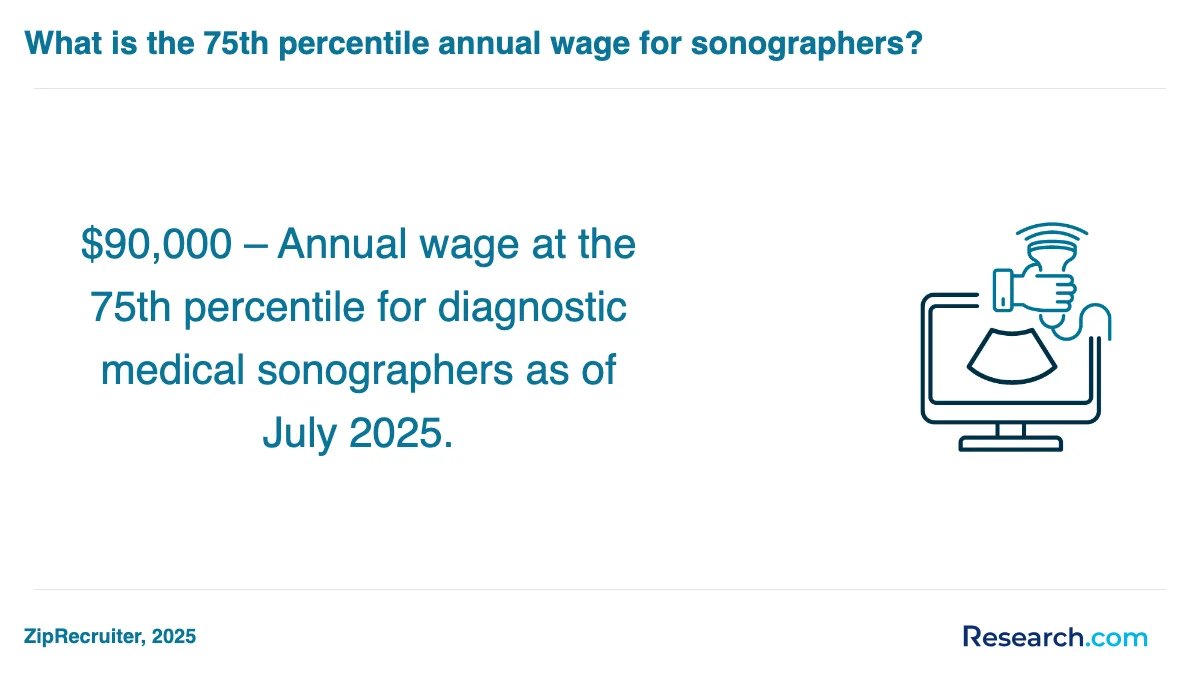
With experience, salaries often rise. Sonographers with a few years on the job may earn closer to $74,930 per year, matching the state average. Graduates who specialize in cardiac sonography or vascular sonography may earn more, with salaries reaching $81,700 to over $108,000 annually.
Hourly pay also shows the value of experience and specialization. Many graduates start around $31.25 per hour, while experienced sonographers may earn up to $40.14 or higher. Higher pay may be tied to advanced credentials, high-demand specialties, hospital shifts, call requirements, or travel assignments.
- Entry-level earnings: around $50,300 annually, with many starting around $31.25 per hour.
- Experienced earnings: closer to $74,930 per year, with hourly wages up to $40.14 or higher.
- Specialized earnings: cardiac and vascular sonography roles may reach $81,700 to over $108,000 annually.
Students comparing programs should look beyond tuition alone. A lower-cost program with strong clinical placement and certification preparation may deliver better long-term value than a more expensive option with limited employer connections.
- Applicants generally need a high school diploma or GED, must pass an entrance exam, and often complete background checks and drug screening before clinical placement.
- Most programs are accredited and lead to an associate's degree, taking 15 to 24 months to complete through a mix of classroom instruction, labs, and clinical rotations.
- Graduates typically qualify for the ARDMS certification exam, which is widely required by employers in South Carolina despite no state mandate.
- Tuition for associate degree programs ranges from $5,000 to $30,000 depending on the school and residency, covering about 61 core credits plus general education.
- Entry-level sonographers earn between $55,000 and $65,000 annually, while experienced professionals can make $75,000 or more.
- Job opportunities are available in hospitals, clinics, private practices, outpatient imaging centers, and specialty departments, with demand expected to grow statewide.
Most medical sonographer trade school programs in South Carolina take about 18 to 24 months to complete. Some certificate pathways may be shorter, while associate degree programs can take longer because they include general education requirements in addition to sonography coursework and clinical training.
Students in cities such as Columbia and Charleston often describe the timeline as intensive because the programs compress a large amount of technical knowledge and clinical practice into a relatively short period. Instead of spreading healthcare training across four years, these programs focus directly on the skills needed for entry-level diagnostic imaging roles.
Clinical rotations may begin within the first few months at some schools. This early exposure can help students connect classroom topics, such as anatomy and ultrasound physics, to real patient care. It also helps students confirm whether they are comfortable with the physical, technical, and communication demands of the profession.
When comparing timelines, students should ask whether the published program length includes prerequisites, waitlists, general education courses, and clinical placement requirements. A program advertised as 18 months may still require additional preparation before formal admission.
- Shorter certificate option: may suit students who already meet prerequisite requirements and want focused training.
- Associate degree option: may provide a broader academic foundation and may be preferred by some employers.
- Clinical scheduling: can affect total completion time, especially if rotations require daytime availability or travel.
The main difference between online and on-campus medical sonographer trade school programs is how classroom content, lab training, and clinical practice are delivered. Sonography cannot be learned fully online because students must practice scanning techniques, operate ultrasound equipment, position patients, and complete supervised clinical rotations.
On-campus programs, such as those at Greenville Technical College and Spartanburg Community College, typically provide direct access to instructors, ultrasound equipment, scanning labs, and peer practice. This format can be especially helpful for students who learn best through real-time feedback and structured lab sessions.
Online options in South Carolina are rare and usually limited to theory-based coursework, such as ultrasound physics or general education classes. Even when lectures are online, students should expect to attend campus labs or travel to affiliated clinics for hands-on training. A hybrid format can work well for students who need schedule flexibility, but it does not remove the in-person requirements of the field.
For many students, the choice comes down to learning style and logistics:
- On-campus programs: better for students who want frequent instructor interaction, scheduled labs, and immediate scanning feedback.
- Hybrid programs: better for students who need some online coursework but can still attend required labs and clinical rotations.
- Fully online claims: should be reviewed carefully, because legitimate sonography preparation requires in-person clinical skill development.
Students considering any online component should confirm accreditation, clinical placement support, lab requirements, and eligibility for certification exams before enrolling.
The cost of medical sonographer trade schools in South Carolina depends on school type, residency status, credential level, program length, and included fees. Certificate programs, often chosen for focused training and a shorter 12 to 18 months duration, typically cost between $5,000 and $10,000.
Associate degree programs can vary more widely. Tuition for associate degree programs ranges from $5,000 to $30,000 depending on the school and residency, covering about 61 core credits plus general education. Students should compare not only tuition but also program fees, books, uniforms, equipment, exam costs, and commuting expenses for clinical rotations.
Several South Carolina programs illustrate the range. Midlands Technical College's General Sonography program has tuition fees around $15,900. Greenville Technical College offers a Diagnostic Medical Sonography program with tuition and fees totaling approximately $10,775 for in-state students. Horry-Georgetown Technical College's program costs about $10,978.
Students should also budget for additional expenses such as textbooks, uniforms, equipment, health screenings, immunizations, background checks, and certification exams. ARDMS exams usually cost $250 to $350 per specialty.
Financial aid can reduce the out-of-pocket cost through federal grants, scholarships, work-study, payment plans, and institutional aid. Before choosing a school, students should request a full cost estimate and ask whether the program is eligible for federal aid.
For students comparing healthcare career options and wondering what is the best job in healthcare, sonography can offer a strong mix of patient care, technical skill, job stability, and earnings potential.
Medical sonographer trade school students in South Carolina may qualify for federal, state, institutional, and private financial aid. The first step is usually completing the FAFSA, which schools use to determine eligibility for grants, loans, and work-study programs.
Many students at schools such as Midlands Technical College and Trident Technical College rely on the Pell Grant. For the 2022-23 academic year, the Pell Grant offered up to $6,895 for eligible students. Students with greater financial need may also qualify for the Federal Supplemental Educational Opportunity Grant (FSEOG), which provided additional funds ranging from $100 to $4,000, depending on school availability.
South Carolina scholarships and grants can also help, especially for students attending community and technical colleges. Eligibility rules vary, so students should contact the financial aid office early and ask which state programs apply to sonography, allied health, or technical education pathways.
Private and professional scholarships may provide additional support. Organizations such as the Society of Diagnostic Medical Sonography Foundation offer scholarship opportunities for students pursuing sonography training. Some colleges may also provide payment plans, while healthcare employers may offer tuition reimbursement for eligible employees.
Students should be careful to confirm whether their program is accredited and aid-eligible before enrolling. A lower advertised tuition may not be the best value if the program lacks federal aid eligibility, clinical placement support, or certification exam preparation.
Prerequisites for medical sonographer trade schools in South Carolina are designed to confirm that applicants are academically and clinically prepared for a demanding healthcare program. Most schools require a high school diploma or GED before admission.
Applicants may also need a strong foundation in science and math. Biology, anatomy, physiology, medical terminology, and basic algebra can be especially important because sonography students must understand body systems, identify structures on images, and apply ultrasound physics.
Common application requirements may include:
- Official transcripts showing completed secondary education and any college coursework.
- Completion of prerequisite courses, especially in anatomy, physiology, and related sciences.
- Entrance exam scores, such as placement testing or a program-specific exam.
- Proof of immunizations, physical exam clearance, and health screenings.
- Background checks and drug screening before clinical placement.
- Letters of recommendation or a personal statement explaining interest in patient care.
Because admissions can be competitive, students should not wait until the application deadline to prepare. Completing prerequisites with strong grades, understanding the program’s clinical schedule, and confirming all documentation requirements can improve readiness and reduce delays.
Medical sonographer trade school programs in South Carolina usually combine general healthcare courses, sonography theory, scanning labs, and clinical rotations. The curriculum is designed to help students understand human anatomy, operate ultrasound equipment, produce diagnostic images, and communicate professionally with patients and healthcare teams.
Core courses often include anatomy and physiology, which help students identify organs, tissues, vessels, and fetal structures during scanning. Ultrasound physics is also essential because sonographers must understand sound waves, Doppler effects, image clarity, artifacts, and machine settings.
Programs also include patient care and medical ethics. These courses prepare students to explain procedures, protect patient privacy, respond to discomfort or anxiety, and maintain professional standards in clinical settings.
Specialized coursework commonly includes:
- Abdominal sonography, including imaging of organs such as the liver and kidneys.
- Obstetric and gynecologic sonography, including pregnancy and female reproductive health.
- Vascular sonography, including blood flow imaging in arteries and veins.
- Ultrasound instrumentation and image optimization.
- Pathophysiology and recognition of abnormal findings.
- Clinical practicum or externship experience in hospitals and clinics.
Hands-on labs help students move from theory to practice before working with patients. Clinical rotations, sometimes exceeding 1,000 hours at hospitals and clinics across South Carolina, are where students build speed, accuracy, confidence, and professional judgment.
Medical sonographer trade schools in South Carolina may offer several specializations that prepare students for different imaging roles. Common diagnostic medical sonography specializations in South Carolina include abdominal sonography, obstetrics and gynecology sonography, and vascular sonography.
Programs such as those at Midlands Technical College and Spartanburg Community College emphasize the major clinical areas students are most likely to encounter. Abdominal sonography is often considered foundational because it involves imaging organs such as the liver and kidneys. OB/GYN sonography focuses on pregnancy and female reproductive health, which can be rewarding for students who want to support prenatal and women’s healthcare. Vascular sonography prepares students to assess blood flow disorders and may lead to work in specialized clinics or hospital departments.
Some programs, including Greenville Technical College, may expand training to include pediatric and neurosonography. These options can help students develop broader skills, but availability varies by school and clinical site capacity.
Students should choose a specialization based on job goals, clinical interests, and certification plans. For example, a student interested in heart and blood vessel imaging may prioritize vascular or cardiac pathways, while a student interested in maternal-fetal care may prefer OB/GYN-focused clinical experiences.
For students seeking good paying medical careers with little schooling, specialization can improve employability and may support higher earnings over time.
The best medical sonographer trade school program in South Carolina is the one that is accredited, affordable, clinically strong, certification-focused, and realistic for your schedule. Students should compare programs carefully because tuition, admissions requirements, clinical placements, and credential outcomes can vary significantly.
Start with accreditation. Programs aligned with recognized accreditation standards are more likely to prepare students for national certification exams and employer expectations. Many students prioritize programs that help them qualify for the American Registry for Diagnostic Medical Sonography exams because ARDMS certification is widely valued by employers.
Next, evaluate clinical experience. A strong program should provide supervised scanning practice in real healthcare settings, not just classroom instruction. Ask where clinical rotations take place, how students are assigned, whether travel is required, and how many hours are included.
Cost should also be reviewed carefully. Affordable sonography programs South Carolina offers may still provide excellent training if they include strong labs, experienced instructors, and reliable clinical partnerships. Compare total program cost, not just tuition.
Use these questions before applying:
- Is the program accredited and does it support certification exam eligibility?
- What credential will I earn: certificate, diploma, or associate degree?
- How long is the program, including prerequisites and clinical rotations?
- What is the total cost after fees, books, uniforms, and exam expenses?
- Where are clinical sites located, and will I need reliable transportation?
- What are the graduation, certification, and employment outcomes?
- Does the schedule fit my work and family responsibilities?
Students asking how do you become a sonographer in South Carolina should focus on programs that clearly connect admissions, coursework, clinical practice, certification preparation, and employment support.
Medical sonographer trade school graduates in South Carolina can pursue careers in hospitals, outpatient imaging centers, private physician offices, specialty practices, research settings, education, and travel healthcare. The most common first role is diagnostic medical sonographer, but specialization can shape the direction of a graduate’s career.
Hospitals in areas such as Charleston and Columbia, along with regional centers such as Grand Strand Regional Medical Center, often employ sonographers in diagnostic imaging departments. These roles may offer broad case variety, exposure to emergency or inpatient care, and opportunities to work with multiple medical specialties.
Private physician offices and outpatient imaging centers may offer more focused roles in obstetrics, gynecology, abdominal imaging, or vascular sonography. Graduates from programs such as Midlands Technical College often rely on clinical rotations to build the practical confidence needed for these settings.
Career paths can include:
- General diagnostic medical sonographer: performs abdominal, OB/GYN, and general ultrasound exams.
- Vascular sonographer: evaluates blood flow in arteries and veins.
- Cardiac sonographer: performs echocardiograms and supports heart imaging teams.
- Pediatric sonographer: works with infants, children, and adolescent patients.
- Travel sonographer: takes temporary assignments in different facilities, with weekly earnings averaging around $1,795 according to recent data.
- Educator or clinical trainer: helps prepare future sonography students after gaining experience.
Professional certification from the ARDMS can be important for advanced roles and stronger job prospects. Students comparing long-term earnings can review ultrasound technologist salary information to understand how pay may change by specialty and experience.
The job market for medical sonographer trade school graduates in South Carolina is strong, with diagnostic medical sonographer jobs in South Carolina expected to grow by 26.4% from 2018 to 2026. This growth reflects continued demand for noninvasive diagnostic imaging in hospitals, clinics, outpatient centers, and specialty practices.
Employment numbers rose from 690 sonographers in 2017 to around 730 in 2018, with projections reaching 910 by 2026. Annual job openings remain steady at about 60, creating ongoing opportunities for graduates who complete accredited training and meet employer credential expectations.
Job prospects are often strongest for graduates who earn ARDMS certification after completing CAAHEP-accredited curricula. Employers may also prefer applicants with clinical experience in high-demand areas such as vascular, cardiac, OB/GYN, or abdominal sonography.
The sonographer salary and employment outlook South Carolina offers is also encouraging. Graduates report weekly wages averaging $1,964, which can make sonography financially attractive compared with many other allied health roles in the region.
Students who want to strengthen their options should choose programs with strong clinical placement, prepare early for certification exams, and remain open to both urban and rural employers. Those exploring flexible academic pathways can also review the best online associate in sonography programs while confirming that any program includes required hands-on clinical training.
Most Affordable Diagnostic Medical Sonographer Schools & Training - Budget-Friendly Sonography Trade Programs in South Carolina for 2026
# 1 position
Horry-Georgetown Technical College - Diagnostic Medical Sonography/Sonographer and Ultrasound Technician.
certificate or diplomaHorry-Georgetown Technical College offers a Diagnostic Medical Sonography/Sonographer and Ultrasound Technician program with a hybrid format, combining in-person and distance education. The program prepares students to use ultrasound techniques under physician supervision to collect diagnostic sonographic data. It covers patient care, data integration, equipment operation, and professional ethics. Annual in-state tuition is $4,468. Graduates earn a median salary of $42,533 one year after completion. The program is accredited by the Southern Association of Colleges and Schools Commission on Colleges.
# 2 position
Greenville Technical College - Diagnostic Medical Sonography/Sonographer and Ultrasound Technician.
associateGreenville Technical College offers a Diagnostic Medical Sonography/Sonographer and Ultrasound Technician program with a hybrid format, including some distance education. The program trains students to use ultrasound techniques for medical diagnosis under physician supervision, covering patient care, data recording, sonographic processing, and professional ethics. Annual in-state tuition is $5,639. Graduates earn a median salary of $59,685 one year after completing the program. The program is accredited by the Southern Association of Colleges and Schools Commission on Colleges.
# 3 position
Piedmont Technical College - Diagnostic Medical Sonography/Sonographer and Ultrasound Technician.
certificate or diplomaThe Diagnostic Medical Sonography/Sonographer and Ultrasound Technician program at Piedmont Technical College offers a hybrid format with some distance-education options. It prepares students to perform medical ultrasound techniques under physician supervision, including patient care, data recording, and sonography equipment operation. The program is accredited by the Southern Association of Colleges and Schools Commission on Colleges. Annual in-state tuition is $4,775, and median earnings one year after completion are $34,637.
# 4 position
Orangeburg Calhoun Technical College - Mammography Technology/Technician.
certificate or diplomaOrangeburg Calhoun Technical College offers a hybrid Mammography Technology/Technician program that prepares registered radiographers to become registered mammographers. The curriculum includes anatomy, physiology, mammography instrumentation, positioning, procedures, and quality assurance. The program’s annual in-state tuition is $4,970. It is accredited by the Southern Association of Colleges and Schools Commission on Colleges.
# 5 position
Southeastern College-Columbia - Diagnostic Medical Sonography/Sonographer and Ultrasound Technician.
associateThe Diagnostic Medical Sonography/Sonographer and Ultrasound Technician program at Southeastern College-Columbia offers a hybrid format with some distance-education options. The program prepares students to use medical ultrasound techniques for diagnostic purposes, covering patient care, sonographic data processing, and professional ethics. Annual in-state tuition is $24,184. The program is accredited by the Accrediting Commission of Career Schools and Colleges.
# 6 position
Southeastern College-Charleston - Diagnostic Medical Sonography/Sonographer and Ultrasound Technician.
associateThe Diagnostic Medical Sonography/Sonographer and Ultrasound Technician program at Southeastern College-Charleston offers a hybrid format with some distance-education options. It prepares students to use ultrasound techniques under physician supervision to diagnose various conditions. The curriculum covers patient care, sonographic data processing, and professional ethics. Annual in-state tuition is $24,184. The program is accredited by the Accrediting Commission of Career Schools and Colleges.
Frequently Asked Questions about medical sonographer
Students attending affordable diagnostic medical sonographer schools in South Carolina might face challenges such as balancing work and study, finding clinical placement opportunities, and managing financial constraints. Additionally, they could encounter limited access to state-of-the-art technology compared to more expensive programs.
In 2026, graduates of medical sonographer trade schools in South Carolina can pursue certifications like Registered Diagnostic Medical Sonographer (RDMS) and Registered Vascular Technologist (RVT). These certifications, offered by the American Registry for Diagnostic Medical Sonography (ARDMS), can enhance career opportunities and increase earning potential.
For 2026, some of the most affordable diagnostic medical sonographer schools in South Carolina include Midlands Technical College, Trident Technical College, and Greenville Technical College. These institutions offer budget-friendly programs, providing excellent value for aspiring sonographers while maintaining high educational standards.
- Most Affordable Diagnostic Medical Sonographer Schools & Training - Budget-Friendly Sonography Trade Programs in North Carolina for 2026
- Most Affordable Diagnostic Medical Sonographer Schools & Training - Budget-Friendly Sonography Trade Programs in Florida for 2026
- Most Affordable Diagnostic Medical Sonographer Schools & Training - Budget-Friendly Sonography Trade Programs in Alabama for 2026
- Most Affordable Diagnostic Medical Sonographer Schools & Training - Budget-Friendly Sonography Trade Programs in West Virginia for 2026
- Most Affordable Diagnostic Medical Sonographer Schools & Training - Budget-Friendly Sonography Trade Programs in Louisiana for 2026
- Most Affordable Diagnostic Medical Sonographer Schools & Training - Budget-Friendly Sonography Trade Programs in Maryland for 2026
- Most Affordable Diagnostic Medical Sonographer Schools & Training - Budget-Friendly Sonography Trade Programs in Missouri for 2026
- Most Affordable Diagnostic Medical Sonographer Schools & Training - Budget-Friendly Sonography Trade Programs in Ohio for 2026
- Most Affordable Diagnostic Medical Sonographer Schools & Training - Budget-Friendly Sonography Trade Programs in Indiana for 2026
- Most Affordable Diagnostic Medical Sonographer Schools & Training - Budget-Friendly Sonography Trade Programs in Pennsylvania for 2026
- Diagnostic Medical Sonographers in South Carolina - Healthcare Degree Search https://healthcaredegreesearch.com/careers/diagnostic-medical-sonographers/south-carolina-us/
- Ultrasound Technologist | CareSouth Carolina Bennettsville, SC https://www.caresouth-carolina.com/careers/ultrasound-technologist
- Diagnostic Medical Sonographers and Cardiovascular Technologists and Technicians : Occupational Outlook Handbook: : U.S. Bureau of Labor Statistics https://www.bls.gov/ooh/healthcare/diagnostic-medical-sonographers.htm
- Find Accredited Ultrasound Technician Schools in South Carolina https://www.ultrasoundschoolsinfo.com/south-carolina/
- University of South Carolina | Ultra Sound Sonographer https://uscjobs.sc.edu/titles/156310
- How to Become a Medical Sonographer in South Carolina | Dreambound https://dreambound.com/blog/how-to-become-a-medical-sonographer-in-south-carolina
- Diagnostic Medical Sonography Program | Greenville Technical College https://www.gvltec.edu/academics_learning/health-sciences/diagnostic_medical_sonography/index.html
- General Sonography - Training Certificate | Midlands Technical College https://www.midlandstech.edu/programs-and-courses/health-care/general-sonography
- Diagnostic Medical Sonography | Southeastern College https://www.sec.edu/academic-program/diagnostic-medical-sonography/
- Diagnostic Medical Sonography - Associate in Applied Science Degree | Horry-Georgetown Technical College https://www.hgtc.edu/academics/academic-departments/imaging-sciences/diagnostic-medical-sonography-degree.html





