# 1 position
College of Eastern Idaho - Electrician.
associate

Audited and Verified:
Our Editorial and Data Verification Process
Research.com uses government datasets, official education statistics and primary institutional information to support its career and degree guides. Our review process checks factual accuracy, occupational definitions, source dates and the requirements associated with the credentials discussed.
How This Article Was Fact-Checked
Our editorial team verifies salary estimates, employment projections, education requirements and program information against original data providers and official organizations. Salary figures are checked against the relevant occupational definitions and reporting periods. Information about licensure, accreditation and required in-person training is reviewed separately.
Fact-checked and verified on:

Co-Founder and Chief Data Scientist

Reviewed by Karolina Broda
Fact-Checker and Data Verification
Choosing an electrician program in Idaho means deciding where you will learn the trade - and how you will earn the supervised experience required to work independently. The U.S. Bureau of Labor Statistics projects 9.2% national growth in electrician employment from 2025 to 2035, making the training decision timely. This guide compares school and apprenticeship routes, costs, credentials, and Idaho licensing requirements. It also accompanies the Best Electrician Trade Schools in Idaho for 2027 ranking, created by the Research.com team of data scientists to help students identify programs worth considering.
Expect a mix of electrical theory, code study, and physical practice with wiring, circuits, tools, and test instruments. The decisive distinction is whether a program provides classroom preparation only or also connects you to supervised work that can count toward Idaho licensing. The Idaho Division of Occupational and Professional Licenses (DOPL) sets occupational requirements separately from any credential a school awards.
These routes serve different needs. Compare the credential with the practical experience you will still need after - or alongside - training.
| Training route | What it typically provides | Best fit and key question |
| Pre-apprenticeship or introductory certificate | Foundational safety and electrical skills; a school credential, not journeyman status | New entrants who need preparation; ask whether employers or sponsors recognize the training. |
| Technical-college certificate, diploma, or associate degree | Structured coursework and labs; an academic credential if the program awards one | Students seeking scheduled instruction; ask which classes meet Idaho requirements and how field hours are obtained. |
| Registered apprenticeship | Paid supervised work plus related instruction and a completion credential | Applicants ready to earn while training; ask about openings, wages, classroom costs, and work locations. |
| Employer-sponsored apprentice route | On-the-job experience with instruction arranged separately or through a sponsor | Applicants with a qualifying employer; verify registration and how work and instruction are documented. |
A school shop helps you practice safely, but it is not automatically a substitute for documented employment hours. Ask for the actual lab schedule and for written confirmation of any apprenticeship placement or credit arrangement; a similarly named credential at another provider may involve much less hands-on work.
Electrical training can lead to work with residential contractors, commercial construction crews, industrial facilities, and maintenance employers. Electricians install, maintain, and troubleshoot electrical power and control systems, according to the U.S. Bureau of Labor Statistics. An apprentice performs that work under the supervision required for their stage of training; completing school alone does not authorize independent electrical contracting.
Location affects access to the work experience you need. A student near the Boise area may be able to compare more potential employers without relocating, while a rural student should ask a sponsor where jobsites are and how far apprentices travel. A lower-priced classroom program can become more expensive if its fieldwork requires a long commute or a move.
The U.S. Bureau of Labor Statistics reports a $63,190 national median annual wage for electricians in May 2025. Half of employed electricians earned more and half earned less; the figure combines workers at different experience levels and should not be treated as an apprentice's expected pay. For an Idaho decision, compare current local wage information from the Idaho Department of Labor with actual apprentice pay scales offered by prospective sponsors.
When weighing school against paid apprenticeship, compare earnings over the full training period, not just pay after licensure. A program that delays paid work may still be worthwhile if it provides recognized instruction and a credible path to an employer - but its tuition and foregone wages belong in the calculation.
A short introductory program may take months, but becoming eligible for Idaho journeyman licensure is a longer undertaking. DOPL describes the general journeyman pathway in terms of 8,000 hours of qualifying work and 576 hours of related classroom instruction, followed by the applicable licensing process. Those work hours represent years of supervised employment, not hours that can ordinarily be completed in a school lab.
Schedules vary: a full-time apprentice can accumulate work experience more steadily than someone who works intermittently, while evening instruction can make paid employment possible throughout training. Before enrolling in an accelerated course, ask what it accelerates - classroom completion, employer entry, or neither. It cannot erase required field experience.
Online instruction can be useful for electrical calculations, code reading, and some theory. Conduit bending, wiring, measurement, troubleshooting, and supervised jobsite work require in-person practice. A hybrid option is worthwhile when its remote lessons reduce travel without reducing the labs or documented field experience you need.
General online-learning guides, including those about best college courses for seniors online, may help returning learners think about study format. They cannot establish that an electrical course satisfies Idaho's instruction or experience requirements. Request the provider's breakdown of online hours, in-person labs, and worksite training, then verify how each component will be recorded for licensing.
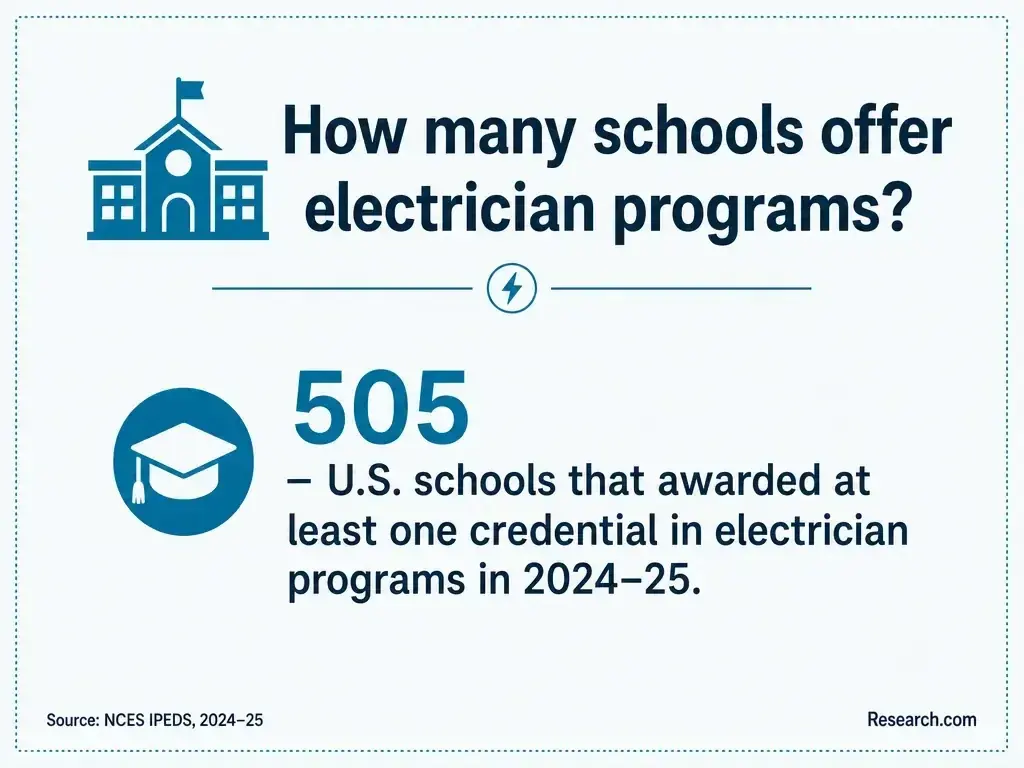
There is no single statewide price for electrician training: a school program and a paid apprenticeship have different cost structures. Request a written, program-specific budget rather than comparing advertised tuition alone. Account for mandatory fees, books, tools, consumable materials, safety gear, transportation to classes and jobsites, and licensing or examination charges when applicable. Also count earnings you would give up to attend classes.
A paid apprenticeship can offset training costs through wages, though instruction, tools, and travel may still cost the apprentice. School students should ask whether their specific program is eligible for federal aid, scholarships, or Idaho workforce assistance; institutional eligibility does not establish eligibility for every short course. Lists of the cheapest online universities that accept FAFSA cannot answer that program-level question.
For a realistic return-on-investment comparison, consider completion likelihood, aid, borrowing, time until paid work, expected apprentice wages, and likely earnings after licensure. A low upfront price is not a bargain if the instruction cannot support the work-and-classroom pathway you intend to follow.
Your school credential depends on the program: it may be a certificate, diploma, or associate degree. A registered apprenticeship has its own completion credential. None is the same as an Idaho occupational license, which depends on meeting DOPL's applicable experience, instruction, examination, and application requirements.
If you are comparing an associate program with a cheap associates degree online, check the curriculum rather than the credential name. For electrical work, the useful questions are whether the instruction counts toward your intended license, where you will practice hands-on skills, and whether any credits or prior learning receive documented recognition. Ask both the school and the receiving apprenticeship sponsor before assuming credits will transfer or shorten training.
Entry rules differ between a school and an apprenticeship. A school may require an application, placement assessment, or prerequisite coursework; an apprenticeship sponsor or employer may also assess math skills, availability for jobsites, and ability to perform work safely. Ask for the current written requirements rather than assuming that admission to a classroom program includes a job offer.
Idaho also distinguishes entry into training from authorization to work in the trade. Before accepting electrical work as an apprentice, confirm the registration requirements that apply to you with DOPL and the sponsor. Ask who arranges supervision, when registration must be completed, and who keeps the records of your instruction and work hours. Missing records can become a licensing problem even when the work itself was valuable.
Useful electrician training links theory to tasks you will perform under supervision: interpreting electrical drawings, calculating loads, applying electrical-code rules, selecting conductors and overcurrent protection, installing circuits, testing equipment, and diagnosing faults. Safety instruction should address shock and arc hazards, protective equipment, and when a task is beyond an apprentice's authorization. These are core duties and competencies identified in the U.S. Bureau of Labor Statistics occupational description and construction-training standards such as those published by NCCER.
Ask to see the lab syllabus, not just a course list. A program with repeated supervised practice on real equipment may better prepare a beginner than one centered on videos and quizzes, even when both teach the same code topics. Confirm separately whether its classroom hours meet the requirements for your intended Idaho license.
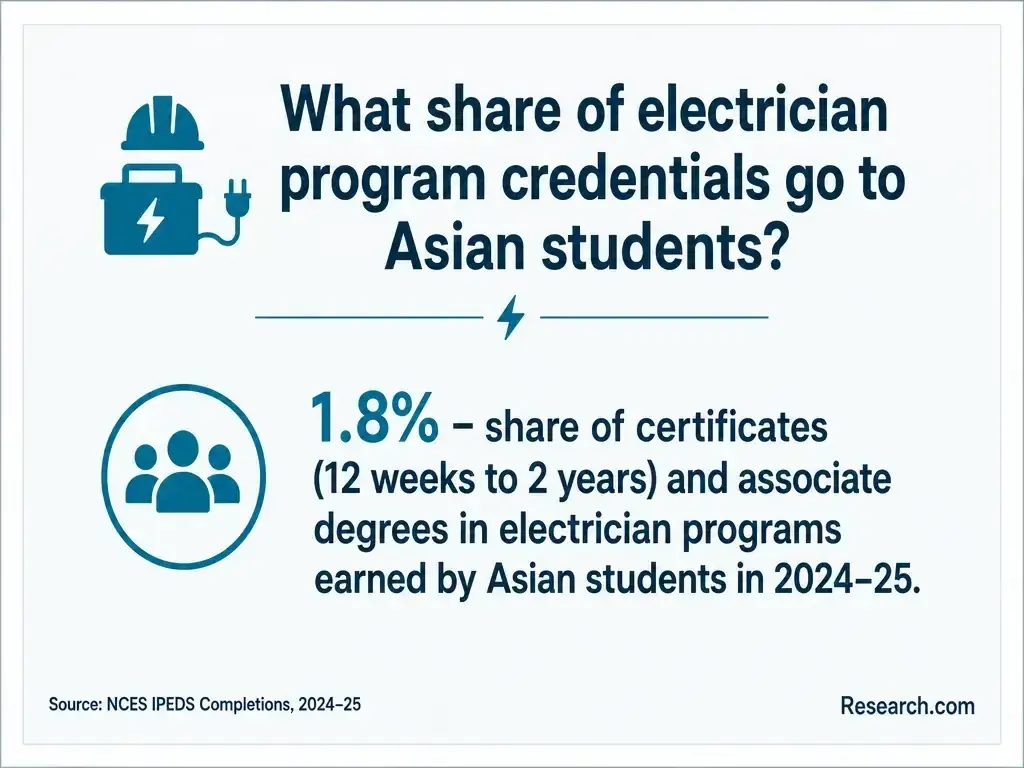
Yes - Idaho regulates electrical work. DOPL distinguishes apprentices and licensed electricians and sets requirements for journeyman qualification, including documented supervised experience, related instruction, and an examination. An occupational license is not awarded automatically when you finish school or an apprenticeship. Requirements for specialty work and advancement can differ, so check the license category before choosing a course.
Keep the distinctions clear: institutional accreditation concerns the school; state school authorization concerns permission to operate; an industry training credential documents particular instruction; registered-apprenticeship status concerns the work-based program; and DOPL controls occupational licensing. None substitutes for the others. Before paying a deposit, ask DOPL whether the proposed instruction and experience can be used toward your intended Idaho credential, and obtain the provider's explanation in writing.
The best option is the one that gives you a workable route from instruction to documented, supervised employment - not necessarily the highest-ranked school or shortest advertised course. If you already have an employer prepared to train you, a paid apprenticeship may offer a better fit than full-time school. If you need foundational math, safety practice, or help reaching employers, a hands-on introductory program may justify its cost.
Use these checks to compare finalists and catch costly gaps before enrolling:
A guide to a one year online masters degree addresses a very different educational decision; it cannot establish whether an Idaho electrical program leads to qualifying work hours. Treat a promise of "licensure upon graduation," without an explanation of supervised experience and examination, as a red flag.
A common progression is apprentice to journeyman after meeting Idaho's requirements, followed by work that may emphasize residential installations, commercial projects, industrial maintenance, or controls. Greater responsibility, supervisory work, and contracting can require further experience or separate licensing; an introductory school credential by itself does not qualify someone for those roles (Idaho DOPL).
If you are asking what is the best job for introverts?, focus less on the label and more on the work setting. Some electrical tasks call for sustained independent troubleshooting, but jobsites also require coordination, clear safety communication, and cooperation with other trades. Ask employers what a typical apprentice day looks like before choosing a specialization.
The U.S. Bureau of Labor Statistics projects 9.2% growth in electrician employment nationwide from 2025 to 2035. That is an outlook for the occupation, not a prediction that every Idaho graduate will find a position. For a local decision, review Idaho Department of Labor projections and current apprentice openings in the areas where you can travel or relocate.
Demand is useful only if you can enter the training pipeline. Compare the number and location of sponsor openings with each school's employer relationships, then ask how graduates obtain the supervised work needed for licensure. This is particularly important if your nearest classroom provider is far from the contractors hiring apprentices.
Education is a consequential investment, so Research.com evaluates electrician programs against other programs in the same occupation and location - not against unrelated schools nationwide. The Best Electrician Trade Schools in Idaho for 2027 ranking includes only programs reporting completions to the Integrated Postsecondary Education Data System (IPEDS). That makes comparisons more consistent, but it also means a registered apprenticeship or employer program can be a worthwhile option without appearing in the ranking.
Best-program scores cover student outcomes, earnings and return on investment, costs and debt, and quality and recognition. Occupation-relevant programmatic accreditation or industry recognition receives 20% of the score, institutional accreditation 10%, and student support services 10%. The remaining 60% covers completion and retention, earnings after completion relative to attendance cost, tuition, debt - including debt held by students who withdrew - and federal loan default rates. An entropy-based method assigns more weight to indicators that distinguish programs more clearly. Most-affordable-program rankings instead score only tuition, attendance cost, debt, and loan default rates; accreditation and other quality indicators are not part of that affordability score. Readers can review the full approach in Research.com's methodology.
The team draws on the following sources to check program characteristics, outcomes, costs, and relevant recognition. Several recognition sources cover other trades or health programs; their inclusion in the broader research process does not make them electrician-program accreditors.
Use the ranking to narrow your search, then confirm directly with each provider how its instruction, fieldwork, costs, and outcomes apply to your intended Idaho electrical license. College-oriented datasets do not capture every apprenticeship or employer-sponsored route.
# 1 position
# 2 position

# 3 position

# 4 position

A school can provide valuable instruction, but Idaho journeyman qualification also involves documented supervised work and an examination. Confirm the current requirements for your intended license with DOPL.
It may be if you can secure a paid position with qualifying work and instruction. A certificate can be useful when you need entry-level skills or help becoming competitive for an apprenticeship; compare costs and employer access.
You may be able to study some theory online, but physical skills and supervised electrical work require in-person participation. Verify how a hybrid provider delivers and documents both.
No. Accreditation addresses an institution or program's educational standing. DOPL determines occupational licensing requirements, including applicable experience, instruction, and examination.
Ask for total costs, hands-on lab hours, the plan for obtaining supervised work, and written confirmation of how instruction is documented. Compare those answers with a paid apprenticeship offer if one is available.