# 1 position
Central Wyoming College - Electrician.
certificate or diploma

Audited and Verified:
Our Editorial and Data Verification Process
Research.com uses government datasets, official education statistics and primary institutional information to support its career and degree guides. Our review process checks factual accuracy, occupational definitions, source dates and the requirements associated with the credentials discussed.
How This Article Was Fact-Checked
Our editorial team verifies salary estimates, employment projections, education requirements and program information against original data providers and official organizations. Salary figures are checked against the relevant occupational definitions and reporting periods. Information about licensure, accreditation and required in-person training is reviewed separately.
Fact-checked and verified on:

Co-Founder and Chief Data Scientist

Reviewed by Karolina Broda
Fact-Checker and Data Verification
Choosing electrician training in Wyoming means deciding how you will gain paid work experience - not just where you will take classes. National electrician employment is projected to grow 9.2% from 2025 to 2035, according to the U.S. Bureau of Labor Statistics (BLS). For new entrants and career changers, this guide compares college programs, apprenticeships, costs, credentials, and licensing. It also features a Best Electrician Trade Schools in Wyoming for 2027 ranking, created by the Research.com team of data scientists to help students make an informed choice about which training programs are worth considering.
Expect electrical theory, code study, safety instruction, and practice with circuits, wiring methods, tools, and test instruments. The decisive difference between options is where supervised job experience comes from. A classroom or shop credential can prepare you to apply for an apprenticeship, but it does not replace work under qualified supervision.
These pathways lead to different credentials and levels of work experience. Use the comparison to identify what you would still need after completing each one.
| Pathway | What you receive | Best fit and main limitation |
| College certificate or diploma | School credential and laboratory instruction | Useful for building fundamentals before seeking an employer; verify whether coursework receives apprenticeship credit. |
| Electrical associate degree | Academic degree with technical and general coursework | Fits someone who wants broader study; extra coursework is not automatically extra licensing credit. |
| Registered apprenticeship | Paid supervised work, related instruction, and a completion credential | Direct work-based route; openings and entry requirements depend on the sponsor. |
| Employer-sponsored entry | Training and wages determined by the employer | Can reduce upfront school costs; confirm that work and instruction will count toward the intended license. |
Public colleges, career schools, union training centers, and employers can all play a role. In Wyoming, where a training site and an electrical jobsite may be far apart, ask about both classroom scheduling and the location of field placements before enrolling.
Electricians install, maintain, and troubleshoot electrical systems for construction contractors, commercial facilities, industrial plants, and maintenance employers. Wyoming's energy and industrial worksites can make motor controls, instrumentation, and industrial safety valuable alongside building-wiring skills. Rural service work may involve substantial travel, so a nearby class does not necessarily mean a nearby job.
Match the curriculum to the work you want. Residential wiring instruction alone may not prepare you for industrial controls; conversely, training focused on industrial equipment may offer less exposure to service calls and home construction. Ask employers and apprenticeship sponsors which experience they accept. Electricians who wire facilities should also distinguish their occupation from electrical power-line installers, a separate BLS occupation with different field training.
Wyoming pay depends on apprenticeship stage, location, employer, specialization, and overtime. For a benchmark - not a Wyoming wage quote - the BLS reports a $63,190 national median annual wage for electricians in May 2025. Because that figure covers workers across experience levels, it should not be used as an offer estimate for a new apprentice.
Before comparing offers, request the sponsor's apprentice wage schedule, raises, benefits, travel expectations, and any required tool purchases. Consult the latest Wyoming occupational wage estimates from the BLS or Wyoming labor-market agency for a state-specific comparison. Lists about what majors make the most money answer a different question: for this trade, earnings depend heavily on paid experience and progression toward licensure.
A college certificate may take substantially less time than the full journey to independent electrical work. A registered apprenticeship generally runs several years because it combines related instruction with extensive supervised employment; the U.S. Department of Labor describes apprenticeship as paid work-based learning, not classroom study alone. Program length, weekly schedules, and credit for prior experience vary by sponsor.
Ask for three separate timelines: time to finish school coursework, time to secure an apprenticeship or qualifying job, and time to meet Wyoming's current experience, instruction, and examination requirements. A fast classroom program is only an accelerated career route if it also helps you obtain acceptable supervised work. Have the Wyoming State Fire Marshal's Office confirm how proposed hours will be credited before relying on a provider's estimate.
Online study can work for code reading, electrical calculations, and some theory. It cannot reproduce wiring installations, instrument use, troubleshooting under supervision, or the employer-site experience needed for occupational progression. A hybrid program makes sense when it provides accessible in-person labs and a viable route to fieldwork; a fully online course should be treated as supplemental unless the relevant Wyoming regulator and apprenticeship sponsor confirm otherwise.
Wyoming's distances make format a practical cost issue. Ask where labs meet, how often attendance is required, and who arranges work placements. Returning learners comparing top online college courses for seniors should apply an additional test here: can they reliably travel to every required electrical lab and supervised worksite?
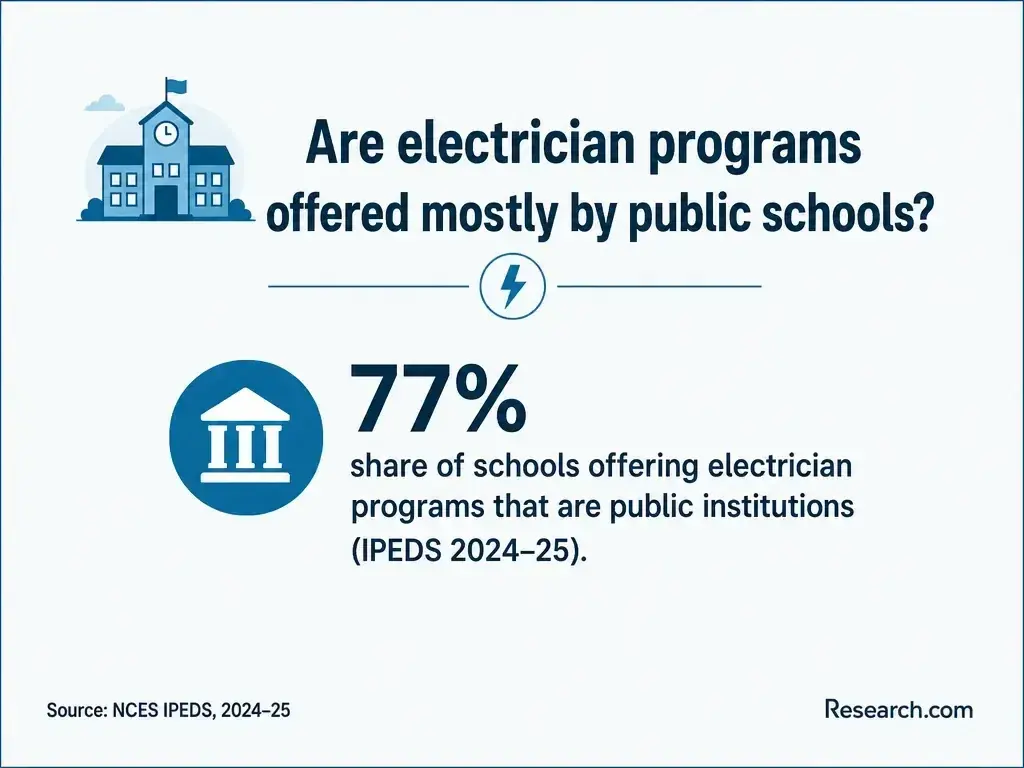
There is no single defensible average for every Wyoming electrician route: college tuition, short courses, and paid apprenticeships have different cost structures, and apprenticeships are not fully represented in college datasets. Compare total cost to become job-ready, not the advertised tuition alone.
For each option, request an itemized estimate covering mandatory fees, books or code materials, tools, meters, protective equipment, consumables, examination and license applications, and travel to labs and jobsites. Add lost earnings if classes prevent you from working; subtract confirmed grants, scholarships, employer payments, and apprentice wages. Wyoming resident tuition may differ from nonresident tuition at public colleges, so establish your classification before comparing quotes.
Federal aid depends on the school and specific program's eligibility, not merely on a low sticker price. Readers using lists of low tuition online colleges that accept FAFSA should verify aid eligibility and required in-person electrical training separately. Ask a school's aid office about federal aid and Wyoming-based assistance, and ask an apprenticeship sponsor which training expenses it covers (Federal Student Aid; U.S. Department of Labor).
A provider may award a certificate, diploma, or associate degree; a registered apprenticeship awards its own completion credential. These document different learning and should not be treated as interchangeable. Wyoming occupational licensure is a separate determination made under state rules, not a credential conferred by a school (Wyoming State Fire Marshal's Office; U.S. Department of Labor).
Ask whether coursework is recognized by a specific apprenticeship sponsor and whether prior electrical experience can earn advanced standing. Get any credit agreement in writing; similar course titles do not establish transferability. Lists of certifications that make money can suggest optional career development, but an industry certificate is not a substitute for Wyoming electrical licensing.
School admission and apprenticeship hiring are separate steps. Colleges set their own enrollment and course-placement requirements; apprenticeship sponsors may assess math preparation, availability for paid fieldwork, and ability to meet employer or jobsite requirements. Ask each provider for its current written criteria rather than assuming acceptance into classes secures an apprenticeship position.
Also ask when any required apprentice registration or authorization must be obtained before electrical work begins, and who submits the paperwork. If you have prior training or work experience, request a review before enrolling. An applicant who needs immediate earnings may prefer a paid opening over a standalone classroom program, provided the sponsor can explain how the experience counts toward the intended Wyoming license.
Core instruction typically covers electrical safety, circuit theory, blueprint reading, calculations, wiring methods, grounding, code use, and testing. Look for labs that require students to install and diagnose circuits - not just watch demonstrations. For industrial goals, ask whether training includes motors, controls, and troubleshooting equipment relevant to the employers you are targeting (BLS Occupational Outlook Handbook; provider curricula).
Request a breakdown of supervised lab hours and employer-site hours, the equipment available to each student, and how instructors assess safe work. Practical competence matters as much as the credential name: two programs can award similarly titled certificates while offering very different opportunities to work with tools and energized-system safety procedures.
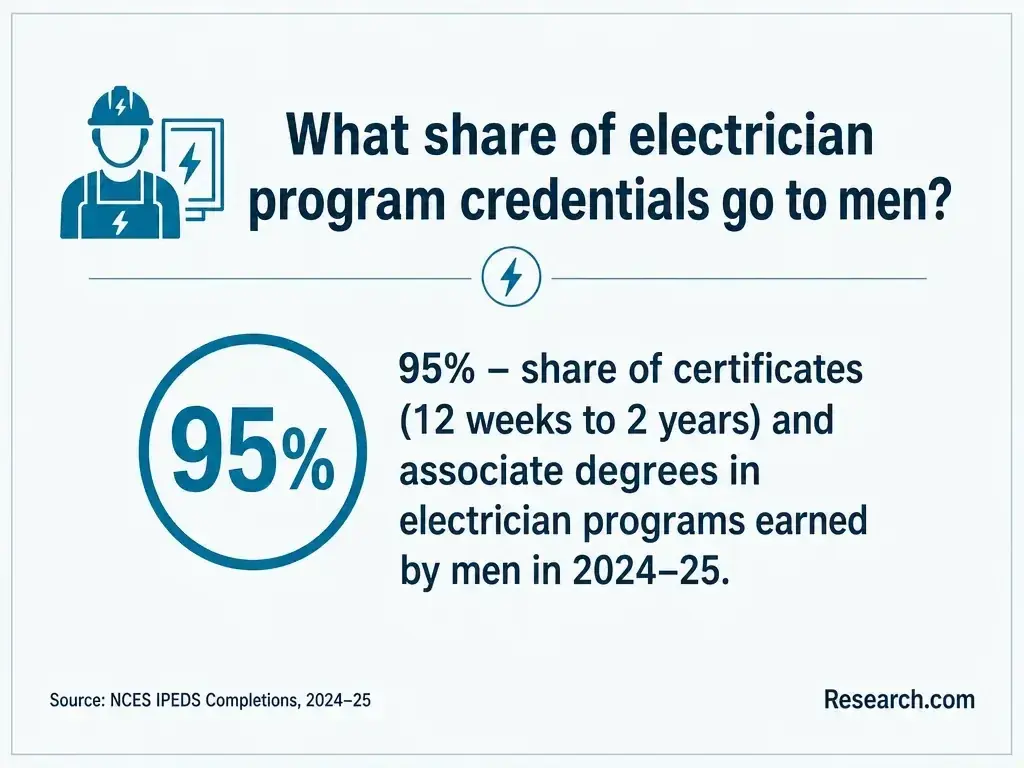
Plan around Wyoming's electrical licensing rules before paying for training. Apprentice-level work, progression to journeyman status, and later master or contractor responsibilities are distinct stages; the applicable requirements can include documented supervised experience, instruction, and examinations. Confirm the current category and eligibility rules directly with the Wyoming State Fire Marshal's Office. Do not assume a certificate, apprenticeship completion, or license from another state automatically authorizes the same work in Wyoming.
Keep institutional accreditation, school authorization, apprenticeship registration, industry certification, and occupational licensure separate. Accreditation can matter for educational quality and aid, while a registered apprenticeship establishes a recognized work-and-instruction structure; neither by itself grants a Wyoming license. Before enrolling, ask the regulator whether the specific instruction and work arrangement you propose can count toward your target license.
Start with your target - residential installation, commercial construction, or industrial maintenance - then compare programs on the path from enrollment to qualifying work. If considering Central Wyoming College, Western Wyoming Community College, Casper College, Laramie County Community College, or Northwest College, verify the current electrical offering at the campus you can attend; do not assume every location offers the same credential or schedule.
Use these checks before making a deposit or declining a paid apprenticeship opportunity:
A common costly mistake is choosing the cheapest or quickest classroom credential without a realistic supervised-work plan. Return on investment also depends on completion probability, debt, earnings before and after training, the time it takes to progress, and the value of earnings received sooner rather than later. A ranking is a shortlist, not proof that an option fits your circumstances.
A common progression is supervised apprentice work, qualifying experience and instruction, examination and journeyman licensure, then possible specialization or supervisory work. Later master-level or contractor responsibilities have their own requirements; verify them before planning to operate independently (Wyoming State Fire Marshal's Office). Industrial controls, commercial systems, and maintenance are potential directions, but entry opportunities depend on the employers and worksites within a practical travel radius.
For someone intent on becoming a working electrician, paid apprenticeship may offer a more direct return than buying coursework without an employer connection. A college credential can be worthwhile when it supplies needed fundamentals, flexible access to labs, or documented credit toward a sponsor's training. Material about dual degree universities should not be used to judge whether an electrical program delivers qualifying field experience.
National electrician employment is projected to grow 9.2% from 2025 to 2035 (BLS Employment Projections). That indicates broad demand, not a forecast for a particular Wyoming town or a guarantee of an apprenticeship opening. Construction schedules, industrial maintenance needs, and the distance between worksites can make local opportunities uneven.
Use Wyoming labor-market information and current employer or sponsor openings alongside the national projection. If you cannot relocate or travel regularly, ask providers where recent trainees found qualifying work - not simply whether the occupation is growing nationwide. That answer may matter more than a program's advertised completion speed.
Investing in training is an important decision. Research.com created its ranking to help readers compare electrician programs with other programs serving the same occupation and location, using documented measures of outcomes, cost, and quality. Only programs reporting completions to IPEDS are eligible; an apprenticeship or other provider absent from the ranking should not be assumed to be unavailable or inferior.
For best-program rankings, student outcomes include completion and full-time and part-time retention. Earnings and return on investment include median earnings one year after completion and earnings relative to annual attendance cost. Costs and debt include resident and nonresident tuition, attendance cost, median debt - including debt held by students who withdrew - and federal loan default rates. Programmatic accreditation or relevant industry recognition accounts for 20% of the score, institutional accreditation for 10%, and student support for 10%. Outcomes, earnings, and costs make up the remaining 60%, with weights distributed by an entropy-based method that gives more weight to indicators that vary more across programs. Most-affordable-program rankings use only tuition, attendance cost, median debt, and federal loan default rates, weighted by that method; accreditation and other quality measures are not scored.
The team uses the following sources to check program reporting, costs, outcomes, recognition, and training context. Some professional organizations cover occupations other than electrical work; their inclusion as ranking data sources does not make their credentials electrician requirements.
The ranking can narrow a search, but its college-oriented datasets do not cover every apprenticeship, union training center, or employer-sponsored route. Compare any shortlisted option with the current requirements for the electrical work you intend to do. More detail on Research.com's approach is available on its methodology page.
# 1 position
# 2 position
Electrical and Power Transmission Installation/Installer, General
Delivery mode: On Campus (May Include Online Courses)
21.27
/ 100
Final score
Accreditation
Institutional accreditation from Higher Learning Commission.
Western Wyoming Community College received a Research.com Trade Program Score of 21.27/100.
# 3 position
# 4 position

# 5 position
# 6 position

Not necessarily. A paid apprenticeship or employer-supported route may provide instruction and supervised experience. Verify that your chosen route meets current Wyoming licensing requirements with the Wyoming State Fire Marshal's Office.
No. A school credential documents training; occupational licensure requires meeting the state's applicable experience, instruction, and examination rules.
Online coursework can cover some theory, but wiring practice and supervised electrical work require in-person participation. Confirm how a hybrid provider supplies both before enrolling.
Choose based on access to qualifying work, cost, and your preparation. College can build fundamentals; an apprenticeship combines instruction with paid experience. Ask whether college coursework earns credit with the sponsor you would join.
Request a written total covering fees, tools, safety gear, travel, and licensing-related expenses. Compare it with confirmed aid or paid apprentice wages, not tuition alone.