# 1 position

Audited and Verified:
Our Editorial and Data Verification Process
Research.com uses government datasets, official education statistics and primary institutional information to support its career and degree guides. Our review process checks factual accuracy, occupational definitions, source dates and the requirements associated with the credentials discussed.
How This Article Was Fact-Checked
Our editorial team verifies salary estimates, employment projections, education requirements and program information against original data providers and official organizations. Salary figures are checked against the relevant occupational definitions and reporting periods. Information about licensure, accreditation and required in-person training is reviewed separately.
Fact-checked and verified on:

Co-Founder and Chief Data Scientist

Reviewed by Karolina Broda
Fact-Checker and Data Verification
Choosing electrician training in Montana means comparing more than a classroom schedule: you need a route to supervised work and, eventually, state licensure. The U.S. Bureau of Labor Statistics projects 9.2% growth in electrician employment nationwide from 2025 to 2035, making the choice timely without promising a local job. The Research.com team of data scientists created the Best Electrician Trade Schools in Montana for 2027 ranking to help students identify programs worth considering. This guide explains how to compare training, costs, apprenticeships, and licensing requirements before committing.
Expect electrical theory alongside physical practice: reading plans, applying the National Electrical Code, selecting materials, and installing or testing circuits under supervision. A lab can teach safe procedures before a student enters a jobsite, but it does not automatically replace documented employment experience. Ask how many scheduled hours are spent doing hands-on work rather than watching demonstrations.
The main pathways serve different needs. A short pre-apprenticeship can help a newcomer test the trade and prepare to apply for paid training. A certificate or diploma can provide a structured technical foundation; an associate degree adds a broader course load. A registered apprenticeship combines related instruction with paid, supervised work and is the more direct route for someone who can secure a sponsor. Employers may also hire and train registered apprentices directly. Compare the actual curriculum and work arrangement, not just the credential's name.
Flathead Valley Community College is one school-based option to investigate. Request its current electrical-program plan and ask whether completed coursework can count toward an apprenticeship's related instruction. That answer depends on the receiving sponsor's rules, not simply on whether the college accepts open admission applicants for a program.
Electrical workers can pursue jobs with construction contractors, industrial facilities, utilities, maintenance departments, and organizations that install or service building systems. The U.S. Bureau of Labor Statistics identifies construction and electrical contracting as major settings for electricians. A graduate entering the trade should expect supervised assignments unless they already hold the license needed for a different level of work.
Location changes the practical choice. A rural student may find a suitable classroom program but have fewer nearby sponsors or worksites; a longer commute can erase the apparent savings from cheaper tuition. Ask prospective employers where jobsites are located, whether travel is paid, and whether work will provide experience the Montana Board of Electricians accepts toward the intended license. The relevant comparison is the local path into this trade, not a general list of highest paying bachelors.
The U.S. Bureau of Labor Statistics reports a $63,190 national median annual wage for electricians in May 2025. That is a midpoint for working electricians across experience levels and locations, not an expected starting wage for a Montana program graduate. Apprentices generally earn wages while learning, with pay determined by their employer or apprenticeship agreement.
For a Montana decision, compare current local apprentice offers with journeyman openings in the area where you intend to live. Check whether quoted pay assumes overtime, travel, or a particular license level. A higher eventual wage may justify longer training for some readers, but only after accounting for the time spent at apprentice pay and any debt incurred before work begins.
Program length and time to licensure are different clocks. A pre-apprenticeship or certificate may be shorter than an associate degree, while an apprenticeship ordinarily spans several years of instruction and paid work. According to the Montana Board of Electricians, the journeyman experience route requires 8,000 hours of qualifying practical experience; the board also recognizes an approved apprenticeship route. Verify current eligibility rules before assuming school lab hours count toward either route.
If you need earnings soon, compare the time until a program places you in supervised paid work - not just its graduation date. An accelerated classroom schedule may shorten school attendance without shortening the experience required for a license. Conversely, a longer school program may be worthwhile if its labs, employer connections, and transferable instruction fit your circumstances. A search for a masters degree online 1 year describes a very different timeline and should not be used to judge electrician training.
Online delivery can work for code study, calculations, and some technical reading. Wiring, testing, tool use, troubleshooting, and supervised jobsite practice require physical equipment and in-person oversight. A hybrid program can be useful for someone far from campus if its lab dates and apprenticeship arrangements are realistically accessible.
Before enrolling remotely, ask where practical assessments occur, who supplies equipment, whether you must arrange your own employer, and how the sponsor documents qualifying experience. Institutional accreditation - including what readers might look for among accredited non profit online colleges - is a separate question from whether an electrician program provides usable hands-on training. No online classroom credential by itself should be treated as a Montana electrical license.
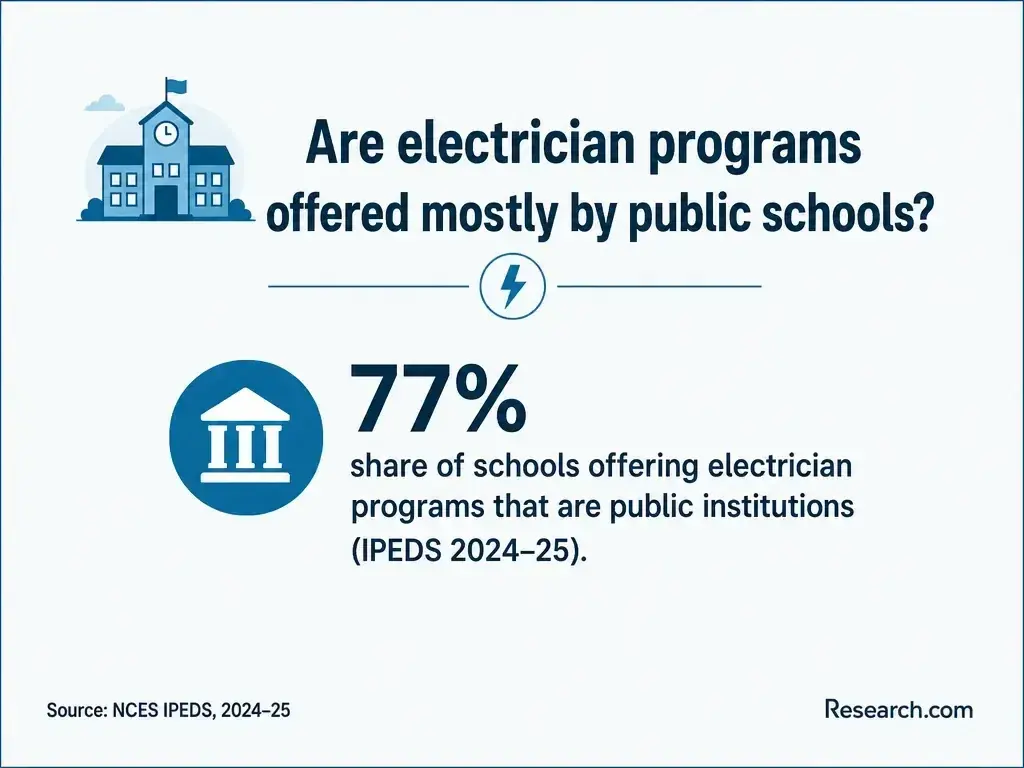
There is no single reliable statewide price that captures college programs, short courses, and paid apprenticeships on the same basis. Request each provider's current, itemized cost for the entire training period. At a public college such as Flathead Valley Community College, confirm your tuition classification and program-specific fees; at an apprenticeship, ask about instruction charges, required purchases, and wages during training.
To compare routes fairly, build a job-ready budget covering tuition, mandatory fees, books and code materials, tools, personal protective equipment, transportation to labs and jobsites, and eventual examination and license-application costs. Include foregone earnings if classes prevent you from working. Then subtract only aid or employer support you are actually eligible to receive. Federal aid depends on the institution and program's eligibility, according to Federal Student Aid; paid apprenticeships and workforce assistance follow different rules. The cheapest tuition is not necessarily the cheapest route to qualifying experience.
The award depends on the route: a school may issue a certificate, diploma, or associate degree; a registered apprenticeship documents completion of its work-and-instruction program. Those credentials describe training, not permission to work independently as a licensed electrician. Confirm the exact award in the current catalog or apprenticeship agreement, including whether partial coursework has value if you leave early.
Ask whether a sponsor will recognize school instruction for advanced standing and obtain that answer in writing before paying for overlapping coursework. Institutional accreditation concerns the school; industry recognition concerns particular training standards; apprenticeship registration concerns the work-based program; and occupational licensure is decided by the Montana Board of Electricians. None automatically substitutes for another.
School admissions and apprenticeship hiring are separate processes. A school may require an application, placement steps, or preparation in reading and math. An apprenticeship sponsor can also assess readiness for physical work, reliable travel, and employer selection requirements. Ask each provider for its current criteria rather than assuming that college admission secures an apprenticeship position.
Before accepting electrical work as an apprentice, check the Montana Board of Electricians' current registration and supervision rules with the prospective employer. In particular, ask who handles registration, when it must be completed, and how your hours will be recorded. A program promising "license-ready" graduates without explaining supervised experience and examination eligibility deserves closer scrutiny.
A useful curriculum connects calculations and code interpretation to tasks a beginner will perform safely: identifying conductors and equipment, measuring circuits, installing raceways and devices, reading drawings, and diagnosing faults. The U.S. Bureau of Labor Statistics describes electricians' work as installing, maintaining, and repairing electrical power, communications, lighting, and control systems. Ask to see the lab equipment and sample assessments so you can judge whether students actually practice those tasks.
Technology matters most when it changes the work you will do. Training that includes current control systems, efficient building equipment, or relevant installation methods can broaden preparation, but a list of fashionable topics cannot compensate for weak safety instruction or limited tool time. Employers will also expect dependable documentation, communication with other trades, and the judgment to stop work when a condition is unsafe.
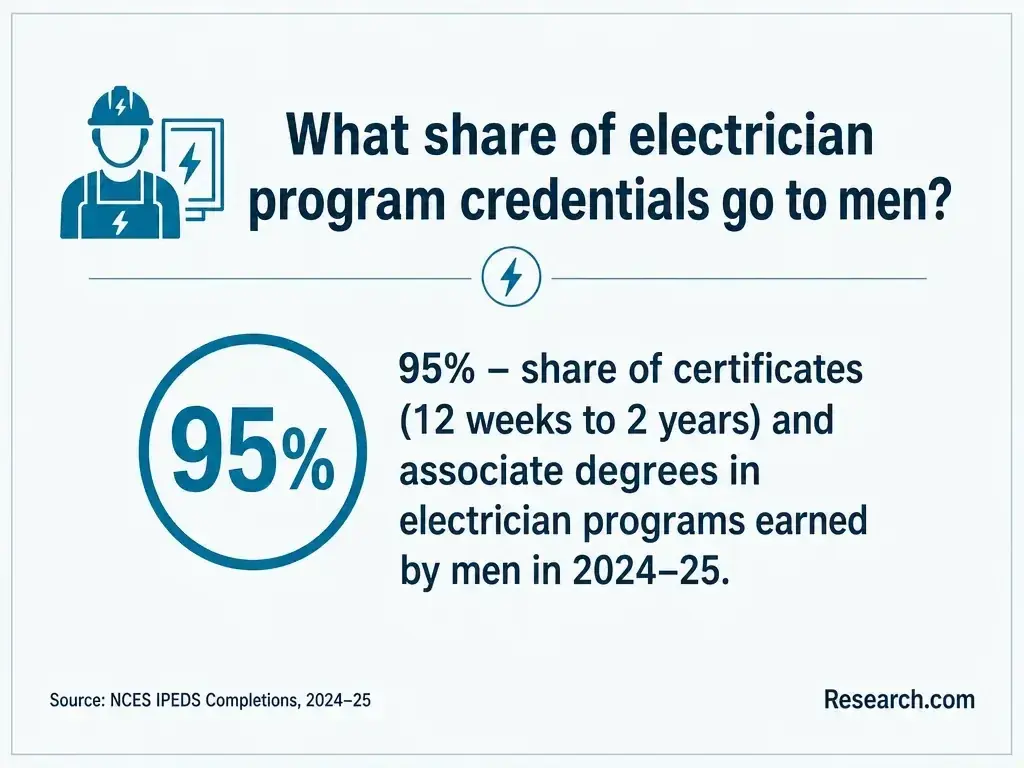
Yes, Montana regulates electrical work through its Board of Electricians. The appropriate status depends on the work and level of responsibility: an entrant needs to follow applicable apprentice registration and supervision rules, while independent progression requires the relevant residential, journeyman, or master electrician license. The board sets experience and examination requirements; a school certificate is not a substitute for either.
Before choosing training, tell the board or prospective sponsor which license you eventually want and ask how the proposed instruction and documented work fit its rules. Keep records of employers, dates, duties, and hours. An optional industry training credential may help demonstrate skills, but do not confuse it with state licensure. If you may move, check the destination state's rules separately rather than assuming a Montana credential transfers automatically.
Start with the job you want and work backward to the required supervised experience and license. A college program is a stronger fit if you need structured labs and can afford the interval before paid work; a registered apprenticeship may fit better if you can obtain a position and need to earn while learning. Neither route is automatically the better investment.
Use these checks when comparing a school, sponsor, or employer; they expose gaps that a ranking or tuition figure cannot show.
Be cautious if a provider equates graduation with licensure, advertises a wholly online route to hands-on competence, or cannot explain how students reach supervised employment. Career-fit resources such as best career path for introverts may prompt reflection, but they cannot replace a visit to a lab or a conversation with working electricians about the trade's physical and team-based demands.
A common progression is supervised apprentice work, qualification for a residential or journeyman license as applicable, and later specialization or advancement. Experienced electricians may move toward troubleshooting, industrial maintenance, crew leadership, or a master-level license and contracting responsibilities. Each step depends on relevant experience and the Montana Board of Electricians' rules, not simply on completing another classroom credential.
Choose early training with the intended setting in mind. Residential installation, commercial construction, and industrial controls expose workers to different equipment and jobsites; ask sponsors which experience they can actually provide. If self-employment is the long-term goal, investigate the separate licensing and business requirements before treating a school award as a direct route to operating independently.
The U.S. Bureau of Labor Statistics projects 9.2% growth in electrician employment nationally from 2025 to 2035. This is an occupational projection, not a forecast that every Montana graduate will find a nearby opening. Construction schedules, maintenance needs, and the availability of employers willing to train apprentices will shape a newcomer's immediate prospects.
Use the national trend as a reason to investigate, then test the local market: compare current apprentice vacancies, sponsor intake schedules, and journeyman postings in places you could realistically commute to or relocate within. A program with strong instruction but no accessible route to qualifying work may be a poorer choice than one that connects you with a suitable local sponsor.
Education is a significant investment, so Research.com compares electrician programs with other programs in the same occupation and location rather than with unrelated schools. The ranking includes only programs reporting completions to IPEDS. That makes the comparison more useful for evaluating college-based options, but it does not mean an apprenticeship or other provider absent from IPEDS is unavailable or lower quality.
Best-program scores consider student outcomes, earnings and return on investment, costs and debt, and quality and recognition. Programmatic accreditation or relevant industry recognition accounts for 20%; institutional accreditation and student support services account for 10% each. The remaining 60% covers outcomes, earnings, and costs, with weights assigned through an entropy-based method that gives more weight to indicators that vary more across programs. Most-affordable rankings instead score only tuition, attendance cost, debt, and federal loan default rates; they do not include quality indicators in the score. Readers should still verify current program details and Montana licensing eligibility independently.
The Research.com team uses the following data sources to check institutional information, outcomes, costs, recognition, and training pathways. Some recognition sources cover other trades or healthcare fields; their inclusion in the broader methodology does not imply that they accredit electrician programs.
The ranking can help readers narrow their college-based choices, while the separate checks in this guide help determine whether a particular program fits their budget and route into electrical work. More detail on the scoring approach is available in Research.com's methodology.
# 1 position
# 2 position
Potentially. A registered apprenticeship or qualifying supervised employment may provide a route into the trade. Confirm registration, instruction, experience, and examination requirements with the Montana Board of Electricians and the prospective sponsor.
No. A certificate documents training; Montana journeyman licensure also depends on meeting the board's qualifying experience or approved-apprenticeship requirements and passing the required examination.
Registered apprenticeships combine employment with instruction, so apprentices earn wages under their employment arrangements. Ask about starting pay, progression, instruction costs, and travel before accepting an offer.
You may be able to study some theory online, but electrical labs and supervised work require in-person participation. Check where practical training occurs and how work hours are documented.
Request the full cost, exact credential, hands-on schedule, and written details of any apprenticeship connection or recognized instruction. Verify licensing implications with the Montana Board of Electricians rather than relying on advertising.