# 1 position


Audited and Verified:
Our Editorial and Data Verification Process
Research.com uses government datasets, official education statistics and primary institutional information to support its career and degree guides. Our review process checks factual accuracy, occupational definitions, source dates and the requirements associated with the credentials discussed.
How This Article Was Fact-Checked
Our editorial team verifies salary estimates, employment projections, education requirements and program information against original data providers and official organizations. Salary figures are checked against the relevant occupational definitions and reporting periods. Information about licensure, accreditation and required in-person training is reviewed separately.
Fact-checked and verified on:

Co-Founder and Chief Data Scientist

Reviewed by Karolina Broda
Fact-Checker and Data Verification
Choosing electrician training in Hopkinsville means weighing more than tuition: you need practical skills, a workable route into paid experience, and a clear understanding of Kentucky licensing. The U.S. Bureau of Labor Statistics projects electrician employment to grow 9.2% nationally from 2025 to 2035. For prospective students and career changers, this guide explains costs, credentials, apprenticeships, and local considerations. It will feature a Most Affordable Electrician Trade Schools in Hopkinsville for 2027 ranking created by the Research.com team of data scientists to help students make an informed choice about programs worth considering.
Expect instruction in electrical theory and code alongside supervised practice with wiring, circuits, test instruments, and safe work procedures. A classroom-only course can teach terminology, but it cannot replace troubleshooting on physical equipment or supervised work at an electrical jobsite. Ask how much time is spent in a lab, who supervises it, and whether students practice installing and diagnosing circuits rather than only watching demonstrations.
Your main choice is between school-first preparation and learning largely through employment. Hopkinsville Community College is a local starting point for asking which electrical or closely related technical credentials are currently offered, where their labs meet, and whether credits apply toward a longer credential. A registered apprenticeship instead combines paid, supervised work with related instruction, generally over several years (U.S. Department of Labor). School may help someone build foundational skills before seeking an employer; an apprenticeship may suit someone ready to work and earn while training. Neither route should be assumed to confer a Kentucky license automatically.
Potential settings include residential and commercial construction, building maintenance, and industrial facilities in and around Christian County. The distinction matters: construction electricians install and repair building systems, while industrial maintenance roles may emphasize motors, controls, and production equipment. Review actual job descriptions before choosing electives or a credential; a course focused on industrial controls may not be the best preparation for residential wiring.
Hopkinsville's labor market is smaller than a large metropolitan area, so your practical job search may extend to nearby Kentucky communities or across the Tennessee border. Before accepting out-of-state work, check the other state's electrical licensing rules rather than assuming Kentucky training or a future Kentucky license transfers. Ask a prospective employer whether the role includes supervised electrical experience relevant to your intended Kentucky license.
The U.S. Bureau of Labor Statistics reports a $63,190 national median annual wage for electricians in May 2025. That is the midpoint for employed electricians at different career stages nationwide - not a Hopkinsville wage quote or a reasonable promise of first-year apprentice pay. A new trainee should compare actual local job offers and apprenticeship wage schedules, including scheduled raises and benefits, rather than budget around the national median.
Pay can also differ between construction and maintenance work and with experience, licensing, overtime, and travel. If a Hopkinsville-specific estimate is unavailable for the same occupation and period, do not treat a broader-area figure as a city-specific salary. For a school-versus-apprenticeship decision, the crucial comparison is what you would earn while training as well as after qualifying for more independent work.
Length depends on the credential and schedule. A short certificate may cover introductory electrical skills; a longer diploma or associate degree can add technical and general coursework. Request the current catalog's required credits or clock hours and a realistic full-time or part-time completion schedule. Two programs with the same credential name may provide substantially different amounts of lab practice.
A registered electrician apprenticeship typically takes about four to five years because it combines related instruction with extensive paid on-the-job training (U.S. Bureau of Labor Statistics). School can get you into entry-level job applications sooner, but completing a short course does not erase subsequent supervised-experience requirements for licensing. Unlike searches for quick degrees, the decisive timeline here is time to the required practical experience and occupational eligibility - not simply time to a certificate.
Electrical theory, code reading, and some calculations can be taught remotely. Measuring live-system conditions safely, wiring a training panel, using tools, and demonstrating installation and troubleshooting skills require an appropriate in-person setting. A hybrid option can reduce classroom travel, but confirm where its labs take place and how often you must attend; a distant lab can erase the convenience for a Hopkinsville student.
Listings of top online trade schools can help you find formats to investigate, not establish that an online electrician course satisfies Kentucky licensing requirements. Ask for a written breakdown of remote instruction, supervised labs, and any worksite placement. Avoid any claim that finishing online lessons alone makes you a licensed electrician.
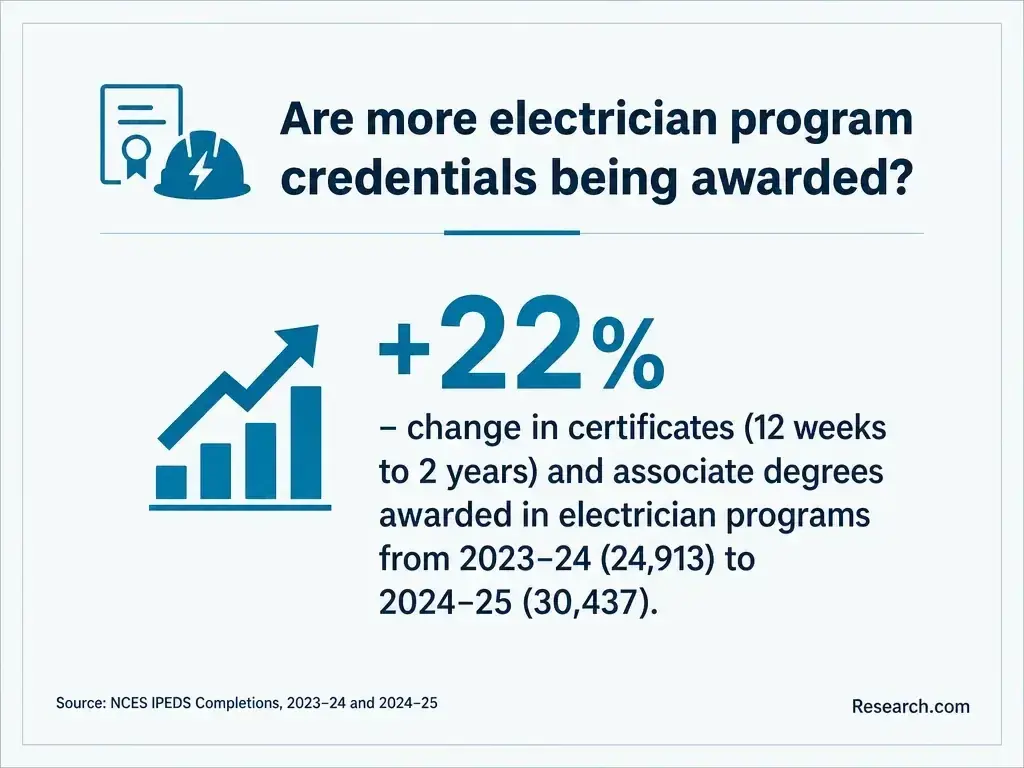
There is no reliable Hopkinsville-wide average that covers college programs, private training, and paid apprenticeships on a comparable basis. Rather than rely on an unsupported average, request an itemized, current quote for each option. A college's published tuition may not include tools or commuting; an apprenticeship may pay wages while still requiring related-instruction, tool, or travel expenses.
Compare the total cost to become job-ready: tuition and mandatory fees; books and materials; tools, meters, and personal protective equipment; transportation to labs or worksites; and any later examination or license-application fees. Subtract confirmed grants or employer payments, and account for earnings you would give up to attend full time. Ask Hopkinsville Community College about eligible aid and whether a particular credential qualifies for Kentucky's Work Ready Kentucky Scholarship; eligibility depends on the student and approved program (Kentucky Higher Education Assistance Authority). Resources about online colleges FAFSA may help with aid terminology, but confirm federal-aid eligibility for the specific electrician program before enrolling (Federal Student Aid).
A school may award a certificate, diploma, or associate degree, depending on the program. Those are educational credentials documenting completed coursework; they are not interchangeable with a registered apprenticeship completion credential or a Kentucky occupational license. Ask for the exact award printed on the transcript or certificate, the skills it represents, and whether its courses stack into another credential.
That distinction affects value. A short certificate may fit someone seeking foundational skills before applying to electrical employers. A longer credential may make sense if its additional labs or industrial coursework match the target job and justify the added time and expense. If a program advertises apprenticeship credit, obtain confirmation from the receiving apprenticeship sponsor about advanced standing; do not assume a school credential automatically shortens paid training.
Requirements differ by provider and pathway. A college may assess readiness for technical math and reading, while an apprenticeship sponsor may use an application, aptitude assessment, interview, and employer selection process. Ask about minimum age, prior education, identification, and any worksite requirements before planning a start date; the school's admission offer is not an apprenticeship job offer.
Prepare for the work itself as well as admission. Electricians use measurements, basic algebra, diagrams, and safety procedures, often while working on ladders or at changing jobsites (U.S. Bureau of Labor Statistics). If a program requires a prerequisite or placement course, include that time and cost in your comparison. Ask whether previous technical coursework or verified experience can receive credit, and get any decision in writing.
Useful entry-level training connects electrical calculations to physical tasks: reading plans, identifying components, bending and installing conduit where covered, making connections, testing circuits, and finding faults. Instruction should address safe work practices and the electrical code edition relevant to the work students expect to perform. Employers may also value reliable documentation, communication with other trades, and careful troubleshooting (U.S. Bureau of Labor Statistics; O*NET).
Check the curriculum against your goal rather than the program title alone. Someone targeting industrial maintenance should look for motors and controls practice; someone targeting building construction should examine wiring, installation, and code labs. Ask to see the equipment and a sample lab sequence, and find out whether students perform the work individually under supervision or mainly observe it.
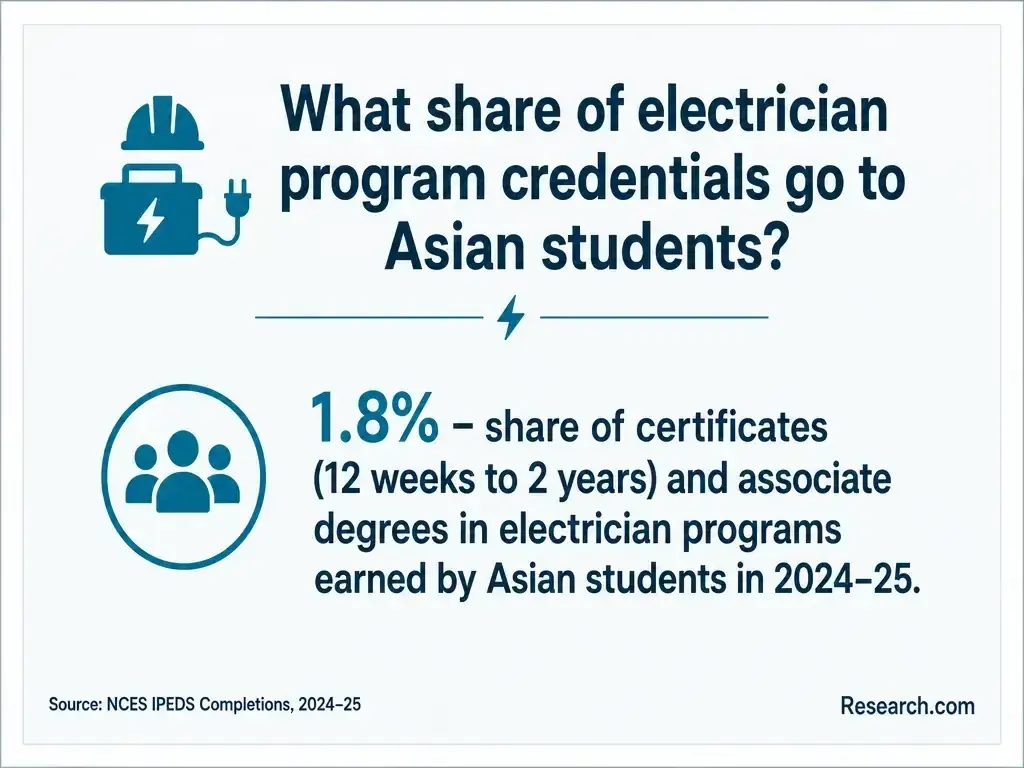
Kentucky regulates electrical work through occupational licensing. The Kentucky Department of Housing, Buildings and Construction administers electrical licensing, including electrician, master electrician, and electrical contractor categories. The applicable experience, examination, and application rules depend on the license sought. A school completion credential, institutional accreditation, industry certificate, and registered apprenticeship are distinct from a state license; none should be advertised as an automatic substitute for it.
Before paying for training, tell the Kentucky licensing office which license you eventually want and ask what experience counts, how it must be documented, whether the proposed education affects eligibility, and which examination applies. Ask a school or apprenticeship sponsor who supervises work and maintains experience records. Optional industry credentials may demonstrate skills to an employer, but verify their relevance separately from state licensing. If you expect to work in Tennessee, check its rules independently.
Start with the job you want, then compare programs on the route from enrollment to supervised work - not on tuition or ranking position alone. A cost ranking does not score accreditation or hands-on quality, and accreditation alone does not establish Kentucky licensing eligibility. Hopkinsville Community College and a registered apprenticeship may serve different needs: the first can provide a structured school credential, while the second integrates paid jobsite experience with instruction.
Before committing, get answers you can compare side by side:
A common mistake is using a broad earnings list, such as highest paid bachelor's degree, as the return-on-investment benchmark for a licensed trade. Instead, compare plausible local entry pay, paid-training income, debt, completion likelihood, and the time needed to reach your target license. A low-priced program is poor value if its schedule prevents you from completing labs or obtaining relevant work experience.
An entry route may begin with supervised electrical work in construction or with a maintenance role that uses electrical skills. With qualifying experience and the applicable Kentucky license, an electrician may take on more independent work; further experience can support pursuit of master-electrician or contractor licensing, subject to state requirements (Kentucky Department of Housing, Buildings and Construction). Industrial controls, troubleshooting, and supervisory work are other possible directions, depending on the employer and skills developed.
Keep the path tied to your intended occupation. Someone seeking licensed building-electrical work should verify how a proposed maintenance position counts toward that goal; similar-sounding electrical duties do not necessarily lead to the same license or job opportunities. Searches such as what's the easiest doctorate degree to get address a different education decision and offer no useful shortcut to the supervised experience this trade requires.
The U.S. Bureau of Labor Statistics projects 9.2% national employment growth for electricians from 2025 to 2035. That supports investigating the trade, but it is not a Hopkinsville hiring forecast or a guarantee of an apprenticeship opening. Construction schedules, industrial employers' staffing needs, and access to supervised positions will determine which opportunities are available when you finish training.
Use the national outlook as context, then test local demand: review current postings for their license and experience requirements, ask apprenticeship sponsors about recruitment cycles, and check whether employers will hire and supervise beginners. This is particularly important if you cannot commute beyond Hopkinsville. Training is a more defensible investment when you can identify a realistic first job and a way to accumulate documented experience.
Education is a consequential investment, so Research.com created the affordability ranking to help readers compare electrician programs against relevant local options rather than against unrelated trades. The team uses reported education and cost data, checks source credibility, and applies a consistent scoring method. Only programs with completions reported to IPEDS are eligible; an apprenticeship or employer program absent from the ranking may still be a strong option.
The most affordable ranking scores tuition, cost of attendance, median student debt, and federal loan default rate. Its weights are assigned through an entropy-based method, which gives more weight to measures that vary more among eligible programs. Accreditation and other quality measures are not part of this affordability score. Research.com's separate best-program rankings also consider student outcomes, earnings, support, and recognition; those criteria should not be mistaken for this ranking's criteria.
The following sources inform Research.com rankings across occupations. Some concern other trades or healthcare fields and should not be interpreted as electrician-specific approvals:
Use the ranking to narrow a cost-conscious shortlist, then confirm each program's current price, practical training, and fit with your licensing plan. More detail on Research.com's approach is available in its ranking methodology.
# 1 position
# 2 position
Not necessarily. Paid supervised work and apprenticeship can be routes into the trade. Check the Kentucky Department of Housing, Buildings and Construction's requirements for the license you want before assuming any particular school course is required or sufficient.
It can be cheaper in net terms because you earn while learning, but compare tool, instruction, and travel costs as well as wages. Apprenticeships also take longer and require an available position.
Do not assume so. Online lessons can cover theory, but electrical work requires practical competence and the experience and examinations applicable to the Kentucky license sought.
Choose it only if its labs, credential, and next step into supervised work fit your goal. A longer option may be worthwhile for additional relevant practice; a short option may cost less without meeting your needs.
No. Ranking eligibility requires program completions reported to IPEDS. Compare registered apprenticeships and employer training separately even if they do not appear in a college-based ranking.