# 1 position


Audited and Verified:
Our Editorial and Data Verification Process
Research.com uses government datasets, official education statistics and primary institutional information to support its career and degree guides. Our review process checks factual accuracy, occupational definitions, source dates and the requirements associated with the credentials discussed.
How This Article Was Fact-Checked
Our editorial team verifies salary estimates, employment projections, education requirements and program information against original data providers and official organizations. Salary figures are checked against the relevant occupational definitions and reporting periods. Information about licensure, accreditation and required in-person training is reviewed separately.
Fact-checked and verified on:

Co-Founder and Chief Data Scientist

Reviewed by Karolina Broda
Fact-Checker and Data Verification
Choosing the cheapest electrician program in Fulton, Mississippi, is not as simple as comparing tuition: tools, hands-on training, and the route into paid work matter too. The U.S. Bureau of Labor Statistics projects 9.2% growth in electrician employment nationally from 2025 to 2035. This guide compares school-based training with apprenticeships, explains costs and Mississippi licensing considerations, and helps you assess job readiness. It accompanies the Most Affordable Electrician Trade Schools in Fulton for 2027 ranking, created by the Research.com team of data scientists to help students make an informed choice about programs worth considering.
Expect instruction in electrical theory and code alongside supervised practice - not a credential that, by itself, makes you an independent electrician. Labs may cover reading plans, installing conduit and wiring, testing circuits, and using tools safely. Ask how much time students actually spend doing those tasks and whether the program arranges employer-based experience.
The main pathways serve different needs. A certificate or diploma can provide focused preparation for entry-level work; an associate degree may add broader technical coursework. A registered apprenticeship combines related instruction with paid, supervised work and is a more direct route for someone ready to seek an employer or sponsor. School first can make sense if you need foundational skills before applying, but ask whether a sponsor will credit that training rather than assuming it will shorten an apprenticeship. Itawamba Community College is a local provider to check for current electrical offerings, schedules, and employer connections; confirm the exact credential and campus before applying.
Potential settings include residential construction, commercial construction, industrial facilities, and building maintenance. The work differs: a residential crew may emphasize service panels and branch circuits, while an industrial employer may value motor controls and troubleshooting. The U.S. Bureau of Labor Statistics describes electricians as installing, maintaining, and repairing electrical power, communications, lighting, and control systems.
For a Fulton student, the important geographic question is how far you can travel to a jobsite or apprenticeship sponsor. Compare training and openings across the surrounding northeast Mississippi area, not just within city limits. If a program advertises placement, request its recent electrician-specific results, the locations of hiring employers, and whether positions are paid apprenticeships or other entry-level roles.
A reliable Fulton-specific electrician median is not established here. The U.S. Bureau of Labor Statistics reports a $63,190 national median annual wage for electricians in May 2025. That figure covers experienced as well as newer workers, so it should not be used as an expected first wage after school. Ask local employers or apprenticeship sponsors for their current entry wage, scheduled increases, and whether travel time between jobsites is paid.
When weighing a program's return, compare its full cost and any borrowing with the wages you could earn while training, your likelihood of finishing, and the time needed to reach your target role. A school route may be worthwhile if its labs and employer connections improve your access to work; a paid apprenticeship may be financially preferable if you can secure a place without first paying for a separate program. For readers comparing earnings across very different career investments, longer-term earnings comparisons are less useful here than verified local apprentice wages and training costs.
Length depends on the credential and schedule. A focused certificate or diploma generally takes less time than an associate degree, while part-time attendance extends the calendar. Request the provider's published clock or credit hours, lab hours, and course sequence; a short course with little practical work is not interchangeable with extensive supervised training.
The U.S. Bureau of Labor Statistics describes most electrician apprenticeships as lasting four to five years and combining paid work with technical instruction. Those years involve progression on the job, not simply time in a classroom. If speed is your priority, a guide to the fastest associates degree can illustrate academic scheduling, but an accelerated timetable does not replace electrical shop skills or required work experience.
Electrical theory, calculations, and some code study can be taught remotely. Conduit bending, wiring, safe testing, and diagnosing faults require equipment, supervision, and hands-on assessment. Hybrid training may reduce trips for classroom work, but it does not remove the need to reach a lab or worksite.
Before enrolling in an advertised online option, ask where practical assessments occur, who supplies tools, and whether an apprenticeship sponsor recognizes the training. Someone who cannot travel to required sessions should not choose an online-labeled program on the assumption that all requirements can be completed at home. Online certifications that can pay well may suit other goals, but a remote certificate alone is not evidence of electrician job readiness.
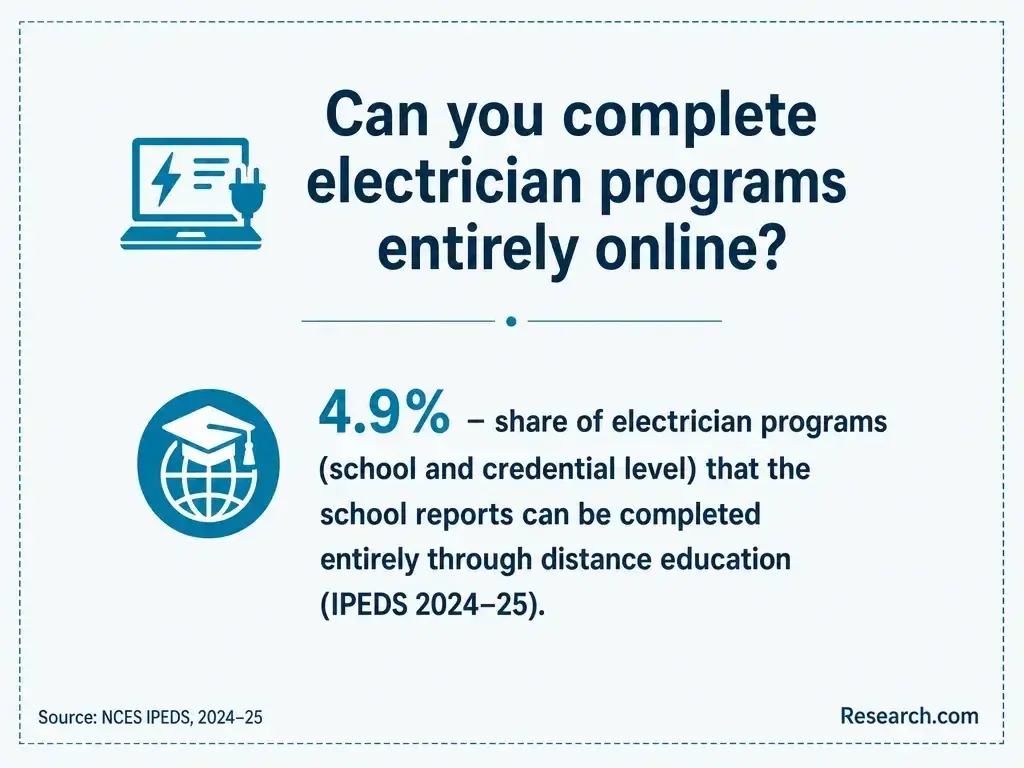
There is no defensible single Fulton-wide average to use as a shopping price: providers and pathways charge differently, and a paid apprenticeship has a different cash-flow pattern from tuition-funded study. Obtain a current, itemized quote for your intended credential and attendance status. Include mandatory fees, books, tools, personal protective equipment, consumable materials, transportation to labs or jobsites, and any applicable examination or application charges. Time away from paid work belongs in the comparison too.
Ask Itawamba Community College about current tuition, fees, electrical-course supplies, and aid eligibility for the specific offering you are considering. For any provider, verify federal-aid eligibility with the school and Federal Student Aid rather than assuming every short course qualifies. Cheap online colleges that accept financial aid can provide a broader cost reference, but their advertised prices do not substitute for an electrician program's tool, lab, and travel budget. Also ask a registered apprenticeship sponsor about wages, instruction charges, and tool responsibilities.
The award may be a certificate, diploma, or associate degree, depending on the program. These are educational credentials. A registered apprenticeship instead leads to a completion credential upon meeting its work and instruction requirements, according to the U.S. Department of Labor. An industry certificate, where offered, is another distinct credential; ask what it assesses and whether local employers value it.
Neither a school award nor institutional accreditation is an electrician license. Verify the exact award name, its transcript or documentation, and whether coursework can transfer into further technical study or receive advanced standing with an apprenticeship sponsor. Get any promised credit arrangement in writing before using it to justify a higher price.
Requirements vary by provider. Ask about minimum age, prior schooling or equivalency, math placement, physical demands, and the ability to attend labs at scheduled times. An apprenticeship sponsor may have its own application, assessment, interview, and employer-selection process; acceptance to a school program does not reserve an apprenticeship place.
If you need flexible entry, compare actual application deadlines and lab availability - not just an institution's general admissions policy. A list of best online colleges with open admissions policy describes a different access question; open admission does not guarantee entry to a capacity-limited electrical course or a sponsor's paid position. Request the electrical program's requirements directly.
Relevant training covers electrical safety, basic circuits, measurements, wiring methods, blueprint reading, code use, installation, and troubleshooting. More advanced study may address motors or controls. The U.S. Bureau of Labor Statistics emphasizes both technical knowledge and the ability to identify and fix electrical problems; classroom knowledge must be demonstrated with tools and equipment.
Compare programs by the tasks students perform independently under supervision, not by course titles alone. Ask to see the lab equipment and a sample skills assessment. If your goal is industrial maintenance, check for controls and motor work; if your goal is construction, check for installation practice and opportunities to work on active jobsites.
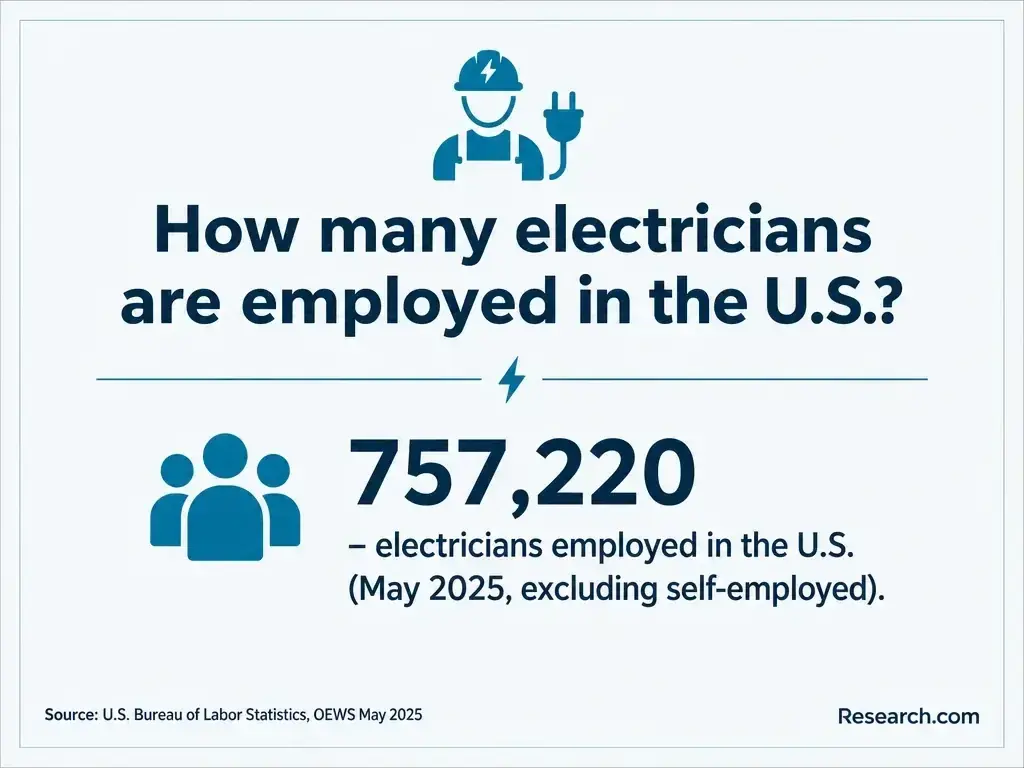
Do not assume that finishing school authorizes independent electrical contracting. Mississippi contractor licensing is administered by the Mississippi State Board of Contractors, while permissions to perform electrical work and local permit requirements can depend on the jurisdiction and type of work. Confirm the rules for the city or county where you expect to work and the role you intend to hold. A supervised entry-level position, a contractor's business license, and permission to work independently are not the same thing.
Ask a prospective employer, local building authority, and the Mississippi State Board of Contractors what experience, examinations, registration, or licensing applies to your planned work. Institutional accreditation, school authorization, apprenticeship registration, industry certification, and occupational licensure each answer different questions; none should be accepted as a substitute for another without confirmation from the relevant authority.
Start with your intended job, then compare the route that can get you there at an acceptable total cost. An affordability ranking is a useful shortlist, not a substitute for checking practical training or employer access. Use the following questions when speaking with a provider or apprenticeship sponsor:
A red flag is a promise that a short, entirely online credential automatically makes you licensed or job-ready. Another is a low tuition quote that omits required tools or offers no clear path to supervised work. If you can enter a suitable paid apprenticeship directly, compare that offer before paying for school; if you need stronger fundamentals or a more accessible first step, a lab-based program may justify its cost.
A realistic first step is an electrical helper, trainee, or apprentice role under supervision. With experience and the permissions applicable to the jobsite, a worker may move into more complex residential, commercial, or industrial work. Later options can include controls troubleshooting, crew supervision, or contracting; each may require additional experience or separate approvals. The U.S. Bureau of Labor Statistics describes apprenticeship as a common way electricians learn the occupation.
Choose training for the work you want next, not just the most advanced-sounding credential. For example, broad classroom study may help you explore specializations, but access to a well-supervised employer can matter more when your immediate goal is to accumulate practical experience.
The U.S. Bureau of Labor Statistics projects 9.2% national employment growth for electricians from 2025 to 2035. That supports considering the trade, but it is not a Fulton forecast and does not show how many local apprentices will be hired. Construction schedules, industrial maintenance needs, and the availability of employers willing to train beginners will shape your actual opportunities.
Before committing, review current openings within a commute you can sustain and contact apprenticeship sponsors about application windows. Look for repeated requests for the skills your chosen program teaches. A broader search radius may reveal more opportunities, but include the resulting travel cost when deciding whether a low-priced program is affordable in practice.
Investing in training is an important decision, so Research.com designed this ranking to compare programs against other electrician options in the same location - not against unrelated trades. The team checks multiple education and occupational sources to improve the ranking's quality, credibility, and accuracy. Only programs with completions reported to IPEDS can appear; a missing apprenticeship or other training provider should not be taken as a judgment of its quality.
Most affordable rankings score costs and debt only: tuition, cost of attendance, median student debt, and federal loan default rate. Indicator weights are distributed using an entropy-based method, which gives more weight to measures that vary more across programs. Accreditation and other quality measures do not enter this affordability score. Research.com's separate best programs methodology considers student outcomes, earnings and return on investment, costs and debt, and quality and recognition; its specified weights are 20% for occupation-relevant programmatic accreditation or industry recognition, 10% for institutional accreditation, 10% for student support, and 60% for outcomes, earnings, and costs, distributed by the entropy-based method. See Research.com's methodology for more detail.
The following sources inform the ranking across the trades Research.com covers. Allied-health sources are part of that broader source set; their recognition does not establish whether an electrician program meets electrical-industry or Mississippi requirements.
Use the ranking to narrow a cost comparison, then confirm current prices, practical training, and apprenticeship connections with each provider. An affordability score alone cannot tell you whether a program is the right route to electrical work.
# 1 position
# 2 position
Not necessarily. A registered apprenticeship is another route combining instruction with paid supervised work. Check employer and local work requirements before choosing either path.
Choose based on the skills, lab time, cost, and employer connections - not the credential name alone. An associate degree takes broader study; a focused certificate may suit a quicker entry-level goal.
You may study theory online, but electrical installation, testing, and troubleshooting require supervised hands-on practice. Confirm where and when that work takes place.
Do not assume so. Ask the relevant local authority and, for contracting questions, the Mississippi State Board of Contractors about requirements for your intended role.
Compare mandatory fees, tools, safety gear, travel, potential lost wages, practical training, completion prospects, and access to paid work. Request an itemized quote before enrolling.