# 1 position


Audited and Verified:
Our Editorial and Data Verification Process
Research.com uses government datasets, official education statistics and primary institutional information to support its career and degree guides. Our review process checks factual accuracy, occupational definitions, source dates and the requirements associated with the credentials discussed.
How This Article Was Fact-Checked
Our editorial team verifies salary estimates, employment projections, education requirements and program information against original data providers and official organizations. Salary figures are checked against the relevant occupational definitions and reporting periods. Information about licensure, accreditation and required in-person training is reviewed separately.
Fact-checked and verified on:

Co-Founder and Chief Data Scientist

Reviewed by Karolina Broda
Fact-Checker and Data Verification
Choosing an affordable electrician program in Meridian, Mississippi, means looking beyond tuition: you also need a route to supervised electrical work. The U.S. Bureau of Labor Statistics projects 9.2% national growth in electrician employment from 2025 to 2035, making the training decision timely. This guide helps prospective students and career changers compare costs, credentials, apprenticeships, and licensing implications. It also accompanies the Most Affordable Electrician Trade Schools in Meridian for 2027 ranking, created by the Research.com team of data scientists to help students make an informed choice about programs worth considering.
Expect instruction in electrical theory, circuits, wiring methods, code use, and safe tool handling, supported by labs where you can practice installing and testing systems. Meridian Community College is a local public-college option to investigate. Ask which electrical credential is currently offered, how many hours take place in a lab, and whether the program helps students connect with supervised work; offerings and schedules can change.
Trade school and apprenticeship solve different parts of the entry problem. A college certificate or associate-level electrical program can build foundational skills before employment, but its completion does not itself replace jobsite experience. A registered apprenticeship combines related instruction with paid, supervised work over multiple years (U.S. Department of Labor). Direct employer entry may suit someone who can secure supervised work immediately, while school can suit someone who needs structured preparation first. Compare the actual work placement and credit arrangements, not just the credential names.
Potential workplaces include electrical contractors, building-construction projects, industrial maintenance operations, and facilities teams serving Meridian and the surrounding area. These settings demand different skills: construction emphasizes installation and inspection-ready work, while maintenance may emphasize troubleshooting equipment and controls (U.S. Bureau of Labor Statistics, Occupational Outlook Handbook).
Ask local employers which entry roles accept classroom training without prior jobsite experience and whether they provide qualified supervision. If a program advertises placement, request its electrician-specific placement definition and the geographic area covered. A job requiring a long commute can change the value of an otherwise inexpensive local program.
The U.S. median annual wage for electricians was $63,190 in May 2025 (U.S. Bureau of Labor Statistics, Occupational Outlook Handbook). It describes workers across experience levels nationwide - not the expected wage of a newly trained electrician in Meridian. No verified Meridian-specific electrician wage is presented here, so use current local job postings and apprenticeship wage schedules when comparing offers.
Pay can differ between supervised entry work, experienced installation, industrial maintenance, and contracting. For an investment decision, compare likely starting compensation with your current earnings and account for raises during paid training rather than applying the national median to your first year.
Length depends on the credential and schedule: a focused certificate generally takes less time than an associate-level program, while a registered apprenticeship extends across multiple years of instruction and supervised employment (U.S. Department of Labor; U.S. Bureau of Labor Statistics, Occupational Outlook Handbook). Do not confuse time in school with time needed to gain the experience required for a later licensing or contractor goal.
Request the current program map from Meridian Community College, including terms, lab or contact hours, and part-time availability. A search for a fast track associates degree is not a shortcut to electrical jobsite competence: an accelerated schedule is worthwhile only if required practical work and employer-recognized training remain intact.
Online delivery may work for portions of electrical theory, code study, and assignments. Wiring, testing, lockout procedures, and working safely around equipment require supervised practice with physical tools and systems. A hybrid program is useful only if its in-person labs and any required worksite training are accessible from Meridian and fit your schedule.
Do not treat an online course completion badge as proof of occupational readiness or licensing eligibility. Even lists of easiest online degrees do not answer the decisive electrician-training question: where, under whose supervision, and for how long will you practice? Obtain those details in writing before enrolling.
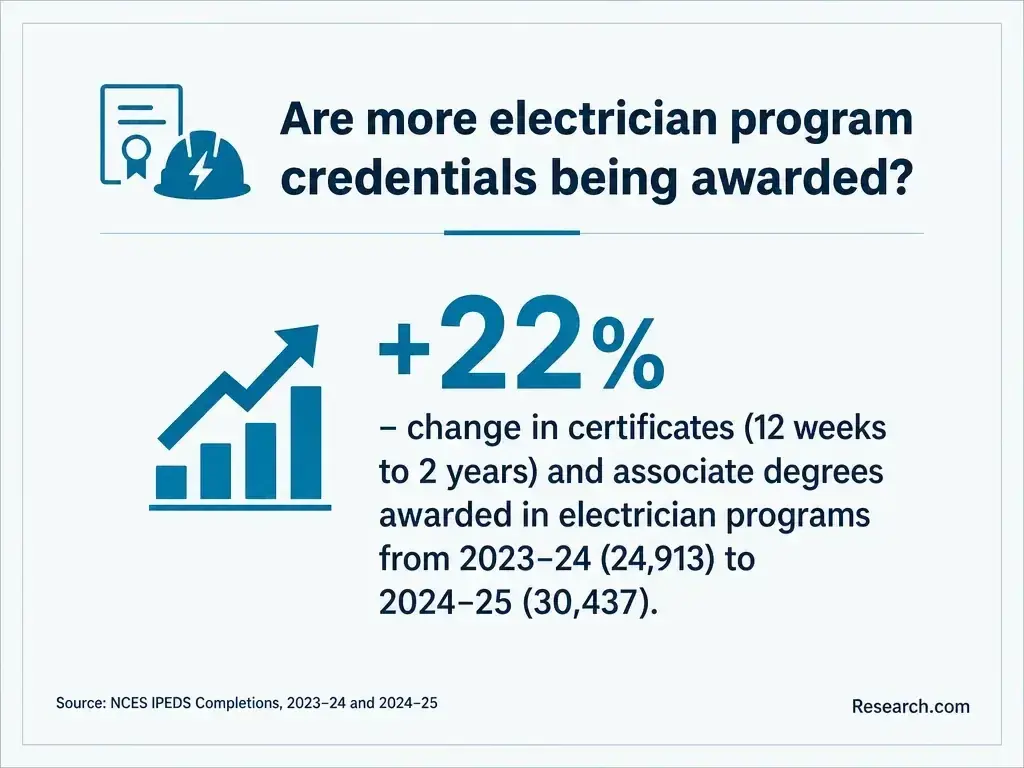
A reliable Meridian-wide average cannot be established from the information available here. Published tuition is only one component, and a paid apprenticeship has a different cost structure from a college program. Ask Meridian Community College for a current, credential-specific cost estimate, then compare it with any apprenticeship offer over the same period.
Your job-ready budget should include mandatory fees, books, tools, testing equipment, safety gear, materials, transportation to labs or worksites, and any examination or application charges. Subtract grants or employer-paid costs, and include earnings you would give up to attend. Federal aid eligibility depends on both the student and program; verify it through the school's financial aid office and Federal Student Aid. A list of best affordable accredited online colleges cannot replace an electrician-specific estimate that includes local hands-on training.
The answer depends on the specific program: possibilities include a college certificate or an associate-level credential, while a registered apprenticeship has its own completion credential (Meridian Community College; U.S. Department of Labor). Confirm the exact award on the current program page before applying. An industry training credential, if offered, is distinct from both a college award and a government-issued license.
Also ask whether completed coursework can count toward another college credential or related apprenticeship instruction. Credit or advanced standing is not automatic: the receiving institution or apprenticeship sponsor decides what it accepts. Most importantly, no school credential alone authorizes independent electrical contracting in Mississippi.
College applicants should check Meridian Community College's current admissions and program-specific requirements rather than assume every electrical pathway has the same entry rules. Ask about placement, prerequisite coursework, registration deadlines, required equipment, and whether classes are offered at times compatible with work.
Apprenticeships and employer positions have separate selection processes set by their sponsors. Confirm the minimum age, education, ability to reach jobsites, and any screening requirements directly with each sponsor (U.S. Department of Labor, Apprenticeship.gov). Meeting school admission requirements is not the same as being hired into supervised electrical work.
Useful preparation links classroom calculations to hands-on tasks: reading diagrams, measuring circuits, selecting conductors and protective devices, making connections, and diagnosing faults. Electrical safety and applying the code to installations matter as much as speed. The U.S. Bureau of Labor Statistics identifies reading blueprints, testing components, and following safety practices among electricians' work.
Ask for a lab syllabus and an explanation of which tasks students perform themselves. Two programs can cover similar theory but provide different amounts of supervised wiring and troubleshooting practice. If your goal is industrial maintenance rather than building installation, check whether the curriculum covers motors and controls relevant to that goal.
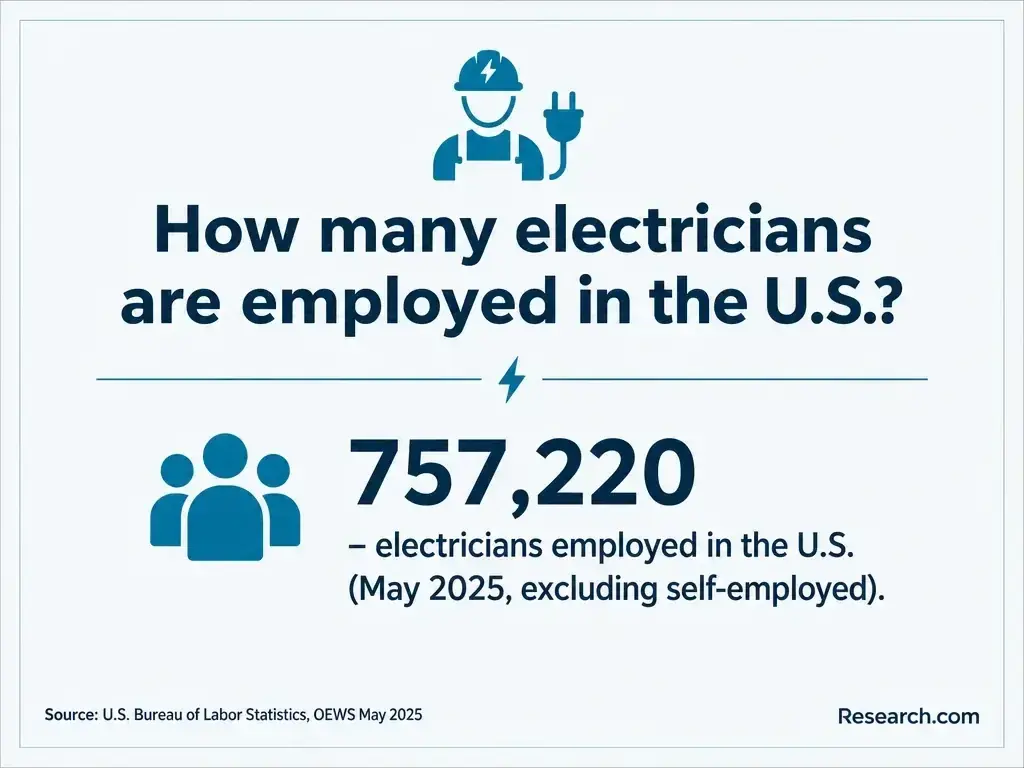
Do not assume there is one credential called an "electrician license" that covers every role. In Mississippi, the State Board of Contractors regulates applicable electrical contracting, while local permitting and work rules can also affect projects in Meridian (Mississippi State Board of Contractors; City of Meridian). Whether you are an employee working under supervision or intend to contract independently is a consequential distinction.
Before choosing training, tell the Mississippi State Board of Contractors and Meridian's permitting authority the kind of work you plan to perform and ask which licenses, examinations, experience, and permits apply. Then ask the school or apprenticeship sponsor how its training relates to those requirements. Institutional accreditation, state school authorization, apprenticeship registration, optional industry certification, and occupational or contractor licensing each serve different purposes; none should be assumed to substitute for another.
Start with the job you want, then compare the lowest complete cost of reaching it. A low ranking price matters less if a program lacks accessible labs, a feasible route to supervised employment, or coursework employers recognize. Likewise, a short program may cost more overall if it prevents you from working while enrolled.
Before committing, use these questions to test whether a program fits your goal:
Verify answers with the school, prospective sponsor, relevant accreditor, and licensing authority. A program is a sound investment only if its completion prospects, debt, foregone earnings, and likely post-training pay fit your circumstances. Comparing accelerated bachelors offerings will not answer those trade-specific questions.
Common progression begins with supervised installation or maintenance work, followed by greater responsibility as experience and technical competence grow. An electrician may later focus on industrial troubleshooting, controls, estimating, supervision, or contracting; independent contracting introduces separate business and licensing responsibilities (U.S. Bureau of Labor Statistics; Mississippi State Board of Contractors).
These paths should not be valued solely by a highest-paying trade school careers list. For someone starting in Meridian, access to a paid position, the type of systems encountered, and a realistic route to advancement are more useful measures than an experienced worker's national wage.
The U.S. Bureau of Labor Statistics projects electrician employment to grow 9.2% from 2025 to 2035. That is a national occupational projection, not a forecast of Meridian vacancies or a guarantee of a local job. It supports investigating the field, but the size and timing of local hiring still matter when choosing a training route.
Check current electrical-contractor and facilities openings alongside apprenticeship recruitment schedules before selecting a start date. If openings near home are limited, ask whether a program's employer relationships extend into the surrounding area - and factor the resulting commute into your cost comparison.
Education is a significant investment, so the Research.com team uses documented data sources and a consistent comparison method to help readers assess local options. Programs are compared with others in the same occupation and location. Only programs reporting completions to the Integrated Postsecondary Education Data System (IPEDS) can appear; an apprenticeship or employer training program absent from the ranking may still be a valid option.
This most-affordable ranking measures costs and debt only: tuition, cost of attendance, median student debt, and federal loan default rate. Indicator weights are assigned using an entropy-based method, which gives more weight to measures that vary more across programs. Accreditation, student support, and earnings are not included in this affordability score. Readers should verify those factors separately before enrolling.
The ranking system draws on the following sources. Some recognition sources apply to other occupations in Research.com's broader trade-program work; allied-health and dental sources do not establish electrician-program quality or affect this electrician affordability score.
Use the ranking to narrow your cost search, not as a substitute for checking lab training, employer connections, and the requirements for the work you intend to perform. Further details are available on Research.com's methodology page.
# 1 position
# 2 position
Not necessarily. A supervised employer position or registered apprenticeship may provide an entry route. Compare its instruction, pay, and selection requirements with those of a college program (U.S. Department of Labor; U.S. Bureau of Labor Statistics).
That cannot be determined from tuition alone. Request its current total program charges and compare them with tools, travel, available aid, and wages from any paid-training offer.
Online coursework can support theory study, but it cannot replace supervised practice with electrical equipment or required jobsite experience. Check where a hybrid program delivers those components.
No certificate should be assumed to confer independent contracting authority. Check the requirements for your intended work with the Mississippi State Board of Contractors and Meridian's permitting authority.
Ask the apprenticeship sponsor whether it accepts the program's coursework, how much credit it grants, and whether that decision changes your instruction schedule or wage progression. Get the answer before paying for training.