
Most Affordable Electrical Technician Schools & Training in Perkinston for 2027
Audited and Verified:
Our Editorial and Data Verification Process
Research.com uses government datasets, official education statistics and primary institutional information to support its career and degree guides. Our review process checks factual accuracy, occupational definitions, source dates and the requirements associated with the credentials discussed.
How This Article Was Fact-Checked
Our editorial team verifies salary estimates, employment projections, education requirements and program information against original data providers and official organizations. Salary figures are checked against the relevant occupational definitions and reporting periods. Information about licensure, accreditation and required in-person training is reviewed separately.
Fact-checked and verified on:

Co-Founder and Chief Data Scientist

Reviewed by Karolina Broda
Fact-Checker and Data Verification
Choosing electrician training near Perkinston means comparing more than tuition: a short classroom program and a paid apprenticeship can lead to very different costs and work experience. The U.S. Bureau of Labor Statistics projects 9.2% growth in electrician employment nationwide from 2025 to 2035. This guide explains local training options, total costs, credentials, and Mississippi licensing considerations. It also accompanies the Most Affordable Electrician Trade Schools in Perkinston for 2027 ranking, created by the Research.com team of data scientists to help students make an informed choice about which programs are worth considering.
Key findings about electrician degrees in Perkinston
- The lowest-ranked price is not necessarily the lowest cost to become job-ready: compare fees, tools, travel, debt, and any wages earned during training.
- A Perkinston-area school program can teach electrical fundamentals, but a certificate alone does not replace supervised experience or any contractor or local authorization required for the work you intend to perform.
- Electricians had a $63,190 U.S. median annual wage in May 2025, and employment is projected to grow 9.2% nationally from 2025 to 2035; neither figure predicts a new trainee's pay or vacancies near Perkinston (U.S. Bureau of Labor Statistics).
Table of Contents
- Most Affordable Electrical Technician Schools & Training in Perkinston for 2027
- What can I expect from an electrician trade school program in Perkinston?
- Where can I work with an electrician trade school training in Perkinston?
What can I expect from an electrician trade school program in Perkinston?
Expect instruction in electrical theory, wiring methods, code interpretation, and safe tool use, followed by practice assembling and testing circuits. A lab can build entry-level competence, but it is not the same as installing and troubleshooting systems on occupied worksites under supervision. Ask how much time is spent doing each.
Mississippi Gulf Coast Community College is a public-college option to investigate for electrical training relevant to Perkinston. Confirm its current catalog, campus location, credential, schedule, and lab requirements before comparing it with an apprenticeship. A school-based program may suit someone who wants structured preparation before applying to electrical employers. Someone ready to work and able to secure a position may prefer a registered apprenticeship, which combines paid work with related instruction (Mississippi Gulf Coast Community College; U.S. Department of Labor).
Program availability and class location matter particularly in a rural community: a course described as serving the Gulf Coast may still require regular travel away from Perkinston. Ask where every lab meets and whether the provider helps students obtain supervised electrical work.
Where can I work with an electrician trade school training in Perkinston?
Potential settings include residential construction, commercial building projects, and maintenance of electrical systems at facilities along the Mississippi Gulf Coast. The practical question is whether you can reach available jobs and supervised training sites - not whether an occupation exists somewhere in the state. Search openings in Perkinston and the coastal communities you can realistically commute to, and compare the required experience with what a program actually provides.
Initial roles may be advertised as electrical helper or apprentice. A school credential can support an application, but employers may still require worksite training and may assess driving availability, safety habits, and basic troubleshooting. Ask a prospective provider which employers have recently hosted its students; do not treat an employer list as a placement guarantee.
The latest national Occupational Outlook Handbook figure supplied for electricians is a $63,190 median annual wage for May 2025 (U.S. Bureau of Labor Statistics). That is a midpoint for employed electricians nationwide, including experienced workers - not an entry-level offer or a Perkinston wage estimate. Request current pay ranges from nearby employers and apprenticeship sponsors, separating helper or apprentice rates from experienced-electrician rates.
When comparing offers, consider paid hours, overtime availability, benefits, travel time, and how apprentice wages increase with documented progress. A slightly higher hourly rate farther from home may leave less after commuting expenses; a paid apprenticeship can also reduce the earnings forgone during training.
There is no single duration: an introductory certificate, a longer school credential, and a registered apprenticeship have different purposes. Ask Mississippi Gulf Coast Community College for the current program's required credits or contact hours and a term-by-term schedule; do not infer completion time from a program title. Part-time study can extend the calendar while making it easier to keep working.
Registered electrician apprenticeships generally take multiple years because classroom learning runs alongside substantial paid, supervised work. U.S. Department of Labor apprenticeship guidance commonly describes approximately 2,000 hours of on-the-job learning and 144 hours of related instruction per year, but the sponsor's registered standards govern the actual requirements. A short school program can get you into the applicant pool sooner; it should not be mistaken for completion of that work-based training.
Online instruction can cover terminology, electrical calculations, drawings, and some code study. Testing circuits, handling tools, following lockout procedures, and demonstrating safe installation require in-person practice. A hybrid program is useful only if its lab location and schedule work for you; an entirely online theory course should not be treated as equivalent to supervised electrical work.
Before paying, request the course-by-course breakdown of remote lessons, campus labs, and employer-site work. Confirm who evaluates practical skills and whether an apprenticeship sponsor will recognize any prior instruction. An accelerated online associate degree program is a different educational option; its online format alone says nothing about electrician worksite preparation.
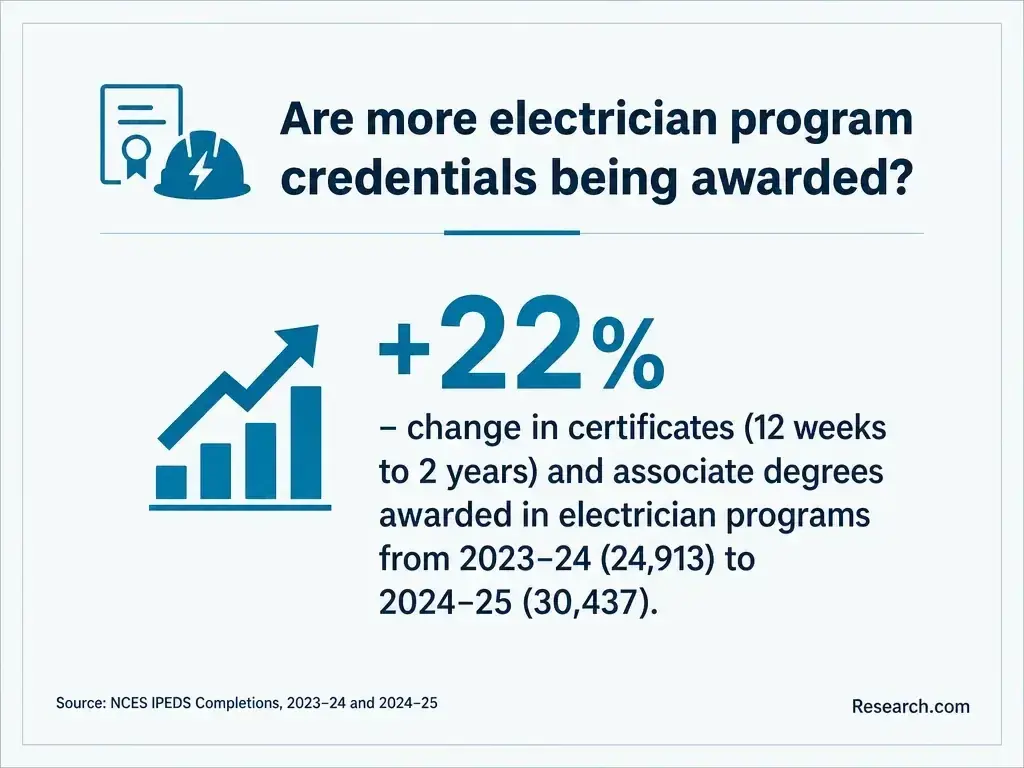
A defensible Perkinston average is not available here: local electrician pathways differ in length and funding, and a paid apprenticeship does not have the same cost structure as college enrollment. Rather than rely on an unsupported average, request a written, program-specific estimate from Mississippi Gulf Coast Community College and any apprenticeship sponsor you are considering.
Build a cost to become job-ready estimate that includes tuition, mandatory fees, books, tools, safety gear, materials, travel to labs or worksites, and any required exam or application fees. Then subtract grants or employer-paid expenses and account separately for wages earned - or forgone - during training. Federal aid depends on both student and program eligibility (Federal Student Aid); ask the college's aid office, and check Mississippi workforce-training assistance through the state workforce system. A list of most affordable online schools that accept FAFSA cannot establish eligibility for a particular electrician program.
The credential depends on the route you choose. A college program may award a certificate, diploma, or - if the specific program is structured that way - an associate degree. A registered apprenticeship documents completion under its sponsor's approved standards. An industry training certificate can document particular skills, but it is not an occupational license (Mississippi Gulf Coast Community College; U.S. Department of Labor).
Ask for the exact credential name and whether its coursework can be credited toward later study or recognized as prior learning by a prospective apprenticeship sponsor. Get any promise of advanced standing in writing from the organization that would award it. The question is not whether a credential sounds substantial; it is whether employers and sponsors for your intended electrical work will recognize what it represents.
Requirements vary by program and sponsor. Check the current college catalog for its application, placement, and program-entry rules; ask an apprenticeship sponsor separately about its application process, work eligibility, and any assessment or interview. Do not assume admission to a college guarantees a place in an apprenticeship or a job (Mississippi Gulf Coast Community College; U.S. Department of Labor).
Before applying, ask whether you must obtain tools or safety gear before the first lab and whether the schedule permits employment. If you have relevant construction experience, ask whether the provider assesses prior learning - but do not assume it will waive practical instruction. The same caution applies to other online education listings, including easy masters programs: their admissions information does not describe entry into electrical training.
A worthwhile electrical curriculum should connect calculations and blueprint reading to actual wiring, measurement, fault-finding, and safe use of equipment. Code instruction matters because an installation must be assessed against the rules applicable to the job, not merely made to function. Compare syllabi and lab equipment: two programs with similar credential names may give students very different opportunities to practice (U.S. Bureau of Labor Statistics; Mississippi Gulf Coast Community College).
Ask to see how students demonstrate competency - for example, whether they build circuits, use meters, diagnose faults, and receive feedback on safe work practices. Workplace habits also matter: communicating a problem clearly and documenting work help a trainee contribute on a construction or maintenance crew.
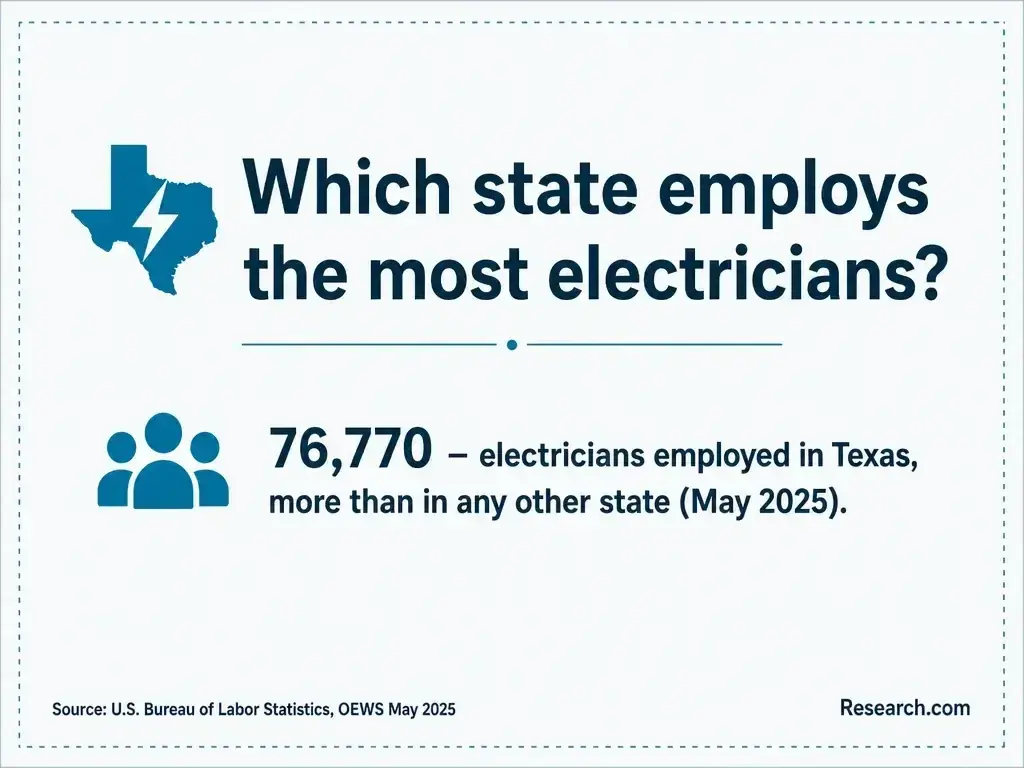
Do not confuse three separate matters: authorization to operate an electrical contracting business, any permits or local rules governing particular jobs, and an employer's requirements for a worker under supervision. Mississippi's State Board of Contractors regulates covered contractor work, while requirements for a particular project can also depend on the relevant local authority (Mississippi State Board of Contractors). A school certificate does not itself grant contractor licensure or permission to perform unsupervised work.
Before enrolling, describe your goal - employee, apprentice, or future contractor - to the provider and ask what experience and examinations, if any, the relevant authorities require for that goal. Verify the answer with the Mississippi State Board of Contractors and the jurisdiction where you expect to work. NCCER or another industry credential may help document training, but it does not replace a required license, permit, or supervised experience (NCCER; Mississippi State Board of Contractors).
Start with the job you want, then compare routes against that goal. A low-priced classroom program may be a good investment if it provides usable lab skills and helps you enter supervised work. A paid apprenticeship may make more financial sense if you can obtain a place and its work schedule fits your circumstances. Neither route is automatically better: completion likelihood, travel, financial aid, debt, wages during training, and later earnings all affect the return over time.
Ask each provider the same questions so that the answers are comparable:
- What exact credential will I receive, and which electrical jobs or apprenticeship applications is it designed to support?
- How many required hours are hands-on, where do they occur, and who evaluates my work?
- What is my total expected out-of-pocket cost after aid, including tools and commuting?
- Can you document recent completion and job-placement outcomes for this specific program?
- Who decides whether coursework counts toward an apprenticeship or further training?
Verify institutional accreditation, any claimed industry recognition, and Mississippi authorization as separate questions; none alone establishes licensing eligibility. A common mistake is choosing solely by rank or tuition without checking the lab and worksite pathway. General listings such as what is the cheapest online bachelor degree cannot answer those electrician-specific questions.
A realistic progression is from helper or apprentice to an experienced electrician who can take on more complex installation or maintenance work. With additional experience, some workers specialize in controls, industrial systems, or crew supervision; others consider contracting after meeting the rules applicable to their work. Those later roles are possibilities, not outcomes conferred by a school credential (U.S. Bureau of Labor Statistics; Mississippi State Board of Contractors).
Choose training around the setting you want. Someone targeting building construction should ask about installation labs and apprenticeship connections; someone interested in facility maintenance should ask how much troubleshooting and equipment diagnosis the program includes. An unrelated online credential - even a cheap online doctorate - does not substitute for those practical competencies.
The U.S. Bureau of Labor Statistics projects 9.2% national employment growth for electricians from 2025 to 2035. That supports considering the occupation, but it is not a forecast for Perkinston or a guarantee of a nearby opening. In a smaller community, the number of reachable employers and apprenticeship positions may matter more to an individual applicant than national growth.
Test local demand before committing: review current helper and apprentice postings across your feasible Gulf Coast commute, note the skills employers request, and speak with sponsors about their next intake. If openings demand experience your proposed program cannot provide, favor a route that connects instruction to supervised work rather than paying for classroom training alone.
Most Affordable Electrical Technician Schools & Training in Perkinston for 2027
Investing in training is an important decision, so the Research.com team checks multiple sources and compares electrician programs with other programs serving the same occupation and location. The affordability ranking includes only programs with completions reported to IPEDS. It evaluates tuition, cost of attendance, median student debt, and federal loan default rates, with weights assigned using an entropy-based method. Accreditation and other quality indicators do not contribute to the affordability score; readers should check those separately.
The team uses the following data sources in creating its trade-program rankings. Some cover occupations other than electrical work and should not be read as electrician-program accreditors:
- IPEDS database - reported program completions and institutional data.
- National Center for Education Statistics - federal education data and definitions.
- College Scorecard database - available cost, debt, and outcome measures.
- Peterson's database - supplemental institutional information.
- Commission on Accreditation of Allied Health Education Programs (CAAHEP) - accreditation information for applicable health programs, not electrician training.
- Accrediting Bureau of Health Education Schools (ABHES) - accreditation information for applicable health programs, not electrician training.
- Commission on Dental Accreditation (CODA) - accreditation information for applicable dental programs, not electrician training.
- Dental Assisting National Board (DANB) - credential information for applicable dental programs, not electrician training.
- National Center for Construction Education and Research (NCCER) - construction-training credential information.
- Apprenticeship.gov Partner Finder - registered-apprenticeship sponsor information.
This approach helps readers identify lower-cost college-reported options, but it cannot establish that a program provides the best electrical labs or a route into an apprenticeship. Registered apprenticeships and employer training may not appear in IPEDS at all. The Research.com methodology explains the ranking process in more detail.
# 2 position
# 3 position
# 4 position
Mississippi Gulf Coast Community College - Electrician.
certificate or diploma Frequently asked questions about electrician programs in Perkinston
Is trade school required to become an electrician?
Not necessarily. An apprenticeship or employer-sponsored route can combine instruction with supervised paid work. Compare entry requirements and ask whether school training improves your chances of entering the route you want.
Is an electrician certificate enough to work independently?
No. It documents training, not automatic authority to contract or perform work without supervision. Check applicable Mississippi contractor and local requirements for the work you plan to do.
Can I complete electrician training entirely online?
Online lessons can cover theory, but electrical installation, testing, and safety skills require in-person practice. Confirm where required labs and supervised work take place.
Which is cheaper: college or an apprenticeship?
It depends on fees, tools, travel, aid, and wages during training. Request written cost estimates for both; a paid apprenticeship can change the calculation substantially.
Should I use the affordability ranking as my final decision?
No. Use it to identify college-reported options to investigate, then verify current prices, practical training, credential recognition, and access to supervised work.
- U.S. Bureau of Labor Statistics - Electricians
Used to verify salary, employment outlook, and typical education requirements.
https://www.bls.gov/ooh/construction-and-extraction/electricians.htm - NCCER - Accredited Training
Used to verify programmatic accreditation or industry recognition of programs.
https://www.nccer.org/ - O*NET OnLine - Electricians
Used to verify common responsibilities, skills, work settings, and education expectations.
https://www.onetonline.org/link/summary/47-2111.00 - Mississippi Gulf Coast Community College - official website
Official school website (programs, tuition, admissions).
https://www.mgccc.edu/