# 1 position


Audited and Verified:
Our Editorial and Data Verification Process
Research.com uses government datasets, official education statistics and primary institutional information to support its career and degree guides. Our review process checks factual accuracy, occupational definitions, source dates and the requirements associated with the credentials discussed.
How This Article Was Fact-Checked
Our editorial team verifies salary estimates, employment projections, education requirements and program information against original data providers and official organizations. Salary figures are checked against the relevant occupational definitions and reporting periods. Information about licensure, accreditation and required in-person training is reviewed separately.
Fact-checked and verified on:

Co-Founder and Chief Data Scientist

Reviewed by Karolina Broda
Fact-Checker and Data Verification
Choosing affordable electrician training in Salina means looking beyond tuition: the cheapest program may not provide the hands-on experience needed for the work you want. The U.S. Bureau of Labor Statistics projects electrician employment to grow 9.2% nationally from 2025 to 2035. For prospective students and career changers, this guide compares training routes, costs, credentials, and local entry requirements. It also accompanies the Most Affordable Electrician Trade Schools in Salina for 2027 ranking, created by the Research.com team of data scientists to help students make informed choices about programs worth considering.
Expect a mix of electrical theory and supervised practice, not a shortcut to independent electrical contracting. Salina Area Technical College is a local school to investigate, while paid apprenticeships and employer training offer different routes into the trade. Ask for the current catalog, credential title, lab schedule, and placement or apprenticeship relationships; program names alone do not establish how much supervised work you will get.
The main pathways differ in when you begin earning, where you practice, and what you receive at completion. This comparison helps identify the route that fits your immediate goal.
| Pathway | Typical training structure | Best fit |
| Technical-school certificate or diploma | Classroom and shop instruction; workplace experience depends on the program | Someone seeking structured fundamentals before applying for electrical work |
| Electrical associate degree, if offered | Trade instruction plus additional coursework; verify the actual program and credential | Someone who wants the broader credential and can justify its extra time and cost |
| Registered apprenticeship | Paid supervised work paired with related technical instruction | Someone ready to compete for a position and learn primarily on the job |
| Employer-sponsored entry | Paid helper work and employer-directed training; formal instruction varies | Someone with a credible employer willing to explain the route to advancement |
For each option, ask whether previous coursework or documented experience can count toward training. Credit or advanced standing is sponsor- and provider-specific; a school certificate does not automatically shorten an apprenticeship. If you are weighing other career routes, best college degrees for employment addresses a separate decision, not a qualification for electrician work.
Electrical training can support applications for supervised work with residential and commercial contractors, industrial maintenance teams, and facilities departments. In Salina, compare jobs at manufacturing and other facilities with contractor jobs across the surrounding area: maintenance may emphasize troubleshooting existing equipment, while construction work may provide more experience installing new systems. An employer's openings and supervision arrangements matter more than a school's broad list of possible job titles.
Ask whether a prospective employer hires beginners, provides supervised electrical experience, and supports related instruction. Working as an electrical helper can be a realistic alternative to paying for a school program first, but general maintenance duties may not count as qualifying electrical experience under the rules that apply where you seek a license.
The U.S. Bureau of Labor Statistics reports a $63,190 national median annual wage for electricians in May 2025. The figure combines workers at different experience levels and locations; it is neither a verified Salina wage nor a promise to a newly trained applicant. Apprentices and helpers generally need to evaluate the wage offered for their specific position rather than use the occupation-wide median as a starting-pay estimate.
For a local return-on-investment estimate, compare actual Salina-area job postings or written apprenticeship wage schedules with your present earnings. Include the time before you reach a higher wage, not just a possible later-career salary. The question what bachelor's degree makes the most money involves a different education path and should not be used as an electrician pay benchmark.
A school program and the full path to experienced electrician are different timelines. Certificate or diploma length depends on the provider's published credit or clock hours and whether you attend full- or part-time. A registered apprenticeship combines related instruction with paid, supervised work over multiple years; U.S. Department of Labor apprenticeship standards describe the occupation's required instruction and work experience, while the sponsor sets the applicable program details.
Before choosing an accelerated course, ask how many hours are spent wiring, testing, and troubleshooting in person, and whether the course connects to an employer or apprenticeship. Finishing classes sooner does not eliminate required workplace experience or local examination requirements. A fastest high paying degree comparison likewise cannot tell you how quickly you can progress through electrical field training.
Online instruction can be useful for electrical theory, calculations, and code study. It cannot replace supervised practice with tools, circuits, testing equipment, jobsite procedures, and safe work habits. A hybrid program is worth considering if its in-person labs are accessible from Salina and scheduled around work; a remote course with no credible practical component is a weaker choice for a beginner seeking field employment.
Ask a hybrid provider where labs take place, who supervises them, how skills are assessed, and whether any worksite placement is required. Commuting to those sessions belongs in your cost calculation. Do not assume an online completion certificate satisfies an apprenticeship sponsor's requirements or a local licensing authority's experience rules.
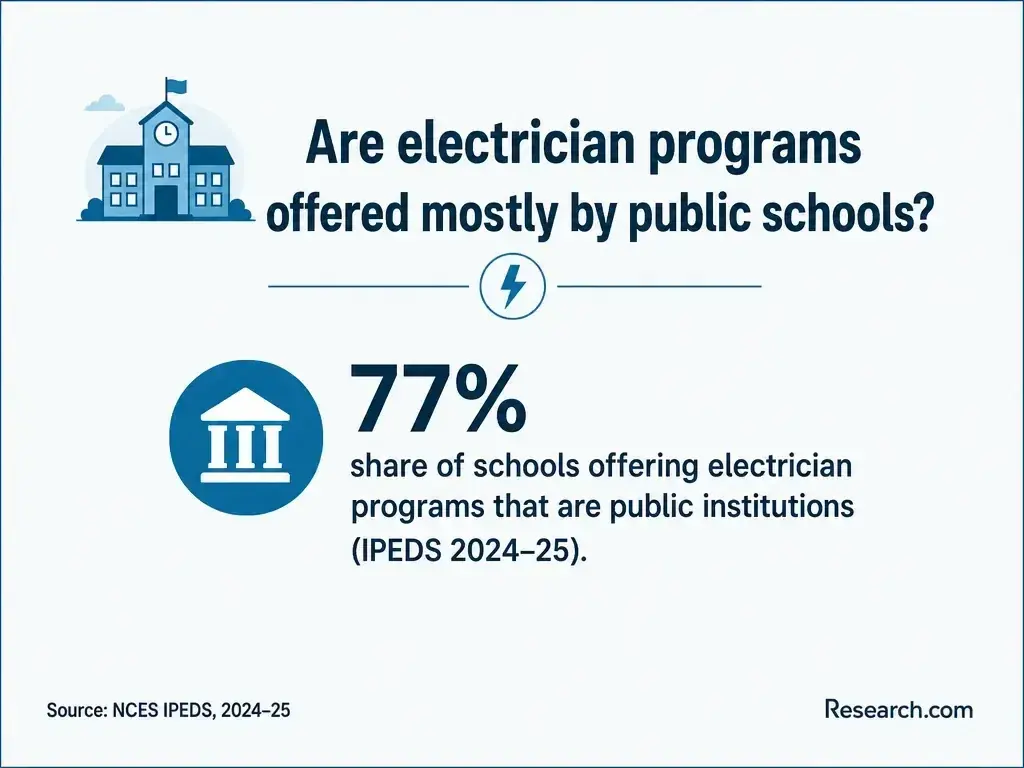
There is no dependable Salina-wide average that captures school programs, paid apprenticeships, and employer training on comparable terms. A quoted tuition amount is only a starting point. Request a current, itemized cost sheet from Salina Area Technical College and any other training sponsor you are considering; do not treat a ranking position as a final bill.
Your comparison should account for the costs most likely to change what you actually pay:
Ask the school's financial aid office which aid applies to the specific program, not merely to the institution. Federal Student Aid eligibility depends on program and student requirements. For a paid apprenticeship, compare wages and any tool or instruction costs alongside the longer training timeline. A sensible investment estimate also accounts for your likelihood of finishing, borrowing costs, expected wage progression, and when those earnings might occur.
The credential depends on the route: a school may award a certificate, diploma, or associate degree for a qualifying program; a registered apprenticeship awards its own completion credential. Confirm the exact title and issuing organization before enrolling. Neither a school award nor an apprenticeship completion document is automatically a local occupational license.
Industry credentials can demonstrate particular skills, but their value depends on the curriculum and employers you target. For readers comparing shorter credentials generally, fast certifications that pay well should not be mistaken for a substitute for supervised electrical practice. Ask employers which credentials they recognize for entry-level hiring and whether they require additional instruction after hire.
Requirements vary by provider and pathway. Request the current admissions checklist for any school program; a registered apprenticeship sponsor may separately screen applicants for education, aptitude, work eligibility, or the ability to perform jobsite duties under its published rules. Admission to school does not mean acceptance into an apprenticeship or a job.
Before applying, ask whether math preparation is recommended, when labs meet, what tools students must bring, and whether a work placement is arranged or left to students. If you already have electrical coursework or documented field experience, ask both the provider and apprenticeship sponsor whether either will recognize it. Get any advanced-standing decision in writing before using it to compare program lengths.
Useful entry-level training connects electrical calculations and code concepts to tasks a beginner must perform safely: reading drawings, identifying materials, installing and testing circuits, using meters, and troubleshooting under supervision. The U.S. Bureau of Labor Statistics' electrician occupational description also emphasizes inspection, repair, and compliance with electrical codes. Shop practice matters because recognizing a wiring diagram is not the same as safely building and testing the installation.
Compare syllabi at the task level. A student aiming for industrial maintenance should ask about motors, controls, and troubleshooting practice; someone targeting construction should ask about installation labs and jobsite exposure. Neither should assume a general course covers the employer's equipment or removes the need for further supervised training.
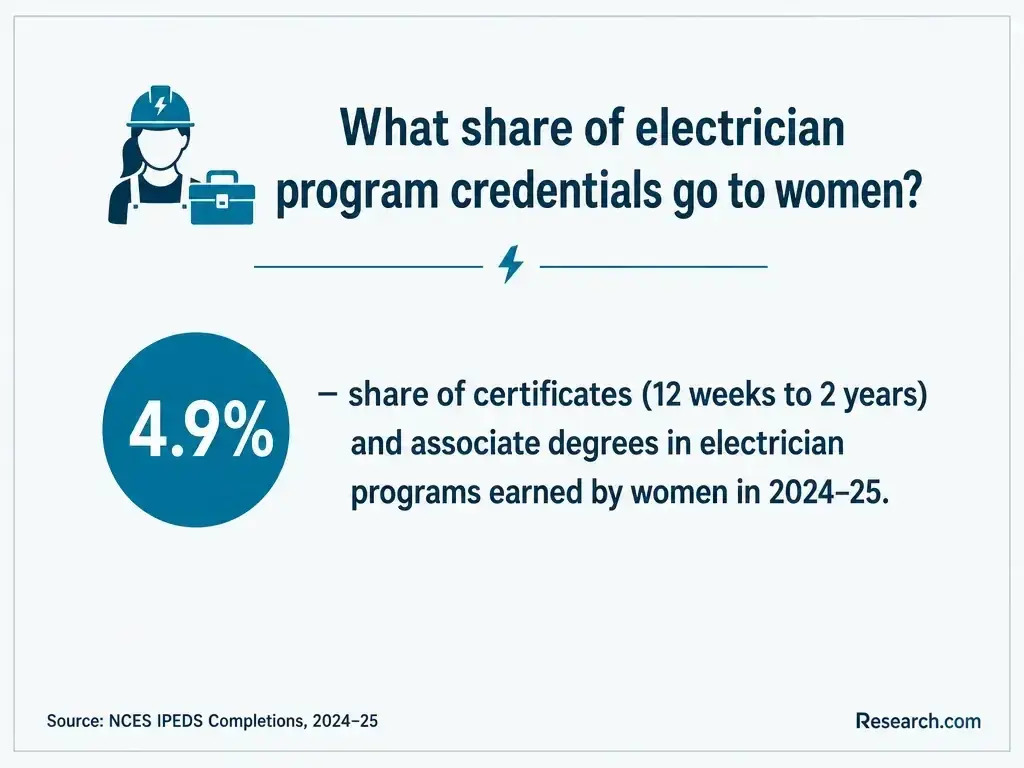
Check the rules for the work and jurisdiction you intend to enter. Kansas does not have one uniform statewide journeyman electrician license; local authorities govern relevant trade licensing and electrical permits. For work in Salina, confirm current classifications, experience documentation, examination rules, and contractor requirements with the City of Salina's building or licensing authority before assuming a school credential qualifies you. Rules can differ when a job is outside city limits or in another jurisdiction.
Keep separate records for school instruction, supervised work, and any examinations. Institutional accreditation concerns the school; apprenticeship registration concerns the training arrangement; optional industry certification documents particular skills; and occupational licensing determines whether you may perform regulated work in a given jurisdiction. One does not automatically provide the others. Ask a prospective employer who supervises beginners and who is responsible for permits.
Choose the route that can take you from training to supervised employment at a cost and schedule you can sustain. A low-cost school option may be worthwhile if its labs build the skills local employers seek; a paid apprenticeship may be better if you can secure a place and need wages while training. Neither choice is strong if you cannot confirm its practical component or intended next step.
Use these checks when speaking with an admissions representative or apprenticeship coordinator:
Do not use an accreditation label as proof of licensing eligibility. A list of nationally accredited colleges is not a directory of locally approved electrical apprenticeships or licensed contractors. The key red flags are vague answers about lab time, promised wages without supporting employer evidence, and a price quote that leaves out required tools.
An entry-level route commonly begins with supervised helper or apprentice work, followed by more responsibility as skills and documented experience develop. Depending on the employer, that experience can lead toward construction electrical work, industrial electrical maintenance, controls-related tasks, supervision, or eventually contracting. Each move can call for different experience, examinations, or local licensing; a short course does not make someone independently qualified for every role.
Choose training for the next position you can plausibly obtain, then ask what experience that employer offers. For example, someone interested in plant troubleshooting should favor meaningful equipment and controls practice over a program focused solely on introductory residential installations. Someone hoping to operate a contracting business should investigate local contractor rules and business obligations separately from worker training.
The U.S. Bureau of Labor Statistics projects 9.2% growth in electrician employment nationally from 2025 to 2035. That projection indicates demand across the occupation, not a forecast of openings in Salina or a guarantee of placement. Local hiring can vary by construction schedules, industrial maintenance needs, and how far you are willing to travel for work.
Before paying for training, review current beginner-level openings and speak with apprenticeship sponsors or employers about their next intake. Note whether advertised roles require prior experience and whether work is based in Salina or involves regional jobsites. That check turns a national outlook into a more useful test of your intended entry route.
Investing in training is an important decision. Research.com created the affordability ranking to help readers compare electrician programs against other programs in the same occupation and location, rather than against unrelated schools. The team uses reported data and checks its quality and credibility; only programs with completions reported to IPEDS are eligible. That means an apprenticeship or employer training route can be worth considering even if it does not appear in the ranking.
The most affordable ranking scores costs and debt only: tuition, cost of attendance, median student debt, and federal loan default rate. An entropy-based method assigns more weight to indicators that differ more across eligible programs. Accreditation, instruction quality, and licensing alignment are not part of this affordability score. Readers should verify those separately before enrolling. More detail appears in Research.com's ranking methodology.
The ranking draws on the following data sources. Some cover multiple occupations and should not be read as endorsements or electrician-specific approvals:
Use the ranking to narrow your cost comparison, then ask each provider about practical training, the exact credential, and how its graduates enter paid electrical work. College-oriented datasets do not comprehensively cover registered apprenticeships, union training, or employer-sponsored instruction.
# 1 position
# 2 position
A paid apprenticeship or employer-sponsored position may reduce upfront tuition and provide wages, but entry can be competitive and tools or travel may still cost money. Compare an actual offer with a school's itemized net cost.
No. A school program provides its stated instruction and credential; a registered apprenticeship combines related instruction with paid, supervised work. Ask whether a school program has a formal connection to a sponsor rather than assuming completion provides apprenticeship credit.
Online coursework can teach theory, but electrical work requires supervised practical skills. Verify where hands-on instruction occurs and what experience local authorities or prospective employers require.
Not automatically. Check the licensing, experience, examination, and permit rules that apply where you plan to work, including current City of Salina requirements for work in the city.
Only after comparing required tools and fees, hands-on training, time away from paid work, and the path into supervised employment. The lowest tuition may not be the lowest total cost to become job-ready.