# 1 position


Audited and Verified:
Our Editorial and Data Verification Process
Research.com uses government datasets, official education statistics and primary institutional information to support its career and degree guides. Our review process checks factual accuracy, occupational definitions, source dates and the requirements associated with the credentials discussed.
How This Article Was Fact-Checked
Our editorial team verifies salary estimates, employment projections, education requirements and program information against original data providers and official organizations. Salary figures are checked against the relevant occupational definitions and reporting periods. Information about licensure, accreditation and required in-person training is reviewed separately.
Fact-checked and verified on:

Co-Founder and Chief Data Scientist

Reviewed by Karolina Broda
Fact-Checker and Data Verification
Choosing an affordable electrician training program in McKinney means looking beyond tuition: the least expensive classroom option may not provide the supervised work experience needed for a Texas license. The U.S. Bureau of Labor Statistics projects electrician employment to grow 9.2% nationally from 2025 to 2035. This guide compares school and apprenticeship pathways, costs, credentials, and licensing steps. It also accompanies the Most Affordable Electrician Trade Schools in Mckinney for 2027 ranking, created by the Research.com team of data scientists to help students make an informed choice about programs worth considering.
Expect instruction in electrical theory, circuits, blueprint reading, code, testing, and safe installation, paired with lab work such as wiring, bending conduit, and diagnosing faults. The crucial distinction is whether practical work occurs only in a school lab or also on an employer's jobsite. Texas journeyman eligibility depends on qualifying supervised work experience, not simply finishing a course (Texas Department of Licensing and Regulation, or TDLR).
These pathways serve different needs. Ask each provider exactly which credential it awards and how it helps you obtain supervised work.
| Pathway | Typical credential or result | Best fit and main limitation |
| Short pre-apprenticeship or certificate | School or training-provider completion credential | Useful for exploring the trade and building basic skills; does not itself supply the experience required for a journeyman license. |
| Longer college or career-school program | Certificate, diploma, or, where offered, associate degree | Fits learners seeking structured labs and broader instruction; confirm employer connections and whether credits transfer. |
| Registered apprenticeship | Paid supervised work, related instruction, and an apprenticeship completion credential | Fits learners ready to earn while training; entry depends on sponsor openings and selection requirements. |
| Employer-sponsored entry | On-the-job training; school credential may not be awarded | Fits applicants who can find a qualified supervising employer; verify instruction, documented hours, and advancement opportunities. |
Collin County Community College District is one local public-college option to investigate, but confirm its current electrical offerings and delivery sites before planning a commute. An introductory certificate is worthwhile when it improves access to an employer or apprenticeship; it is a weaker investment if it repeats training an employer would provide at no charge.
Electrical contractors serving McKinney and the wider Dallas-Fort Worth area work on homes, commercial buildings, renovations, and industrial facilities. Maintenance employers may also need electrical skills, though a maintenance job is not automatically qualifying electrician experience for Texas licensure. Before accepting a position, ask who will supervise the work and how experience will be documented for TDLR.
A wider job search can improve your chances of finding paid training, but commuting changes the real cost of a program or job. Compare the worksite location and schedule with classroom requirements, rather than assuming a McKinney address means all training happens nearby. If you are comparing trades, a guide to easy certifications that pay well can provide context; electrician work still requires substantial practical training and Texas licensure for regulated electrical work.
The U.S. Bureau of Labor Statistics reports a $63,190 national median annual wage for electricians in May 2025. That is the midpoint across workers with different experience levels and locations - not a McKinney wage estimate or a likely first-year apprentice salary. Apprentices should request the sponsor's current wage progression, while job seekers should compare actual local offers by license level, overtime terms, benefits, and travel requirements.
Pay can rise as workers gain experience and qualify for additional responsibility, but higher wages are not guaranteed by a school credential. When estimating whether training pays off, compare expected earnings over time with your current pay, training costs, debt payments, and any apprentice wages earned along the way.
A short introductory course and a multi-term college program have different completion timelines; request each provider's current calendar, total instructional hours, and lab schedule rather than relying on its credential name. Part-time study may preserve income but extend the time before you can use the training to seek electrical work.
The larger timeline is progression to independent work. TDLR requires 8,000 hours of qualifying on-the-job experience under appropriate supervision for a Texas journeyman electrician license, followed by an exam. Classroom hours alone do not replace those work hours. A registered apprenticeship combines paid work with related instruction; its sponsor should explain its schedule and how it records experience. For a quicker entry into earning, an employer-backed route may be more useful than choosing the shortest classroom program. Lists of easy majors are not a substitute for checking an electrical program's actual work-hour pathway.
Online coursework can cover theory, calculations, code concepts, and some exam preparation. It cannot replace practicing safe installation, instrument use, conduit work, and troubleshooting on physical equipment or earning supervised jobsite experience. A hybrid program can be convenient for a working apprentice if its required labs are reachable from McKinney and scheduled around work.
Before enrolling remotely, obtain a written account of where labs take place, who arranges them, and whether the provider helps students find supervised employment. An online certificate by itself does not qualify someone for Texas journeyman licensure (TDLR). Even the most affordable bachelor's degree online comparison answers a different question: for this trade, hands-on access and documented work hours are central to the decision.
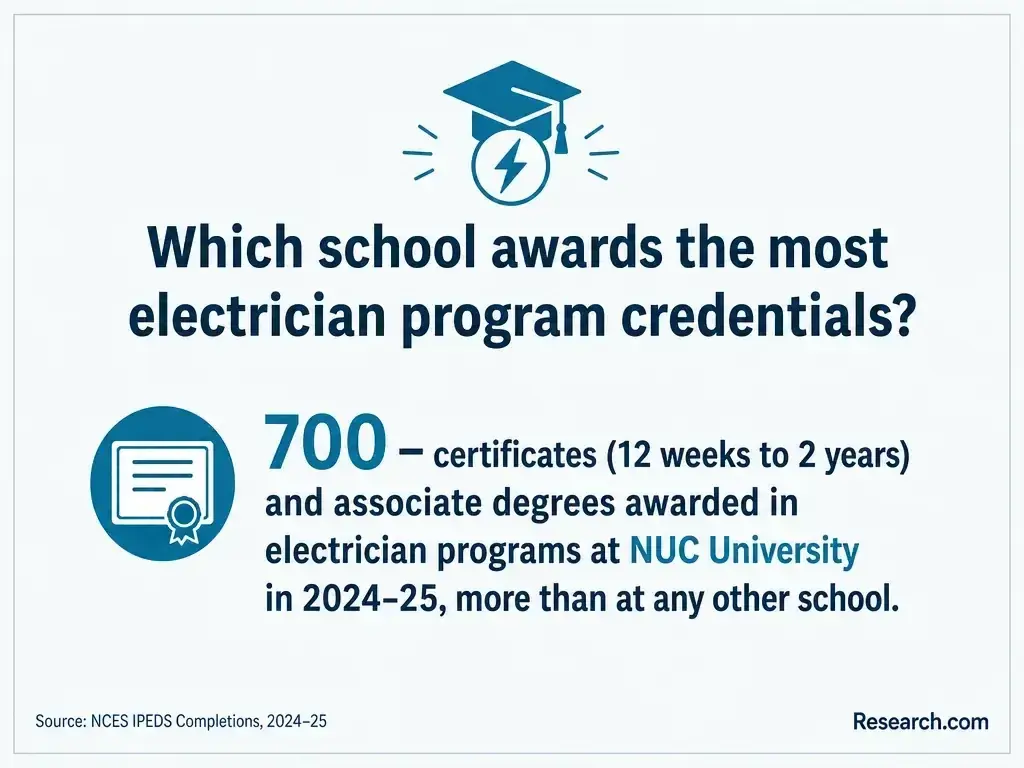
There is no reliable single McKinney-wide price for electrician training: a college course, private program, and paid apprenticeship have different charges and earnings arrangements. Published tuition may exclude mandatory fees, textbooks, tools, safety gear, consumable materials, transportation, and license or exam expenses. Request a current, itemized quote from each provider rather than treating a ranking position as your final price.
Compare net career-entry cost: add required spending and income forgone while training, then account for grants, eligible aid, employer-paid instruction, and apprentice wages. Ask Collin County Community College District and any apprenticeship sponsor about current eligibility and funding; federal student aid depends on the student, institution, and program, and is not automatic (Federal Student Aid). A low-cost program is a sound investment only if you can complete it and use it to move toward qualifying work. General comparisons such as what are the shortest phd programs do not measure the time or cost of entering this licensed trade.
The award depends on the provider: a completion certificate, diploma, or associate degree from a school; an apprenticeship completion credential from a registered sponsor; or documented employer training without a separate school award. A construction-industry credential may demonstrate specific skills, but it is distinct from an academic award and from a Texas occupational license.
Ask whether credits or prior learning can count toward a later program and whether an apprenticeship sponsor grants advanced standing for previous coursework. Get any agreement in writing: similarly named electrical courses need not cover equivalent lab work. Institutional accreditation concerns the school; state authorization concerns permission to operate; apprenticeship registration concerns the training arrangement; and TDLR licensure governs regulated electrical work. None automatically substitutes for another.
School admissions and apprenticeship selection are separate processes. A provider may assess reading and math readiness, request prior education records, or require safety equipment; an employer or apprenticeship sponsor may also use interviews or job-related selection steps. Check the current requirements directly rather than assuming admission to a school also secures an apprenticeship position.
Texas has a separate apprentice electrician license for people entering regulated electrical work under supervision (TDLR). Before starting a job, ask the employer which license applies, who will supervise you, and how your hours will be verified. If a school advertises job placement, request its definition of placement and whether it includes positions that generate qualifying electrician experience.
Relevant training connects electrical calculations and code reading to installation and fault-finding. Students should practice identifying hazards, selecting protective equipment, interpreting drawings, using meters correctly, wiring circuits, and troubleshooting equipment under supervision. Workplace skills also matter: documenting work, coordinating with other trades, and explaining findings clearly to a supervisor or customer (U.S. Bureau of Labor Statistics, Occupational Outlook Handbook).
Compare programs by what students actually do, not course titles alone. Ask to see the lab equipment, the amount of supervised practice, and whether instruction addresses residential, commercial, or industrial work matching your intended jobs. Coursework that is mostly videos may help with theory but is a poor substitute for repeated hands-on practice.
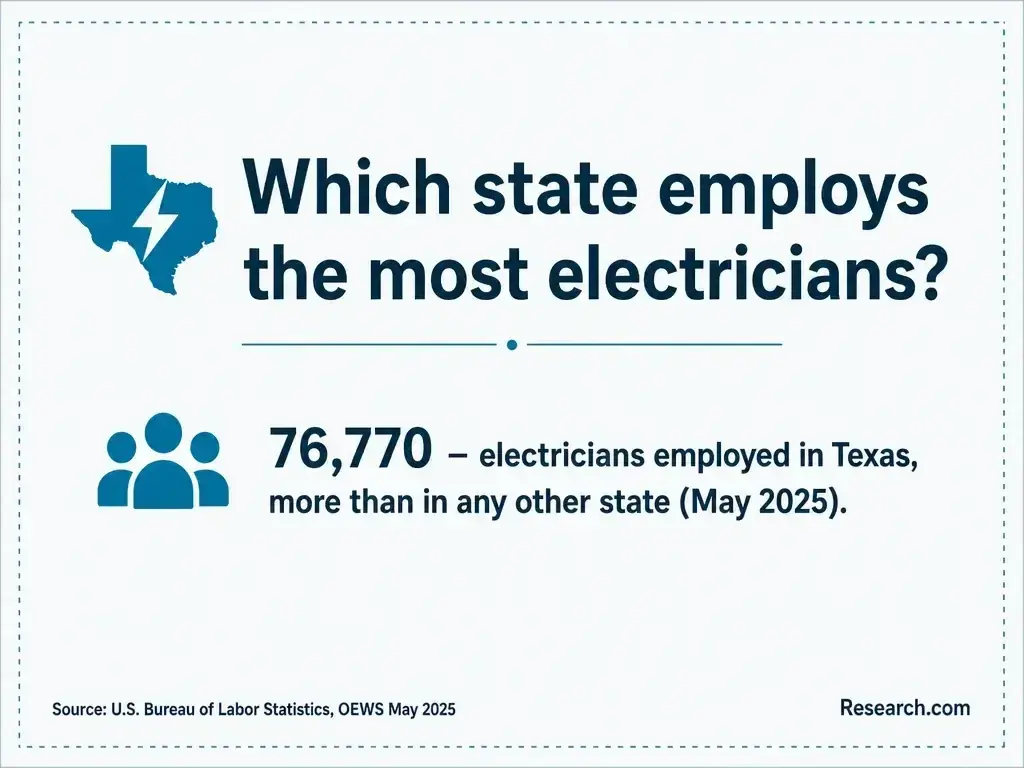
Yes, Texas regulates electrical work through TDLR. An apprentice electrician license is the entry route for supervised work; it is not permission to work independently. To qualify for a journeyman electrician license, applicants generally need 8,000 hours of qualifying on-the-job experience under the required supervision and must pass the licensing exam (TDLR). Check TDLR's current application and experience-verification rules before relying on any claimed shortcut.
A school certificate or optional industry certification can help show preparation, but neither replaces the state license. Workers considering later advancement should review TDLR's separate requirements for other license types rather than assuming journeyman status follows automatically from program completion. A school's accreditation also does not waive experience or examination requirements.
Start with the job and Texas license you want, then compare programs on their ability to help you reach both. This sequence prevents three expensive mistakes: choosing by tuition alone, assuming an online credential replaces practical training, or paying for coursework without a route into supervised work.
For a fuller return-on-investment comparison, consider your probability of completion, starting earnings, expected earnings after training, debt, and how long you expect to work in the trade. A ranking is a useful cost screen, not proof that its first-listed option matches your goals. Broad guides to what majors make the most money cannot answer whether a particular electrical program provides the practical pathway you need.
Training can lead to supervised apprentice work in residential or commercial construction, followed by journeyman-level work after meeting Texas experience and examination requirements. With further experience, electricians may pursue supervisory responsibilities, specialized installation or maintenance work, or other TDLR license categories where applicable. The next step depends on documented experience and the type of work - not merely the name of an entry-level credential.
Choose introductory training if you need a foundation before approaching employers. Choose a registered apprenticeship or a suitable employer route if you are ready for paid, supervised fieldwork. If your long-term goal is a particular specialty, ask prospective employers how apprentices gain exposure to it before committing to a narrow course.
The U.S. Bureau of Labor Statistics projects 9.2% national employment growth for electricians from 2025 to 2035. That supports considering the trade, but it is not a McKinney hiring forecast or a promise of placement. Local opportunity depends on contractor demand, worksite location, and employers willing to supervise new entrants.
For a practical read on the market, compare current apprentice openings across McKinney and the surrounding Dallas-Fort Worth area. Note which employers offer related instruction, predictable hour documentation, and a feasible commute. Those details may matter more to a new entrant than a national growth figure.
Investing in electrical training is an important decision, so Research.com evaluates programs against other options in the same occupation and location. For this most-affordable ranking, the score considers tuition, cost of attendance, median student debt, and federal loan default rate. Weights are assigned using an entropy-based method, which gives more weight to measures that differ more across programs. Accreditation and other quality indicators are not part of the affordability score; readers should check them separately.
The Research.com team reviews source data for credibility and comparability. Only programs with completions reported to IPEDS can enter this ranking, so a missing apprenticeship, employer program, or career school should not be mistaken for a poor-quality option. The following sources support Research.com's broader trade-program data and verification work; occupation-specific sources are used where relevant, while health-field sources do not establish the quality of electrician training:
This approach helps readers compare reported school costs without treating a ranking as a substitute for checking hands-on training, employer connections, and Texas licensing requirements. See Research.com's methodology for more about how rankings are created.
# 1 position
# 2 position
No. Supervised employment and registered apprenticeships are alternative entry routes. A school can build useful skills, but Texas journeyman eligibility depends on qualifying work experience and an exam (TDLR).
Do not assume so. Ask TDLR and the employer or apprenticeship sponsor how your particular training will be treated; classroom completion is not the same as documented on-the-job experience.
You can study some theory online, but electrical installation skills and qualifying supervised work require in-person practice. Confirm where a hybrid program holds its labs.
Not necessarily. Wages can offset costs, but compare required instruction charges, tools, travel, time to entry, and available aid for each option.
Get the full cost and refund terms, credential awarded, lab schedule, employer-support details, and explanation of how the program fits Texas licensing rules in writing.