# 1 position
Dallas College - Electrician.
associate

Audited and Verified:
Our Editorial and Data Verification Process
Research.com uses government datasets, official education statistics and primary institutional information to support its career and degree guides. Our review process checks factual accuracy, occupational definitions, source dates and the requirements associated with the credentials discussed.
How This Article Was Fact-Checked
Our editorial team verifies salary estimates, employment projections, education requirements and program information against original data providers and official organizations. Salary figures are checked against the relevant occupational definitions and reporting periods. Information about licensure, accreditation and required in-person training is reviewed separately.
Fact-checked and verified on:

Co-Founder and Chief Data Scientist

Reviewed by Karolina Broda
Fact-Checker and Data Verification
Choosing an affordable electrician program means looking beyond tuition: you need hands-on training, a workable route to paid experience, and a clear understanding of Texas licensing. The U.S. Bureau of Labor Statistics reports a national median electrician wage of $63,190 for May 2025, but that is not a starting-pay estimate. This guide explains Dallas-area training costs, pathways, and career requirements. It also accompanies the Most Affordable Electrician Trade Schools in Dallas for 2027 ranking, created by the Research.com team of data scientists to help students identify programs worth considering.
Expect instruction in electrical theory, wiring methods, the National Electrical Code, safety, and troubleshooting, alongside practical work with circuits, conduit, devices, and test equipment. Dallas College is one public-college option to investigate; registered apprenticeships and employer-sponsored training offer different ways to combine instruction with supervised work. Ask any provider how much training takes place in a lab or on a jobsite, because a similarly named certificate may deliver very different practical experience.
The main pathways differ most in how - and when - you gain paid field hours:
| Pathway | What you receive | Best fit and key limitation |
| College or career-school program | A certificate, diploma, or, where offered, an associate degree with classroom and lab instruction | Useful for structured preparation; confirm whether an employer will hire you into supervised work afterward. |
| Registered apprenticeship | Related instruction plus paid, supervised on-the-job training and an apprenticeship completion credential | Useful if you want to earn while learning; entry and work assignments depend on sponsor availability. |
| Direct employer entry | Supervised experience and any training the employer provides | Useful if you have a qualifying job offer; compare the training plan and progression opportunities before accepting. |
A directory of best online trade colleges may help you explore theory coursework, but electrician training still requires in-person practice and supervised work.
Dallas-area trainees can seek supervised work with electrical contractors on housing and commercial construction, building-maintenance teams, industrial facilities, and contractors serving large institutional sites. The work setting matters: a residential placement may build different experience from commercial conduit installation or industrial controls. Ask a prospective employer which tasks you will perform, who will supervise you, and whether the experience can be documented toward the Texas license you want.
School training can help you qualify for an interview, but it does not authorize independent electrical work. Confirm the appropriate Texas license or apprentice registration with the Texas Department of Licensing and Regulation (TDLR) before beginning regulated work.
The U.S. Bureau of Labor Statistics (BLS) reports a $63,190 national median annual wage for electricians in May 2025. This is pay for workers across experience levels, not a Dallas wage or a likely first-year apprentice salary. For a local offer, compare the employer's apprentice wage scale, scheduled increases, benefits, travel time, and expected hours; then check the latest BLS Dallas-Fort Worth-Arlington occupational wage release for a metro benchmark from the same occupation and reference period.
A paid apprenticeship can offset training costs, while a short school program may let you seek work sooner. Neither advantage establishes a better return on investment by itself: compare your expected earnings before training with likely earnings afterward, completion prospects, debt, time spent training, and the years over which you expect the investment to pay off.
A school certificate can be shorter than the supervised-work period needed for a journeyman license. Published program length varies by provider and attendance schedule, so request the actual calendar, total instructional hours, lab hours, and expected completion date. A part-time schedule may preserve income but extend the time before you can seek full-time electrical work.
Under TDLR requirements, journeyman applicants need 8,000 hours of on-the-job training under the supervision of a master electrician, as well as the required examination. TDLR also identifies a residential wireman route requiring 4,000 hours of supervised on-the-job training. These are licensing experience requirements - not hours automatically awarded for finishing a school program. Ask how a provider helps students obtain and document qualifying work.
Online delivery can work for code reading, calculations, and some electrical theory. On-campus or worksite training is needed to practice safe tool use, make connections, install equipment, measure live-system conditions under proper supervision, and troubleshoot physical faults. A hybrid schedule is worthwhile if its lab dates and location fit your commute; an entirely online course should not be mistaken for a complete route to Texas licensure.
If you are comparing online associate-degree prices through a guide to the cheapest associate degree online, check whether the specific electrical program includes accessible in-person labs and a route to supervised employment. A low online price cannot substitute for practical competencies.
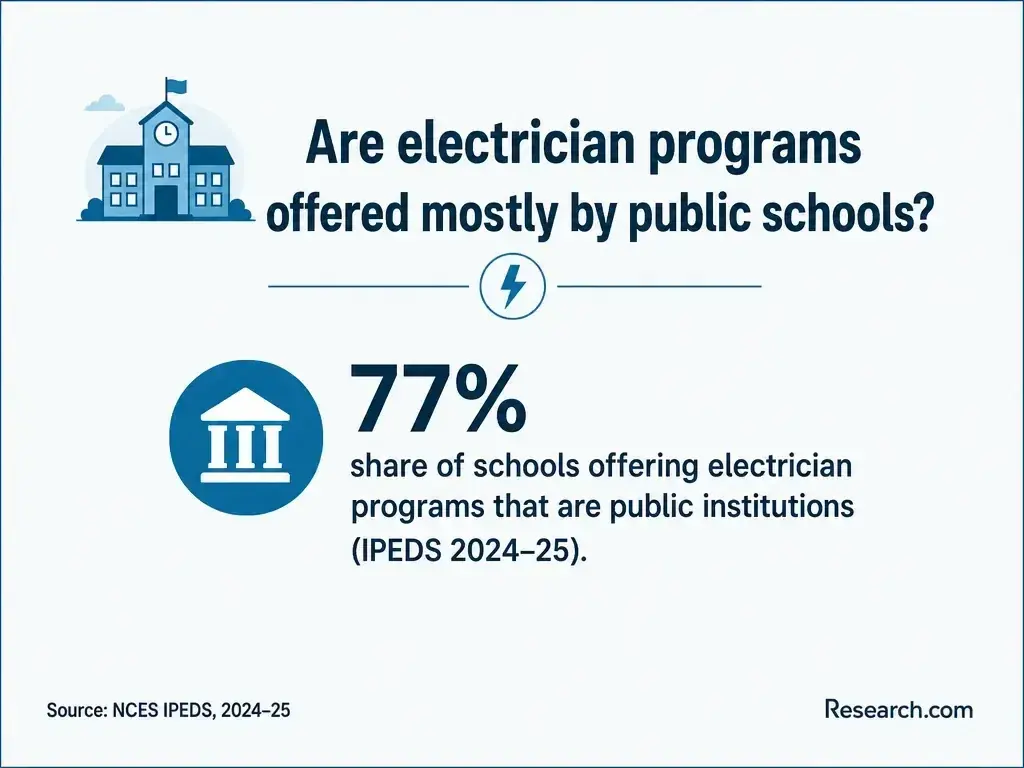
There is no single reliable Dallas-wide average that covers college programs, career schools, and paid apprenticeships on the same basis. Ask each provider for a current, itemized estimate rather than using tuition as a proxy for the amount you will spend to become job-ready.
For a useful comparison, include these costs and offsets in your own estimate:
Federal aid eligibility depends on the institution and program, not simply on whether it teaches a trade; confirm eligibility through the provider and Federal Student Aid. A paid apprenticeship may reduce borrowing, but compare its wage progression and admission timeline with the cost and schedule of school-based options.
The award depends on the pathway: a school may issue a certificate, diploma, or associate degree; a registered apprenticeship has its own completion credential. An industry training credential, such as one aligned with the National Center for Construction Education and Research, can document particular skills. None of these is the same as a Texas occupational license, and none by itself establishes that your field hours satisfy TDLR rules.
Before enrolling, request the credential's exact name and ask local hiring managers whether they recognize it. Broad lists of the best schools to go to for college serve a different purpose: for this occupation, the decisive questions are practical training, access to supervised work, and the cost of reaching your intended license.
Requirements vary by provider. Ask about age, prior schooling, placement assessments, physical demands, schedule, and whether tools or protective equipment are needed on day one. An apprenticeship sponsor or employer may also use an application process, interview, and work-readiness requirements; acceptance into a school program should not be read as acceptance into a paid apprenticeship.
There is a separate regulatory step before performing electrical work. TDLR administers Texas electrician licenses, including the apprentice electrician license; confirm the current application and supervision requirements with TDLR and your prospective employer. If a school advertises job placement, ask whether it arranges interviews, has formal sponsor relationships, or merely provides a job board.
Strong entry-level training connects electrical calculations and code rules to work you can demonstrate: reading plans, selecting materials, bending and installing conduit, wiring circuits, using meters, identifying faults, and applying lockout and other safety practices. The BLS Occupational Outlook Handbook describes electricians as installing, maintaining, and repairing electrical power, communications, lighting, and control systems; that breadth is why a narrow online-only curriculum deserves scrutiny.
Ask to see the lab task list and assessment method. If your goal is industrial maintenance rather than residential construction, check for relevant motor-control and troubleshooting practice - and for an employer placement that exposes you to those systems. Coursework is most valuable when it helps you enter supervised work suited to your target specialty.
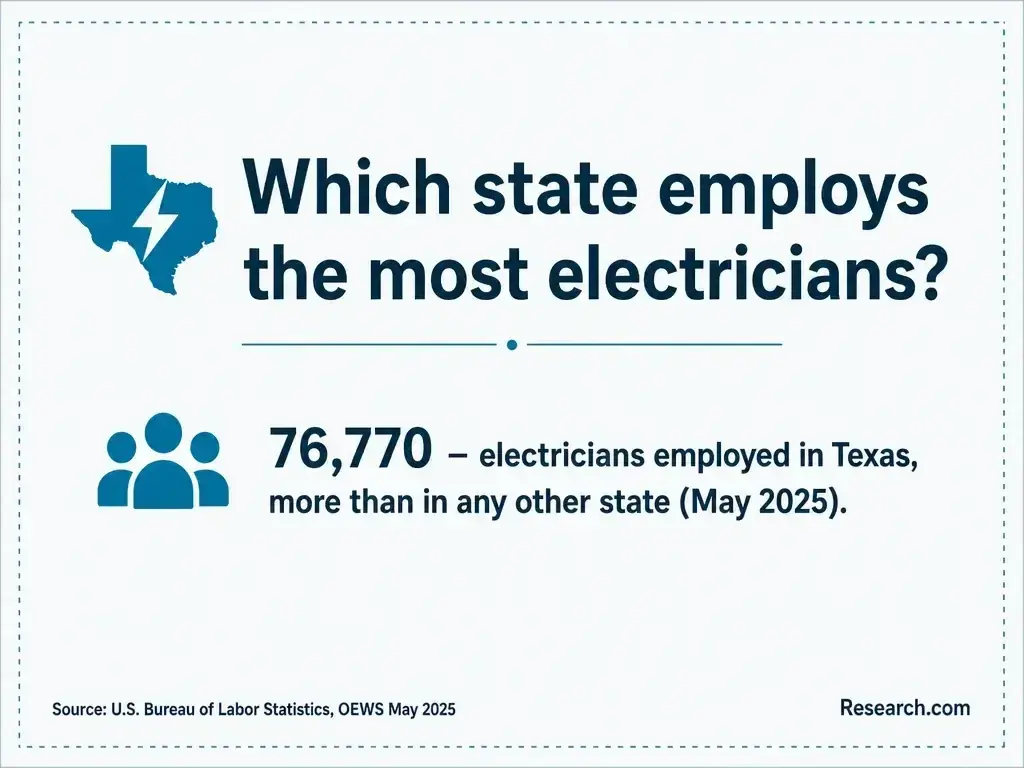
Yes - Texas regulates electrical work through TDLR. The license appropriate to your duties and career stage matters: an apprentice works under required supervision, while advancing to journeyman involves documented qualifying experience and an examination. TDLR lists 8,000 supervised on-the-job hours for journeyman eligibility. A school's accreditation, state authorization, or industry certificate does not replace an individual occupational license.
Keep records of employers, supervisors, dates, and qualifying hours from the start. If you plan to operate a contracting business later, investigate Texas electrical-contractor requirements separately; a personal journeyman credential is not the same as authorization to run a contracting business. Verify current rules with TDLR before relying on any program's licensing claims.
Start with your intended job and license, then compare providers on the full route from enrollment to supervised employment. An affordable program is a poor bargain if its labs are inaccessible or you cannot find a way to earn qualifying field hours. Use the cost ranking as a shortlist, not a substitute for checking fit.
Ask each school, apprenticeship sponsor, or employer these questions before committing:
Be cautious about claims that a fast online credential alone makes you a licensed electrician. Even a guide to the best accelerated online bachelor degree programs for working adults addresses a different educational goal; speed and online convenience cannot replace this trade's supervised practical experience.
A typical progression begins with supervised apprentice work, then moves toward a Texas residential wireman or journeyman license when the applicable experience and examination requirements are met. With further experience and the relevant requirements, an electrician may pursue master-level work, supervision, contracting, or a specialty such as commercial construction, service troubleshooting, or industrial systems. Advancement is not automatic after earning a school credential.
Choose initial training and jobs with your intended progression in mind: residential wiring experience may be valuable, but it may not expose you to the equipment used in an industrial role. Resources about the best college degrees for seniors online address a different decision; career changers entering electrical work should focus instead on physical job demands, a realistic paid-training schedule, and the time needed to build documented experience.
The BLS projects 9.2% growth in U.S. electrician employment from 2025 to 2035. That national projection indicates sustained demand for the occupation, not a forecast of openings for a particular Dallas program's graduates. Local prospects also depend on construction activity, maintenance needs, employer hiring, and your ability to travel to changing jobsites across the metro area.
For a practical Dallas job search, ask apprenticeship sponsors and electrical employers about current intake, work locations, and the skills they expect from new apprentices. A program with reliable access to supervised field experience may be worth more to you than a cheaper one that leaves the employment step entirely to chance.
Investing in training is an important decision, so the Research.com team uses comparable program data and checks the scope of each ranking rather than treating a low advertised tuition price as the whole story. Programs are compared with others in the same occupation and location; only programs reporting completions to IPEDS are eligible. That means a registered apprenticeship or employer training program can be a strong option without appearing in the ranking.
The most affordable ranking scores costs and debt: tuition, cost of attendance, median student debt, and federal loan default rate. Indicator weights are assigned using an entropy-based method, which gives more weight to measures that differ more across programs. Accreditation and other quality measures are not included in this affordability score. Research.com's separate best-program rankings also consider student outcomes, earnings, support, accreditation, and occupation-relevant recognition; those are different rankings, not evidence that the cheapest program is the best fit.
The following data sources support Research.com's trade-program ranking work. Some cover other trades and do not constitute electrician-program approval or Texas licensing recognition:
Use the ranking to narrow your cost search, then confirm current charges, lab access, apprenticeship connections, and Texas license requirements directly with providers. More detail about the ranking approach appears on Research.com's methodology page.
# 1 position
# 2 position
No single trade-school credential replaces the Texas licensing process. Supervised employment and a registered apprenticeship are pathways to investigate alongside school; check TDLR requirements for the license you intend to pursue.
No. Online coursework can cover theory, but Texas licensing routes require supervised on-the-job experience, and electrical skills require hands-on practice.
It can reduce borrowing because you earn wages while training. Compare sponsor charges, tools, travel, admission timing, and wage progression with the full cost of a school program.
Do not assume it does. TDLR specifies supervised on-the-job experience for journeyman eligibility; ask TDLR how any particular training or prior experience is treated before enrolling.
Only if its full cost, lab training, schedule, and route to supervised work also fit your goal. Request an itemized price and verify licensing claims before paying a deposit.