# 1 position
Grayson College - Electrician.
associate

Audited and Verified:
Our Editorial and Data Verification Process
Research.com uses government datasets, official education statistics and primary institutional information to support its career and degree guides. Our review process checks factual accuracy, occupational definitions, source dates and the requirements associated with the credentials discussed.
How This Article Was Fact-Checked
Our editorial team verifies salary estimates, employment projections, education requirements and program information against original data providers and official organizations. Salary figures are checked against the relevant occupational definitions and reporting periods. Information about licensure, accreditation and required in-person training is reviewed separately.
Fact-checked and verified on:

Co-Founder and Chief Data Scientist

Reviewed by Karolina Broda
Fact-Checker and Data Verification
Choosing an affordable electrician program in Denison means comparing more than tuition: you need hands-on training, a workable route into supervised employment, and a clear understanding of Texas licensing. The U.S. Bureau of Labor Statistics projects electrician employment to grow 9.2% nationally from 2025 to 2035, but that does not make every training option a good investment. For prospective students and career changers, the Research.com team of data scientists created a Most Affordable Electrician Trade Schools in Denison for 2027 ranking to help identify programs worth considering. This guide explains how to assess their real costs and career value.
Expect instruction in electrical theory, code use, circuits, wiring methods, testing, and jobsite safety, paired with supervised practice. A useful program lets you demonstrate tasks - such as interpreting plans, making connections, and diagnosing faults - rather than only passing written quizzes. Ask how many hours take place in a lab or at a worksite; similarly named certificates can provide very different amounts of practice.
Trade school is generally preparation for entry-level electrical work, not a substitute for the supervised experience Texas requires for higher-level licensing. Compare it with applying directly to an electrical contractor or a registered apprenticeship: the latter combines paid work with structured instruction, but entry depends on available sponsors and selection requirements. School may suit someone who wants foundational skills before approaching employers; direct paid entry may make more sense if a suitable position is already available.
A short credential can be worthwhile if it improves access to supervised work without imposing disproportionate debt. When comparing occupations as well as programs, top paying certificate programs offers broader context; electrician applicants should still judge their choice against the Texas work-experience pathway.
Potential workplaces include electrical contractors serving homes and commercial buildings, construction sites, maintenance departments, and industrial facilities in the Sherman-Denison area. The distinction matters: installation work may follow construction schedules and changing sites, while maintenance work emphasizes troubleshooting existing equipment. The U.S. Bureau of Labor Statistics describes electricians as working across construction, manufacturing, government, and other settings.
For a first job, ask whether an employer will supervise work that qualifies toward the Texas license you want. A maintenance-related opening may build valuable skills without providing every type of experience you expect; confirm how duties and supervision will be documented with the employer and the Texas Department of Licensing and Regulation (TDLR). If nearby openings are limited, include commuting time and transportation costs in your training decision.
There is no single reliable wage for a newly trained electrician in Denison. The U.S. Bureau of Labor Statistics reports a $63,190 national median annual wage for electricians in May 2025. That figure covers workers at different experience and licensing levels across the country; it is not a starting-pay estimate or a Denison wage.
For a local decision, compare current apprentice job postings with journeyman postings in the Sherman-Denison area. Check whether the stated rate assumes overtime, travel, or a particular license. Use the pay you could realistically earn while training - not the national career median - when deciding how much tuition or debt you can afford.
A school certificate may be shorter than an apprenticeship, but program length alone does not tell you when you can work independently. Request the provider's current calendar, total contact hours, lab hours, and attendance rules; schedules vary, and a part-time option can extend the time before you seek full-time electrical work.
Texas's journeyman route requires 8,000 hours of qualifying on-the-job training under the supervision of a master electrician, according to TDLR. Texas also has a residential wireman pathway with a different scope and experience threshold. A classroom course does not automatically replace those work hours. If speed matters, compare the date you could start paid supervised work under each option, not just the date a certificate is awarded.
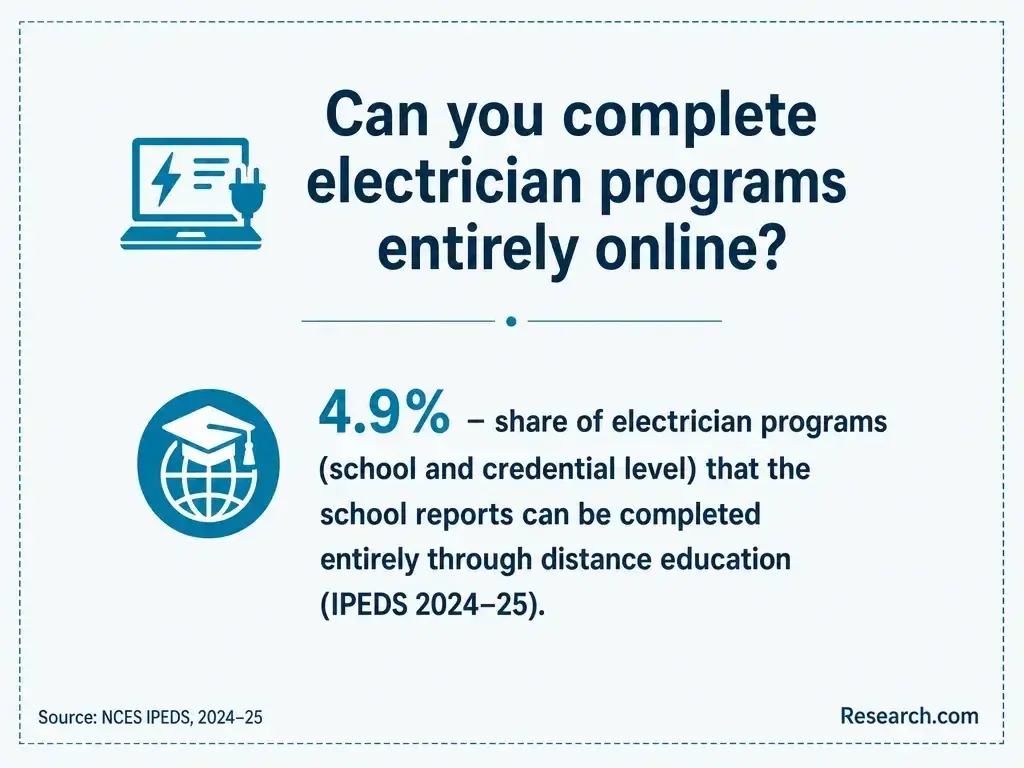
Online coursework can help with electrical theory, calculations, code study, and scheduling. It cannot, by itself, demonstrate safe installation, tool use, testing, or troubleshooting on physical equipment. Campus labs and supervised worksites supply that practical component; a hybrid option is useful only if its required in-person sessions are accessible from Denison.
Ask where labs occur, who supervises them, and whether worksite placement is arranged or left to the student. An entirely remote course should not be treated as proof of Texas licensing eligibility. A list of best online universities may help with general format comparisons, but electrician training requires a separate check of local hands-on access and supervised work.
A defensible Denison-wide average is not available from the information needed to compare every route: college programs, employer training, and apprenticeships report costs differently. Instead, request a written, itemized estimate for each option. The table separates expenses a tuition quote may omit from offsets that can change the amount you pay.
| Cost or offset | What to verify | Why it affects the decision |
| Tuition and required fees | Full-program amount, payment schedule, and refund terms | A low advertised rate may not include required charges. |
| Tools, materials, and safety gear | Required purchases and whether equipment is supplied | These can differ substantially between classroom and employer-based routes. |
| Travel and time away from work | Lab location, worksite travel, and class schedule | Commuting and forgone earnings can outweigh a tuition difference. |
| Licensing and testing | Applicable application and examination costs | A school fee may not cover later career-entry expenses. |
| Aid and paid training | Actual grant eligibility, employer support, and apprentice wages | Offsets can reduce net cost without changing the posted price. |
Compare the net cost to become job-ready, not tuition alone. Ask whether a program is eligible for federal aid or Texas workforce assistance; eligibility depends on the specific provider, program, and student. A paid apprenticeship may lower borrowing but can take longer to complete. If you are comparing highest earning bachelor degrees with a trade route, avoid using wages alone as a return-on-investment shortcut: completion odds, debt, earnings while training, and time to qualification also matter.
Depending on the actual offering, you might earn a certificate, diploma, or associate degree; an apprenticeship may instead document completion of a registered work-and-instruction program. Verify the exact credential before applying. An NCCER credential or another industry-recognized training record may help demonstrate specific skills, but neither is automatically a Texas occupational license.
A college credential and an apprenticeship can sometimes complement each other rather than compete. Ask whether prior electrical work earns credit, whether coursework can count toward apprenticeship instruction, and whether earned credits transfer into a later technical credential. Get any arrangement in writing from the receiving provider. Unlike best dual degrees, the key question here is whether each component advances practical electrical training and documented supervised experience.
School admission and entry to paid electrical work are separate decisions. Ask each training provider about its current education, age, placement, physical-task, and documentation requirements; do not assume that acceptance into a class includes an apprenticeship position. Employers and apprenticeship sponsors may also assess availability, transportation, aptitude, and ability to work safely on jobsites.
Texas requires an appropriate TDLR credential for electrical work covered by its licensing rules; the apprentice electrician credential is the usual starting point for supervised work, according to TDLR. Before paying a deposit, confirm which credential you need to start, whether the provider assists with employer introductions, and who will be responsible for recording qualifying work hours.
Core instruction typically addresses electrical calculations, circuits, wiring, motors or controls, blueprint reading, testing instruments, the National Electrical Code, and safe work practices. The U.S. Bureau of Labor Statistics identifies installation, inspection, maintenance, and troubleshooting as central electrician duties. For a prospective student, the practical test is whether instruction moves beyond demonstrations to supervised performance and feedback.
Compare the equipment and tasks practiced with your intended job. Residential wiring practice may be valuable for a housing contractor, while a facility-maintenance goal may call for more troubleshooting and controls. Ask whether the curriculum uses current code materials, how lab competency is assessed, and whether students practice identifying faults before working around energized systems.
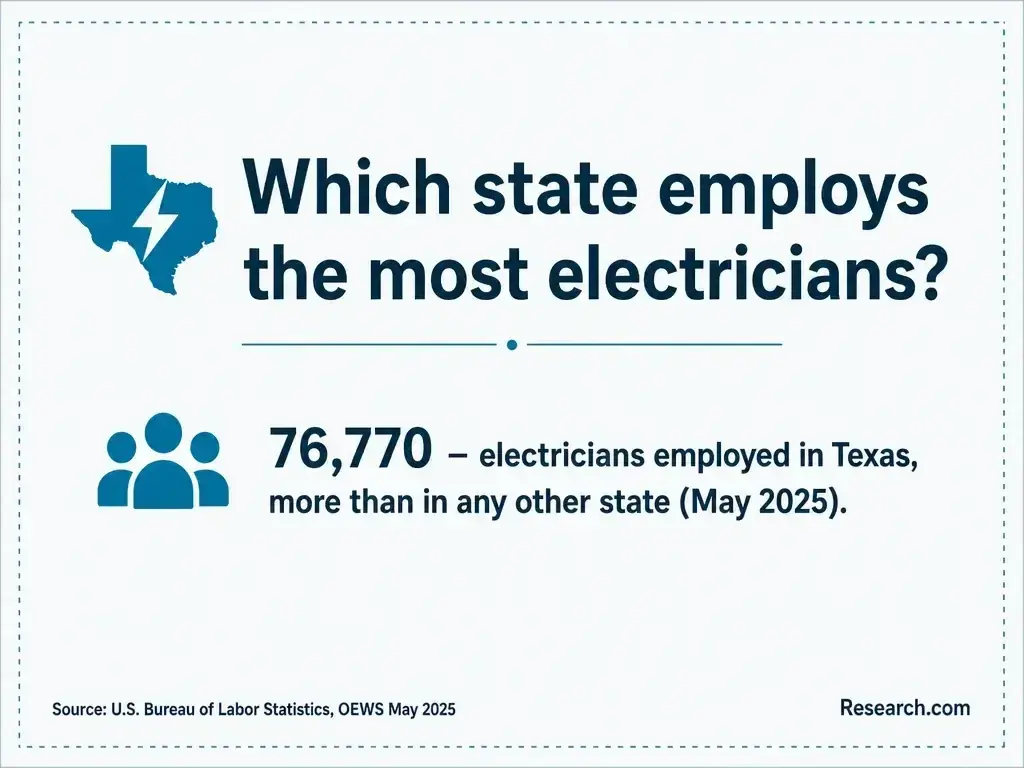
Yes, plan around Texas electrical licensing rather than a school certificate alone. TDLR regulates electrician credentials and describes the apprentice electrician route for supervised entry. Its journeyman electrician pathway requires qualifying experience and an examination; applicants should check TDLR's current rules for documentation and examination eligibility before relying on a school's description.
Keep four things distinct: institutional accreditation concerns the school; industry certification documents particular training or skills; registration of a formal apprenticeship concerns the training arrangement; and a TDLR license authorizes work within its stated scope. None automatically substitutes for the others. If you may work across a state line later, check that state's rules separately rather than assuming Texas credentials or hours will transfer unchanged.
Start with the job and Texas credential you want, then compare a school option - such as an electrical offering currently available through Grayson College - with paid apprenticeship and employer-entry opportunities you can actually reach. An affordability ranking is a starting shortlist, not evidence that every listed program offers the right labs, schedule, or route to supervised work.
Before enrolling, ask providers for answers you can verify. These questions expose the most costly mismatches:
A common mistake is choosing the shortest or cheapest course without checking whether it advances the intended license. Another is treating a national median wage as expected first-year pay. If your broader search includes what is the easiest bachelor's degree to get online, keep that separate from the electrician decision: this trade turns on practical competence, supervised hours, and state credentials.
One path starts with supervised apprentice work, progresses to a Texas journeyman license after the required experience and examination, and may later lead to supervisory or contracting goals. Texas also offers a residential wireman license with a narrower scope and separate requirements, according to TDLR. Maintenance, commercial installation, residential service, and industrial work can emphasize different skills even when an opening uses the word "electrician."
Choose initial training for the work you want to enter, then ask employers which additional skills they value. Experience with controls or troubleshooting may open different opportunities from residential installation practice, but no short course guarantees advancement. Someone considering best dual degrees should compare that separate educational goal with the electrician pathway's immediate need for supervised field experience.
The U.S. Bureau of Labor Statistics projects 9.2% national employment growth for electricians from 2025 to 2035. That is evidence of demand across the occupation, not a forecast of openings in Denison or a promise of placement after a particular program.
For a local read, check current Sherman-Denison postings by experience level and ask apprenticeship sponsors when they next recruit. Separate apprentice openings from jobs requiring an existing journeyman license. If few entry-level positions match your travel range, a program with credible employer connections may be more valuable than one with a lower sticker price but no practical route into supervised work.
Education is a consequential investment. To help readers compare programs available in the same occupation and location, the Research.com team checks multiple education and workforce sources and evaluates the consistency and credibility of the information used in its rankings.
The most affordable ranking scores reported tuition, cost of attendance, median student debt, and federal loan default rates. Indicator weights are assigned through an entropy-based method, which gives more weight to measures that vary more across programs. Accreditation and other quality measures are not part of this affordability score. Only programs with completions reported to IPEDS are eligible; an apprenticeship or other training option absent from the ranking may still be worth considering.
The team used the following data sources in creating its trade-program rankings. Some cover other occupations as well as electrical training; their inclusion does not imply that a healthcare accreditor approves electrician programs.
Use the ranking to narrow your search, then confirm current prices, practical training, and Texas licensing implications directly with each provider. Read more about the ranking approach on Research.com's methodology page.
# 1 position
# 2 position
# 3 position
Not necessarily. Supervised employer entry and apprenticeship are alternatives. Texas licensing requirements still apply; compare each route's instruction, paid work, and documentation of qualifying experience.
No. A school certificate does not replace the qualifying on-the-job experience and examination required by TDLR for a Texas journeyman electrician license.
Online lessons can cover theory and code study, but practical wiring, testing, and supervised work require in-person participation. Verify a program's lab and worksite arrangements before enrolling.
It depends on total charges, required tools, aid, travel, and wages earned during training. Request itemized figures from each available option rather than comparing advertised tuition with a paid-work headline.
No. The affordability score addresses costs and debt, not whether labs, scheduling, employer access, and the eventual Texas licensing route fit your goal.