# 1 position
Austin Community College District - Electrician.
certificate or diploma

Audited and Verified:
Our Editorial and Data Verification Process
Research.com uses government datasets, official education statistics and primary institutional information to support its career and degree guides. Our review process checks factual accuracy, occupational definitions, source dates and the requirements associated with the credentials discussed.
How This Article Was Fact-Checked
Our editorial team verifies salary estimates, employment projections, education requirements and program information against original data providers and official organizations. Salary figures are checked against the relevant occupational definitions and reporting periods. Information about licensure, accreditation and required in-person training is reviewed separately.
Fact-checked and verified on:

Co-Founder and Chief Data Scientist

Reviewed by Karolina Broda
Fact-Checker and Data Verification
The cheapest electrician program is not necessarily the least expensive route to a Texas license: tools, travel, unpaid training time, and access to supervised work all matter. The Research.com team of data scientists created the Most Affordable Electrician Trade Schools in Austin for 2027 ranking to help students make an informed choice about programs worth considering. With U.S. electrician employment projected to grow 9.2% from 2025 to 2035, this guide helps Austin career changers compare costs, credentials, apprenticeships, and licensing requirements before enrolling (U.S. Bureau of Labor Statistics).
An Austin electrician training program should teach electrical theory, code use, safety, and installation through practical work - not simply prepare students to pass written tests. A school certificate or diploma can provide structured preparation, but students still need a plan for obtaining supervised experience. A registered apprenticeship combines related instruction with paid work; direct entry through an electrical employer can also be viable if the worker meets Texas apprentice-registration and supervision rules (Texas Department of Licensing and Regulation; U.S. Department of Labor).
For a campus program, ask to see the lab and identify what students actually install, test, and troubleshoot. For an apprenticeship, ask when paid work begins, how classroom time is scheduled, and who documents qualifying experience. Two credentials with similar names may offer very different amounts of hands-on practice.
Training can lead to work with electrical contractors on homes, commercial buildings, and renovations, or to electrical roles supporting industrial facilities. Around Austin, the distinction matters: residential work emphasizes service equipment and home circuits, while commercial and industrial work may involve larger distribution systems, controls, and more complex jobsite coordination. Employers may also work across the wider metro area, making transportation to changing jobsites a real entry cost.
Ask a provider which employers accept its trainees and whether its placements involve supervised electrical work that can count toward the Texas license you want. A general construction placement is not automatically equivalent to qualifying electrician experience (Texas Department of Licensing and Regulation).
The U.S. median annual wage for electricians was $63,190 in May 2025 (U.S. Bureau of Labor Statistics). That national, occupation-wide figure includes established electricians; it is not an Austin wage estimate or an apprentice's likely first-year earnings. Pay can differ by employer, specialty, experience, and overtime.
For an investment decision, request the actual starting wage and scheduled increases from prospective apprenticeship sponsors or employers. Compare those figures with your present earnings and the program's full costs; do not use the national median as a promised post-training salary.
A school certificate may take substantially less time than the supervised experience needed for independent work. Ask each Austin provider for its current calendar, scheduled lab hours, and any work placement; there is no single program length or school contact-hour requirement that describes every route. Texas journeyman eligibility generally requires 8,000 hours of supervised on-the-job training and an examination (Texas Department of Licensing and Regulation). Completing a short course does not erase that experience requirement.
If speed is your priority, compare the date you could begin qualifying paid work, not just the graduation date. Searches for fast track degree programs will not tell you whether supervised electrician hours can be shortened. A longer paid apprenticeship may get you onto jobsites sooner than a faster classroom-only course.
Online instruction can be useful for electrical math, theory, drawings, and code study. It cannot by itself demonstrate safe installation, tool use, testing, or supervised jobsite experience. A hybrid program makes sense for a working student only if its in-person labs are accessible and its work arrangement fits Texas registration and supervision rules (Texas Department of Licensing and Regulation).
Before paying for a remote course, ask where practical assessments occur and who arranges supervised work. Even when comparing cheap associate programs online, check the electrician curriculum's lab and employment pathway separately; an online credential alone is not a Texas electrician license.
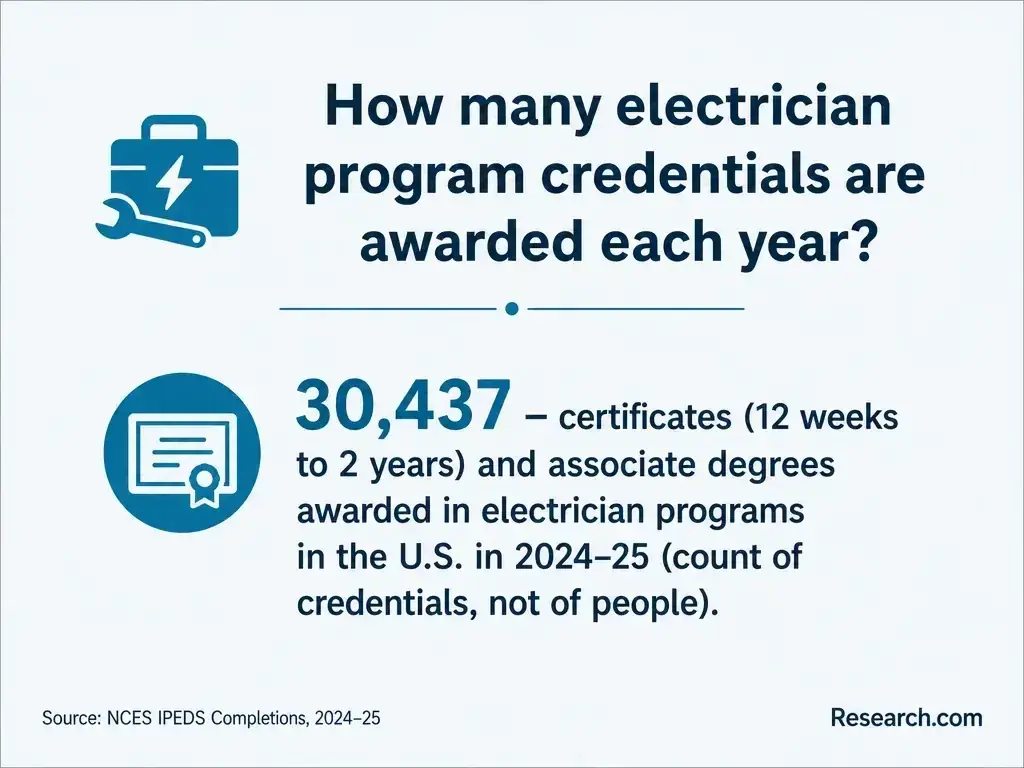
There is no defensible single average price for all Austin electrician routes: school programs and paid apprenticeships use different cost structures, and published tuition may omit essential expenses. Request a written, current cost-of-attendance estimate before comparing offers. The categories below show why the lowest advertised tuition may not produce the lowest cost to become job-ready.
| Cost or offset | What to verify |
| School charges | Tuition, mandatory fees, books, and materials for the full credential - not one term. |
| Practical training | Required tools, meters, protective equipment, and replacement consumables. |
| Career entry | Registration, examination, and application charges relevant to the intended Texas license. |
| Time and travel | Trips to labs and changing jobsites, plus earnings forgone during unpaid training. |
| Offsets | Apprentice wages, employer-paid instruction, grants, scholarships, and aid for which the specific program qualifies. |
Federal aid eligibility depends on the institution and program, not merely on a provider advertising career training (Federal Student Aid). Lists of low tuition universities online that accept financial aid cannot establish aid eligibility for an Austin electrician course. Ask the provider's aid office and your local workforce agency about applicable assistance before borrowing.
The credential depends on the route: a school may award a certificate, diploma, or, where offered, an associate degree; a registered apprenticeship documents completion of its work-and-instruction program. Industry credentials such as NCCER training records may help demonstrate skills, but none should be confused with Texas occupational licensure (National Center for Construction Education and Research; Texas Department of Licensing and Regulation).
Check the exact award on the program's current catalog, then ask employers whether they recognize it. An easiest bachelor degree comparison is not a measure of electrician readiness: the decisive questions are practical competence, qualifying work experience, and license eligibility.
Entry standards vary. A school may assess reading and math readiness or require specific documents; an apprenticeship sponsor may use an application, aptitude assessment, interview, and employer selection process. Do not assume admission to a school also secures an apprenticeship job.
Before applying, request the current eligibility checklist from each provider. If you intend to work as an apprentice, confirm how and when to register with the Texas Department of Licensing and Regulation and who will supervise and record your work. Ask whether prior electrical experience can earn advanced standing; get any credit decision in writing rather than assuming earlier coursework reduces Texas-required experience.
Useful entry training covers circuit calculations, interpreting plans, wiring methods, grounding and bonding, electrical-code navigation, testing instruments, and jobsite safety. Labs should let students practice installation and fault-finding with feedback; supervised work then develops judgment around real equipment, other trades, and changing site conditions. These are different learning environments, not interchangeable hours.
When comparing syllabi, ask whether training includes both residential and commercial examples if you have not chosen a specialty. Also check which electrical-code edition is taught and how instruction handles code updates; employers need workers who can consult the applicable code, not just recall classroom examples.
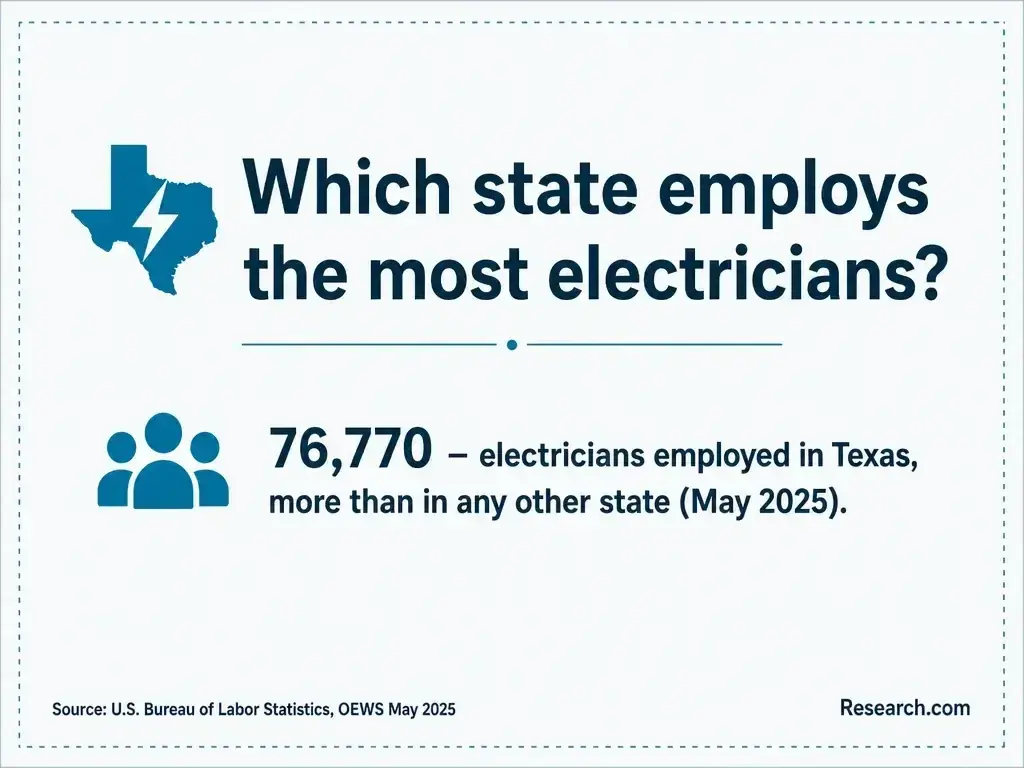
Yes - Texas regulates electrical work. An entrant generally registers as an apprentice and works under required supervision rather than practicing independently. The journeyman route generally calls for 8,000 hours of on-the-job training under a master electrician and passing the licensing examination; other license categories have different experience and scope rules (Texas Department of Licensing and Regulation). Verify the current category requirements before choosing a program.
Institutional accreditation, state authorization to operate a school, industry recognition, registered-apprenticeship status, and an individual Texas license answer different questions. None automatically substitutes for supervised experience or an examination. Ask a school exactly how its training connects you to qualifying work, then confirm the answer with the Texas Department of Licensing and Regulation.
The best-value route is the one that gets you safely into qualifying work at a cost and pace you can sustain. Compare current offerings from Austin Community College District and Austin Career Institute only after confirming that the specific electrician program you want is currently available; also compare local registered apprenticeships and employer-sponsored entry. A ranking is a shortlist, not proof of licensure eligibility or employment.
Use these questions in admissions and apprenticeship conversations; request written answers where costs or experience credit affect your decision:
A common mistake is choosing the quickest or cheapest advertised course without confirming a route to supervised work. Another is assuming online-college affordability translates to practical trade training; even lists of the most affordable online colleges for working students cannot answer where an electrician trainee will gain hands-on experience. Evaluate return on investment using expected completion, aid, debt, apprentice wages, forgone earnings, and realistic earnings over time - not tuition alone.
A typical progression is supervised apprentice work, examination and licensure when eligible, then greater responsibility in installation, service, or troubleshooting (Texas Department of Licensing and Regulation). Experience may open paths into residential service, commercial construction, industrial electrical work, estimating, or supervision. Master electrician licensure has additional Texas requirements; a school credential alone does not confer that status.
If you already know your preferred setting, seek matching lab exercises and employer connections. Someone aiming for controls work, for example, should examine how much time a program spends on motors, testing, and troubleshooting rather than choosing solely by credential title.
U.S. electrician employment is projected to grow 9.2% from 2025 to 2035 (U.S. Bureau of Labor Statistics). That supports considering the occupation, but a national projection does not predict an individual's chance of finding an Austin apprenticeship or job.
For a local decision, ask sponsors about current openings and employers about the kinds of work they expect trainees to perform. Construction demand can shift by project and specialty. A provider with a credible route into supervised, paid work may therefore be more useful than one that offers only classroom instruction, even if the latter has a lower listed tuition.
Investing in electrician training is a significant decision. Research.com created this ranking to help readers compare reported costs and debt among programs serving the same occupation and location, rather than treating a national list as a substitute for local choices. The team checks multiple education data sources for credibility and accuracy. Only programs with completions reported to IPEDS are eligible; registered apprenticeships and other training providers may therefore be absent even when they are valid local options.
The most affordable ranking scores tuition, cost of attendance, median student debt, and federal loan default rate. Indicator weights use an entropy-based method, giving more weight to measures that differ more across eligible programs. Accreditation and other quality measures are not part of this affordability score. Research.com's separate best programs rankings consider completion and full-time and part-time retention; earnings one year after completion and earnings relative to annual attendance cost; tuition, attendance cost, debt - including for students who withdrew - and loan default; plus recognition and support. Their weights are 20% for occupation-relevant programmatic accreditation or industry recognition, 10% for institutional accreditation, 10% for student support, and an entropy-weighted 60% for outcomes, earnings, and costs.
The ranking draws on the following sources. Some cover occupations other than electrical work and should not be read as electrician-specific approvals:
Use the ranking to narrow a shortlist, then obtain current program quotes and verify the supervised-work route yourself. Details on the broader approach appear in Research.com's methodology.
# 1 position
# 2 position
Electrician
Delivery mode: On Campus (May Include Online Courses)
59.39
/ 100
Final score
Accreditation
Institutional accreditation from Council on Occupational Education.
Austin Career Institute earned a Research.com Affordability Score of 59.39/100.
No single trade-school credential replaces Texas apprentice registration, supervised experience, and the examination required for the relevant license. A registered apprenticeship or qualifying employer-sponsored route can be an alternative (Texas Department of Licensing and Regulation).
Online study can cover theory, but electrical work requires practical skills and supervised experience. Confirm where labs and qualifying jobsite work will occur before enrolling.
Compare the complete school bill with apprentice wages, any instruction charges, tools, travel, and time to qualifying employment. Neither route is automatically cheaper for every applicant.
It may document instruction, but do not assume it replaces required supervised on-the-job experience. Confirm the treatment of your specific training with the Texas Department of Licensing and Regulation.
Confirm the current credential, itemized full cost, lab access, aid eligibility, and a documented path to supervised electrical work. Ask for recent completion and placement figures with their reporting periods.