# 1 position
Brazosport College - Electrician.
associate

Audited and Verified:
Our Editorial and Data Verification Process
Research.com uses government datasets, official education statistics and primary institutional information to support its career and degree guides. Our review process checks factual accuracy, occupational definitions, source dates and the requirements associated with the credentials discussed.
How This Article Was Fact-Checked
Our editorial team verifies salary estimates, employment projections, education requirements and program information against original data providers and official organizations. Salary figures are checked against the relevant occupational definitions and reporting periods. Information about licensure, accreditation and required in-person training is reviewed separately.
Fact-checked and verified on:

Co-Founder and Chief Data Scientist

Reviewed by Karolina Broda
Fact-Checker and Data Verification
Choosing electrician training near Lake Jackson means comparing more than tuition: a low-cost course may not provide the supervised experience needed for a Texas license. The U.S. Bureau of Labor Statistics projects 9.2% national growth in electrician employment from 2025 to 2035. This guide explains local pathways, full costs, wages, and licensing so you can weigh school against paid apprenticeship. It also features a Most Affordable Electrician Trade Schools in Lake Jackson for 2027 ranking, created by the Research.com team of data scientists to help students make informed choices about programs worth considering.
Expect a mix of electrical theory and physical practice: reading plans, identifying conductors and devices, making connections, testing circuits, and working safely under supervision. The important distinction is between learning a task in a lab and accumulating qualifying experience on a jobsite. TDLR bases journeyman eligibility on supervised work experience; do not assume classroom or lab hours count toward it.
For a Lake Jackson resident, Brazosport College is a local provider to investigate, but confirm its current electrician-related offerings, credential, lab schedule, and employer connections directly before applying. A registered apprenticeship instead combines related instruction with paid, supervised work. Direct entry with a licensed electrical contractor may suit someone ready to work immediately, provided the employer can supply appropriate supervision and document hours. A short school program can be useful for building skills or meeting hiring preferences, but it is not automatically a faster route to independent practice.
Potential workplaces include electrical contractors serving homes and businesses, industrial maintenance teams, and contractors working at Gulf Coast industrial facilities. In this area, industrial work can make motor controls, troubleshooting, and strict jobsite safety practices especially valuable. Residential installation, commercial construction, and industrial maintenance are different skill mixes; ask whether a program's lab equipment and employer placements match the work you want.
Employment after school depends on an employer's requirements and your Texas registration or license status, not simply the name of your credential. If your preferred industrial role is outside Lake Jackson, include travel time and shift schedules in the decision to enroll.
BLS reports a $63,190 national median annual wage for electricians in May 2025. That figure covers workers at different experience levels and locations; it is neither a Lake Jackson wage estimate nor a prediction of apprentice starting pay. Compare actual local offers by hourly rate, expected hours, benefits, travel requirements, and how wages increase as you gain experience.
A paid apprenticeship can improve the economics of training even when its initial wage is below that national median. Conversely, a low-tuition course may cost more overall if it delays paid work. For anyone comparing electrician training with top paying college majors, the useful comparison is the investment required to reach the particular job - not a national occupation median treated as a guaranteed return.
School-based timelines depend on the specific certificate or other credential, course load, and whether classes are offered during the hours you can attend. Obtain the current catalog's required course hours and projected completion date rather than relying on an advertised "finish fast" claim.
Time in school and time to licensure are different clocks. TDLR requires 8,000 hours of supervised on-the-job experience for a Texas journeyman electrician license; its residential wireman pathway has a separate 4,000-hour experience requirement (TDLR). Ask an apprenticeship sponsor or employer when paid work starts, how classroom instruction is scheduled, who supervises you, and how your hours are recorded. An accelerated classroom schedule does not erase the work-experience requirement.
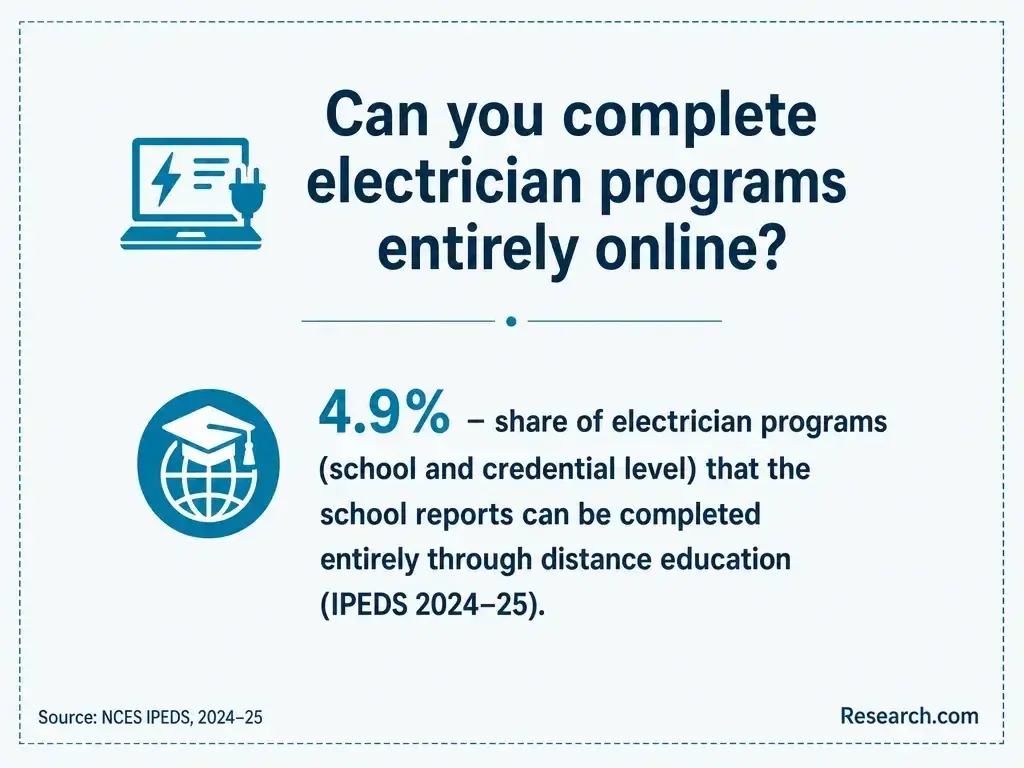
Online instruction can cover code concepts, calculations, and electrical theory. Wiring, tool use, testing, troubleshooting, and safe work practices need supervised physical practice; qualifying Texas work experience takes place on the job. A hybrid program may reduce classroom commutes, but ask exactly where and when its labs occur.
Listings of most popular online trade colleges can help you find formats to investigate, not establish electrician licensing eligibility. Likewise, a listing of non profit online accredited colleges does not show whether an electrician course supplies practical training or supervised work. Before paying, request the lab requirements, attendance policy, credential awarded, and a written explanation of any work-based component.
There is no defensible single Lake Jackson average that covers school programs, employer training, and paid apprenticeships on the same basis. Published tuition also may not reflect your residency status, course load, or required equipment. Request a current, itemized estimate from each option you are considering.
Build a job-ready cost comparison that includes tuition, mandatory fees, books or software, tools, safety gear, travel to labs and jobsites, and applicable registration or examination charges. Then subtract confirmed grants, scholarships, or employer-paid costs and account separately for wages earned during training. Federal aid eligibility depends on the institution and program, not merely on its being a trade school (Federal Student Aid). Ask Brazosport College about eligibility for its current offerings and ask apprenticeship sponsors what instruction or equipment they cover.
For a fair return-on-investment comparison, also consider completion likelihood, earnings you would otherwise have received, likely post-training pay, borrowing costs, and the time needed to recover your investment. A cheaper course is poor value if it lacks the hands-on preparation your intended employer requires.
The answer depends on the pathway. A school may award a certificate or, where offered, an associate degree; a registered apprenticeship provides its own completion credential. An employer may provide documented training without awarding a school credential. Ask for the exact credential name before enrollment, because similarly named electrical programs can teach different specialties.
None of those credentials is itself a Texas electrician license. Institutional accreditation concerns the school, state authorization concerns its permission to operate, apprenticeship registration concerns a work-based training program, and TDLR occupational licensure concerns the worker. An optional industry credential may help demonstrate skills, but confirm whether employers you are targeting value it. Ask whether prior experience earns advanced standing in a particular program and whether that changes coursework, apprenticeship placement, or neither.
Requirements vary by provider. A school may assess math or reading readiness and set its own admission rules; an apprenticeship sponsor or employer may instead evaluate work availability, driving or travel needs, and ability to perform job tasks safely. Check the actual application and any employer conditions rather than assuming admission to a school includes an apprenticeship position.
Texas also regulates the work itself. TDLR has an electrical apprentice registration pathway, and supervised experience must meet its rules to support later licensure (TDLR). Before accepting a placement, ask who the supervising license holder is, what work you will perform, and how experience will be verified. If you are changing careers, compare entry requirements and the start date for paid work as carefully as you compare classroom requirements.
Relevant instruction typically joins circuit theory and calculations with blueprint reading, wiring methods, equipment testing, troubleshooting, and electrical safety (BLS Occupational Outlook Handbook). What matters is how often you actually use tools and diagnostic equipment, receive feedback, and practice procedures resembling your target workplace.
If you want residential work, look for substantial practice with branch circuits and common building installations. If you want industrial work in the Gulf Coast area, ask about motors, controls, and systematic fault-finding. A course that mentions those topics but has little shop time may be less useful than one with a narrower title and stronger practical instruction. Ask to see the current course outline and lab expectations.
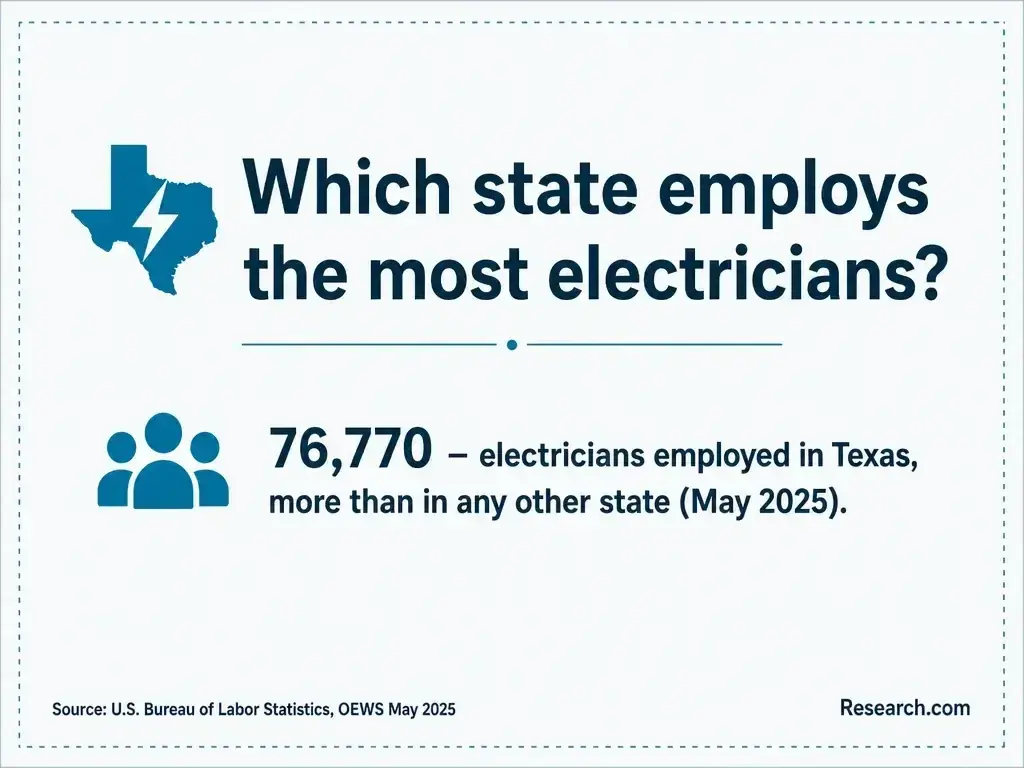
Texas regulates electrical work through TDLR. An entry-level worker may use the electrical apprentice registration pathway while working under required supervision; independent journeyman-level work requires meeting TDLR's experience and examination requirements. The journeyman pathway requires 8,000 hours of supervised on-the-job experience, and the residential wireman pathway has distinct requirements (TDLR). Check the current TDLR rules for the exact license matching the work you intend to do.
School completion does not confer a license or substitute for documented experience. Nor does a school's accreditation, a training provider's industry recognition, or an optional certification grant permission to perform licensed work. Before enrolling, tell the provider your intended Texas license and ask which parts of its program are classroom preparation, which are supervised employment, and who documents qualifying hours.
Start with the job you want, then compare the training route that actually gets you there. A school program may suit someone who needs structured foundational practice before seeking employment. A paid apprenticeship or supervised employer route may fit someone who can secure a position and wants to earn while accumulating qualifying experience. The most affordable ranking is a cost screen, not a substitute for this fit check.
Ask each provider these questions before making a deposit; the answers reveal costs and licensing gaps that a headline price can hide.
Verify a school's accreditation and aid eligibility through the relevant official records, and verify licensing rules with TDLR. A common mistake is choosing the shortest or cheapest option without checking practical training and documented work hours. If searches for accelerated bachelors degrees online appear alongside your options, keep your electrician decision tied to the specific credential and supervised experience the occupation requires.
An entry path may lead through supervised residential or commercial installation, followed by the applicable Texas license as experience and examination requirements are met. Industrial maintenance or controls work may call for additional equipment-specific skills and employer training. With further qualifying experience, a worker may pursue higher licensing levels, supervisory responsibilities, or business ownership subject to Texas rules (TDLR).
Choose the starting program for the work you want first, not a distant job title. Someone seeking a residential contractor role should assess building-wiring practice; someone aiming at industrial troubleshooting should assess controls instruction and access to relevant employers. Searches for easy masters degrees that pay well do not answer whether an electrician pathway supplies the supervised trade experience needed for progression.
BLS projects 9.2% growth in U.S. electrician employment from 2025 to 2035. That national projection indicates a growing occupation, but it does not measure vacancies in Lake Jackson or guarantee placement after a local program. Construction schedules, industrial maintenance needs, and willingness to commute can all affect an individual job search.
Use the national outlook as a reason to investigate opportunities, not as proof that any one course pays off. Ask local employers and apprenticeship sponsors what skills they hire for, whether they are taking new entrants, and where jobsites are located. Those answers are more useful for choosing between residential, commercial, and industrial training than a national growth figure alone.
Education is a significant investment, so the Research.com team designed this ranking to help readers compare electrician programs with other programs serving the same location - not with unrelated trades. Only programs reporting completions to the Integrated Postsecondary Education Data System (IPEDS) are eligible. That boundary matters: an apprenticeship or employer training program can be a sound option even if it does not appear in a college-based ranking.
The most affordable ranking scores tuition, cost of attendance, median student debt, and federal loan default rate. Weights are assigned through an entropy-based method, which gives more weight to measures that vary more across eligible programs. Accreditation, instructional quality, and licensing alignment are not part of this affordability score. Research.com also produces best-program rankings using outcomes, earnings, costs, accreditation or industry recognition, and student support; those are different rankings. Readers should use this list to narrow their cost comparison, then independently verify practical training and Texas licensing fit.
The ranking draws on the following sources. Some cover other trades as well as electrician training; their inclusion as data sources does not imply that an allied-health or dental credential applies to electricians.
Research.com checks multiple sources to make the comparison more credible and useful, but a ranked price is not a quote for your circumstances. Ask each provider for its current charges and consult the Research.com methodology for more detail on how the ranking is created.
# 1 position
# 2 position
Not necessarily. Supervised work through an employer or apprenticeship is another route. School can build foundational skills, but TDLR's license requirements still govern the work you may perform and the experience you need.
Do not assume it does. TDLR's journeyman requirement concerns qualifying supervised on-the-job experience. Ask TDLR and the provider how any work component is documented.
No online coursework alone supplies the supervised physical work required for the Texas journeyman pathway. Verify any hybrid program's labs and worksite arrangements before enrolling.
It may reduce out-of-pocket costs because you earn wages while training, but compare required fees, tools, travel, entry timing, and the sponsor's pay terms with a school's written estimate.
Only if its schedule, hands-on instruction, credential, and route to documented work experience fit your goal. The affordability score measures costs and debt, not licensing readiness or instructional quality.