# 1 position


Audited and Verified:
Our Editorial and Data Verification Process
Research.com uses government datasets, official education statistics and primary institutional information to support its career and degree guides. Our review process checks factual accuracy, occupational definitions, source dates and the requirements associated with the credentials discussed.
How This Article Was Fact-Checked
Our editorial team verifies salary estimates, employment projections, education requirements and program information against original data providers and official organizations. Salary figures are checked against the relevant occupational definitions and reporting periods. Information about licensure, accreditation and required in-person training is reviewed separately.
Fact-checked and verified on:

Co-Founder and Chief Data Scientist

Reviewed by Karolina Broda
Fact-Checker and Data Verification
The cheapest electrician program is not necessarily the least expensive route to a job: tools, travel, unpaid training time, and access to an apprenticeship can change the calculation. The U.S. Bureau of Labor Statistics (BLS) projects 9.2% national growth in electrician employment from 2025 to 2035. For Mississippi students and career changers, this guide compares training routes, costs, credentials, and work requirements. It also accompanies the Most Affordable Electrician Trade Schools in Mississippi for 2027 ranking, created by the Research.com team of data scientists to help students choose programs worth considering.
Expect instruction in electrical theory, code use, wiring, circuits, and safety, followed by supervised practice with tools and test equipment. The important distinction is what happens after the classroom: a college credential may help you enter an electrical job or apprenticeship, while a registered apprenticeship combines paid work with related instruction over several years (BLS; U.S. Department of Labor).
These pathways differ in both upfront cost and access to supervised work. Compare them against the kind of electrician work you want to do, not just the credential name.
| Pathway | Typical result | Best fit and main trade-off |
| Short college certificate or pre-apprenticeship | Certificate or completion credential; practical entry skills | Useful for testing the field or preparing for entry, but may not include an apprenticeship placement. |
| Technical diploma or associate degree | College credential with broader technical coursework | Useful if its labs and employer connections justify the extra time and expense; verify which credits transfer. |
| Registered apprenticeship | Paid supervised experience, related instruction, and an apprenticeship completion credential | Useful if you can secure a position and want to earn while learning; entry depends on sponsor openings and selection. |
| Employer-sponsored entry | Workplace training; credential varies | Can reduce upfront school costs, but verify the training plan and whether experience is documented for your goal. |
A school program is worth considering when its lab practice and employer connections improve your route into supervised work at a cost you can manage. Ask where graduates actually complete their field training; similar-sounding credentials can offer very different amounts of hands-on practice.
Electricians work for electrical contractors, construction firms, manufacturers, and facilities that maintain power and control systems (BLS). In Mississippi, a residential-construction job may build different experience from industrial maintenance or commercial installation. Choose a program whose labs and employer relationships match the work available within commuting distance.
If you live far from a training site, ask whether required labs and work placements are offered locally or require regular travel. A lower-cost program can become more expensive if reaching its practical training means losing work hours or making a long commute.
The BLS reports a $63,190 U.S. median annual wage for electricians in May 2025. It describes workers across experience levels and locations - not an entry-level offer in Mississippi. For a local estimate, consult the latest BLS state and metropolitan occupational wage tables and compare actual apprentice or helper offers in the area where you plan to work.
Ask an apprenticeship sponsor how wages progress and whether instruction time is paid. When comparing a school program with paid training, account for earnings you might give up while attending classes. That difference can matter more to your budget than a small tuition gap.
Length depends on the credential and schedule: a short certificate generally takes less time than a diploma or associate degree, while a registered electrician apprenticeship commonly lasts four or five years (BLS). Neither a short program nor an accelerated course should be presented as a substitute for years of supervised work.
Request each program's required classroom and lab hours, weekly schedule, and expected completion time for part-time students. Also ask whether previous electrical work or college coursework can earn credit, and whether an apprenticeship sponsor will recognize that credit; the school and sponsor may make different decisions. Searches for best 6-month online associate degree programs do not tell you how quickly you can develop electrical skills in person.
Online instruction can cover theory, calculations, code reading, and some safety concepts. It cannot replace supervised practice installing equipment, making connections, using test instruments, or responding to hazards in a lab or at a worksite. A hybrid option is useful when it reduces travel without weakening access to those practical sessions.
Before enrolling, get the location, frequency, and cost of every required in-person component in writing. Ask who supervises practical assessments and whether an apprenticeship sponsor accepts the coursework. An online bachelor degree cheap search may surface low-cost remote study, but its format and price say nothing about preparation for electrician fieldwork.
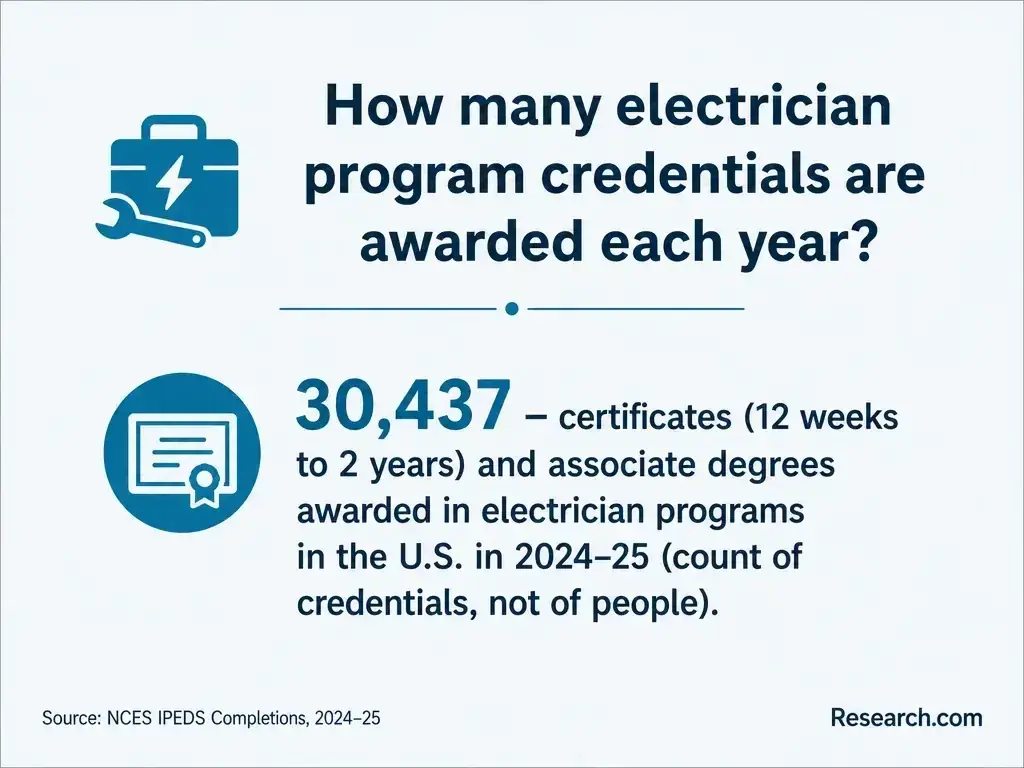
There is no single reliable statewide price for every electrician route: published college tuition does not capture all tools, commuting, or the value of paid apprenticeship training. Use each provider's current program-level charges rather than a college-wide figure, and compare costs over the time it takes you to become job-ready.
Build a written estimate from the following categories before accepting an offer. This is especially important when comparing a low-tuition campus program with paid work-based training.
Federal student aid depends on the student, institution, and program meeting eligibility rules (Federal Student Aid). Ask the financial aid office whether your specific credential qualifies, and contact a Mississippi WIN Job Center about available workforce assistance. Lists of most affordable online colleges that accept fafsa cannot establish aid eligibility for an electrician program.
The award may be a college certificate, technical diploma, or associate degree, depending on the program. A registered apprenticeship leads to a completion credential and documented on-the-job training (U.S. Department of Labor). An employer's internal training record may be useful to that employer but is not automatically equivalent to either one.
Ask for the credential's exact name and a record of completed lab and work hours. Institutional accreditation concerns the school; industry credentials, apprenticeship registration, and occupational licensing are separate matters. An NCCER-aligned curriculum, for example, is not itself permission to work independently or to operate an electrical contracting business.
Requirements vary by provider. A college may assess reading and math readiness before placing you in technical courses; an apprenticeship sponsor may use an application, aptitude assessment, interview, and employer selection process. Ask whether you need a diploma or equivalency credential, what documents to submit, and whether any jobsite conditions apply before paying an application fee.
Entry into a school program is not the same as entry into an apprenticeship. If your goal is paid field training, find out whether the college arranges interviews, offers credit a sponsor will accept, or simply provides instruction before you apply independently.
Relevant training covers circuit fundamentals, electrical calculations, blueprint reading, code navigation, wiring methods, motor controls, troubleshooting, and safe use of hand tools and meters (BLS; O*NET). The curriculum should make you practice diagnosing faults and completing installations, not merely recognize components on a screen.
For Mississippi job prospects, look at the program's actual equipment and worksites. Someone aiming for industrial maintenance should ask about motors and controls; someone seeking construction work should ask about installation practice and field placements. Request a lab-hour breakdown and ask how instructors assess safe work before students handle energized equipment.
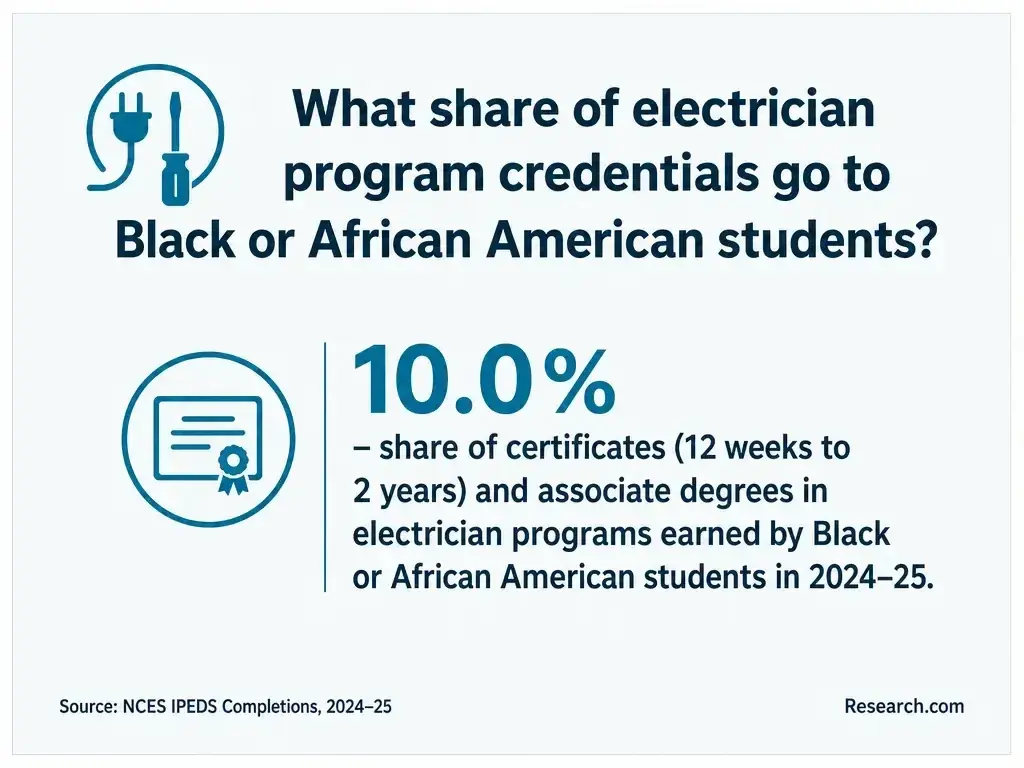
Do not assume one statewide electrician credential covers every job. Mississippi's State Board of Contractors regulates electrical contracting within its jurisdiction, while local authorities may set requirements for work or credentials in their jurisdictions (Mississippi State Board of Contractors; applicable local licensing authority). Employee duties, contractor work, and local journeyman or master classifications should be checked separately before choosing training.
Ask the authority where you intend to work what experience documentation, examination, and license or registration - if any - applies to your intended role. Then ask the program or apprenticeship sponsor which of those requirements its training addresses. Graduation, institutional accreditation, an optional industry certificate, and apprenticeship registration are not interchangeable with a required occupational or contractor license.
Start with the job you want, then compare programs on the supervised practice and next step they provide. The lowest-ranked price is useful only if the program gets you closer to that job than a paid apprenticeship or employer-sponsored opening would.
Use these checks when speaking with admissions staff and apprenticeship coordinators:
A common mistake is choosing on advertised tuition or a national wage alone. If you are also comparing top paying majors, keep that decision separate: the electrician investment depends on your own costs, paid-work opportunities, and route to documented experience - not a headline earnings figure.
A realistic first step is supervised electrical work, such as an apprentice or helper role. With documented experience, an electrician may move into more complex installation or troubleshooting, industrial maintenance, supervisory work, or contracting, subject to the requirements for each role (BLS; Mississippi State Board of Contractors).
Training in controls may suit someone pursuing manufacturing work; construction-focused experience may better serve an installer. Optional industry credentials can demonstrate particular skills, but they do not replace experience or a required license. An easy master degree search is not a shortcut to electrician advancement: for this trade, the more useful question is which supervised tasks and credentials your next role requires.
The BLS projects 9.2% growth nationally for electricians from 2025 to 2035. That supports considering the trade, but it is not a Mississippi hiring forecast or a promise of an opening near home. Check the latest Mississippi occupational projections and current vacancies in the area where you can work before committing to a training schedule.
Demand also depends on the type of work. Compare local apprenticeship openings, construction employers, and facilities-maintenance roles against the program's practical training. If suitable openings are farther away, include that commute - or a possible move - in your affordability decision.
Education is a significant investment, so Research.com built the accompanying ranking to help readers compare electrician programs with other local options. The team draws on education, cost, debt, and occupational data to check the ranking's credibility and accuracy. Only programs with completions reported to IPEDS are eligible; a registered apprenticeship or training provider absent from the ranking is not necessarily a poor option.
For most affordable rankings, programs are scored on tuition, cost of attendance, median student debt, and federal loan default rate. Weights are assigned using an entropy-based method, which gives more weight to measures that vary more across programs. Accreditation and other quality indicators are not part of this affordability score. By contrast, Research.com's best-program rankings also consider outcomes, earnings, student support, and recognition. The sources used across the ranking process include:
The allied-health and dental sources support rankings in other occupations; they do not establish the quality or licensing value of an electrician program. Use this affordability ranking as a shortlist, then verify practical training, employer connections, and local requirements yourself. More detail about the ranking approach is available in Research.com's methodology.
# 1 position
# 2 position
# 3 position
# 4 position

# 5 position
# 6 position
# 7 position
# 8 position
# 9 position

# 10 position
# 11 position

# 12 position
# 13 position

# 14 position
Electrical and Power Transmission Installation/Installer, General
Delivery mode: On Campus (May Include Online Courses)
82.62
/ 100
Final score
Accreditation
Institutional accreditation from Southern Association of Colleges and Schools Commission on Colleges.
Jones County Junior College earned a Research.com Affordability Score of 82.62/100, with $5,500 median student debt among the verified supporting factors.
# 15 position
# 17 position

# 18 position
# 19 position
Not necessarily. A registered apprenticeship or employer-sponsored route may provide paid training. Check the entry rules of local sponsors and authorities before paying for a school credential.
Do not assume so. A certificate records completed coursework; independent work or contracting may involve experience, examination, and applicable state or local requirements.
Theory may be taught online, but installation, testing, and safe tool use require in-person practice. Verify the practical components before enrolling.
Compare total charges and equipment costs against any wages earned during training. An apprenticeship can reduce unpaid study time, but openings and terms vary by sponsor.
Ask for the full cost, lab hours, credential awarded, apprenticeship connections, aid eligibility, and how the training aligns with requirements where you plan to work.