# 1 position
St Philip's College - Electrician.
associate

Audited and Verified:
Our Editorial and Data Verification Process
Research.com uses government datasets, official education statistics and primary institutional information to support its career and degree guides. Our review process checks factual accuracy, occupational definitions, source dates and the requirements associated with the credentials discussed.
How This Article Was Fact-Checked
Our editorial team verifies salary estimates, employment projections, education requirements and program information against original data providers and official organizations. Salary figures are checked against the relevant occupational definitions and reporting periods. Information about licensure, accreditation and required in-person training is reviewed separately.
Fact-checked and verified on:

Co-Founder and Chief Data Scientist

Reviewed by Karolina Broda
Fact-Checker and Data Verification
Choosing affordable electrician training in San Antonio means comparing more than tuition: a short course, a college credential, and a paid apprenticeship can lead to very different costs and work experience. Electricians earned a $63,190 national median annual wage in May 2025, according to the U.S. Bureau of Labor Statistics (BLS), but that is not a starting-pay estimate. The Research.com team of data scientists created the Most Affordable Electrician Trade Schools in San Antonio for 2027 ranking to help students identify programs worth considering. This guide explains the costs, Texas licensing rules, and training trade-offs behind that choice.
Expect instruction in electrical theory, circuits, wiring methods, code use, testing, and jobsite safety, paired with labs where students install or troubleshoot equipment. Ask how many hours are spent doing supervised shop work rather than watching demonstrations. A classroom credential can prepare you to seek entry-level work, but Texas licenses depend on the applicable examination and documented experience requirements, not graduation alone (TDLR).
These routes serve different needs. Published schedules and award titles vary by provider, so confirm the current catalog and apprenticeship terms before comparing offers.
| Training route | What it provides | Best fit and main limitation |
| Short certificate or pre-apprenticeship | Foundational instruction and, where offered, hands-on labs; the award depends on the provider. | Useful for testing the trade or strengthening an application; it does not substitute for licensed work experience. |
| College or career-school program | Structured classes and labs leading to the advertised certificate, diploma, or, if offered, associate degree. | Fits students who want a fixed training schedule; verify the full price and how graduates find supervised employment. |
| Registered apprenticeship | Paid, supervised work plus related instruction under a registered training plan. | Fits people ready to work while learning; openings and entry requirements depend on the sponsor. |
| Direct employer entry | Paid work and employer training after obtaining the appropriate Texas apprentice registration. | Can avoid upfront school tuition; confirm who supervises and documents hours and how you will learn theory. |
Electrical work is one of the jobs you can get with a vocational degree or other occupational training, but a degree is not the standard entry requirement. The strongest option is the one that connects instruction to verifiable work experience.
Local opportunities can include residential and commercial electrical contractors, industrial facilities, building-maintenance teams, and contractors serving infrastructure projects. The job you can take depends on your Texas registration or license, experience, and the employer's supervision arrangements - not merely the name of your school credential (TDLR; BLS Occupational Outlook Handbook).
Think about the worksite before choosing a program. Residential wiring practice may fit a homebuilding goal, while commercial or industrial work can call for more time with conduit, motor controls, drawings, and troubleshooting. Lists of best college majors for future jobs answer a different question; for this trade, ask whether local employers will hire you into supervised electrical work that counts toward your intended license.
A verified San Antonio wage figure is necessary to state a local median responsibly; the national figure is only a benchmark. BLS reports a $63,190 national median annual wage for electricians in May 2025. That figure includes experienced workers and should not be used as an apprentice's expected offer. Ask prospective sponsors or employers for the current entry wage, scheduled increases, benefits, and expected weekly hours, then compare those terms with the cost of attending school.
Pay also depends on whether work is residential, commercial, industrial, maintenance, or supervisory, and on the license and experience a position requires (BLS Occupational Outlook Handbook; TDLR). For a local decision, compare offers for the same type of role and work schedule rather than treating the national median as a San Antonio salary.
A school's completion date and the time needed to qualify for a Texas license are different clocks. A short course may finish before a longer certificate or associate program, but the school's advertised clock or credit hours must be checked in its current catalog. Texas journeyman eligibility requires 8,000 documented hours of qualifying supervised work; TDLR permits eligible candidates to take the journeyman examination after 7,000 hours, but examination eligibility does not waive the remaining experience requirement (TDLR).
Registered apprenticeships combine paid work and related instruction over a multiyear training plan; exact hours and schedules are sponsor-specific (U.S. Department of Labor, Apprenticeship.gov). If speed matters, ask when you can begin earning and accumulating qualifying hours - not just when classes end. Part-time attendance may make school easier to afford while extending the time before you finish its instruction.
Electrical theory, code reading, and some calculations can be taught remotely. Safe tool use, installation, testing, troubleshooting, and supervised jobsite work require physical equipment or worksites. An online completion certificate is therefore not evidence that a student has practiced those competencies or met Texas licensing experience rules (TDLR).
A hybrid option may reduce commuting for classroom lessons, but request its lab schedule, location, equipment access, and assessment method in writing. That matters in a city where traveling between home, class, and an employer worksite adds real time and expense. Students researching online community colleges that accept FAFSA should separately verify both the specific electrician program's aid eligibility and its in-person training requirements; neither follows automatically from an institution's online offerings.
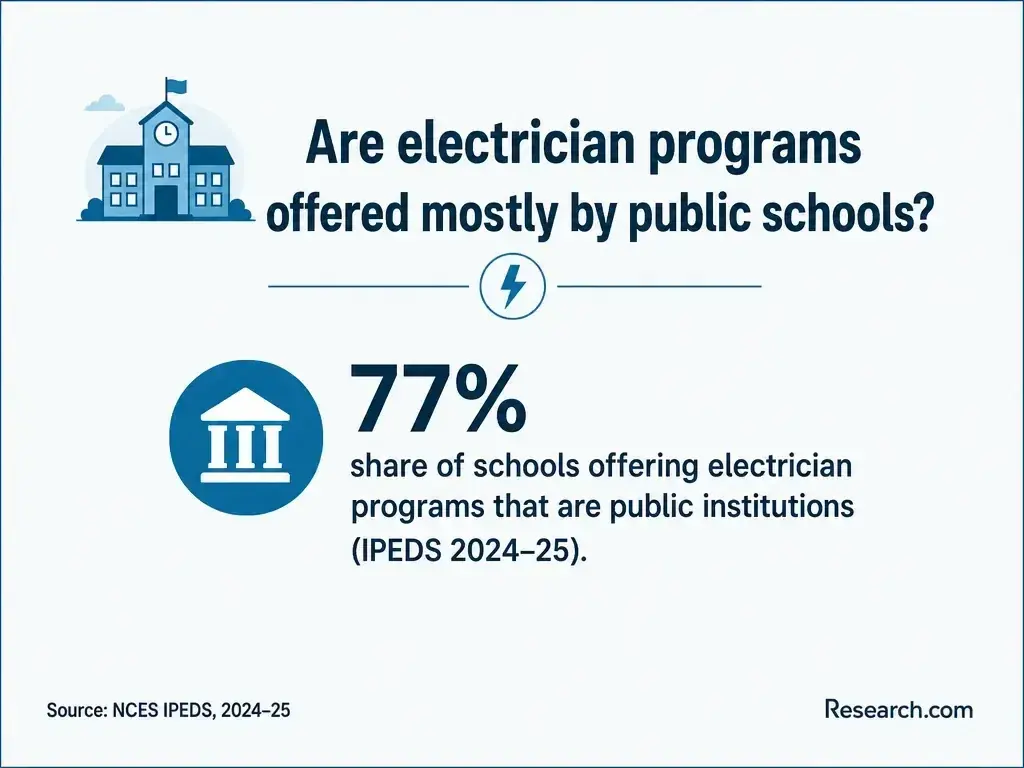
There is no responsible single San Antonio average that combines school tuition with paid apprenticeships: they charge and compensate trainees differently, and published prices can exclude necessary supplies. Compare each option's total cost to become job-ready, not tuition alone. Request a written, program-specific estimate from St Philip's College, Lamson Institute, or Southern Careers Institute-San Antonio if considering an electrician offering there; confirm that the offering is currently available before using any quoted price.
Use the same cost categories for each school offer, then subtract only aid or earnings you can reasonably expect to receive.
| Cost or offset | What to verify |
| School charges | Tuition, mandatory fees, textbooks, software, and lab or consumable-material charges. |
| Work-ready supplies | Tools, testing equipment, work clothes, and required personal protective equipment. |
| Entry and attendance costs | Applicable registration or examination fees, travel to labs or worksites, and earnings forgone while in class. |
| Potential offsets | Eligible grants and scholarships, employer-paid supplies, and wages during an apprenticeship or entry-level job. |
Federal aid depends on the institution, program, and student's eligibility; a registered apprenticeship may instead offer wages during training (Federal Student Aid; U.S. Department of Labor). Ask about Workforce Solutions Alamo assistance and its eligibility rules before counting on funding. Searches for the best major to make money are not a substitute for this calculation: electrician training's value depends on its price, the paid work available during training, debt, and whether you complete the path to your intended license.
The credential is whatever the specific provider awards: a completion certificate, diploma, or an associate degree where that academic program is offered. A registered apprenticeship has its own completion credential, and an industry training credential such as one aligned with NCCER standards is different again. Get the exact award title, issuing organization, and required coursework from the provider rather than assuming similarly named programs teach the same skills.
None of those awards is itself a Texas journeyman electrician license. Institutional accreditation concerns the school; industry recognition concerns particular training standards; state school authorization concerns permission to operate; apprenticeship registration concerns the training arrangement; and TDLR occupational licensing governs who may perform regulated electrical work. Check each separately when it matters to your goal (U.S. Department of Education; U.S. Department of Labor; TDLR).
Schools set their own admissions rules, which may include an application, prior-education documentation, and placement requirements. Apprenticeship sponsors set separate selection standards; employers set hiring and safety requirements. Request the current written criteria rather than assuming admission to a school also secures an apprenticeship or job (institution and sponsor admissions policies).
Texas electrician apprentices must obtain the appropriate TDLR registration to perform regulated work under required supervision. Before committing to a program, ask whether it helps students obtain that registration, meet potential employers, and preserve records of supervised hours. If you already have electrical experience, ask the school about prior-learning credit and the apprenticeship sponsor or TDLR about recognition of experience; school credit and licensing work hours are not automatically interchangeable (TDLR).
A useful entry-level curriculum connects electrical theory to tasks an apprentice will encounter: measuring circuits, reading drawings, selecting wiring methods, installing devices, using test instruments, and diagnosing faults. Code interpretation, lockout and other safety practices, communication, and accurate documentation matter because electricians work around hazardous energy and alongside other trades (BLS Occupational Outlook Handbook; Occupational Safety and Health Administration).
Ask to see the actual lab exercises and equipment. A program emphasizing only theory may help with foundational knowledge but leave you seeking practical instruction elsewhere; a program emphasizing installation without code and troubleshooting can leave a different gap. Compare the curriculum with the residential, commercial, or industrial work you want to pursue, and confirm how instructors assess hands-on competence.
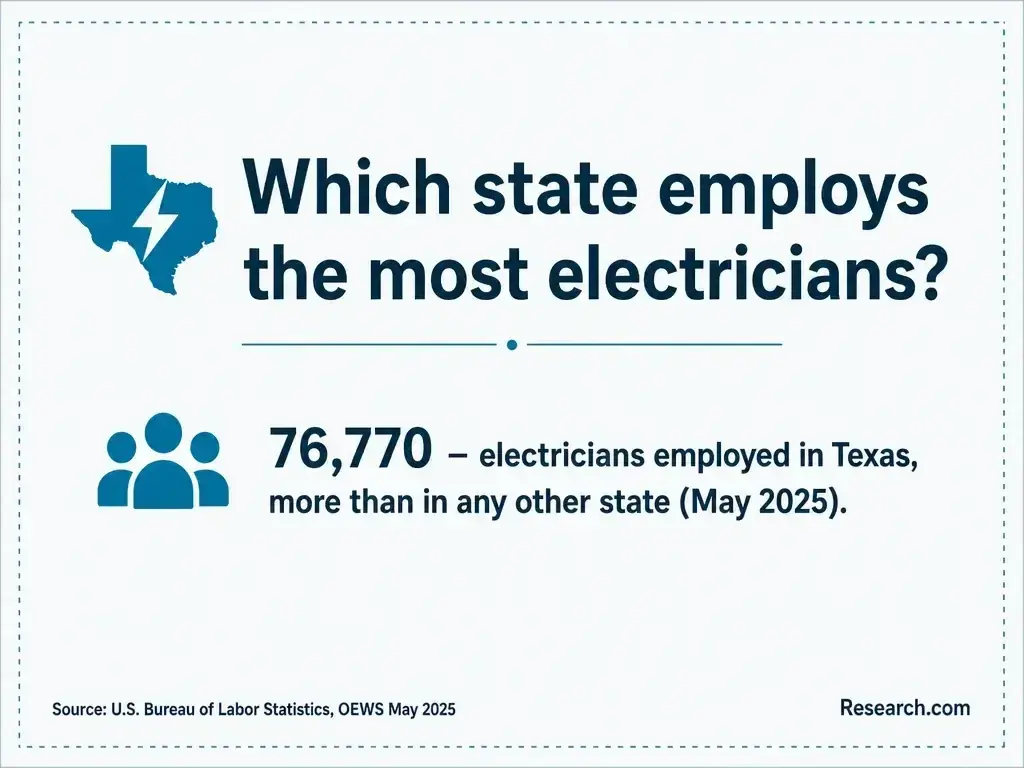
Yes, Texas regulates electrical work through TDLR. An entry-level worker typically begins with electrician apprentice registration and works under the required supervision rather than holding a journeyman license. For journeyman licensure, TDLR requires qualifying documented experience and an examination; a school certificate or optional industry certification does not replace either. Texas also has other license categories, including residential wireman, with different scopes and requirements (TDLR).
Licensing rules affect which program is worth buying: ask whether its instruction helps prepare you for the examination and, more importantly, how you will obtain and document qualifying work. Verify current TDLR requirements before enrollment and again before applying. Permits and jobsite rules are separate from the personal credential a worker holds; do not treat a school's accreditation or a training sponsor's registration as permission to work independently.
Start with the job and Texas license you want, then compare providers on the route from enrollment to supervised employment. A low-cost course can be poor value if it offers little lab practice or no realistic connection to qualifying work; a more expensive program needs to justify its added time and cost. Rankings are a starting point, not proof of licensing eligibility or personal return on investment.
Put these questions to each school or apprenticeship sponsor and request answers in writing:
Estimate value using your likely completion date, wages you may forgo or earn during training, aid, debt, and a realistic time horizon. Do not assume the national electrician median will be your first wage. Search results for easy master degree programs address a different educational route and cannot answer whether an electrician program supplies the practical experience your Texas goal requires.
Training can lead first to supervised apprentice work, followed - once the relevant Texas requirements are met - by licensure within the appropriate scope. Experience may open residential service, commercial construction, industrial maintenance, controls-related work, or supervisory roles. Running an electrical contracting business involves additional Texas licensing and business requirements; completing a school program is not enough (TDLR; BLS Occupational Outlook Handbook).
Choose initial training for the work you can actually access. Someone aiming for industrial troubleshooting should examine equipment and employer connections rather than paying extra for a course focused narrowly on house wiring. Someone who needs income immediately may prefer a paid apprenticeship or supervised employer entry to full-time classes, provided the arrangement supplies sound instruction and documented experience.
BLS projects 9.2% growth in U.S. electrician employment from 2025 to 2035. That national projection signals continuing demand for training and replacement hiring, but it does not measure San Antonio openings, guarantee an apprenticeship place, or predict an individual graduate's prospects (BLS Employment Projections).
For a local decision, check current San Antonio-area postings and ask apprenticeship sponsors and contractors when they recruit, which worksites trainees reach, and what entry skills they expect. Compare those answers with the program's labs and schedule. Demand is most useful to you when a training route can turn it into an attainable supervised job and a path toward the license you want.
Investing in electrician training is an important decision, so the Research.com team designed the ranking to make local cost comparisons more credible and useful. Programs are compared with others in the same occupation and location; only programs reporting completions to the Integrated Postsecondary Education Data System (IPEDS) are eligible. The most affordable ranking scores tuition, cost of attendance, median student debt, and federal loan default rates, with weights assigned through an entropy-based method. Accreditation, student support, and other quality measures are not part of this affordability score. Readers should check those separately before enrolling.
The ranking draws on the following data sources. Some belong to a broader, cross-occupation source pool; health-specific organizations on this list do not establish whether an electrician program meets Texas licensing requirements.
This approach helps readers narrow the cost comparison, not declare a program the best route to a license. IPEDS and College Scorecard do not cover every union, employer, or apprenticeship provider; absence from the ranking is not a quality judgment. Research.com explains its broader ranking practices on its methodology page.
# 1 position
# 2 position
# 3 position

# 4 position
No. A registered apprenticeship or supervised employer-entry route can provide training without a separate trade-school program. Texas registration, supervision, experience, and examination rules still apply to the relevant work and license (TDLR).
It may reduce upfront school expense and provide wages while you learn, but compare sponsor fees, tools, travel, starting pay, and the time commitment. Openings and terms differ by sponsor (U.S. Department of Labor, Apprenticeship.gov).
Online classes can teach theory, but they do not replace required supervised work or prove hands-on competence. Check the requirements for your intended TDLR license category before enrolling.
No. A certificate documents the provider's training, not a Texas occupational license. Independent work depends on the applicable TDLR license and its scope.
Ask whether the specific program qualifies for federal aid, what grants or workforce assistance you may be eligible for, and which required tools and fees remain out of pocket (Federal Student Aid). Compare that net cost with paid-training options.