
# 1 position
Most Affordable Electrical Technician Schools & Training in Thomasville for 2027
Audited and Verified:
Our Editorial and Data Verification Process
Research.com uses government datasets, official education statistics and primary institutional information to support its career and degree guides. Our review process checks factual accuracy, occupational definitions, source dates and the requirements associated with the credentials discussed.
How This Article Was Fact-Checked
Our editorial team verifies salary estimates, employment projections, education requirements and program information against original data providers and official organizations. Salary figures are checked against the relevant occupational definitions and reporting periods. Information about licensure, accreditation and required in-person training is reviewed separately.
Fact-checked and verified on:

Co-Founder and Chief Data Scientist

Reviewed by Karolina Broda
Fact-Checker and Data Verification
Choosing affordable electrician training in Thomasville means looking beyond tuition: you need a route to supervised work, practical skills, and the right credentials. The U.S. Bureau of Labor Statistics projects electrician employment to grow 9.2% nationally from 2025 to 2035, making the choice timely but not guaranteeing a local job. This guide compares training costs, apprenticeships, wages, and Georgia licensing rules. It also features a Most Affordable Electrician Trade Schools in Thomasville for 2027 ranking, created by the Research.com team of data scientists to help students identify programs worth considering.
Key findings about electrician degrees in Thomasville
- The national median annual wage for electricians was $63,190 in May 2025; it is not a Thomasville starting-wage estimate (U.S. Bureau of Labor Statistics).
- A Thomasville-area school program can teach electrical fundamentals, but completing it does not replace the experience and examination Georgia requires of electrical contractor license applicants (Georgia State Construction Industry Licensing Board).
- Compare Southern Regional Technical College's current total program charges with paid apprenticeship offers; the lower tuition figure may not be the lower-cost route once tools, travel, aid, and earnings during training are included.
Table of Contents
- Most Affordable Electrical Technician Schools & Training in Thomasville for 2027
- What can I expect from an electrician trade school program in Thomasville?
- Where can I work with an electrician trade school training in Thomasville?
What can I expect from an electrician trade school program in Thomasville?
Expect a mix of electrical theory and supervised practice, not a qualification to work independently on day one. Southern Regional Technical College is the local public technical-college option to investigate for current electrical program availability, schedules, lab access, and credentials. Ask which tasks students actually perform with tools and test equipment, rather than judging programs by credential name alone.
A certificate may suit someone seeking entry-level skills before applying to an employer or apprenticeship. A longer diploma can cover more technical coursework; an associate degree, where offered, adds broader academic study. A registered apprenticeship is different: it combines paid work under supervision with related instruction and leads toward occupational proficiency. Employer-sponsored and union training may offer similar work-based entry, subject to available places and selection requirements (U.S. Department of Labor, Apprenticeship.gov).
Speed is useful only if the training fits your next step. Readers comparing fast track college programs should check whether an electrical program's shorter calendar leaves enough time for safe, hands-on practice and an employer-recognized credential.
Where can I work with an electrician trade school training in Thomasville?
Potential workplaces include electrical contractors serving homes and commercial buildings, construction sites, industrial facilities, and maintenance departments. Job duties differ: installing circuits on a building site is not the same as troubleshooting equipment in a plant. The U.S. Bureau of Labor Statistics identifies electrical contractors, manufacturing, and government among electrician employment settings.
Thomasville applicants should ask programs and apprenticeship sponsors which employers take their trainees and where those jobs are located. A placement described as "regional" may require a commute beyond Thomasville; that affects both transport costs during training and which openings you can realistically accept. Request recent employer names, placement definitions, and the share of placements that were paid electrical work - not merely any employment.
A dependable Thomasville-specific electrician wage is not established here, so do not treat a national figure as a local offer. The national median was $63,190 annually in May 2025 for electricians across experience levels and employers (U.S. Bureau of Labor Statistics, Occupational Outlook Handbook). New trainees can earn less, while experienced workers' pay depends on responsibilities, overtime, and employer.
For a useful local comparison, request starting-pay ranges from Thomasville-area electrical employers and apprenticeship sponsors. Compare paid hours and benefits, not just an hourly rate: an apprenticeship wage earned while learning can change the value of a longer training route. Do not use the national median as a forecast of what a particular program's graduates will earn.
Length depends on the credential, course load, and whether work experience is built into the route. A short certificate generally takes less time than a diploma; a registered electrician apprenticeship typically spans several years of paid, supervised work and related instruction (U.S. Department of Labor, Apprenticeship.gov). Confirm the current calendar and required contact hours with the provider rather than assuming similarly named programs have identical schedules.
Ask whether evening or part-time study postpones access to labs or delays the next apprenticeship intake. An accelerated classroom program may get you to an entry-level application sooner, but it cannot compress the supervised work experience needed for more independent responsibilities. That distinction matters more to an electrician applicant than comparisons with a list of dual degree programs.
Online study can deliver theory, calculations, code-reading exercises, and some safety instruction. It cannot by itself demonstrate safe wiring, conduit work, testing, fault-finding, or performance under supervision. Campus labs and employer worksites provide those practical opportunities; a hybrid option is useful only if its in-person component is accessible and substantial.
The distinction is especially important for students outside central Thomasville who may face repeated trips to a lab or jobsite. Before enrolling, get the lab timetable, location, attendance rules, and any required work placement in writing. A directory of best accredited online schools may help you check an institution, but accreditation does not turn remote-only coursework into practical electrical experience or Georgia contractor-license eligibility.
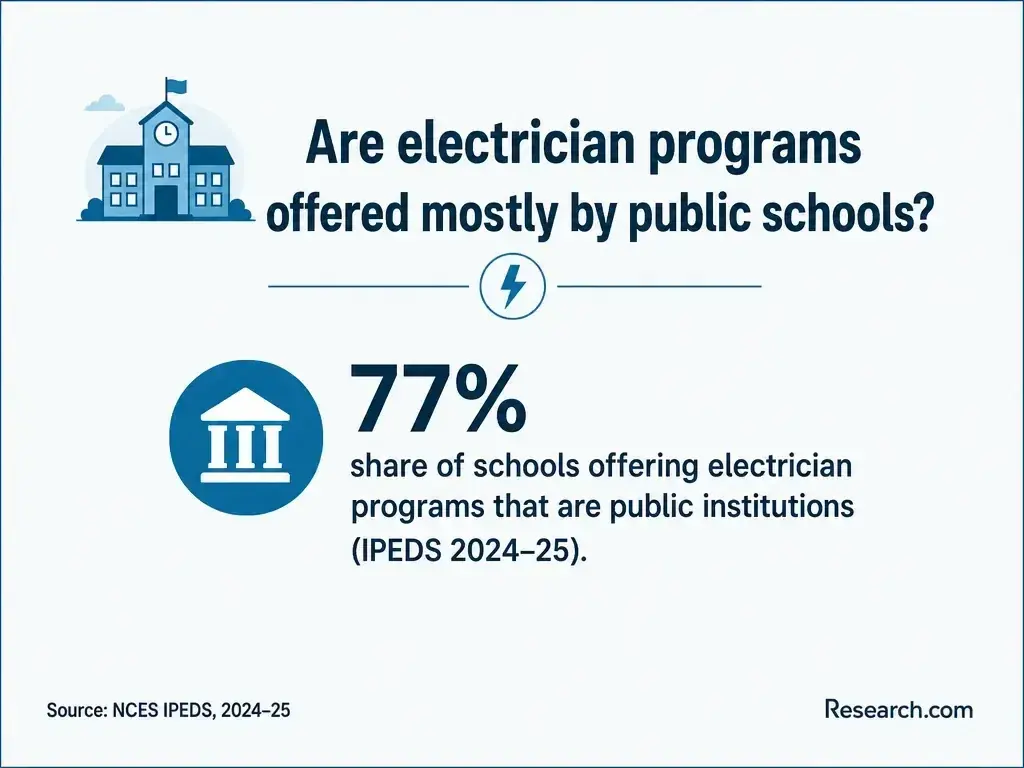
There is no verified Thomasville-wide average here that fairly combines college programs, employer training, and paid apprenticeships. Published tuition is only one part of the amount needed to become job-ready. Ask Southern Regional Technical College for its current program-specific cost sheet and compare it with any apprenticeship's charges and paid-work terms.
The comparison below separates expenses that are easy to miss. Enter each provider's actual quote rather than substituting an unrelated online-program price.
| Cost or offset | What to verify for electrical training |
| School charges | Tuition, mandatory fees, books, and electrical lab or materials charges |
| Job-readiness expenses | Tools, testing equipment, protective gear, transport, and any required exam or application fees |
| Financial offsets | Eligible grants, scholarships, employer-paid instruction, and apprenticeship wages |
| Time cost | Work hours lost to classes or gained through paid training |
Eligible Georgia residents can investigate the HOPE Grant for qualifying certificate or diploma study; eligibility and covered charges depend on current rules and the program (Georgia Student Finance Commission). Federal aid eligibility also varies by student and program (Federal Student Aid). Neither the cheapest doctoral degree online nor another field's tuition is a meaningful benchmark for electrician training with required tools and onsite work.
The award depends on the route you enroll in: a technical-college program may award a certificate or diploma, while an eligible associate program awards an academic degree. A registered apprenticeship has its own completion credential documenting work-based training and related instruction (U.S. Department of Labor, Apprenticeship.gov). Ask for the exact credential name and whether employers or apprenticeship sponsors award credit for prior coursework.
Institutional accreditation evaluates the school; state authorization governs its ability to operate; an industry certificate documents specified skills; apprenticeship registration concerns a training program; and an occupational license is a separate legal authorization. None automatically substitutes for another. If a program advertises NCCER-aligned training, ask which NCCER credential, if any, students actually earn (National Center for Construction Education and Research).
Requirements vary by provider and credential. Request Southern Regional Technical College's current admissions checklist, including any academic placement, age, documentation, or program-entry conditions. Apprenticeship sponsors and employers set their own selection standards and may assess math readiness, work eligibility, and ability to reach jobsites; admission to a school does not secure an apprenticeship position (Southern Regional Technical College; Apprenticeship.gov).
Before applying, confirm that you can attend the stated lab hours and travel to any assigned worksite. Ask whether previous electrical coursework earns credit or advanced standing, and obtain the decision in writing. That can prevent paying twice for instruction without assuming prior study replaces required supervised experience.
Relevant instruction covers electrical calculations, interpreting drawings, circuits, wiring methods, safety, and using meters to diagnose faults. Employers also need workers who communicate clearly, follow procedures, document work, and recognize when a task exceeds their training (U.S. Bureau of Labor Statistics, Occupational Outlook Handbook).
Compare programs by observed practice: ask to see lab equipment and find out whether students install and test circuits, troubleshoot faults, and receive feedback on safe work - not just watch demonstrations. Check which code edition the curriculum uses and how instructors address current equipment. A trainee aiming for industrial maintenance should ask about motors and controls; someone targeting building construction should prioritize installation practice and access to contractor worksites.
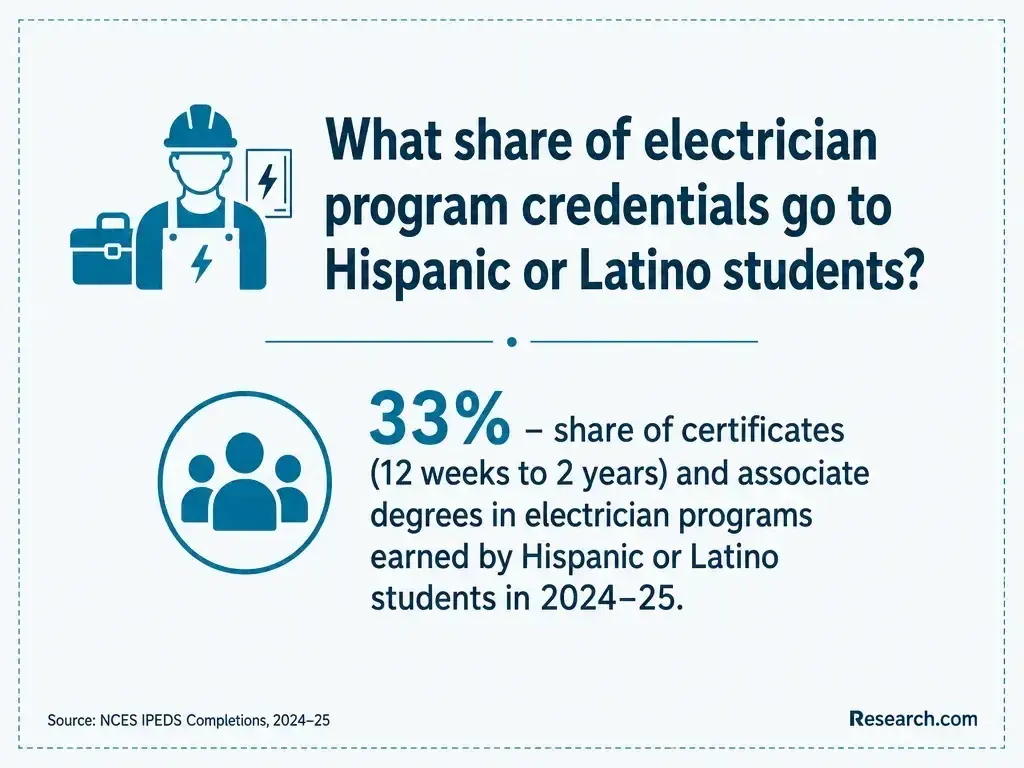
Georgia's electrical contractor license is distinct from a school credential. The Georgia State Construction Industry Licensing Board sets experience and examination requirements for applicants who want to qualify as electrical contractors; finishing a certificate or diploma alone does not meet them. Work performed as an employee under an appropriately licensed contractor is a different position from independently contracting for electrical jobs (Georgia Secretary of State, State Construction Industry Licensing Board).
Before choosing training, tell the provider whether your goal is supervised entry-level employment or eventual independent contracting. Ask how its instruction connects to documented experience, what records you should keep, and who can verify that experience for a future application. An optional industry certification may help demonstrate skills, but it is not a substitute for a Georgia contractor license.
Choose the route that gets you safely into the electrical work you want at a manageable total cost. A public technical-college program can suit someone who wants structured labs before seeking employment; a paid apprenticeship can suit someone ready to learn primarily at work. Neither is automatically cheaper or better - the answer depends on admission, schedule, aid, wages, completion prospects, and the experience employers recognize.
Use these checks before paying a deposit. They test whether a low advertised price leads to a usable credential and practical experience.
- Ask for the exact credential, current curriculum, lab hours, and any employer-work component.
- Confirm institutional accreditation or applicable state authorization separately from industry recognition and Georgia licensing requirements.
- Get a written itemized estimate covering fees, tools, protective gear, transport, and likely time away from paid work.
- Ask for recent completion and electrical-job placement information, including how each outcome is defined.
- Compare at least one paid apprenticeship or employer-training route and ask whether school credits can count toward it.
For return on investment, consider aid, debt, the chance of finishing, earnings while training, plausible post-training pay, and how long it takes to recover costs. A ranking alone cannot answer those questions. Searches such as what is the easiest master degree to get address a different decision; for electrical work, supervised competence and the route to your intended job matter more.
An entry route may lead to an electrical helper or apprentice position, followed by broader installation or troubleshooting duties as experience grows. Building construction, service work, and industrial maintenance call for overlapping but different skills. With additional documented experience and the applicable examination, someone may later pursue Georgia electrical contractor licensure; supervising others or operating a business also demands skills beyond classroom wiring (Georgia State Construction Industry Licensing Board; U.S. Bureau of Labor Statistics).
Ask employers which entry roles they offer and what training they provide after hiring. If your goal is industrial controls rather than residential installation, favor a program and work placement with matching equipment. Optional industry credentials can support specialization, but an entry-level school award should not be mistaken for an advanced role or permission to contract independently.
The U.S. Bureau of Labor Statistics projects 9.2% national growth in electrician employment from 2025 to 2035. That indicates broader demand, not the number of openings in Thomasville or a promise of placement. Local opportunities depend on contractors' workloads, facilities' hiring plans, and whether applicants can travel to jobsites.
Use the national projection as context, then test the local market: review current electrical helper and apprentice postings, contact apprenticeship sponsors, and ask providers where recent students found electrical work. Demand for someone who can arrive reliably and perform supervised tasks safely may be more relevant to your first job than a long-range national growth figure.
Most Affordable Electrical Technician Schools & Training in Thomasville for 2027
Investing in electrician training is a consequential financial decision. Research.com created its affordability ranking to help readers compare programs against other electrician options in the same location, rather than against unrelated trades or distant markets. The team uses multiple education, cost, debt, and industry sources to check the credibility and accuracy of its comparisons.
For most affordable rankings, the score considers tuition, cost of attendance, median student debt, and federal loan default rate; weights are assigned using an entropy-based method. Accreditation and other quality measures are not part of that affordability score, so a low-ranked cost alone should not settle your enrollment decision. Only programs reporting completions to IPEDS are eligible. Registered apprenticeships and other training routes may therefore be absent even when they are viable local choices.
The ranking draws on the following data sources. Some cover other trades and serve the broader ranking process; their inclusion does not imply that a health or dental accreditor approves electrician training.
- IPEDS database - program completions and institutional data used to establish eligible comparisons.
- National Center for Education Statistics - federal education data and definitions.
- College Scorecard database - available institutional cost, debt, and outcome information.
- Peterson's database - supplementary institutional information.
- Commission on Accreditation of Allied Health Education Programs (CAAHEP) - occupation-specific recognition information for relevant health programs, not electrician approval.
- Accrediting Bureau of Health Education Schools (ABHES) - accreditation information for relevant health schools, not electrician approval.
- Commission on Dental Accreditation (CODA) - dental-program accreditation information, not electrician approval.
- Dental Assisting National Board (DANB) - dental credential information, not electrician certification.
- National Center for Construction Education and Research (NCCER) - construction-training and industry-credential context relevant to some electrical programs.
- Apprenticeship.gov Partner Finder - a way to identify apprenticeship partners outside the college-only comparison.
Use the ranking to shortlist affordable options, then verify current prices, hands-on instruction, and apprenticeship connections directly. Research.com explains its broader approach on its methodology page.
# 2 position
Southern Regional Technical College - Electrician.
certificate or diplomaFrequently asked questions about electrician programs in Thomasville
Is trade school required to become an electrician in Thomasville?
Not necessarily. Paid apprenticeship and employer training are possible routes. Compare their entry requirements, supervised experience, and related instruction with a school program before enrolling.
Does an electrician certificate let me work independently in Georgia?
No. A school certificate is not a Georgia electrical contractor license; the state board sets separate experience and examination requirements for contractor applicants.
Can I complete electrician training entirely online?
Theory may be taught online, but wiring, testing, and safe tool use require in-person practice. Confirm where and when those activities occur.
What makes a program affordable?
Compare mandatory charges, tools, protective gear, transport, aid, debt, and lost or earned wages during training - not tuition alone.
Should I choose a certificate or an apprenticeship?
A certificate can build skills before job applications. An apprenticeship combines related instruction with paid supervised work; choose based on available places, costs, schedule, and your readiness to work onsite.
- U.S. Bureau of Labor Statistics - Electricians
Used to verify salary, employment outlook, and typical education requirements.
https://www.bls.gov/ooh/construction-and-extraction/electricians.htm - NCCER - Accredited Training
Used to verify programmatic accreditation or industry recognition of programs.
https://www.nccer.org/ - O*NET OnLine - Electricians
Used to verify common responsibilities, skills, work settings, and education expectations.
https://www.onetonline.org/link/summary/47-2111.00 - Southern Regional Technical College - official website
Official school website (programs, tuition, admissions).
https://southernregional.edu/