# 1 position
Augusta Technical College - Electrician.
associate

Audited and Verified:
Our Editorial and Data Verification Process
Research.com uses government datasets, official education statistics and primary institutional information to support its career and degree guides. Our review process checks factual accuracy, occupational definitions, source dates and the requirements associated with the credentials discussed.
How This Article Was Fact-Checked
Our editorial team verifies salary estimates, employment projections, education requirements and program information against original data providers and official organizations. Salary figures are checked against the relevant occupational definitions and reporting periods. Information about licensure, accreditation and required in-person training is reviewed separately.
Fact-checked and verified on:

Co-Founder and Chief Data Scientist

Reviewed by Karolina Broda
Fact-Checker and Data Verification
Choosing the cheapest electrician program can be expensive if it leaves you without the practical experience you need for the job you want. The U.S. Bureau of Labor Statistics projects 9.2% growth in electrician employment from 2025 to 2035, making training choices worth examining carefully. This guide compares costs, credentials, apprenticeships, and Georgia licensing considerations. It also accompanies the Most Affordable Electrician Trade Schools in Augusta for 2027 ranking, created by the Research.com team of data scientists to help students identify programs worth considering.
Expect instruction in electrical theory, circuits, wiring methods, code interpretation, testing, and safe use of tools, paired with supervised lab work. The crucial question is what happens after class: installing and troubleshooting electrical systems on a jobsite requires practice that a classroom credential cannot provide by itself.
The principal routes differ in how students obtain that practice. This comparison helps you match a credential to your preferred way of entering the trade.
| Route | Training and credential | Best fit and limitation |
| Technical-college certificate or diploma | Courses and labs leading to the specified school credential | Fits students seeking a structured foundation; ask how graduates connect with employers or apprenticeships. |
| Registered apprenticeship | Paid supervised work plus related instruction; completion leads to an apprenticeship credential | Fits people ready to work while learning; admission and jobsite schedules depend on the sponsor. |
| Employer-sponsored entry | Training and supervised work defined by the employer | Can suit applicants offered an entry-level position; verify whether instruction and experience are documented and transferable. |
In Augusta, begin by comparing Augusta Technical College's current electrical offerings with registered-apprenticeship and employer routes you can realistically reach. Ask each provider to identify its lab hours, worksite access, and credential in writing; similarly named programs need not offer equivalent practical preparation.
Electrical contractors install and service wiring for homes, commercial buildings, and renovations. Industrial and facilities employers may hire electrical workers for equipment, controls, and maintenance. These settings reward different skills: residential work emphasizes service and building wiring, while industrial work can place more weight on motors, troubleshooting, and controls (U.S. Bureau of Labor Statistics, Occupational Outlook Handbook).
Augusta's position on the Georgia-South Carolina border expands the possible commuting area, but it also makes work location consequential. Before taking a cross-border assignment or planning to operate independently there, check the applicable state and local rules rather than assuming a Georgia credential or experience record transfers automatically.
A reliable Augusta-specific electrician wage is not established here, so a national figure should serve as context, not a local pay quote. Electricians had a $63,190 national median annual wage in May 2025 (U.S. Bureau of Labor Statistics, Occupational Outlook Handbook). That median includes experienced workers; an apprentice or newly trained worker should not treat it as expected starting pay.
When evaluating an offer, request the actual apprentice or entry-level rate, scheduled raises, benefits, overtime policy, and travel expectations. Compare pay against the cost of reaching each jobsite and any income you would give up to attend classes. Readers exploring short programs that pay well should note that a short electrician credential and a completed apprenticeship represent different levels of experience.
There is no single Augusta program length: a certificate's schedule, a diploma's credit requirements, and an apprenticeship's work requirements differ. Electrician apprenticeships commonly take four or five years and combine paid on-the-job training with technical instruction (U.S. Bureau of Labor Statistics, Occupational Outlook Handbook). Confirm the sponsor's actual hours and progression rules rather than assuming every apprenticeship follows the same schedule.
For a school program, ask Augusta Technical College for the current catalog's credits or contact hours, required courses, lab schedule, and full-time and part-time completion timelines. A faster classroom option may get you to an entry-level application sooner, but it does not compress the supervised experience an employer or licensing board may later require.
Electrical theory, code reading, and some calculations can be taught remotely. Safe tool use, circuit testing, installations, and troubleshooting must be demonstrated with equipment or at a worksite. An online lesson therefore is not equivalent to a supervised lab or apprenticeship assignment.
A hybrid schedule may help a working adult reduce classroom trips, but ask where practical sessions occur, who supervises them, and whether their timing fits your work and commute. Do not assume an entirely online certificate supplies the practical experience needed by an employer or counts toward Georgia electrical-contractor licensing. The distinction also matters when comparing certificate programs that pay well: the credential name tells you less than the skills you can demonstrate.
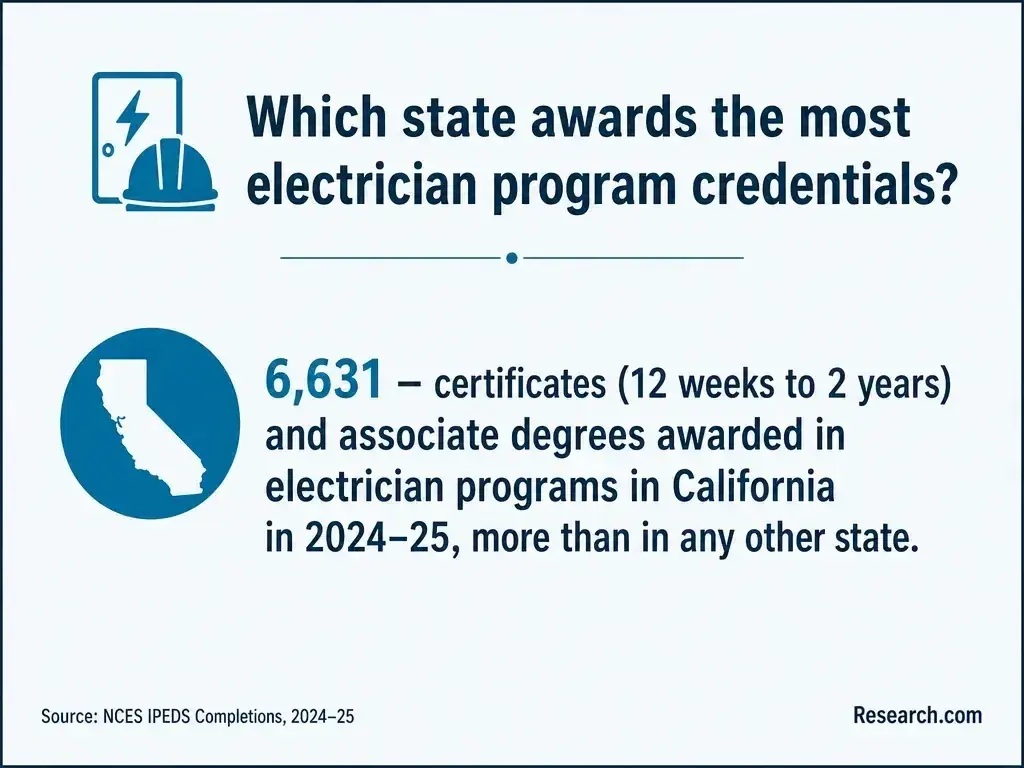
A defensible Augusta-wide average is not available from a common price measure covering technical-college programs, employer training, and paid apprenticeships. Ask for a current, program-specific total instead of using one advertised tuition figure as the cost of becoming job-ready.
Build the estimate from the expenses most likely to change your decision:
Subtract grants or employer-paid expenses only when eligibility or reimbursement is confirmed. Georgia's HOPE Grant may help eligible residents in qualifying certificate or diploma programs; verify both your eligibility and the particular program with Augusta Technical College and the Georgia Student Finance Commission. Federal aid also depends on program and student eligibility (Federal Student Aid). A paid apprenticeship can offset living costs, but compare its wages and advancement schedule with the full cost and completion likelihood of school training.
The award depends on the route: a college may issue a certificate or diploma, while a registered-apprenticeship sponsor awards a completion credential after its work and instruction requirements are met. Neither is automatically a Georgia electrical-contractor license. Before enrolling, get the exact credential name and ask whether employers recognize it for the positions you intend to pursue.
Also ask whether completed courses can count toward another electrical credential or an apprenticeship's related instruction. Credit or advanced standing depends on the receiving provider's policy; do not budget for a shorter pathway until it confirms the arrangement in writing. A person considering a best associate degree in 6 months online accredited comparison should not infer that rapid online study replaces supervised electrical practice.
Requirements vary by provider and route. A technical-college applicant should check the current admissions policy, placement requirements, program prerequisites, and any documentation needed for aid. An apprenticeship applicant should check the sponsor's education, math, interview, work-eligibility, and physical job-duty requirements; a sponsor may also require a driver's license or reliable transportation. These are provider requirements, not universal Georgia entry rules.
Apply to a route you can actually attend. An apprenticeship may provide wages but require a fixed workday and travel among jobsites; a school schedule may offer more room to prepare academically but involve unpaid class time. If you already have relevant training or work experience, request an individual review for credit or advanced standing before committing.
Useful entry-level training connects measurements and diagrams to safe work: reading plans, calculating electrical loads, understanding circuits, selecting wiring methods, using meters, and following applicable electrical code. Labs should let students assemble, test, find faults in, and correct systems under supervision. Workplace skills matter too: communicating hazards, documenting work, and coordinating with other trades (U.S. Bureau of Labor Statistics, Occupational Outlook Handbook).
Ask to see the current course outline and lab equipment. If you want industrial maintenance, look for meaningful exposure to motors and controls rather than assuming a residential-wiring course covers them. If your goal is contractor work, prioritize the route that helps you obtain documented, relevant field experience as well as technical knowledge.
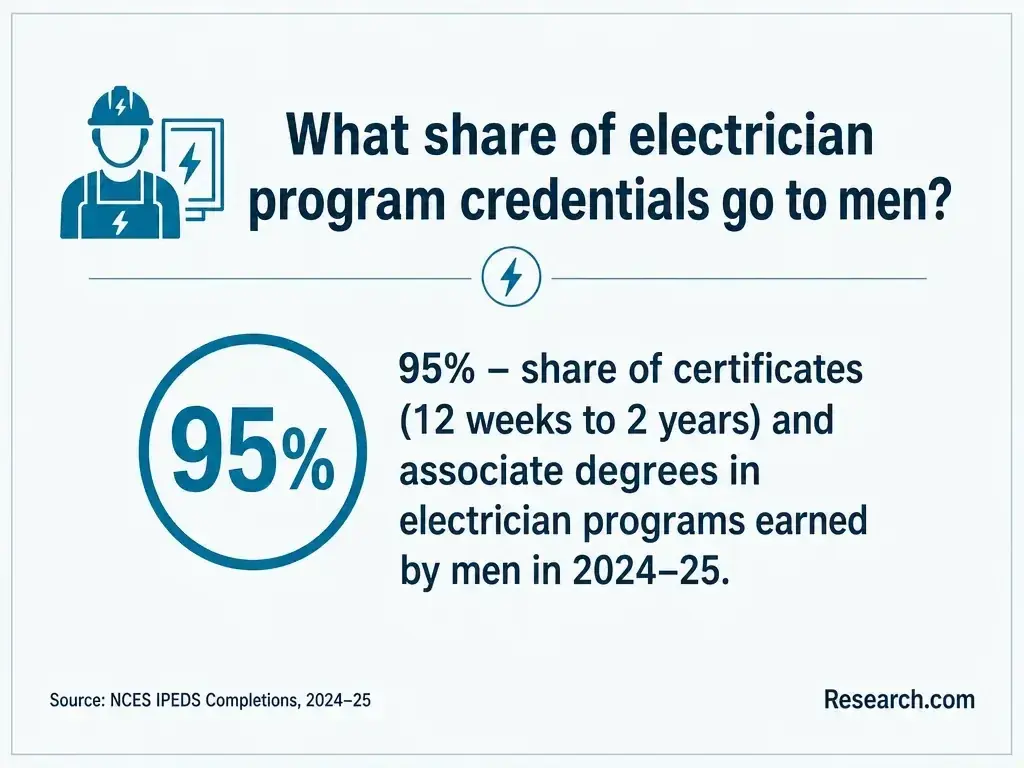
Georgia's electrical-contractor license is relevant if you intend to qualify to offer electrical contracting services; completing a trade-school program does not award that license. The Georgia State Construction Industry Licensing Board administers electrical-contractor licensing and sets experience and examination requirements (Georgia Secretary of State, State Construction Industry Licensing Board). Verify current requirements directly with the board before treating any course or work assignment as qualifying experience.
Entry-level employment under appropriate supervision, completion of a registered apprenticeship, an optional industry training credential, and authority to contract independently are distinct matters. Augusta residents who expect to work across the South Carolina border should check that state's rules separately. Institutional accreditation, state school authorization, apprenticeship registration, and occupational licensure each answer a different question; none substitutes automatically for another.
Choose the lowest-cost viable route to your intended job, not simply the lowest listed tuition. For a new entrant who needs wages immediately, a paid apprenticeship may outperform an inexpensive classroom-only option. For someone who needs foundational instruction before competing for an apprenticeship, a technical-college credential may be a sensible first step.
Use these questions when speaking with Augusta Technical College, an employer, or an apprenticeship sponsor:
Check institutional accreditation and school authorization separately from any claims about industry recognition. A warning sign is a provider promising that a brief credential alone makes you a licensed contractor, or quoting earnings without identifying the occupation, geography, and worker experience behind the figure. Rankings help you shortlist options; written answers determine whether one fits your goal.
An initial school credential can support applications for supervised electrical work or an apprenticeship. With substantial field experience, workers may move into more independent installation and troubleshooting, specialize in commercial or industrial systems, supervise crews, or pursue electrical-contractor licensing where required for their business plans. Each step depends on demonstrated skill and the applicable employer or state requirements, not merely time since graduation.
If your priority is immediate earnings, compare employer entry and paid apprenticeship openings before paying for a separate credential. If you want to test whether electrical work suits you, a shorter, hands-on program may be less of a commitment - but ask whether its credits and skills will carry forward. Other education searches, including easy phd programs to get into, address a fundamentally different investment and should not be used to judge an electrician training route.
The U.S. Bureau of Labor Statistics projects 9.2% national employment growth for electricians from 2025 to 2035. That points to opportunities across the occupation, but it is not a projection for Augusta or a promise of a local opening when you finish training.
For a local decision, compare current apprentice and entry-level postings with the skills taught, jobsite locations, and the sponsor's hiring process. Construction schedules and maintenance hiring can create different opportunities at different times. The national outlook makes practical training worth considering; confirmed local access to supervised work makes a particular program worth paying for. Unlike searches for 4 year degrees that make the most money, the central earnings question here is how quickly you can enter paid electrical work and progress through documented experience.
Education is a significant investment, so Research.com evaluates affordability against comparable electrician programs in the same geographic market rather than unrelated trades. Its most-affordable rankings score tuition, cost of attendance, median student debt, and federal loan default rates. Weights are assigned using an entropy-based method, under which indicators that differ more across programs receive more weight. Accreditation and other quality measures are not part of this affordability score.
Only programs reporting completions to IPEDS qualify for the ranking. That makes the comparison useful for examining reported college costs, but it does not mean an unranked apprenticeship or training provider is unavailable or inferior. Research.com draws on the following sources in its ranking research; occupation-specific sources are considered where relevant:
The health and dental organizations listed above are cross-occupation research sources, not electrician-program accreditors. Use the ranking to narrow a cost comparison, then verify hands-on training and the route into electrical work yourself. Research.com explains its broader approach on its methodology page.
# 1 position
# 2 position
A paid apprenticeship may reduce out-of-pocket costs, while an aid-eligible technical-college program may be affordable for a qualifying student. Compare confirmed aid, wages, fees, tools, travel, and time without pay before deciding.
No school credential automatically grants a Georgia electrical-contractor license. Confirm the credential awarded and check the Georgia State Construction Industry Licensing Board's separate experience and examination requirements.
Some theory may be taught online, but installation, testing, and safe tool use require supervised practical training. Ask where and when labs or worksite training take place.
Choose a certificate if you need structured foundational instruction and understand how it connects to a job. Choose an apprenticeship if you can secure a position and want paid, supervised field training alongside instruction. Some students use both routes.
Training may help you qualify for a job, but permission to perform or contract for electrical work depends on the role and South Carolina's applicable rules. Check those requirements before relying on cross-border work.