# 1 position
Athens Technical College - Electrician.
associate

Audited and Verified:
Our Editorial and Data Verification Process
Research.com uses government datasets, official education statistics and primary institutional information to support its career and degree guides. Our review process checks factual accuracy, occupational definitions, source dates and the requirements associated with the credentials discussed.
How This Article Was Fact-Checked
Our editorial team verifies salary estimates, employment projections, education requirements and program information against original data providers and official organizations. Salary figures are checked against the relevant occupational definitions and reporting periods. Information about licensure, accreditation and required in-person training is reviewed separately.
Fact-checked and verified on:

Co-Founder and Chief Data Scientist

Reviewed by Karolina Broda
Fact-Checker and Data Verification
The cheapest electrician program is not necessarily the least expensive route to becoming job-ready. For Athens, Georgia, students, the decision includes tools, travel, hands-on practice, and whether paid apprenticeship training is a better fit. The U.S. Bureau of Labor Statistics projects 9.2% growth in electrician employment nationally from 2025 to 2035. This guide explains how to compare those trade-offs. It will feature a Most Affordable Electrician Trade Schools in Athens for 2027 ranking, created by the Research.com team of data scientists to help students make an informed choice about programs worth considering.
Expect instruction in electrical theory, code use, circuits, installation, troubleshooting, and jobsite safety, paired with supervised practice using wiring, tools, and test instruments. A classroom credential can help you seek entry-level work, but it does not replace the sustained worksite experience developed through an apprenticeship. Ask Athens Technical College how its current electrical training divides time among lectures, labs, and employer placements rather than assuming similarly named credentials provide equivalent practice.
The most useful comparison is between a school-based start and learning while employed. The routes can complement one another if an employer or apprenticeship sponsor recognizes prior coursework, but credit is not automatic.
The table shows what each route ordinarily provides and the key condition to verify before committing.
| Route | Typical credential or outcome | Best fit and main trade-off |
| Technical-college certificate or diploma | School credential and supervised labs | Fits someone seeking structured preparation before applying for electrical jobs; tuition and a separate work-experience search may follow. |
| Registered apprenticeship | Paid on-the-job training, related instruction, and an apprenticeship completion credential | Fits someone ready to work and study over several years; entry depends on openings and sponsor selection. |
| Employer-sponsored entry | Work experience and employer training; credential varies | Fits someone with an available trainee position; verify the instruction, supervision, and documented experience provided. |
Electrical trainees may pursue work with construction contractors, building-maintenance teams, industrial facilities, or service companies in and around Athens-Clarke County. Those settings demand different skills: new construction emphasizes installation and plans, while service work emphasizes diagnosis in occupied buildings. A commute beyond Athens may expand apprenticeship and employer options, but it also changes transportation costs and available work hours.
Ask a prospective employer whether the role provides supervised electrical experience, who records that experience, and whether training covers the type of work you eventually want to perform. A general maintenance job with occasional electrical tasks is not necessarily equivalent to sustained electrical training.
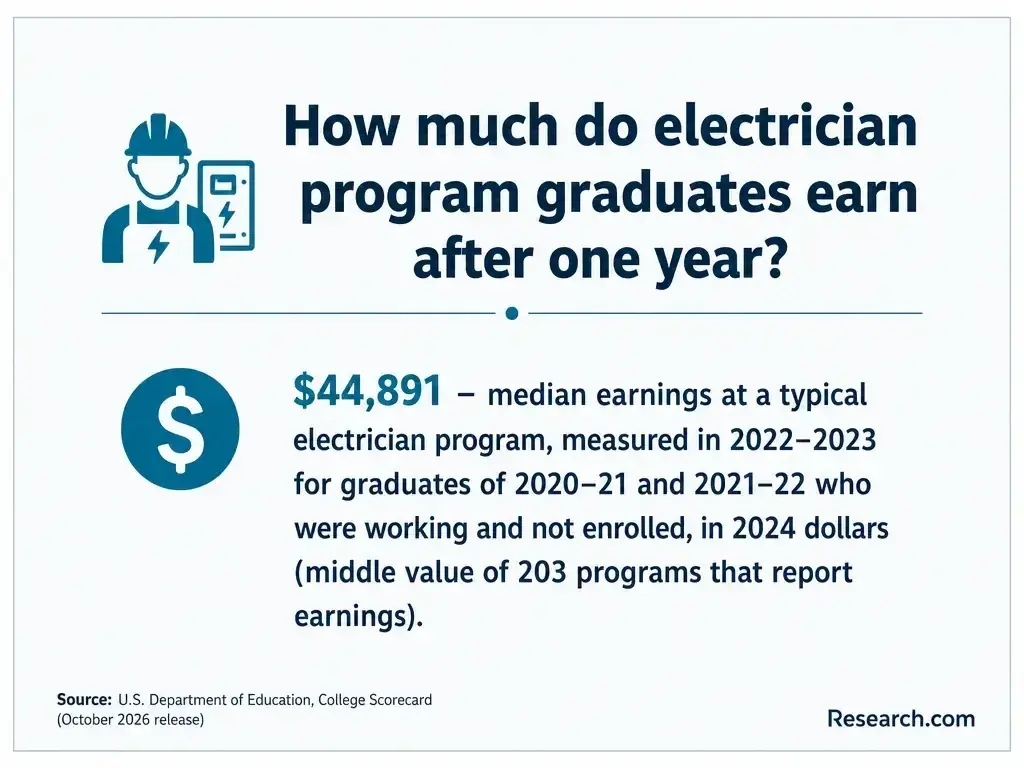
A reliable Athens-specific pay figure is not established here. The U.S. Bureau of Labor Statistics reports a $63,190 national median annual wage for electricians in May 2025. That midpoint includes experienced workers across the country; it is neither an Athens wage estimate nor a likely first paycheck for a newly trained applicant.
For a useful local comparison, request actual apprentice or entry-level wage ranges from Athens-area employers and apprenticeship sponsors. Compare the offered wage progression, expected hours, benefits, and commuting costs - not just the eventual electrician wage - against what you would earn while attending school.
There is no single Athens-wide completion time. A short certificate, a more extensive diploma, and a registered apprenticeship have different course loads and work requirements; part-time attendance can extend a school schedule. Registered apprenticeships combine related instruction with supervised, paid work over multiple years, whereas finishing school-based training may leave you needing to find a qualifying job (U.S. Department of Labor, Apprenticeship.gov).
Before applying, obtain the current program plan showing total credit or clock hours, scheduled lab hours, start dates, and whether courses run during hours you can attend. Ask any apprenticeship sponsor how prior electrical coursework is assessed for advanced standing; never budget for a shorter apprenticeship until the sponsor confirms it in writing.
Online instruction can be useful for theory, calculations, and some code-study assignments. It cannot by itself demonstrate safe installation, tool handling, testing, or troubleshooting on physical equipment. On-campus labs and supervised employer worksites make those competencies observable. A hybrid option is worthwhile if its required in-person sessions are accessible from Athens and fit your work schedule.
Be wary of an entirely online course advertised as a complete route to electrician work. Ask where practical assessments take place, who supervises them, and whether an apprenticeship sponsor or employer accepts the training. General searches for cheap online universities for job holders may help with scheduling ideas, but they cannot establish that an electrical course includes hands-on training.
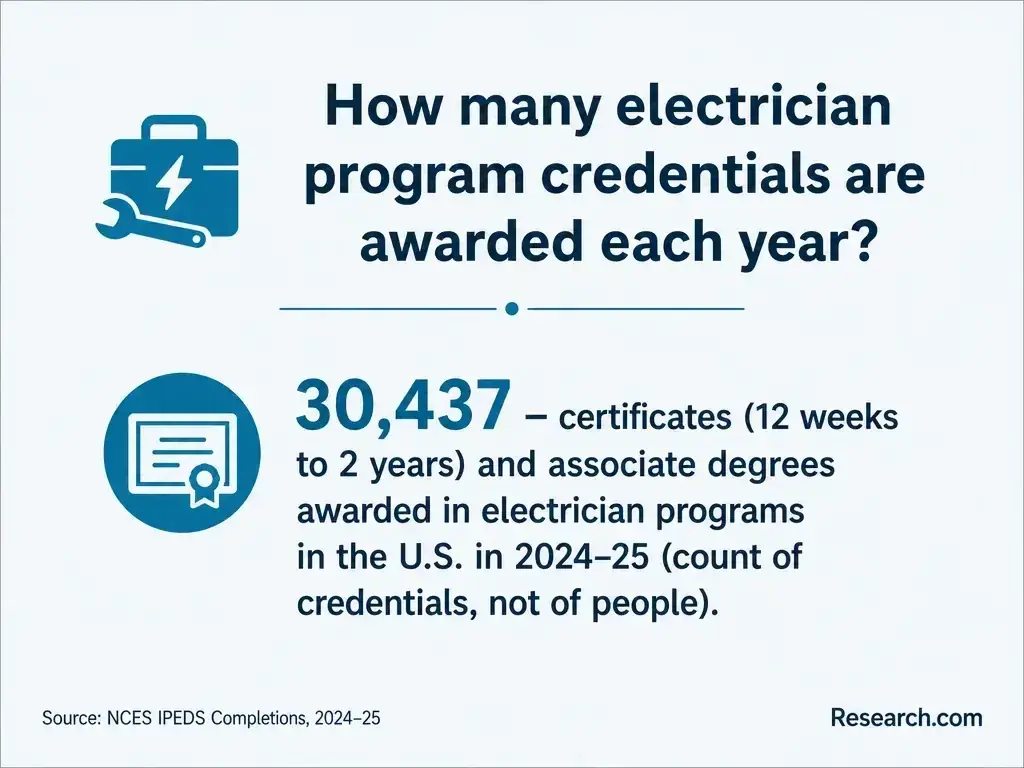
There is no defensible single Athens average without current, comparable prices for the specific credentials and attendance arrangements being considered. Request Athens Technical College's current program-level tuition and mandatory-fee estimate, including whether Georgia residency affects the rate. Then add books, tools, meters, personal protective equipment, consumable materials, travel to labs or jobsites, and income forgone while studying. A lower tuition quote can be more expensive overall if it delays paid work.
Ask the financial-aid office whether your specific program and enrollment status qualify for federal aid or Georgia's HOPE Grant or HOPE Career Grant; eligibility is conditional, not automatic (Federal Student Aid; Georgia Student Finance Commission). Compare grants and employer-paid training against borrowing, and include interest in any debt estimate. A guide to how much is an associate's degree can offer broader cost context, but it is not an Athens electrician-program price quote.
The award depends on the exact program: school-based training may lead to a certificate or diploma, while a registered apprenticeship leads to an apprenticeship completion credential. Some electrical programs award an associate degree, which generally includes additional coursework; do not pay for it unless that extra study supports your intended job or advancement. Confirm the award name and the electrical competencies it represents in the current program catalog.
These awards are distinct from institutional accreditation, industry credentials, apprenticeship registration, and a Georgia electrical-contractor license. Even if a provider describes an industry credential such as NCCER recognition, ask which assessment you will actually complete and whether local employers value it. An award name alone does not prove licensing eligibility.
School admissions and hiring are separate decisions. Obtain Athens Technical College's current admissions requirements for the specific electrical program, including any placement, age, residency, or prerequisite rules. For apprenticeships, ask the sponsor about its application window, selection criteria, work eligibility, transportation expectations, and whether a prospective employer must hire you first. Requirements vary by sponsor (Athens Technical College; U.S. Department of Labor, Apprenticeship.gov).
Working adults should also check whether prior coursework or documented electrical work can count toward school credit or apprenticeship advanced standing. An application without a fee may reduce one small expense, but a list of accredited colleges online no cost to apply does not verify admission to an Athens electrical program or access to its labs.
A useful curriculum connects electrical fundamentals to tasks an entry-level worker must perform safely: reading plans, calculating loads, identifying components, making connections, using meters, and following applicable electrical-code and safety practices. The U.S. Bureau of Labor Statistics describes electricians as installing, maintaining, and repairing electrical power, communications, lighting, and control systems. Ask to see the current course outline and lab equipment so you can judge whether instruction matches residential, commercial, or industrial work.
If your goal is field employment, give more weight to supervised troubleshooting and safe work habits than to an impressive-sounding credential title. Additional credentials can support later specialization, but they do not substitute for competent work under appropriate supervision.
Georgia's State Construction Industry Licensing Board licenses electrical contractors. A school certificate is not that license, and completion should not be advertised as permission to contract independently. Georgia does not use a general statewide journeyman-electrician license as the automatic next step for every graduate; the requirements relevant to you depend on whether you intend to work for a contractor or qualify to operate one (Georgia State Construction Industry Licensing Board).
If ownership or independent contracting is your goal, check the board's current license classifications and its experience, examination, and application rules before paying for training. Also ask an employer about supervision and the local permitting responsibilities for the work you would perform. Institutional accreditation, a voluntary certification, and registered-apprenticeship completion each serve different purposes; none automatically replaces contractor licensure.
Start with the job you want, then compare training routes against the skills, work experience, and regulatory steps needed to reach it. The following checks address the most costly mistakes before you commit:
An accelerated school route may suit someone who needs structured preparation before applying for jobs; a paid apprenticeship may suit someone able to secure a position and learn while earning. Neither is universally cheaper. Rankings help narrow choices, but they cannot replace the written answers above. If you are weighing a broader career change, even resources on top degrees for 60 year olds do not answer the trade-specific question of whether you can access labs and supervised electrical work.
A common progression is electrical trainee or apprentice, then a more experienced installer or service electrician, followed by specialized, supervisory, or contracting work. Residential installation, commercial systems, industrial maintenance, and controls work call for overlapping fundamentals but different worksite experience. Choose early training that gives you a credible route into the setting you want rather than assuming every electrical opening is interchangeable.
Independent contracting adds business and Georgia licensing considerations beyond technical skill. By contrast, someone seeking a faster entry into paid electrical work may benefit more from an employer or apprenticeship opening than from an additional school credential. Resources about one year master degree programs concern a different education route and cannot replace electrical field training.
The U.S. Bureau of Labor Statistics projects 9.2% growth in electrician employment nationally from 2025 to 2035. That supports investigating the trade, but it does not predict the number of Athens openings or guarantee an apprenticeship place. Local demand can differ by construction activity, maintenance hiring, and how far you are willing to commute.
Before enrolling, check current Athens-area trainee vacancies and speak with apprenticeship sponsors about their next intake. If openings require travel or experience you cannot yet provide, factor that constraint into the value of a school program. National growth is most useful as context; an accessible first job is the immediate test of your training plan.
Investing in electrician training is an important financial decision. Research.com's most-affordable ranking compares programs in the same occupation and location using tuition, cost of attendance, median student debt, and federal loan default rates. Weights are assigned through an entropy-based method, which gives more weight to measures that differ more across programs. Accreditation and other quality indicators are not part of the affordability score; a low-cost ranking is a starting point, not a judgment that a program provides the practical experience you need.
Only programs with completions reported to IPEDS are eligible. Research.com draws on the following sources when creating its trade-program rankings; some sources concern other occupations and should not be read as electrician-specific endorsements:
This approach helps readers narrow the cost comparison, but IPEDS does not capture every apprenticeship, union program, or employer training route. A provider's absence does not establish that it is unavailable or poor quality. Readers can review Research.com's methodology for more detail, then confirm current prices and training arrangements directly before enrolling.
# 1 position
# 2 position
Not necessarily. An apprenticeship or employer-sponsored route may provide paid training. Compare its entry requirements and supervised instruction with school-based preparation before paying tuition.
Paid work can offset training costs, but compare tools, travel, related-instruction charges, time to completion, and the wages you could earn under each route. Sponsor terms vary.
Online lessons can cover theory, but electrical installation and testing require in-person practice and assessment. Verify how a course connects to supervised work before enrolling.
No. Georgia electrical-contractor licensing has separate requirements administered by the State Construction Industry Licensing Board. Check the board's current rules for your intended work.
Compare written total-cost estimates, aid eligibility, hands-on hours, and access to paid work. The lowest tuition is only a good value if the route helps you become job-ready.