
# 1 position
Most Affordable Electrical Technician Schools & Training in Salisbury for 2027
Audited and Verified:
Our Editorial and Data Verification Process
Research.com uses government datasets, official education statistics and primary institutional information to support its career and degree guides. Our review process checks factual accuracy, occupational definitions, source dates and the requirements associated with the credentials discussed.
How This Article Was Fact-Checked
Our editorial team verifies salary estimates, employment projections, education requirements and program information against original data providers and official organizations. Salary figures are checked against the relevant occupational definitions and reporting periods. Information about licensure, accreditation and required in-person training is reviewed separately.
Fact-checked and verified on:

Co-Founder and Chief Data Scientist

Reviewed by Karolina Broda
Fact-Checker and Data Verification
Choosing an electrician program in Salisbury, North Carolina, means comparing more than tuition: the cheapest classroom option may not provide the work experience needed for your goal. The U.S. Bureau of Labor Statistics projects 9.2% national growth in electrician employment from 2025 to 2035. For 2027, the Research.com team of data scientists created a Most Affordable Electrician Trade Schools in Salisbury ranking to help students identify programs worth considering. This guide explains costs, apprenticeships, credentials, and North Carolina licensing so you can judge the full path to work.
Key findings about electrician degrees in Salisbury
- The U.S. Bureau of Labor Statistics reports a $63,190 national median annual wage for electricians in May 2025; that is not a Salisbury starting wage.
- Compare a Salisbury-area certificate or associate degree with a paid registered apprenticeship: a school credential alone does not replace supervised job experience or confer a North Carolina electrical contractor license.
- There is no verified Salisbury-wide average program price to rely on. Compare written totals for tuition, fees, tools, travel, and unpaid training time - not the advertised tuition figure alone.
Table of Contents
- Most Affordable Electrical Technician Schools & Training in Salisbury for 2027
- What can I expect from an electrician trade school program in Salisbury?
- Where can I work with an electrician trade school training in Salisbury?
What can I expect from an electrician trade school program in Salisbury?
Expect instruction in electrical theory, code use, circuit installation, testing, and jobsite safety, followed by practice on equipment - not just video lessons. Ask Rowan-Cabarrus Community College which electrical training options are currently offered, at which campus, and how much time students spend in labs. A private career school, employer, or apprenticeship sponsor may offer a different mix of classroom and worksite training.
The main choice is whether you need introductory skills before applying for work or a structured route that includes paid experience. This comparison shows why similarly named programs need not produce the same career readiness.
| Pathway | Typical credential or result | Best fit and key limitation |
| Short certificate or pre-apprenticeship | School or training-provider certificate | Useful for exploring the trade and building entry skills; confirm whether an employer or sponsor recognizes it. |
| Community-college diploma or associate degree | Academic credential, if the particular program awards one | Offers broader technical coursework; verify its labs, schedule, and relationship to work experience. |
| Registered apprenticeship | Paid on-the-job training, related instruction, and a completion credential | Fits applicants ready to work while learning; entry depends on sponsor openings and selection requirements. |
| Employer-sponsored entry | Job experience and any employer-provided training records | Can reduce upfront school costs; check how instruction and experience are documented. |
Online short certificate programs that pay well online may help you compare general training formats, but an electrician option still needs credible hands-on practice and a clear connection to the work you intend to do.
Where can I work with an electrician trade school training in Salisbury?
Potential worksites include residential construction and service, commercial buildings, industrial facilities, and maintenance operations. The distinction matters: residential installation, industrial controls, and facilities maintenance use overlapping fundamentals but different equipment and troubleshooting routines. Before enrolling, ask which employers or apprenticeship sponsors accept the program's trainees and whether placements require travel beyond Salisbury.
A classroom credential can support an application for an entry-level electrical job; it is not permission to bid on electrical contracting work independently. If your goal is a particular specialty, favor training with relevant labs and a realistic way to obtain supervised experience in that setting.
The U.S. Bureau of Labor Statistics reports a $63,190 median annual wage nationally for electricians in May 2025. This describes workers across experience levels and locations, not what a newly trained person in Salisbury can expect to earn. Without a comparable, verified Salisbury-specific wage figure, use local apprentice and entry-level job postings to build a starting-pay estimate.
Compare offers on more than the hourly rate: paid instruction, benefits, travel time, overtime availability, and the schedule for wage progression affect the value of an apprenticeship or first job. When evaluating a school's earnings claim, ask whether it describes electricians generally, its own completers, or workers with years of experience.
A short introductory program may take less time than a diploma or associate-degree program, while a registered apprenticeship normally combines related instruction with several years of supervised work. Exact clock hours, course loads, and apprenticeship terms depend on the provider and sponsor. Request the current calendar and ask separately when you could finish school and when you could meet your intended employer's or licensing pathway's experience requirements.
An accelerated associate program is useful only if its pace leaves room for electrical labs and, where needed, employment. Treat guides to the quickest associate's degree online as a format comparison, not evidence that remote coursework can replace shop or worksite practice.
Online or hybrid delivery can make theory, calculations, and some code-study coursework easier to fit around a job. On-campus labs and employer worksites let instructors assess tool use, wiring methods, testing, and safe procedures in person. An entirely online course should not be treated as equivalent to supervised electrical practice or as proof of licensing eligibility.
For a working adult, the best format may be hybrid instruction paired with accessible local labs or a paid apprenticeship. Compare the required travel days and worksite arrangements before choosing among cheap online schools for working adults; a low online tuition price can lose its advantage if practical training is unavailable nearby.
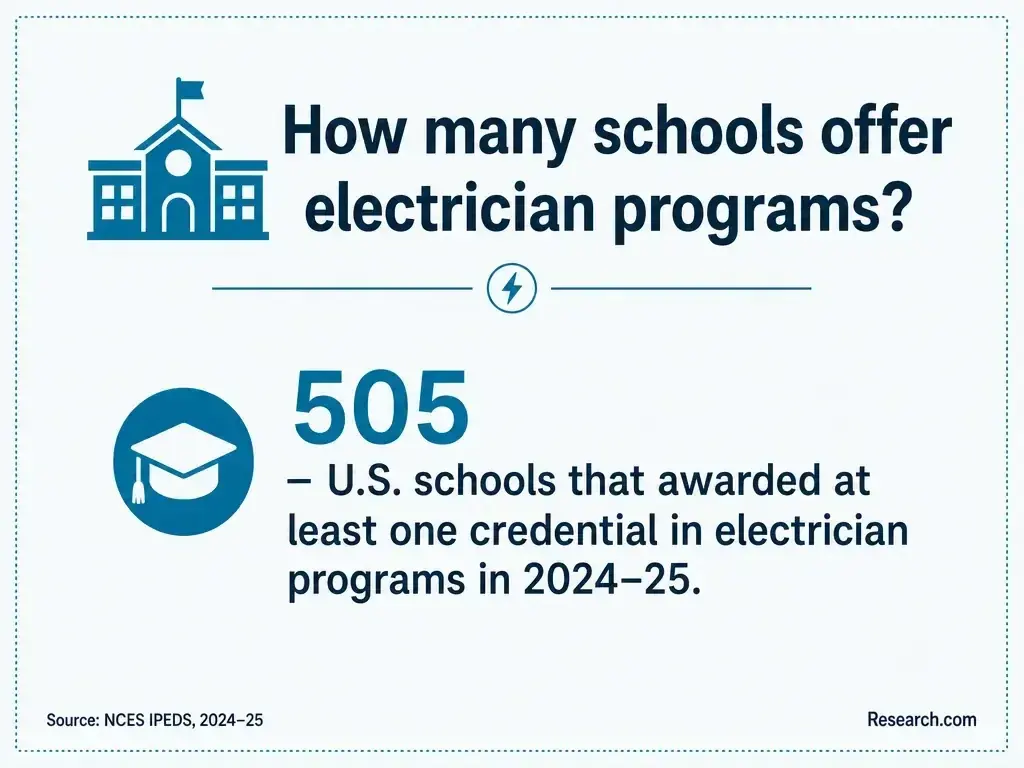
A reliable Salisbury-wide average for electrician training is not available here. Published tuition also measures only part of the investment, and apprenticeship wages can substantially change the comparison. Ask each provider for a written, program-specific estimate covering the following costs and offsets.
| Cost or offset | What to verify |
| Instruction | Tuition, mandatory fees, books, materials, and any additional lab charges |
| Job readiness | Required tools, testing equipment, protective gear, and any examination or application fees |
| Access and time | Travel to campus or worksites, schedule-related lost earnings, and any unpaid placement |
| Offsets | Grants, eligible student aid, employer assistance, and wages earned during training |
Ask the provider and Federal Student Aid whether the specific program qualifies for aid; institutional eligibility alone is not enough to establish program eligibility. A guide to most affordable online universities that accept fafsa cannot establish aid eligibility for an electrician credential. For return on investment, compare net cost, likely debt, completion prospects, earnings while training, and plausible post-training pay over the same time horizon.
That depends on the route: a school may award a certificate, diploma, or associate degree; a registered apprenticeship awards its own completion credential. Employer training may instead produce documented experience and internal qualifications. Ask for the exact credential name and whether coursework or prior experience can count toward another program or apprenticeship. Credit transfer and advanced standing are decisions for the receiving provider or sponsor, not automatic benefits of enrollment.
Keep these distinctions clear: institutional accreditation concerns the school; state authorization concerns permission to operate; industry recognition concerns particular training; apprenticeship registration concerns the work-and-instruction program; and occupational licensure concerns legal authority to perform regulated work. None substitutes for the others.
Requirements differ by provider and route. A school may assess reading and math readiness or require prerequisites; an apprenticeship sponsor may also evaluate applicants' ability to meet work schedules, travel, and jobsite requirements. Confirm current criteria directly rather than assuming admission to a class secures an apprenticeship position.
Before paying a deposit, ask when enrollment opens, whether tools must be purchased before the first lab, and whether any prior coursework or documented electrical work can reduce required training. If you need to keep earning, ask whether classes and sponsor work hours can actually coexist.
Useful entry training connects electrical calculations and circuit theory to reading plans, selecting materials, installing components, measuring faults, and following safety procedures. Code instruction should teach students how to locate and apply requirements, rather than memorize rules without context. The U.S. Bureau of Labor Statistics identifies troubleshooting, physical dexterity, and safety awareness as important parts of electricians' work.
Judge the curriculum by what you will do: ask to see the lab equipment, the proportion of supervised practice, and examples of installation and diagnostic tasks. If your goal is industrial maintenance, look for relevant motors and controls work; a program centered on residential installation may be a weaker match even if its credential has the same name.
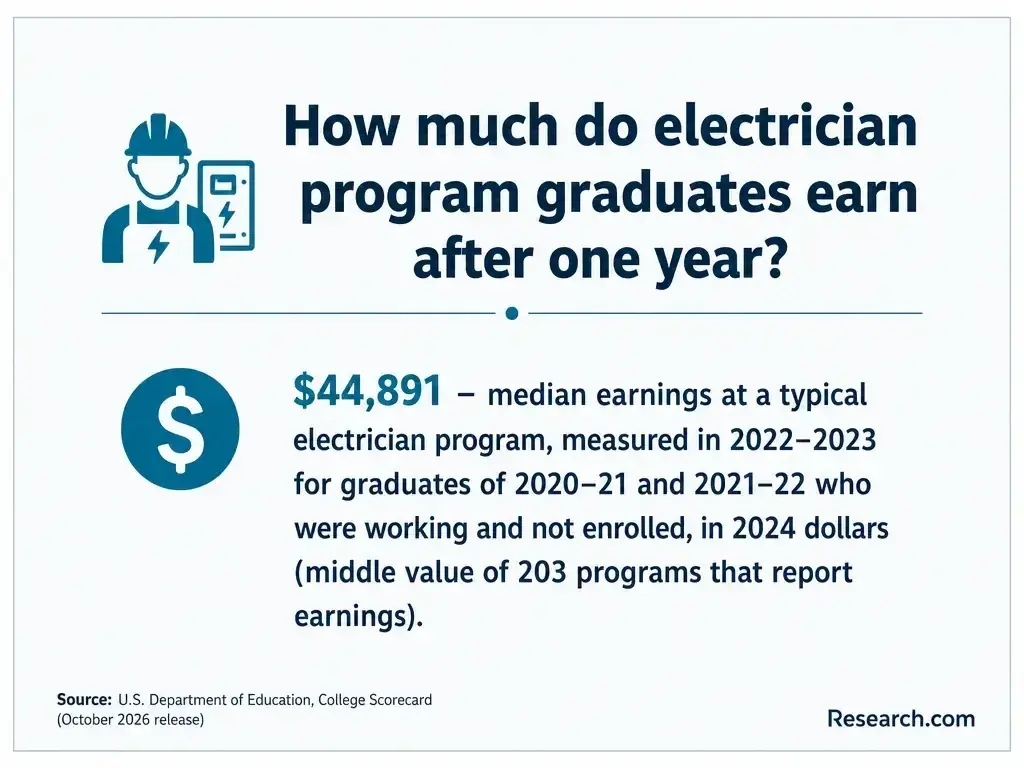
North Carolina regulates electrical contracting through the North Carolina State Board of Examiners of Electrical Contractors. Working as an employee under a properly licensed contractor is different from holding the license needed to undertake contracting work independently. The board sets license classifications and application, experience, and examination requirements; graduating from trade school does not itself grant a contractor license.
Ask the board which classification matches your long-term goal and what experience it will accept. Then ask the school or apprenticeship sponsor how it documents supervised work. An industry training certificate can demonstrate skills to an employer, but it is not a state contractor license. Verify current board rules before selecting a program on the promise that it will make you "licensed."
Start with your intended first job, then compare the full route to it - not just the lowest listed price or the ranking position. A lower-cost classroom option is worthwhile if it provides skills employers recognize and fits a credible work-experience plan; a paid apprenticeship may be better if you can secure a position and need earnings immediately.
Use these questions when speaking with a school, employer, or apprenticeship coordinator:
- Which credential will I earn, and what electrical tasks will I complete under supervision?
- Where are the labs and worksites, and what travel and schedule commitments do they require?
- What is the written total cost after required tools and fees, and which aid or paid-training options apply?
- Who recognizes the training, and how are work hours documented for my North Carolina goal?
- What completion and employment evidence is available for this specific program and cohort?
Common mistakes are assuming online theory replaces fieldwork, treating accreditation as a license, and comparing a national electrician wage with local entry-level pay. Verify each claim with the relevant provider, sponsor, or North Carolina board before committing.
An initial school credential may lead to an electrical helper or trainee role; structured work experience can support progression into more independent installation, service, maintenance, or industrial work. Later goals may include supervising crews or pursuing the North Carolina contractor license appropriate to the work you plan to undertake. Additional testing and documented experience may be required for that progression.
Advancement in this trade depends heavily on demonstrated electrical competence and work history. A search for the quickest online masters degree does not describe a route to electrical contracting authority; assess electrician training against the experience and licensing steps your actual goal requires.
The U.S. Bureau of Labor Statistics projects 9.2% growth in electrician employment nationally from 2025 to 2035. That supports considering the trade, but it is not a forecast of Salisbury openings or a promise of work after a particular program. Construction activity, maintenance hiring, and apprenticeship vacancies can differ locally.
For a practical local check, compare current Salisbury-area job postings with sponsor openings: note the work type, required experience, travel radius, and whether employers will hire trainees. This helps distinguish demand for new entrants from demand for electricians who already have substantial field experience.
Most Affordable Electrical Technician Schools & Training in Salisbury for 2027
Investing in training is a consequential decision, so the Research.com team uses documented education and cost data to make its rankings more consistent and useful for comparison. Programs are evaluated against others in the same occupation and location. Only programs with completions reported to IPEDS are eligible; an apprenticeship or employer program missing from the ranking is not necessarily unavailable or inferior.
The most affordable ranking scores tuition, cost of attendance, median student debt, and federal loan default rate. An entropy-based method gives more weight to cost and debt indicators that vary more across eligible programs. Unlike Research.com's separate best-program rankings, accreditation and other quality indicators are not part of the affordability score. Readers should therefore check practical training and occupational fit independently. More detail is available on the Research.com methodology page.
The ranking draws on the following data sources. Some cover education broadly or occupations other than electrical work; their inclusion does not mean they approve electrician programs.
- IPEDS database
- National Center for Education Statistics
- College Scorecard database
- Peterson's database
- Commission on Accreditation of Allied Health Education Programs (CAAHEP)
- Accrediting Bureau of Health Education Schools (ABHES)
- Commission on Dental Accreditation (CODA)
- Dental Assisting National Board (DANB)
- National Center for Construction Education and Research (NCCER)
- Apprenticeship.gov Partner Finder
# 2 position
Rowan-Cabarrus Community College - Electrician.
certificate or diplomaFrequently asked questions about electrician programs in Salisbury
What is the cheapest way to start electrician training?
Compare a public-college option with paid apprenticeships and employer-sponsored entry. Include tools, travel, fees, and wages earned while training; the lowest tuition is not always the lowest net cost.
Can I become an electrician without trade school?
Potentially. An employer or registered apprenticeship can provide work-based training. Confirm its entry requirements, related instruction, and how it records your experience.
Will an electrician certificate make me licensed in North Carolina?
No. A school certificate and a North Carolina electrical contractor license are different credentials. Check the state board's requirements for the license classification you intend to pursue.
Can I complete electrician training entirely online?
Online coursework can cover some theory, but electrical tool use, installation, testing, and supervised work require in-person practice. Verify where a program provides that experience.
Is an associate degree better than an apprenticeship?
Neither is automatically better. Compare the associate program's labs, cost, and employer connections with an apprenticeship's paid work, instruction, and entry availability.
- U.S. Bureau of Labor Statistics - Electricians
Used to verify salary, employment outlook, and typical education requirements.
https://www.bls.gov/ooh/construction-and-extraction/electricians.htm - NCCER - Accredited Training
Used to verify programmatic accreditation or industry recognition of programs.
https://www.nccer.org/ - O*NET OnLine - Electricians
Used to verify common responsibilities, skills, work settings, and education expectations.
https://www.onetonline.org/link/summary/47-2111.00 - Rowan-Cabarrus Community College - official website
Official school website (programs, tuition, admissions).
https://www.rccc.edu/