# 1 position
Pima Community College - Electrical and Power Transmission Installation/Installer, General.
certificate or diploma

Audited and Verified:
Our Editorial and Data Verification Process
Research.com uses government datasets, official education statistics and primary institutional information to support its career and degree guides. Our review process checks factual accuracy, occupational definitions, source dates and the requirements associated with the credentials discussed.
How This Article Was Fact-Checked
Our editorial team verifies salary estimates, employment projections, education requirements and program information against original data providers and official organizations. Salary figures are checked against the relevant occupational definitions and reporting periods. Information about licensure, accreditation and required in-person training is reviewed separately.
Fact-checked and verified on:

Co-Founder and Chief Data Scientist

Reviewed by Karolina Broda
Fact-Checker and Data Verification
Choosing an affordable electrician program in Tucson means looking beyond tuition: the least expensive classroom option may not provide the paid experience or hands-on practice you need. The U.S. Bureau of Labor Statistics projects electrician employment to grow 9.2% nationally from 2025 to 2035, making training choices timely. Research.com's team of data scientists created the Most Affordable Electrician Trade Schools in Tucson for 2027 ranking to help students identify programs worth considering. This guide helps you compare costs, credentials, apprenticeships, Arizona rules, and career prospects before committing.
Expect instruction in electrical theory, circuitry, blueprint reading, wiring methods, testing, and safe work practices, followed by supervised practice. The critical distinction is where that practice happens: a campus lab develops foundational skills, while an apprenticeship or employer jobsite develops them under working conditions. Ask how many scheduled hours involve hands-on tasks rather than demonstrations.
In Tucson, compare three routes: a short pre-apprenticeship or certificate for someone seeking entry-level readiness; a community-college credential for someone who wants structured coursework and potentially stackable credit; and a registered apprenticeship for someone ready to compete for a paid position combining classroom instruction with supervised work. Pima Community College is one local institution to check for current electrical offerings. A private career-school program may offer another schedule, but its price and employer connections need individual verification.
School is not the only route. Direct-entry helper positions and employer-sponsored training can make sense if an employer provides documented instruction and supervision; a classroom-only credential makes less sense if your immediate goal requires substantial field experience. The U.S. Bureau of Labor Statistics describes apprenticeship as the common route to becoming an electrician.
Potential workplaces include electrical contractors' residential and commercial projects, building maintenance teams, industrial facilities, and employers installing or servicing electrical equipment. The work setting changes what training is most useful: construction employers may value conduit, wiring, and plan-reading practice, while maintenance roles may emphasize troubleshooting existing systems (U.S. Bureau of Labor Statistics; O*NET).
Ask a Tucson provider which local employers accept its credential, whether it arranges interviews or supervised placements, and whether its labs resemble the work you want. An introductory credential may help you seek a helper role, but it should not be marketed as equivalent to completion of an apprenticeship. Readers comparing other top vocational degree careers should compare the required worksite experience, not just the classroom time.
The U.S. Bureau of Labor Statistics reports a $63,190 national median annual wage for electricians in May 2025. A median describes workers across experience levels and locations; it is not a Tucson offer or a likely first-year apprentice wage. For a local decision, compare current Tucson-area job postings and apprenticeship wage schedules with the latest BLS Tucson metropolitan occupational wage estimate, using the same occupation and reference year when comparing figures.
Paid apprentices generally start below experienced electricians and progress under a sponsor's wage schedule (U.S. Department of Labor, Apprenticeship.gov). Before paying for school, ask an apprenticeship sponsor what wages begin at, when raises occur, and whether any prior coursework earns advanced standing. Those answers make a more useful payback estimate than the national median alone.
A short school credential may take months; an associate degree takes longer; and a registered apprenticeship generally combines years of supervised employment with related instruction. The U.S. Department of Labor identifies a common apprenticeship model of roughly 2,000 hours of on-the-job learning and 144 hours of related instruction per year, although the registered sponsor's actual standards control. A brief certificate should therefore not be compared with an apprenticeship as though both deliver the same field experience.
Get the current curriculum and schedule in writing. Check total instructional hours, actual lab hours, evening availability, and whether a course sequence delays entry into paid work. If you already work in the trade, ask whether documented experience or prior learning can shorten coursework or earn advanced standing; obtain the sponsor's answer before assuming credits transfer.
Online instruction can cover theory, calculations, code concepts, and some blueprint reading. It cannot replace supervised practice installing components, using test instruments, identifying hazards, or working on energized-system simulations. A hybrid program can be useful for a working student if its in-person labs and any required jobsite learning fit the student's schedule.
The comparison below separates flexible coursework from practical training. It does not establish that any format qualifies someone for an apprenticeship or contractor license.
| Format | What to verify | Best fit |
| On-campus | Scheduled lab access, equipment, and instructor-supervised practice | Beginners who need frequent hands-on feedback |
| Hybrid | Required lab visits, their location, and attendance rules | Workers who can travel to practical sessions |
| Online coursework | Separate arrangements for practical training and employer recognition | Supplementing field experience, not replacing it |
Ask who assesses hands-on competencies and where you must report in person. A low-priced online course is a poor bargain if it leaves you without the practice your intended employer expects.
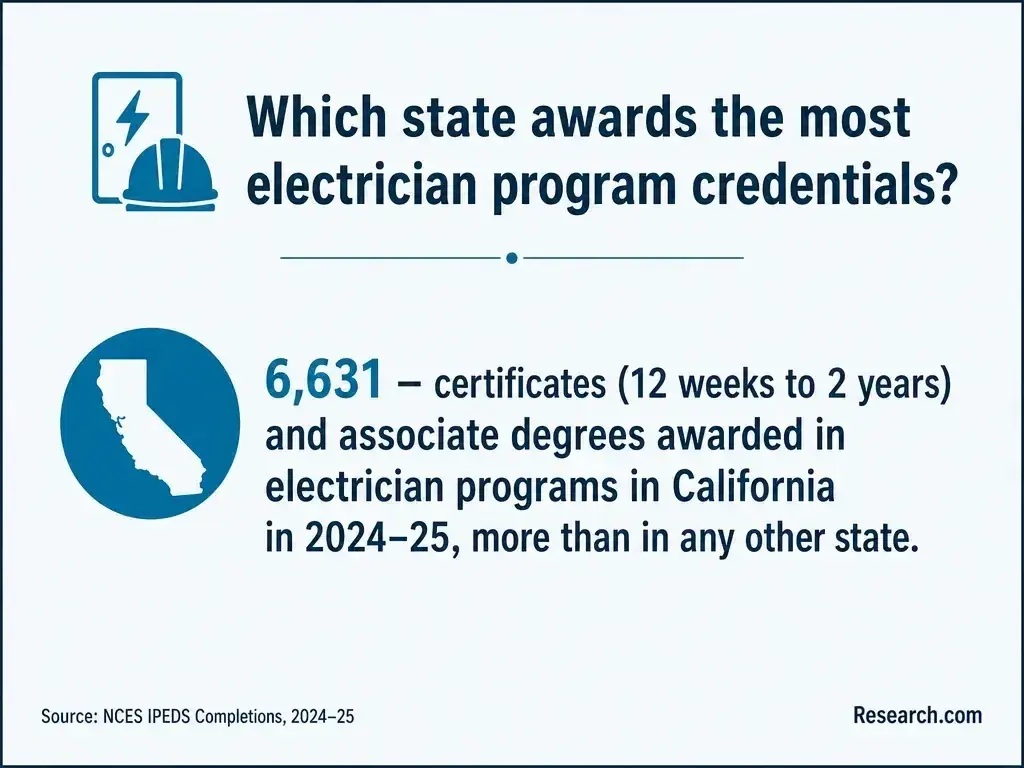
There is no single defensible Tucson-wide average that covers college programs, career schools, and paid apprenticeships on the same basis. Published tuition can exclude substantial job-readiness expenses, while apprenticeships have a different financial profile because training may be paired with wages. Request an itemized estimate for the entire credential or training period, not one term.
Compare these costs and offsets before deciding which option is genuinely affordable:
Federal aid depends on the institution, program, and student's eligibility; it is not automatic for every short course (U.S. Department of Education, Federal Student Aid). Students comparing flexible schools can use an online college that accept financial aid resource as a starting point, but should confirm both aid eligibility and required in-person electrical training with the specific provider.
The award depends on the route: a school may issue a certificate, diploma, or associate degree; a registered apprenticeship leads to a completion credential recognized through the registered apprenticeship system (U.S. Department of Labor, Apprenticeship.gov). Industry credentials, such as those associated with NCCER training, are distinct from a school award and from permission to operate an electrical contracting business.
Ask for the exact credential title and who issues it. Then ask whether employers recognize it, whether coursework can be applied toward further training, and whether an apprenticeship sponsor grants credit for it. A certificate can be a useful entry point among certificate jobs that pay well, but an electrician's earning potential still depends heavily on supervised experience and the role obtained.
Requirements vary by provider and route. A school may assess reading or math readiness and set its own age and enrollment rules. A registered apprenticeship sponsor may use an application, aptitude assessment, interview, and employment eligibility requirements; its published standards, not a school's admissions page, determine entry (U.S. Department of Labor, Apprenticeship.gov). Employers can also impose jobsite safety and hiring requirements.
Before applying, ask whether you need algebra preparation, a driver's license for travel between Tucson-area jobsites, or specific tools at the start. Check application dates for apprenticeships separately from school registration: completing a class does not guarantee acceptance by a sponsor.
A useful curriculum moves from electrical fundamentals and calculations to interpreting plans, selecting materials, making connections, testing circuits, and diagnosing faults. It should teach applicable electrical-code concepts and safety procedures alongside supervised practice; the U.S. Bureau of Labor Statistics identifies these technical and troubleshooting abilities as central to electricians' work.
Compare the lab inventory with the work you want to pursue. For example, ask whether students practice conduit installation, panel work, and testing on equipment themselves, and how instructors evaluate safe performance. Training focused on theory alone may be worthwhile for someone already gaining jobsite hours, but it is a weaker stand-alone option for a beginner seeking hands-on readiness.
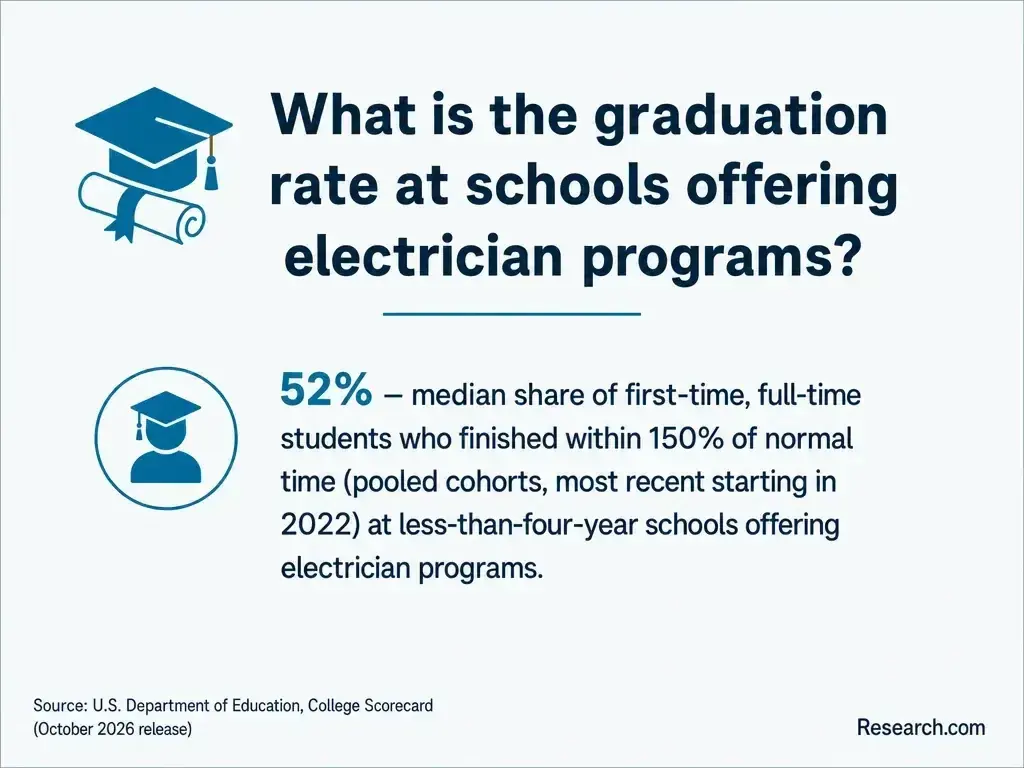
Arizona's key distinction is between working as an electrician for an employer and contracting independently to perform electrical work. Arizona does not issue a statewide journeyman electrician license to every employee. Businesses offering regulated electrical contracting work must meet Arizona Registrar of Contractors licensing rules, including the applicable classification and qualifying-party requirements (Arizona Registrar of Contractors). A school credential or optional industry certification does not replace that contractor license.
If business ownership is your goal, check the Registrar's current electrical classifications, experience documentation, examination requirements, and application rules before choosing training. If your goal is an employee position, ask employers what supervised experience and credentials they expect. Registered-apprenticeship status, school accreditation, and contractor licensure are separate matters; none automatically confers the others.
Start with your intended first job, then work backward to the training it requires. A low-cost certificate may be the right purchase if it gets you into supervised work quickly; an apprenticeship may be better if you can secure a paid place; a longer college route may suit someone who values a broader credential. Do not let an affordability ranking substitute for checking practical training.
Use these questions when you contact Pima Community College, another training provider, or an apprenticeship sponsor:
Watch for promises that a short course makes you independently licensed, unclear lab-hour claims, or prices that omit required equipment. A useful return-on-investment comparison considers total cost, aid, debt, time away from earnings, your likelihood of completion, starting pay, and later pay over a realistic time horizon - not just a headline wage. Comparing an easy bachelor's degree with electrician training will not resolve the central trade-specific question: how you will gain supervised electrical experience.
An initial credential may help someone pursue helper or apprentice opportunities. With substantial supervised experience, workers can move into broader installation or troubleshooting responsibilities; later options may include industrial maintenance, crew leadership, estimating, or running a properly licensed contracting business. Each transition depends on employer requirements and demonstrated skills, not merely the title of an entry-level certificate (U.S. Bureau of Labor Statistics; Arizona Registrar of Contractors).
Choose training for the work you actually want: a construction-focused apprenticeship may be a stronger match for installation work than a general classroom credential, while maintenance-focused practice matters for troubleshooting roles. Highest paying bachelors lists describe different pathways and should not be used to estimate electrician wages or judge the value of electrical field training.
The U.S. Bureau of Labor Statistics projects 9.2% national employment growth for electricians from 2025 to 2035. That projection supports considering the occupation, but it does not measure Tucson-specific vacancies or guarantee a position after school. Local hiring depends on construction activity, maintenance needs, and whether employers have supervised openings for beginners.
To test demand before enrolling, compare current Tucson-area apprentice and helper postings with the placement assistance a provider actually offers. Ask employers which skills they hire for now and apprenticeship sponsors when they next accept applications. This is more actionable than assuming a national projection will translate directly into an immediate local opening.
Investing in electrician training is a consequential financial decision. Research.com evaluates programs against others in the same occupation and location so readers can compare realistic local options. Only programs with completions reported to the Integrated Postsecondary Education Data System (IPEDS) qualify for the ranking; a missing apprenticeship or training provider is not necessarily unapproved or poor quality.
For most affordable rankings, the score considers tuition, cost of attendance, median student debt, and federal loan default rate. An entropy-based method assigns more weight to cost and debt indicators that vary more across eligible programs. Accreditation, employment outcomes, and other quality measures are not included in this affordability score. Research.com's separate best-program rankings also assess student outcomes, earnings, support, and relevant recognition; those broader criteria should not be mistaken for the affordability formula.
The team uses the following sources to check education, cost, recognition, and training information. Some sources cover occupations other than electrical work and do not imply that their healthcare accreditations apply to electrician programs.
Use the ranking to narrow your search, then verify current prices, lab access, apprenticeship connections, and Arizona contractor-license implications directly. More detail about Research.com's approach appears on its methodology page.
# 1 position
# 2 position
No single trade-school credential is required for every employee electrician role. Apprenticeships and supervised employer training are also routes into the occupation. Check an employer's entry requirements and the Arizona Registrar of Contractors rules if you eventually plan to contract independently.
It can be financially attractive because apprentices are paid while learning, but compare any required fees, tools, transportation, starting wages, and admission wait with a school's full cost. Neither route is automatically cheaper for every applicant.
Online coursework can cover theory, but it cannot provide all the supervised installation, testing, and safety practice needed for hands-on work. Verify where a hybrid program delivers and assesses its practical component.
No. A school certificate does not replace the applicable Arizona Registrar of Contractors business-license requirements. Verify the current classification, experience, examination, and application rules before planning to contract.
Compare their full prices, supervised practice hours, schedules, credentials, and links to paid work. Ask whether tools are included and whether an apprenticeship sponsor will recognize the coursework.