# 1 position
Montgomery College - Electrician.
certificate or diploma

Audited and Verified:
Our Editorial and Data Verification Process
Research.com uses government datasets, official education statistics and primary institutional information to support its career and degree guides. Our review process checks factual accuracy, occupational definitions, source dates and the requirements associated with the credentials discussed.
How This Article Was Fact-Checked
Our editorial team verifies salary estimates, employment projections, education requirements and program information against original data providers and official organizations. Salary figures are checked against the relevant occupational definitions and reporting periods. Information about licensure, accreditation and required in-person training is reviewed separately.
Fact-checked and verified on:

Co-Founder and Chief Data Scientist

Reviewed by Karolina Broda
Fact-Checker and Data Verification
Choosing an affordable electrician program means looking beyond tuition: the training also needs to lead toward supervised work and, eventually, licensure. The U.S. Bureau of Labor Statistics projects 9.2% national growth in electrician employment from 2025 to 2035, making the training decision timely. For career starters and workers changing fields, this guide explains Maryland's program options, costs, and licensing considerations. It also accompanies the Most Affordable Electrician Trade Schools in Maryland for 2027 ranking, created by the Research.com team of data scientists to help students make an informed choice about programs worth considering.
Expect a mix of electrical theory and physical practice: interpreting drawings, calculating loads, selecting materials, making connections, testing circuits, and working safely around energized systems. A school lab lets beginners practice under supervision, but it is not the same as installing and troubleshooting equipment on jobsites.
The main choice is between school-first training and paid, work-based training. A certificate or diploma can help someone prepare for an entry-level position; an associate-degree program may add broader technical coursework. A registered apprenticeship combines classroom instruction with supervised, paid on-the-job learning and is often a more direct route for someone ready to work. Employer-sponsored training may also be available, but its structure and portability vary. The U.S. Bureau of Labor Statistics identifies apprenticeship as a common route into the occupation.
A short course can be a sensible introduction if you need foundational skills before applying to sponsors. It is less compelling if it charges substantial tuition without a clear route to an employer or apprenticeship. If your broader comparison includes a fast degree, remember that speed of classroom completion does not replace the supervised electrical experience needed for career progression.
Electricians work for electrical contractors, construction firms, facilities teams, manufacturers, and public-sector employers. Maryland students can look for residential and commercial work as well as maintenance roles serving offices, hospitals, government facilities, and industrial sites. The work differs: new construction emphasizes installation from plans, while maintenance often involves diagnosing existing systems and minimizing downtime (U.S. Bureau of Labor Statistics, Occupational Outlook Handbook).
Location affects access to the worksite training that follows classroom study. Someone in a less densely served area should check a sponsor's jobsite territory and the distance between home, class, and changing worksites - not just the distance to campus. Ask whether placement assistance means introductions to employers or an actual paid position.
Pay depends on experience, license level, employer, specialty, overtime, and location. For a consistent benchmark, the U.S. Bureau of Labor Statistics reports a $63,190 median annual wage nationwide for electricians in May 2025. It describes workers across the occupation, not what a Maryland student should expect immediately after completing a short program.
Before estimating a return on training, request local apprentice or entry-level wage information from prospective employers and sponsors. Compare that starting figure with your present earnings, then consider wage increases during supervised training and the time required to qualify for more independent work. Do not use an occupation-wide median as a promised graduate salary.
A school certificate may take less time than an associate-degree program, but neither duration tells you when you can work independently. Schedules vary by provider and attendance intensity. Registered electrician apprenticeships generally span multiple years because they combine related instruction with substantial supervised jobsite experience; the U.S. Bureau of Labor Statistics describes most electrician apprenticeships as four- or five-year programs.
Ask providers to separate calendar length, classroom hours, lab hours, and paid work hours. An accelerated schedule may get you to entry-level applications sooner, while a part-time schedule may let you keep earning. If you are weighing an easiest associate's degree against shorter training, judge the electrician option by its practical content and employer connections, not by the speed or ease of earning a credential.
Online instruction can cover calculations, code concepts, and drawing interpretation. It cannot, by itself, demonstrate safe tool use, conduit work, circuit testing, or performance on an active jobsite. Campus programs can provide supervised labs; a hybrid program may reserve those competencies for scheduled in-person sessions and add employer-based experience.
The format comparison below focuses on where learning occurs. Confirm the actual lab schedule and work requirements with each provider before assuming that a flexible format fits your commute or job.
| Format | Useful for | Practical limitation to check |
| Campus-based | Regular access to instructors, equipment, and supervised labs | Travel and fixed meeting times |
| Hybrid | Completing some theory remotely while attending required labs | In-person lab availability and frequency |
| Online theory course | Learning or reviewing concepts around a work schedule | No substitute for supervised hands-on or jobsite experience |
A list of best universities online may be useful for comparing remote study generally, but electrician applicants need to verify in-person training separately. Never assume an online completion certificate establishes Maryland licensing eligibility.
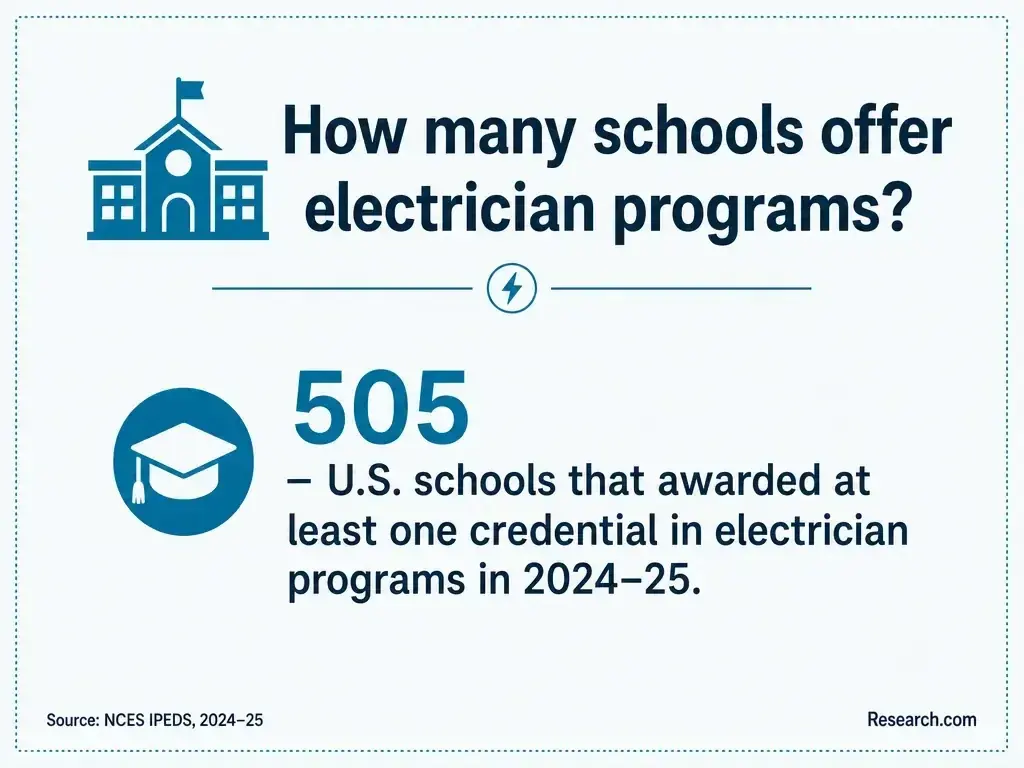
There is no single defensible statewide price for every electrician pathway: a school certificate, an associate-degree program, and a paid registered apprenticeship have different billing and earnings structures. Published tuition also may exclude costs that matter before a student can reach a worksite. Request a current, itemized quote for the entire program rather than comparing only one term's advertised price.
The cost categories below show what to put beside tuition when comparing offers. Some items may be supplied by a sponsor or employer, so ask who pays before adding them to your budget.
| Cost or offset | Why it changes the comparison |
| Tuition, mandatory fees, books, and materials | Determines the school bill; published tuition may not cover supplies. |
| Tools, protective equipment, and replacement supplies | Can be required for labs or the first job even if they are not school charges. |
| Travel, scheduling, and lost earnings | A distant or full-time program may cost more than its bill suggests. |
| Grants, eligible aid, and paid apprenticeship wages | Can reduce out-of-pocket cost or offset earnings forgone during training. |
| Exam and license application charges | May arise later in the career pathway rather than at enrollment. |
Financial aid eligibility depends on the specific institution, program, and student; do not assume every short course or apprenticeship qualifies for federal aid (Federal Student Aid). Check Maryland workforce-training assistance and sponsor-funded options as well. Unlike shopping for an affordable bachelor degree online, comparing electrician training requires particular attention to physical training costs and wages earned - or forgone - while gaining experience.
The credential depends on the route. A school may award a certificate, diploma, or associate degree; a registered apprenticeship leads to documentation of apprenticeship completion when its requirements are met. An employer course may award only a company training record. These are different from an occupational license, which is granted by a licensing authority rather than by a school (Maryland State Board of Electricians; U.S. Department of Labor, Apprenticeship.gov).
Ask for the exact credential name and whether employers or apprenticeship sponsors accept its coursework toward placement or advanced standing. Do not assume transfer or credit: obtain a written decision from the receiving program. Institutional accreditation concerns the school; apprenticeship registration concerns the work-based program; neither automatically grants a Maryland electrician license.
Requirements vary by route. Schools may assess reading and math readiness, while apprenticeship sponsors may set additional application, interview, work-authorization, and jobsite-readiness requirements. Employers may also require a driver's license or reliable transportation because work locations change. Obtain each provider's current written requirements rather than assuming admission to a school guarantees an apprenticeship position.
Before paying an enrollment deposit, ask whether tools are required on day one, whether any screening is needed for placement, and when supervised work can begin. A strong classroom program is a poor fit if its schedule prevents you from meeting the employer or sponsor requirements for the next stage.
Useful entry-level instruction covers electrical fundamentals, applied math, blueprint reading, wiring methods, circuit and equipment testing, electrical-code use, and safe work practices. Labs should require students to make, inspect, and troubleshoot installations - not merely watch demonstrations. On a jobsite, trainees also learn how to coordinate with other trades, document work, and recognize when a task requires a more experienced electrician's supervision (U.S. Bureau of Labor Statistics, Occupational Outlook Handbook).
Compare curricula against your intended work. A course centered on residential wiring may be a starting point for a housing contractor but offer less practice with commercial controls or industrial troubleshooting. Ask to see the lab task list, equipment available to each student, and how instructors evaluate safe performance.
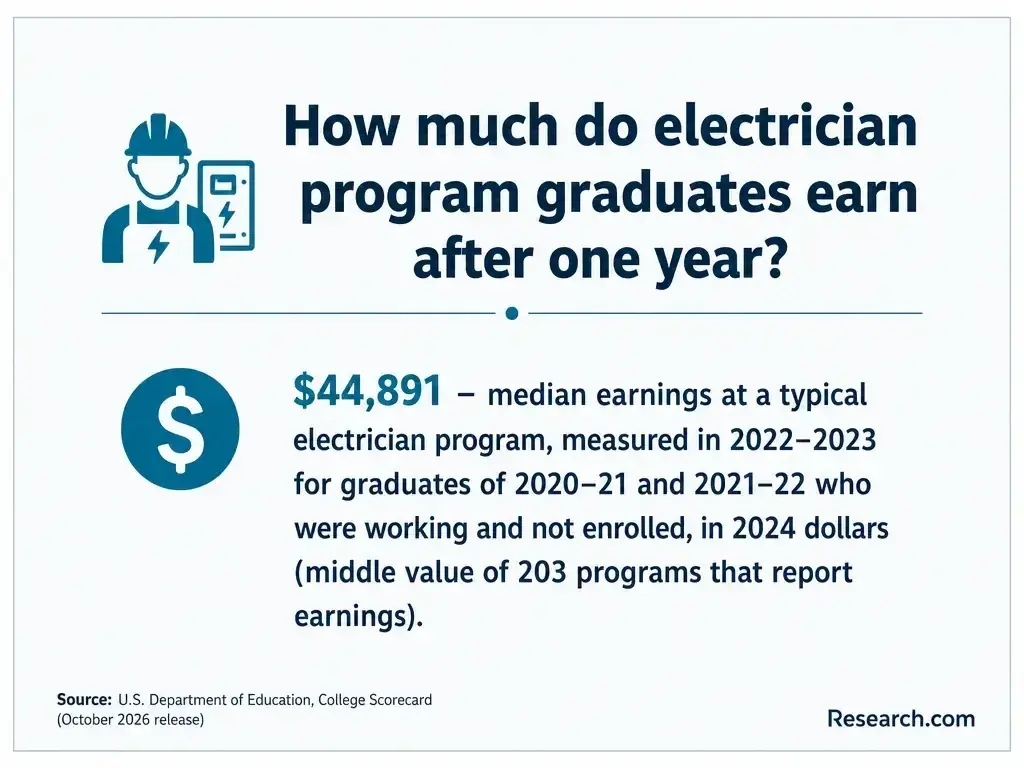
Maryland regulates electrician licensing through the Maryland State Board of Electricians. A person learning the trade under appropriate supervision is in a different position from someone seeking to perform licensed work independently. The board's license categories and applicable experience and examination requirements - not a school certificate alone - determine the route to licensure. Check the board's current rules for the particular license and work you intend to pursue (Maryland State Board of Electricians).
Industry training credentials can document skills, but they are not substitutes for an occupational license. Likewise, a registered apprenticeship is a structured training route, not itself a license. Before enrolling, ask the school or sponsor how it records classroom and supervised work experience, who verifies that experience, and which licensing requirements you would still need to meet. Check whether any local rules affect the work or employer you are considering.
Start with the job you want, then work backward from the training and supervised experience it requires. The cheapest listed program is not necessarily the lowest-cost route to that job, and a similarly named certificate may involve far less lab practice than another. Use the 2027 affordability ranking as a shortlist, then verify fit directly.
These checks make a school, sponsor, or employer conversation more useful:
Watch for claims that a short or entirely online course makes graduates "licensed electricians," or for reluctance to identify an apprenticeship sponsor or explain what happens after completion. The right investment is the pathway you can finish and afford that also connects to the experience your intended work requires.
A beginner may enter as a supervised electrical trainee or apprentice, build experience through installation and service work, and later seek the license appropriate to more independent responsibilities. With additional experience, electricians may focus on commercial systems, industrial maintenance, controls, supervision, or contracting. Advancement depends on documented work, skills, employer opportunities, and applicable Maryland licensing rules - not simply on holding a school certificate (Maryland State Board of Electricians; U.S. Bureau of Labor Statistics, Occupational Outlook Handbook).
Career comparisons such as most lucrative college majors address a different education decision. For electrician training, a more useful question is how soon you can enter paid supervised work, what it costs to progress, and whether your chosen route supports your intended specialty.
The U.S. Bureau of Labor Statistics projects 9.2% growth in electrician employment nationwide from 2025 to 2035. That national projection suggests continued demand for the occupation, but it does not predict openings for a particular Maryland graduate, county, or training provider.
For a local decision, compare current apprentice and entry-level postings in the area where you can realistically commute, and ask sponsors how far their jobsites extend. Check whether openings match the work taught in a prospective program. A program is more valuable when its schedule and employer connections help you reach those jobs while accumulating supervised experience.
Education is a significant investment, so Research.com designed its ranking to help readers compare electrician programs with other programs in the same occupation and location. The team reviews reported cost and debt measures for consistency and uses multiple education data sources. Only programs with completions reported to IPEDS are eligible; a registered apprenticeship or employer program may be a strong option even if it does not appear in the ranking.
For this most affordable ranking, the score uses tuition, cost of attendance, median student debt, and federal loan default rate. An entropy-based method assigns more weight to measures that differ more across eligible programs. Accreditation and other quality indicators are not part of the affordability score. Readers should therefore use the ranking to identify programs for further comparison, not as proof of hands-on quality or licensing eligibility.
The following data sources were used in creating the ranking. Some cover education costs and outcomes broadly; trade-specific sources help provide context and should not be mistaken for accreditation or approval of every listed electrician program.
Healthcare and dental organizations in that source list are not electrician licensing authorities. The affordability ranking also cannot capture every tool purchase, commute, or period of unpaid training. Readers can find more detail about Research.com's approach on its methodology page.
# 1 position
# 2 position

# 3 position
A paid apprenticeship or employer-sponsored route may reduce tuition expense while providing wages, but entry requirements and openings vary. Compare its tools, travel, and classroom costs with a school program's full price.
Not necessarily. Sponsors set their own entry requirements. A school course may help you develop basic skills, but ask the sponsor whether it is required or earns advanced standing before paying for it.
No certificate alone grants a license. Check the Maryland State Board of Electricians' current requirements for the license you want, including applicable experience and examinations.
You can study some theory online, but practical electrical work requires in-person training and supervised experience. Verify the labs and worksite component of any online or hybrid offering.
No. Add required fees, tools, commuting, financing, and lost earnings; then check lab quality and the route to paid supervised work. A lower bill offers little value if the program does not help you reach your intended job.