# 1 position

Audited and Verified:
Our Editorial and Data Verification Process
Research.com uses government datasets, official education statistics and primary institutional information to support its career and degree guides. Our review process checks factual accuracy, occupational definitions, source dates and the requirements associated with the credentials discussed.
How This Article Was Fact-Checked
Our editorial team verifies salary estimates, employment projections, education requirements and program information against original data providers and official organizations. Salary figures are checked against the relevant occupational definitions and reporting periods. Information about licensure, accreditation and required in-person training is reviewed separately.
Fact-checked and verified on:

Co-Founder and Chief Data Scientist

Reviewed by Karolina Broda
Fact-Checker and Data Verification
Choosing an affordable electrician program means looking beyond tuition: will its hands-on training help you get hired, and will you still need an apprenticeship? The U.S. Bureau of Labor Statistics projects 9.2% national growth in electrician employment from 2025 to 2035, making the training decision timely. This guide explains Pennsylvania pathways, costs, wages, and local licensing questions. It also accompanies the Most Affordable Electrician Trade Schools in Pennsylvania for 2027 ranking, created by the Research.com team of data scientists to help students make an informed choice about programs worth considering.
Expect instruction in electrical theory, blueprint reading, the National Electrical Code, jobsite safety, and installation methods, followed by supervised practice with wiring, circuits, and test instruments. The decisive question is where that practice occurs: a classroom demonstration, a school lab, and paid work on an active jobsite provide different levels of experience. Ask each provider for its current lab hours and whether it arranges work placements.
Programs also serve different purposes. A pre-apprenticeship can prepare you to apply for an apprenticeship; a certificate or diploma can build entry-level skills; an associate-degree program may add broader technical coursework; and a registered apprenticeship combines instruction with paid, supervised work. Completing a school program does not itself make someone a journeyman electrician.
A public option such as Westmoreland County Community College or the Community College of Allegheny County may suit a student comparing college-based instruction with work commitments. Someone considering New Castle School of Trades, Greater Johnstown Career and Technology Center, or Fortis Institute-Forty Fort should request the specific electrical program's current curriculum, schedule, costs, and placement arrangements. A provider's name or inclusion in a ranking is not proof that every offering has the same outcomes.
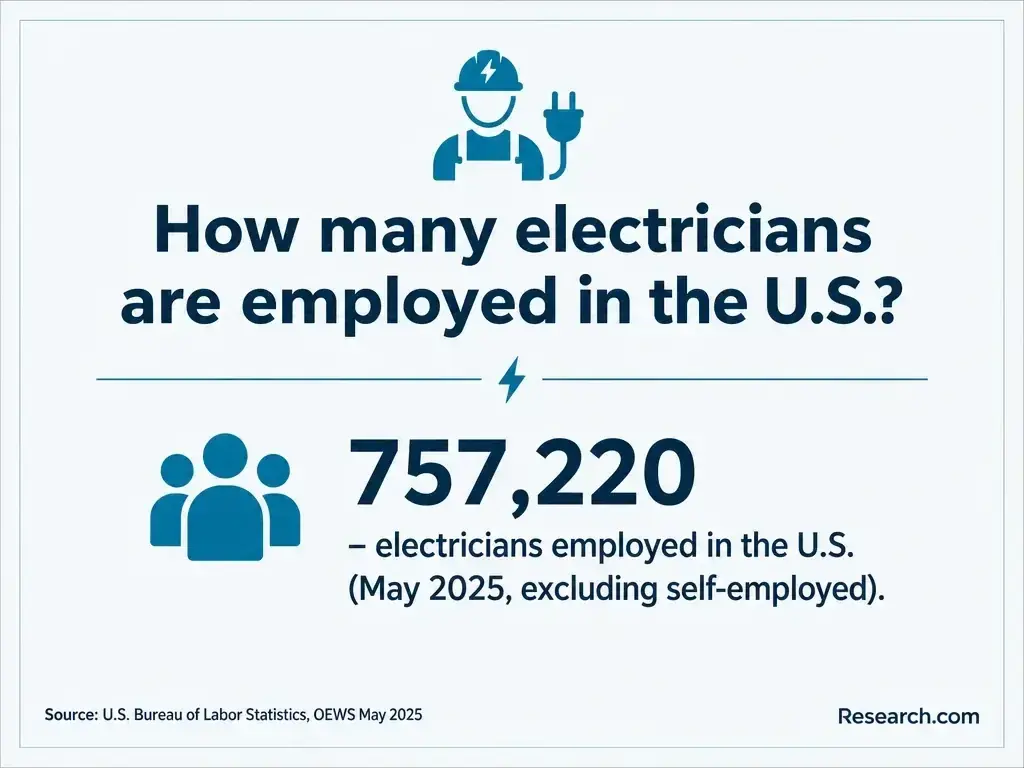
Electricians work for electrical contractors on residential and commercial projects, as well as in manufacturing plants, facilities maintenance, utilities, and industrial construction (U.S. Bureau of Labor Statistics). An introductory credential may help you compete for an electrical helper or apprentice position; independent electrical work generally demands substantially more supervised experience and compliance with local rules.
Location changes the opportunity set. Philadelphia and Pittsburgh-area applicants can compare multiple contractors and apprenticeship sponsors but should check municipal licensing rules before planning independent work. In less densely populated areas, a longer commute to a training site or changing jobsite can add significant cost. Before enrolling, ask employers or sponsors in the area where you intend to work whether they recognize the program and count any completed instruction toward apprenticeship progression.
A single state wage figure cannot describe what every new electrician will earn. The U.S. median annual wage for electricians was $63,190 in May 2025 (U.S. Bureau of Labor Statistics, Occupational Outlook Handbook). That figure covers workers across experience levels and locations; it is not an entry-level offer or a Pennsylvania-specific median.
For a useful local estimate, compare current apprentice wage schedules and job postings in the Pennsylvania area where you plan to work with state occupational wage data from the Pennsylvania Center for Workforce Information and Analysis. Check whether a quoted rate is an apprentice rate, a later apprenticeship step, or an experienced-worker rate, and whether benefits and overtime are included. That distinction matters more to an affordability decision than applying a national median to your first year of work.
Program length depends on the credential and attendance schedule. A focused pre-apprenticeship or certificate can take less time than an associate-degree program, but graduating sooner does not eliminate the need to gain jobsite experience. Electrician apprenticeships commonly run four to five years, combining paid work and related technical instruction (U.S. Bureau of Labor Statistics, Occupational Outlook Handbook).
Compare the calendar date when you could start earning with the date when you could qualify for the work you ultimately want to perform. A full-time school schedule may speed up classroom completion but reduce your ability to earn while studying; a paid apprenticeship can take longer to finish while producing wages throughout training. Ask whether previous coursework or documented experience can earn advanced standing - never assume a school certificate will shorten an apprenticeship.
Electrical theory, code concepts, and some safety instruction can be taught online. Installing circuits, using meters, troubleshooting energized-system risks, and demonstrating safe tool use require supervised, in-person practice. A hybrid program can be useful if its local labs fit your schedule; an entirely online course should not be treated as equivalent to hands-on preparation or as a licensing shortcut.
When comparing formats, get the lab schedule, equipment list, instructor-to-student arrangements, and any required worksite hours in writing. General listings of top online universities with national accreditation cannot answer the electrician-specific question: where will you practice and demonstrate safe electrical work? Institutional accreditation also does not establish eligibility under a municipality's electrical licensing rules.
There is no single reliable price for all Pennsylvania electrician pathways. A public college, career school, and paid apprenticeship have different tuition models and may include different supplies. Published charges also change, so a historical ranking price should be treated as a comparison point rather than a 2027 bill.
Request an itemized estimate for the entire period needed to become job-ready. The main costs and possible offsets to compare are:
Ask whether the specific program and your circumstances qualify for federal student aid, and check Pennsylvania CareerLink for eligibility-based workforce training assistance (Federal Student Aid; Pennsylvania Department of Labor & Industry). Aid availability should be verified before comparing net costs. A lower-priced program is not automatically the better investment: completion likelihood, time away from work, debt, and the wages you could earn while training all affect the result.
The credential depends on the pathway: a school may award a certificate, diploma, or associate degree; a registered apprenticeship leads to an apprenticeship completion credential after its required instruction and work experience. An industry training credential, such as one aligned with NCCER, is different from both a school award and an occupational license (National Center for Construction Education and Research; U.S. Department of Labor).
Ask for the exact award name and what it allows you to do next. Can its coursework be credited by a registered apprenticeship sponsor? Will an employer recognize its practical training? Will the municipality where you intend to work accept any part of it toward a license application? Institutional accreditation, state school authorization, industry recognition, apprenticeship registration, and local licensure answer different questions; none automatically substitutes for the others.
Schools commonly ask applicants for proof of prior schooling and may assess math or reading readiness; exact requirements, minimum ages, and schedules vary by program. Apprenticeship sponsors set their own entry rules, which can include an application, aptitude assessment, interview, and ability to travel to jobsites. Review the current requirements of the specific sponsor rather than assuming school admission also secures an apprenticeship place (U.S. Department of Labor).
Before paying an enrollment deposit, ask whether you need a driver's license or reliable transportation for fieldwork, whether you must buy tools before classes begin, and whether the program has any physical or safety prerequisites. If you already have construction experience, request a written determination of any prior-learning credit or apprenticeship advanced standing. Those decisions can change both your training time and total cost.
Useful electrician training connects calculations and code knowledge to work you can perform safely. Look for practice reading plans, sizing and installing wiring and conduit, making connections, using multimeters, identifying faults, and following lockout and other jobsite safety procedures (U.S. Bureau of Labor Statistics, Occupational Outlook Handbook). Instruction should also develop communication with supervisors and other trades: installation errors can affect an entire project.
Do not judge two similarly named programs by their course titles alone. Ask to see the lab tasks students complete, how instructors assess them, and whether training includes residential, commercial, or industrial systems relevant to your goal. If you want industrial maintenance work, for example, a program focused almost entirely on residential installation may leave you needing additional employer training.
Pennsylvania does not have one statewide electrician license that automatically authorizes electrical work in every municipality. Local governments can regulate electrical contractors and other electrical work; Philadelphia, for example, administers electrical contractor licensing through its Department of Licenses and Inspections (Pennsylvania Department of Labor & Industry; City of Philadelphia Department of Licenses and Inspections). Requirements depend on the jurisdiction, the work, and whether you will work under supervision or contract independently.
Before selecting training, contact the licensing office where you expect to work and ask which experience, examination, and application requirements apply to your intended role. Then ask the school or apprenticeship sponsor how it documents qualifying instruction and supervised work. NCCER credentials and apprenticeship completion may demonstrate training, but neither should be mistaken for permission to perform work that requires a local license.
Choose the pathway that gets you from your current skills to a realistic paid role at an acceptable total cost. A school program may be worthwhile if you need structured fundamentals, supervised lab access, or a schedule that helps you qualify for apprenticeships. A registered apprenticeship may be the stronger financial fit if you can secure a place and need wages while learning. Neither is universally better.
Use this sequence to test a promising option before committing:
A common mistake is treating a low tuition figure - or a general list of top schools to go to for college - as evidence that a specific electrician program provides enough practical training. Another is assuming the national electrician median wage will be your starting pay. If a provider cannot explain its labs, full charges, or intended employment pathway, keep comparing options.
Training can lead first to electrical helper or apprentice work, then to more independent installation, troubleshooting, or maintenance as experience grows (U.S. Bureau of Labor Statistics, Occupational Outlook Handbook). Depending on the employer and local rules, experienced workers may pursue commercial or industrial specialization, supervisory responsibilities, or electrical contracting. Contractor licensing is a separate consideration where the municipality requires it.
Match the pathway to the intended work. Someone seeking the quickest opportunity to earn on a jobsite should investigate registered apprenticeships and employer openings alongside school programs. Someone changing careers who needs foundational practice before applying may value a lab-based certificate. For either person, the meaningful outcome is not just the first credential - it is whether that training helps them secure supervised experience and progress toward their chosen role.
The U.S. Bureau of Labor Statistics projects 9.2% growth in electrician employment nationally from 2025 to 2035. That points to demand for the occupation, but it does not predict the number of openings in a particular Pennsylvania county or guarantee placement after training.
Check Pennsylvania Center for Workforce Information and Analysis projections and current openings for the areas where you can commute. Then ask apprenticeship sponsors and employers whether they expect to recruit entry-level workers and which skills they prioritize. For a prospective student, the practical question is whether local demand aligns with the program's specialty and whether you can reach the jobsites where experience is gained.
Investing in training is a consequential decision, especially when the lowest advertised tuition may not be the lowest cost of becoming job-ready. Research.com created this ranking to help readers compare electrician programs with other programs serving the same occupation and location. The team evaluates available data for accuracy and comparability; readers should still confirm current prices and program details directly with providers.
The most affordable ranking scores costs and debt: tuition, cost of attendance, median student debt, and federal loan default rate. Weights are assigned through an entropy-based method, which gives more weight to measures that differ more across programs. Accreditation, industry recognition, and other quality measures are not part of this affordability score. By contrast, Research.com's separate best-program rankings consider student outcomes; earnings and return on investment; costs and debt; and quality and recognition. Their current weights assign 20% to relevant programmatic recognition, 10% to institutional accreditation, 10% to student support, and 60% to outcomes, earnings, and costs, with that last portion distributed through the entropy-based method.
Only programs with completions reported to IPEDS qualify for this ranking. That makes comparisons more consistent, but it excludes some registered apprenticeships, union training, employer-sponsored programs, and other providers; exclusion does not mean a pathway is unavailable or inferior. The following sources inform the ranking, although several health-occupation sources are not electrician-specific:
Use the ranking to identify programs whose reported costs merit a closer look, then compare their actual electrical labs, employer connections, and full out-of-pocket costs. More detail on the approach is available in Research.com's methodology.
# 1 position
# 3 position

# 4 position
# 6 position

# 7 position
# 8 position

# 9 position
# 10 position
# 12 position
# 13 position
# 14 position
# 15 position

# 16 position

# 17 position
# 18 position

# 19 position
# 20 position

It can be if you need foundational skills or lab practice to become a stronger applicant. Compare its full cost and any credit a sponsor will grant against the possibility of entering a paid apprenticeship directly.
No. A school certificate is a training credential. Check the rules in the Pennsylvania municipality where you intend to work, including any required experience, examination, or contractor license.
You can study some theory online, but electrical installation, testing, and safety skills require in-person practice. Confirm where and how a hybrid program assesses those skills.
Paid apprenticeships can reduce the cost of training, but sponsors may still require tools, transportation, or other expenses. Request the current wage schedule and a complete list of trainee costs.
Ask whether the provider arranges interviews or worksites, what share of completers obtained relevant jobs, when that outcome was measured, and whether the figures include apprenticeships. Placement assistance is not a job guarantee.