
# 1 position
Best Electrical Technician Training Programs & Trade Schools in Hesperia for 2027
Audited and Verified:
Our Editorial and Data Verification Process
Research.com uses government datasets, official education statistics and primary institutional information to support its career and degree guides. Our review process checks factual accuracy, occupational definitions, source dates and the requirements associated with the credentials discussed.
How This Article Was Fact-Checked
Our editorial team verifies salary estimates, employment projections, education requirements and program information against original data providers and official organizations. Salary figures are checked against the relevant occupational definitions and reporting periods. Information about licensure, accreditation and required in-person training is reviewed separately.
Fact-checked and verified on:

Co-Founder and Chief Data Scientist

Reviewed by Karolina Broda
Fact-Checker and Data Verification
Choosing electrician training in Hesperia means comparing more than schools: a short program, a paid apprenticeship, and a community college credential can lead to different costs and amounts of field experience. The U.S. Bureau of Labor Statistics projects 9.2% national employment growth for electricians from 2025 to 2035. This guide explains California's entry rules, training options, costs, and career prospects. It also features a Best Electrician Trade Schools in Hesperia for 2027 ranking, created by the Research.com team of data scientists to help students identify programs worth considering.
Key findings about electrician degrees in Hesperia
- For California electrical work, a school certificate alone is not electrician certification: a noncertified worker generally needs the appropriate electrician-trainee registration and approved-school enrollment or a qualifying apprenticeship, according to the California Department of Industrial Relations.
- General electrician certification involves substantial documented work experience - typically 8,000 hours - or completion of an approved apprenticeship pathway, plus the applicable examination; confirm the current route with the California Department of Industrial Relations before enrolling.
- The national median electrician wage was $63,190 in May 2025, according to the U.S. Bureau of Labor Statistics. That is not a Hesperia starting wage: compare local offers, training costs, and whether you can earn while learning.
Table of Contents
- Best Electrical Technician Training Programs & Trade Schools in Hesperia for 2027
- What can I expect from an electrician trade school program in Hesperia?
- Where can I work with an electrician trade school training in Hesperia?
What can I expect from an electrician trade school program in Hesperia?
Expect a route into supervised electrical work, not automatic permission to work independently. Electrician training combines electrical theory and code study with safe tool use, wiring, testing, and troubleshooting. The decisive difference between options is how classroom learning connects to documented, hands-on work under California's rules.
These pathways award different credentials and distribute classroom and worksite training differently. Compare them against your need for income during training and your intended certification classification.
| Pathway | What you receive | Best fit and key limitation |
| Career-school or community college certificate | A school credential and classroom or lab training; the precise hours and content vary. | Useful for structured preparation, but the credential alone does not replace required supervised experience or state certification. |
| Electrician-focused associate degree | An academic degree combining trade coursework with other required courses. | May suit someone who values the broader credential; check whether extra time and cost advance the same occupational goal. |
| Registered apprenticeship | Paid, supervised work and related instruction under an approved training plan. | Strong fit for learners ready to work while training; admission, work assignments, and schedules depend on the sponsor. |
| Employer-supported electrician-trainee route | Work experience alongside enrollment in a California-approved trainee school. | Can fit someone who has access to a qualifying employer; keeping registration, instruction, and work records current is essential. |
For a Hesperia resident, a program's address matters less than whether its labs and work opportunities are reachable on a recurring schedule. Ask where practical sessions take place and whether the provider helps students find qualifying work; do not treat a job-placement claim as a promised apprenticeship or job.
Where can I work with an electrician trade school training in Hesperia?
Training can support entry-level work with residential or commercial electrical contractors and, as experience develops, work on industrial facilities, maintenance systems, infrastructure, or renewable-energy installations. The U.S. Bureau of Labor Statistics describes electricians as installing, maintaining, and repairing electrical power, lighting, communications, and control systems. The employer and job duties determine which California certification classification and supervision rules matter.
Hesperia applicants should search beyond the city boundary when assessing opportunities. A worksite elsewhere in the Victor Valley or the wider Inland Empire may be practical - or may create substantial commuting costs and early-start scheduling problems. Before accepting training or employment, ask whether the employer's electrical work qualifies toward the experience you intend to document, where jobsites are located, and who verifies your hours.
A reliable Hesperia-only median is not available in the national figure: the U.S. Bureau of Labor Statistics reports a $63,190 U.S. median annual wage for electricians in May 2025. That figure covers experienced as well as newer workers and should not be used as an expected first-year offer. Apprentice and trainee pay can differ substantially from certified-electrician pay, while overtime, specialty, employer, and work location also affect earnings.
For a more useful local comparison, check California Employment Development Department occupational wage data for the relevant county or metropolitan area and compare it with current trainee and journeyman job postings. Those larger geographic estimates are still not Hesperia-specific. If a better-paying worksite requires a long commute, factor transportation and unpaid travel time into the offer rather than comparing hourly pay alone.
School program length and time to electrician certification are different clocks. A certificate might finish well before a worker has accumulated the supervised experience required for a California certification classification. Registered electrician apprenticeships commonly take several years because they combine paid work with related instruction; the U.S. Bureau of Labor Statistics describes a typical electrician apprenticeship as lasting four or five years.
For California general electrician certification, the California Department of Industrial Relations identifies an experience-based route involving 8,000 hours of qualifying work, as well as an approved-apprenticeship route and an examination. Requirements differ by classification. Ask a school how its schedule fits the state's current instruction and experience rules, and ask an apprenticeship sponsor when paid work begins. An accelerated classroom timetable cannot accelerate hours that must be earned on a jobsite.
Someone also comparing short doctoral programs is considering a different kind of investment; for electrician entry, documented practical experience is the time requirement to plan around.
Online instruction can cover subjects such as electrical theory, mathematics, code concepts, and blueprint reading. It cannot by itself demonstrate safe wiring, testing, conduit installation, or troubleshooting on actual equipment. Campus or hybrid programs can provide supervised lab practice; an apprenticeship or eligible worksite adds experience with real installations and jobsite conditions.
If you need flexibility around a job, ask a hybrid provider which sessions are remote, which labs require attendance, and where those labs occur. For Hesperia residents, the location and timing of required practical sessions may matter more than the label "online." Verify any claim that coursework counts toward California electrician-trainee education directly against the California Department of Industrial Relations' current approved-school requirements.
Institutional accreditation, including the distinctions readers may encounter while researching online colleges that are accredited nationally, is not the same thing as California approval for electrician-trainee instruction. Neither accreditation nor an online completion certificate substitutes for qualifying field experience or the state examination.
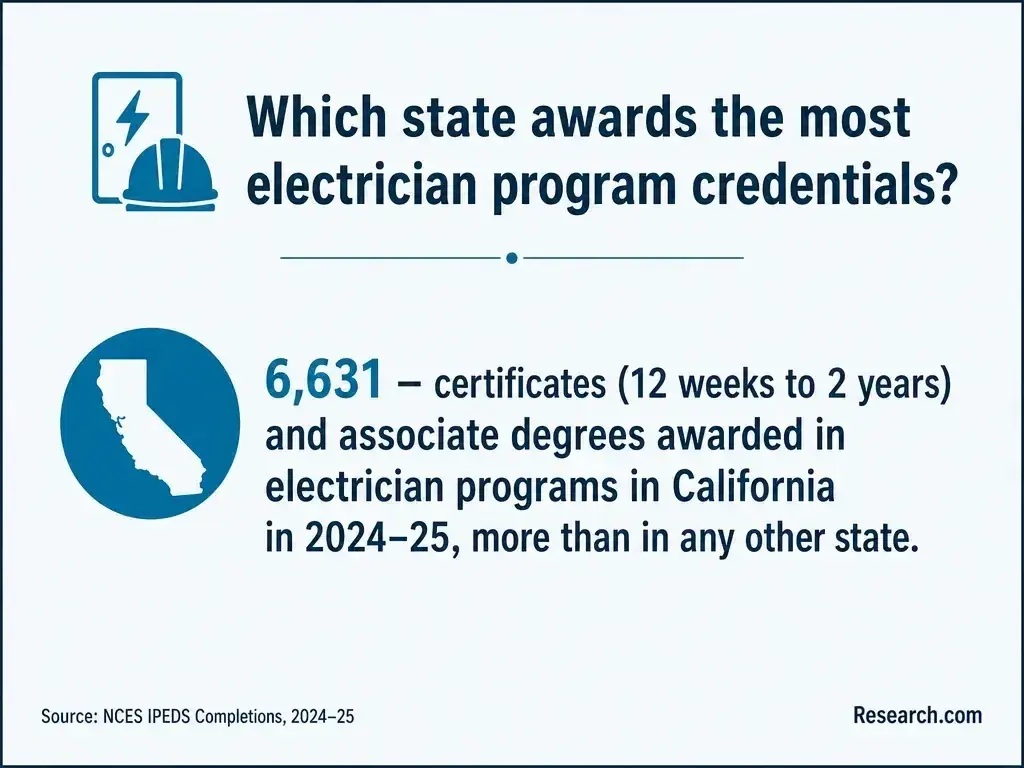
There is no defensible single average that combines Hesperia-area certificates, associate programs, and paid apprenticeships: their charges, lengths, and wage arrangements differ. Request a current, written cost-of-attendance estimate for each option rather than assuming an advertised tuition figure is the total price. If considering San Joaquin Valley College-Hesperia, confirm the current electrician-related offering, location, charges, and eligibility directly before making a comparison.
Build a job-ready budget from these categories so that a lower sticker price does not hide a higher total cost.
- School charges: tuition, mandatory fees, books, software, and consumable lab materials.
- Entry and work costs: required tools, testing equipment, personal protective equipment, exam and application charges, and travel to labs or jobsites.
- Time and offsets: income forgone while attending classes, less any applicable grants, aid, employer support, or wages earned in an apprenticeship.
A cheapest associates degree comparison is useful only if the electrician coursework, practical training, and California trainee-school status also fit your goal; a low-priced credential is not a bargain if it does not advance entry into the trade. Ask the provider about federal aid eligibility and consult Federal Student Aid for program-specific options. Paid apprenticeships may reduce borrowing, but compare their wages and start dates with your immediate income needs.
It depends on the pathway. A school may award a certificate, diploma, or electrician-focused associate degree; a registered apprenticeship documents completion of its approved work-and-instruction program. These are training credentials, not the same thing as California electrician certification. The California Department of Industrial Relations administers electrician certification and sets the applicable experience and examination requirements.
Before enrolling, get the exact credential name in writing and ask whether the instruction comes from a state-approved electrician-trainee school, whether a proposed apprenticeship is registered, and how work hours will be documented. Institutional accreditation concerns the school; state school authorization concerns its authority to operate; trainee-school approval concerns a specific California training route. None should be mistaken for the occupational certification awarded after a worker satisfies the state's requirements.
School admissions criteria vary, so confirm the current requirements for the particular certificate or associate program. Apprenticeship sponsors separately set their application, assessment, interview, and employment conditions. Applicants should be prepared to discuss schedules, transportation to training and jobsites, and the physical and safety demands of electrical work; do not assume admission to a school secures an apprenticeship place.
For someone planning to perform electrical work before certification, California's electrician-trainee and apprenticeship rules matter more than a school's admission letter. The California Department of Industrial Relations generally requires a noncertified electrical worker to follow the applicable registered trainee and approved-school route or an approved apprenticeship route. Confirm your intended classification and current registration steps before starting qualifying work.
Adults exploring flexible study through resources such as best degrees for older adults online should apply a more specific test here: can the training schedule accommodate required in-person labs and supervised electrical work? Ask whether prior relevant coursework or documented experience can receive credit or advanced standing, and obtain the answer from both the provider and, where relevant, the apprenticeship sponsor. Credit toward a school credential does not automatically reduce state-required work experience.
A useful electrician curriculum connects circuit theory and electrical calculations to the work of installing and maintaining systems. Look for instruction in reading plans, applying the electrical code, using meters, identifying faults, selecting materials, and following lockout and other jobsite safety practices. The U.S. Bureau of Labor Statistics identifies troubleshooting, technical knowledge, and safe tool use as central to electrician work.
Ask for a syllabus and a breakdown of lab versus lecture time. A program with substantial supervised practice on wiring methods, panels, and test equipment offers a different preparation experience from one centered on reading and quizzes, even if both award a certificate. Also ask how the provider teaches current equipment and practices relevant to your intended work - such as controls or renewable-energy installations - without assuming a specialty module replaces foundational experience.
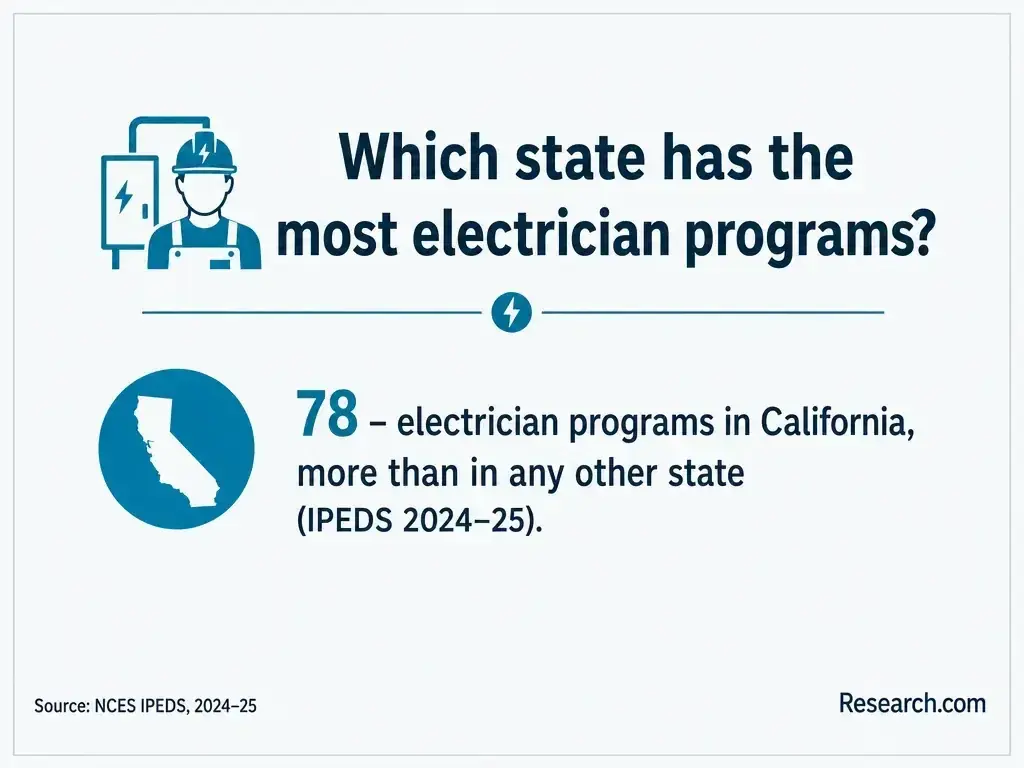
California regulates this work through electrician certification and rules for apprentices and electrician trainees; Hesperia does not create a separate electrician-training credential. Under the California Department of Industrial Relations' system, the appropriate route depends on the electrical work performed. General electrician certification has an experience-based route involving 8,000 qualifying hours and a state examination, while other classifications have different experience requirements. An approved apprenticeship provides another route. Verify the current rules for your classification before relying on a school's eligibility claim.
Do not confuse electrician certification with a contractor license. The California Contractors State License Board regulates contractors, including the electrical contracting classification; working toward electrician certification does not itself authorize someone to operate as a licensed electrical contractor. Likewise, voluntary industry training credentials may demonstrate skills but do not replace California's occupational requirements. Keep records of approved instruction, registration, supervised work, and examination results throughout training.
Start with the job you want - general electrical construction, residential work, or another classification - and work backward from California's requirements. A ranking can identify programs to investigate, but its college-based data cannot fully compare every paid apprenticeship or employer route. The best investment is the option that gets you appropriate instruction and verifiable experience at a manageable total cost.
Use these checks when speaking with schools and apprenticeship sponsors; request written answers where eligibility or cost is involved.
- Confirm the exact credential, hands-on lab content, training location, and whether the electrician-trainee instruction has the California approval your route requires.
- Ask who arranges or verifies qualifying work experience, whether an apprenticeship is registered, and whether a place in one is actually offered.
- Compare full costs, aid eligibility, expected wages while training, scheduling, and commuting - not tuition alone.
- Request program-level completion and employment information with its reporting period, then ask how outcomes were measured.
- Check institutional accreditation and operating authorization separately from state trainee-school approval and occupational certification eligibility.
Watch for claims that a short course makes you a certified electrician, that a fully online certificate replaces fieldwork, or that a national median wage represents a new graduate's likely pay. If two options look equally strong, consider completion probability and the time until you can begin paid qualifying work. A careful return-on-investment comparison also accounts for aid, debt, forgone income, later earnings, and the time over which benefits arrive - not just an advertised salary.
A common progression is supervised trainee or apprentice work, followed by the relevant California electrician certification once state requirements are met. With additional experience, workers may move toward specialized installation, maintenance, troubleshooting, crew leadership, or contracting; independent contracting has separate licensing requirements through the California Contractors State License Board. Employers may value additional training in controls, industrial equipment, or renewable-energy systems, but these options do not bypass the core state pathway.
If you are asking what certificate makes the most money, separate a school's completion certificate from the occupational certification and work experience employers seek. For an aspiring electrician, the useful question is whether a program helps you start qualifying work, build durable skills, and progress toward the classification that matches the jobs you want.
The U.S. Bureau of Labor Statistics projects 9.2% growth in U.S. electrician employment from 2025 to 2035. That national projection indicates a promising occupation overall, not a forecast of openings within Hesperia or a guarantee of placement after training. BLS links electrician demand in part to construction and the installation of power and other electrical systems.
Use California Employment Development Department projections and current openings for the county or surrounding labor market to test whether the opportunities you want are accessible from home. Compare the classifications, experience levels, and travel requirements in those postings with what a prospective program actually provides. If most appealing jobs require experienced certified workers, plan for the supervised training stage rather than expecting to enter at that level immediately.
Best Electrical Technician Training Programs & Trade Schools in Hesperia for 2027
Investing in electrician training is a consequential decision, especially when a program's price and credential do not tell you whether it provides the practical experience needed for the job. Research.com created its ranking to help readers compare programs against other electrician programs in the same location. Its team evaluates published education data and occupation-relevant quality measures, while recognizing that no ranking replaces checking California's training and certification rules.
Only programs reporting completions to the Integrated Postsecondary Education Data System (IPEDS) are eligible. Best-program rankings assess student outcomes; earnings and return on investment; costs and debt; and quality and recognition. Occupation-relevant programmatic accreditation or industry recognition accounts for 20% of the score, institutional accreditation for 10%, and student support for 10%. The remaining 60% covers outcomes, earnings, and costs, with weights distributed by an entropy-based method that gives more weight to indicators that differ more across programs. Most-affordable rankings use only tuition, attendance cost, debt, and federal loan default rates, weighted by that method; quality indicators do not enter that score.
The following sources inform Research.com's ranking work across trade occupations. Some health-profession sources do not evaluate electrician programs; for this occupation, readers should pay particular attention to electrical industry recognition and California's separate regulatory requirements.
- IPEDS database - program completions and institutional data.
- National Center for Education Statistics - federal education data and definitions.
- College Scorecard database - available institutional cost, debt, and earnings measures.
- Peterson's database - supplemental institution and program information.
- Commission on Accreditation of Allied Health Education Programs (CAAHEP) - occupation-specific reference data where applicable.
- Accrediting Bureau of Health Education Schools (ABHES) - occupation-specific reference data where applicable.
- Commission on Dental Accreditation (CODA) - occupation-specific reference data where applicable.
- Dental Assisting National Board (DANB) - occupation-specific reference data where applicable.
- National Center for Construction Education and Research (NCCER) - construction-training and industry-credential information.
- Apprenticeship.gov Partner Finder - information on apprenticeship opportunities and sponsors.
Because IPEDS does not cover every apprenticeship, union training center, or employer program, absence from the ranking does not mean an option is unavailable or inferior. Use the ranking to build a shortlist, then verify each option's electrician-specific curriculum, hands-on training, full cost, and California eligibility. More detail on the approach is available in Research.com's methodology.
# 2 position
San Joaquin Valley College-Hesperia - Electrician.
certificate or diplomaFrequently asked questions about electrician programs in Hesperia
Do I have to attend trade school to become an electrician?
No. A qualifying registered apprenticeship is another route. If you pursue electrician-trainee work instead, check California's current registration and approved-school requirements with the California Department of Industrial Relations.
Will a certificate make me a certified California electrician?
No. A school certificate documents training; state electrician certification has separate experience or approved-apprenticeship and examination requirements.
Can I complete electrician training entirely online?
You may be able to study some theory online, but electrical labs and supervised work require in-person participation. Verify any online course's California trainee-school status before paying.
Is a paid apprenticeship better than a school program?
It may be better if you can enter one and need wages while gaining supervised experience. A school program may offer a more accessible or flexible start, but compare its cost and route into qualifying work.
What should I ask before enrolling?
Ask for the full cost, exact credential, lab schedule, state approval relevant to your route, and a clear explanation of how students obtain and document supervised work.
Are electrician wages in Hesperia the same as the national median?
Not necessarily. The U.S. Bureau of Labor Statistics' May 2025 national median includes workers across experience levels and locations. Check area wage data and actual trainee offers for a more realistic starting comparison.
- U.S. Bureau of Labor Statistics - Electricians
Used to verify salary, employment outlook, and typical education requirements.
https://www.bls.gov/ooh/construction-and-extraction/electricians.htm - NCCER - Accredited Training
Used to verify programmatic accreditation or industry recognition of programs.
https://www.nccer.org/ - O*NET OnLine - Electricians
Used to verify common responsibilities, skills, work settings, and education expectations.
https://www.onetonline.org/link/summary/47-2111.00 - San Joaquin Valley College-Hesperia - official website
Official school website (programs, tuition, admissions).
https://www.sjvc.edu/