# 1 position
UEI College-Riverside - Electrician.
certificate or diploma

Audited and Verified:
Our Editorial and Data Verification Process
Research.com uses government datasets, official education statistics and primary institutional information to support its career and degree guides. Our review process checks factual accuracy, occupational definitions, source dates and the requirements associated with the credentials discussed.
How This Article Was Fact-Checked
Our editorial team verifies salary estimates, employment projections, education requirements and program information against original data providers and official organizations. Salary figures are checked against the relevant occupational definitions and reporting periods. Information about licensure, accreditation and required in-person training is reviewed separately.
Fact-checked and verified on:

Co-Founder and Chief Data Scientist

Reviewed by Karolina Broda
Fact-Checker and Data Verification
Choosing electrician training in Riverside means looking beyond a school's certificate: you need hands-on skills, a way to earn supervised experience, and a path through California's electrical certification rules. The Research.com team of data scientists created the Best Electrician Trade Schools in Riverside for 2027 ranking to help students make an informed choice about programs worth considering. The stakes are real: the U.S. Bureau of Labor Statistics projects 9.2% growth in electrician employment from 2025 to 2035. This guide helps you compare training routes, costs, credentials, and career prospects before enrolling.
Expect instruction in electrical theory, code use, safety, installation, and troubleshooting, paired with practical work on circuits, conduit, panels, and test equipment. The decisive question is what happens after class: California electrical work generally requires a recognized apprentice or electrical-trainee route while you build supervised experience toward certification (California DIR).
These pathways differ most in who arranges the work experience and when you begin earning wages. Confirm each provider's current credential, schedule, and placement arrangements rather than treating similarly named programs as interchangeable.
| Pathway | What it provides | Best fit and main limitation |
| Career-school certificate or diploma | Structured classes and labs; the school awards its own credential. | Fits someone seeking guided preparation. Confirm California school approval and a realistic route to supervised work; the credential is not state electrician certification. |
| Community-college certificate or associate degree | Electrical coursework and labs, with an academic credential determined by the program. | Fits students who value a public-college pathway or broader coursework. Verify that specific classes count toward the intended California trainee route. |
| Registered apprenticeship | Paid, supervised work with related classroom instruction. | Fits applicants ready to work while training. Entry may be competitive, and schedules follow the sponsor's requirements. |
| Employer-sponsored trainee route | Supervised job experience alongside approved schooling when required. | Fits someone with a qualifying employer connection. Verify trainee registration, school enrollment, and who documents hours. |
In the Riverside area, compare the actual lab site and potential worksites as well as the campus. A short commute to class may not offset a much longer daily trip to supervised jobs across the Inland Empire.
Electrical training can lead toward residential construction, commercial buildings, industrial facilities, and building maintenance in the Riverside-San Bernardino-Ontario area. Work may involve new installations, renovations, equipment service, or troubleshooting. The setting matters: residential wiring, commercial conduit work, and industrial controls call for different practice, so ask whether a program's labs and employer connections match the work you want.
A certificate can help demonstrate preparation for an entry opportunity, but employers and California regulators still care about your registration status, supervision, and documented experience. Before accepting a position described as "electrician," clarify the duties, who supervises the work, and whether the hours can support your intended certification pathway (California DIR).
The U.S. Bureau of Labor Statistics (BLS) reports a $63,190 national median annual wage for electricians in May 2025. It represents workers across experience levels and locations; it is neither a Riverside wage estimate nor a forecast of what a new trainee will earn. Paid apprentices and trainees should compare actual local offers, including wage progression, benefits, travel expectations, and hours available.
For a Riverside-specific comparison, use the latest BLS wage release for the Riverside-San Bernardino-Ontario metropolitan area and check that each figure covers electricians - not a broader group of installation workers. Compare that figure with entry-level offers rather than using an occupation-wide median to justify tuition or borrowing.
School-program length and time to electrician certification are different clocks. A certificate may end after its scheduled classes and labs, while an apprenticeship combines instruction with years of supervised work. The BLS describes electrician apprenticeships as typically lasting four to five years; California's general electrician certification pathway requires 8,000 hours of qualifying on-the-job experience before the certification examination (BLS; California DIR). Ask how a provider verifies hours and whether its timetable covers school completion, work experience, or both.
Accelerated academic programs are not shortcuts around field experience. Even if you are comparing a six-month online associate degree, check whether its subject, labs, and California-approved training status match your electrical career goal. A faster credential is useful only if it advances the required pathway.
Online instruction can make theory, code study, and some assignments easier to fit around work. It cannot replace physical practice with wiring methods, tools, test instruments, safe work procedures, and supervised jobsite tasks. On-campus or hybrid training offers a place to demonstrate those skills; an apprenticeship adds practice on actual worksites.
When comparing online trade schools, request a written breakdown of remote lessons, required lab attendance, lab location, and any supervised-work arrangement. Check with the California DIR whether the specific school and courses satisfy electrical-trainee enrollment requirements. Do not assume an online certificate alone establishes eligibility for work or the certification exam.
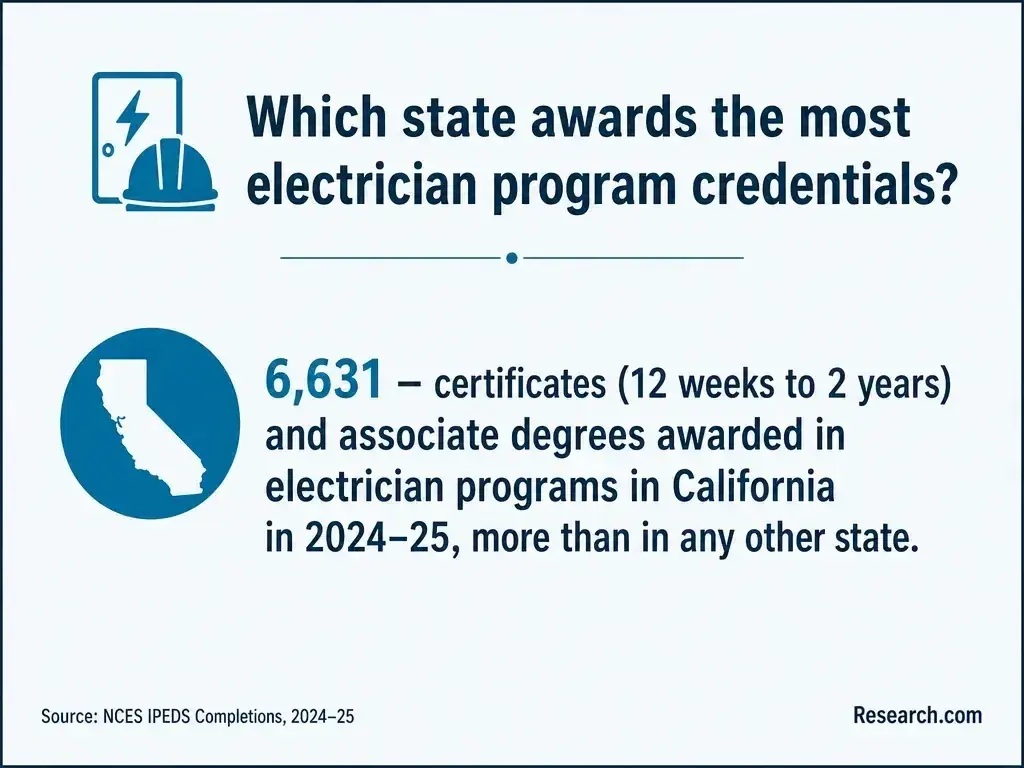
There is no single responsible "average" that covers Riverside career-school programs, college credentials, and paid apprenticeships: they have different tuition structures and may include different amounts of work-based training. Compare total cost to become job-ready, not an advertised tuition figure. Get a current itemized quote for tuition, mandatory fees, books, tools, personal protective equipment, materials, transportation to labs or worksites, and later examination or application charges. Add lost earnings if attendance limits your working hours.
For each offer, calculate the amount you would pay after grants or employer support, then compare likely borrowing and completion time. Ask whether the program is eligible for federal aid and whether you personally qualify; a list of inexpensive online schools that accept financial aid is not evidence that a particular electrician course qualifies. A paid apprenticeship can offset training costs through wages, but availability and entry requirements matter. The least expensive advertised program is not the better value if it lacks usable labs or a credible path to qualifying experience.
It depends on the pathway: a career school may award a certificate or diploma, a college may award a certificate or associate degree, and a registered apprenticeship documents completion through its sponsor. None is the same as California electrician certification, which has its own experience and examination requirements (California DIR). Ask for the exact credential name and who issues it before you enroll.
An associate degree may appeal if you want broader technical coursework, but a fast associate degree is not automatically a faster route to certification. If you already have relevant training, ask whether the provider recognizes prior coursework or offers advanced standing; separately confirm with the California DIR and any apprenticeship sponsor what experience or instruction they will accept.
Requirements vary by provider and pathway. Ask about minimum age, education documentation, math preparation, assessment tests, attendance schedules, and any physical or safety requirements. Apprenticeship sponsors may also have application windows and selection steps; a school's admission offer does not secure an apprenticeship position or an employer.
For work as a California electrical trainee, check the DIR's current registration and approved-school enrollment rules before starting supervised work. Registered apprentices follow their apprenticeship registration route instead (California DIR). Career changers - including readers exploring online education options for older adults - should compare schedule flexibility with the availability of in-person labs and jobsite training, not assume remote coursework removes those commitments.
A useful curriculum connects electrical calculations and code interpretation to tasks you can perform safely: reading plans, selecting materials, installing and testing circuits, bending conduit, diagnosing faults, and documenting work. The BLS identifies technical knowledge, troubleshooting, and safety as central to electricians' work. For Riverside students, exposure to the type of building or equipment used by prospective local employers is more valuable than a long course list with little hands-on time.
Request a lab schedule and ask what you personally install, measure, and troubleshoot - not merely what an instructor demonstrates. If your goal is industrial maintenance or controls rather than residential construction, look for relevant motors, controls, and diagnostic practice. Also ask how the program teaches current code use, because memorizing a rule is not the same as applying it correctly on a worksite.
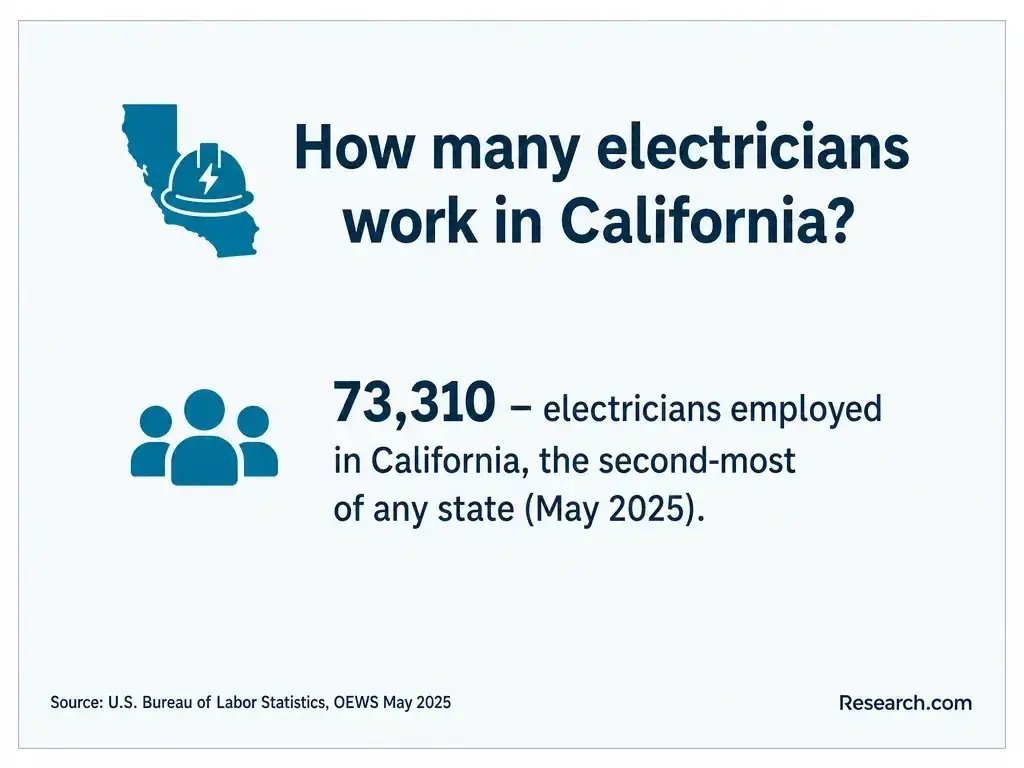
California distinguishes several statuses that are easy to confuse. The California DIR oversees electrician certification and electrical-trainee registration. A trainee generally must be registered, enrolled in a state-approved school, and working under the required supervision; a registered apprentice follows the apprenticeship route. For general electrician certification, the DIR requires qualifying work experience and passage of its examination. Finishing school alone does not meet those requirements.
Institutional accreditation evaluates a school; state school authorization permits an institution to operate under applicable rules; DIR approval concerns whether schooling fits the electrical-trainee pathway; apprenticeship registration concerns the work-and-instruction program. None substitutes for the others. California's contractor licensing rules are a separate matter for someone who later wants to operate an electrical contracting business (California DIR; California Contractors State License Board). Verify the current rules for your intended role before paying for a program.
Start with your intended job and work backward to the required training and experience. A school-based option can be worthwhile if its labs fit your goal, its schedule lets you complete the program, and you have a credible plan for supervised work. A paid apprenticeship may be the stronger fit if you can obtain a place and want wages while learning. Do not choose either route solely because it ranks well or advertises fast completion.
Use these checks before committing money or accepting an offer:
For return on investment, weigh completion probability and debt alongside your current earnings, plausible post-training earnings, program duration, and the time it may take to qualify for certification. A red flag is any claim that accreditation, a certificate, or a salary statistic guarantees a job or independent practice.
Training can support entry as a supervised electrical trainee or apprentice, followed by work toward California electrician certification. With experience, electricians may concentrate on residential or commercial installation, industrial equipment, troubleshooting, or crew leadership. These are progression possibilities, not separate outcomes promised by a school credential.
If your long-term goal is to run an electrical contracting business, plan beyond electrician training: contractor licensing is a distinct California process administered by the Contractors State License Board. If you instead want to work on industrial controls, ask whether prospective employers expect additional equipment-specific training. Choosing a program around the work you want next is more useful than selecting the broadest credential name.
National electrician employment is projected to grow 9.2% from 2025 to 2035 in the BLS Employment Projections. That indicates demand across the United States, not a guaranteed opening or the same growth rate in Riverside. Local hiring depends on construction and maintenance activity, employer needs, and whether applicants have the experience and status required for the work.
Use the national projection as a reason to investigate the field, then test the local opportunity before enrolling: review current Riverside-area apprentice and trainee openings, note their stated requirements, and ask sponsors when they expect to recruit. A program is a better investment when its schedule, practical training, and connections fit the jobs you can realistically pursue.
Education is a significant investment, so the Research.com team evaluates trade programs against other programs in the same occupation and location - not against unrelated schools nationwide. The ranking includes only programs with completions reported to the Integrated Postsecondary Education Data System (IPEDS). That makes the comparison more consistent, but it also means a registered apprenticeship or other training provider absent from IPEDS may be a valid option even if it does not appear in the ranking.
Best-program rankings assess student outcomes, earnings and return on investment, costs and debt, and quality and recognition. Programmatic accreditation or occupation-relevant industry recognition accounts for 20% of the score, institutional accreditation for 10%, and student support services for 10%. The remaining 60% covers completion and retention, earnings one year after completion, earnings relative to annual attendance cost, tuition, attendance cost, debt - including debt held by students who withdrew - and federal loan default rates. An entropy-based method gives more weight to indicators that vary more across programs. Most-affordable rankings instead score only tuition, attendance cost, median debt, and loan default rates; they do not score accreditation or other quality indicators.
The team uses the following sources to check program, institution, outcome, and recognition information. Some recognition sources concern other trades or healthcare occupations and should not be mistaken for California approval of an electrician program:
This approach helps readers compare reported outcomes and costs while recognizing the ranking's limits: a score cannot confirm that a particular course meets California's electrical-trainee rules or that an individual will qualify for certification. Review the underlying program details alongside the ranking. More information about the evaluation approach is available on Research.com's methodology page.
# 1 position
# 2 position
Not necessarily. A California registered apprenticeship combines work and instruction and is an alternative to completing a stand-alone school program first. If you pursue the electrical-trainee route, verify the California DIR's approved-school enrollment and registration requirements.
No. A school certificate is not California electrician certification. Your work status, supervision, qualifying experience, and examination eligibility are governed separately by the California DIR.
Theory may be taught remotely, but labs and supervised electrical work require in-person participation. Confirm that any online or hybrid course meets the California requirements relevant to your pathway before enrolling.
Choose based on access, cost, and how you will gain qualifying experience. A school can provide structured preparation; a registered apprenticeship pairs instruction with paid work but may have competitive entry. Ask both providers what happens from enrollment through documented work hours.
Ask for the total cost, refund policy, lab schedule, exact credential, DIR-approved-school status where relevant, and evidence of how students find supervised work. Get answers in writing and check regulatory claims with the California DIR.