# 1 position
Refrigeration School Inc - Electrician.
certificate or diploma

Audited and Verified:
Our Editorial and Data Verification Process
Research.com uses government datasets, official education statistics and primary institutional information to support its career and degree guides. Our review process checks factual accuracy, occupational definitions, source dates and the requirements associated with the credentials discussed.
How This Article Was Fact-Checked
Our editorial team verifies salary estimates, employment projections, education requirements and program information against original data providers and official organizations. Salary figures are checked against the relevant occupational definitions and reporting periods. Information about licensure, accreditation and required in-person training is reviewed separately.
Fact-checked and verified on:

Co-Founder and Chief Data Scientist

Reviewed by Karolina Broda
Fact-Checker and Data Verification
Choosing electrician training in Phoenix means deciding whether to pay for school, seek a paid apprenticeship, or combine both. The choice matters: U.S. Bureau of Labor Statistics projections show electrician employment growing 9.2% nationally from 2025 to 2035, but a short course alone does not make someone an experienced electrician. This guide explains credentials, costs, hands-on training, Arizona licensing, and career prospects. It accompanies the Best Electrician Trade Schools in Phoenix for 2027 ranking, created by the Research.com team of data scientists to help students identify programs worth considering.
Expect instruction in electrical theory and substantial practice, not an instant qualification to work independently. A worthwhile program should let you handle tools, interpret plans, install and test circuits, and practice safe procedures under supervision. Ask for its actual lab hours and equipment list: two certificates with similar titles may offer very different amounts of hands-on work.
The main pathways differ in both their immediate credential and the experience they provide. Use this comparison to decide whether you need an introduction to the trade or a structured route into paid fieldwork.
| Pathway | What it provides | Best fit and limitation |
| Pre-apprenticeship or short certificate | Foundational instruction and, where offered, shop practice; credential varies by provider | Useful for exploring the trade or strengthening an application; does not replace extensive supervised work |
| Career-school or community-college program | Certificate or, where offered, associate degree with classroom and lab instruction | Fits students seeking structured preparation; verify whether employers or apprenticeship sponsors recognize prior coursework |
| Registered apprenticeship | Paid, supervised work plus related instruction and a completion credential | Fits applicants ready to earn while training; entry can be selective and work schedules depend on available placements |
| Employer-sponsored entry | Jobsite training that may lead into an apprenticeship | Can reduce upfront school costs; confirm who supervises training and whether hours count toward a recognized program |
In Phoenix, compare current electrician-related offerings at GateWay Community College, South Mountain Community College, Refrigeration School Inc, Carrington College-Phoenix North, and UEI College-Phoenix rather than assuming every campus offers the same credential. Confirm the exact campus, curriculum, lab access, and employer connections before applying.
Electricians work for electrical contractors on residential and commercial construction, and in maintenance roles at industrial facilities and large buildings. The U.S. Bureau of Labor Statistics distinguishes installation and repair work from the broader maintenance duties some employers assign. Phoenix-area applicants should therefore read job postings for the actual mix of wiring, troubleshooting, controls, and travel between sites - not rely on an "electrician" title alone.
School training may help you compete for an entry-level helper or apprentice role, but employers determine hiring standards and supervision. If your target is construction, prioritize conduit, plans, and jobsite safety; if it is facility maintenance, ask whether the program covers motors, controls, and systematic troubleshooting. Neither specialization removes the need for practical experience.
The U.S. Bureau of Labor Statistics reports a May 2025 national median annual wage of $63,190 for electricians. That is the midpoint for workers across experience levels - not a Phoenix wage estimate, an apprentice rate, or a likely first paycheck. Use it as occupational context, then compare current Phoenix-area apprentice wage schedules and employer offers before committing to a program.
Pay depends on experience, type of work, employer, and hours available (U.S. Bureau of Labor Statistics). An apprenticeship applicant should compare wages earned during training with a school applicant's tuition and time out of work. Someone aiming to become a contractor must also account for business costs and Arizona licensing requirements rather than treating experienced-worker wages as take-home income.
A short introductory credential may take months, while a registered electrician apprenticeship commonly takes four to five years of paid work and related instruction (U.S. Bureau of Labor Statistics). School calendars vary, and finishing a certificate is not the same milestone as completing an apprenticeship. Request each provider's published clock or credit hours, lab hours, schedule, and expected completion date before comparing an accelerated course with a part-time option.
If speed is your priority, distinguish quick 6 month certifications that lead to high paying jobs from the longer supervised path to electrician proficiency. A shorter program can help you enter the field sooner, but it cannot compress the work experience an employer expects or the experience required for an Arizona contractor license.
Online coursework can be useful for electrical theory, calculations, and code-study preparation. It cannot by itself demonstrate safe tool use, wiring installation, testing, or troubleshooting on physical equipment. Before enrolling in a hybrid option, obtain a written breakdown of remote coursework, required campus labs, and any employer-supervised field training.
An on-campus format may suit a beginner who needs frequent instructor feedback; hybrid study may suit someone already working under supervision. A fully online certificate is better treated as supplemental learning unless the provider can identify where practical competencies are assessed. Lists of what certifications can i get online that pay well are useful for exploring remote study, not evidence that online electrician coursework replaces jobsite experience.
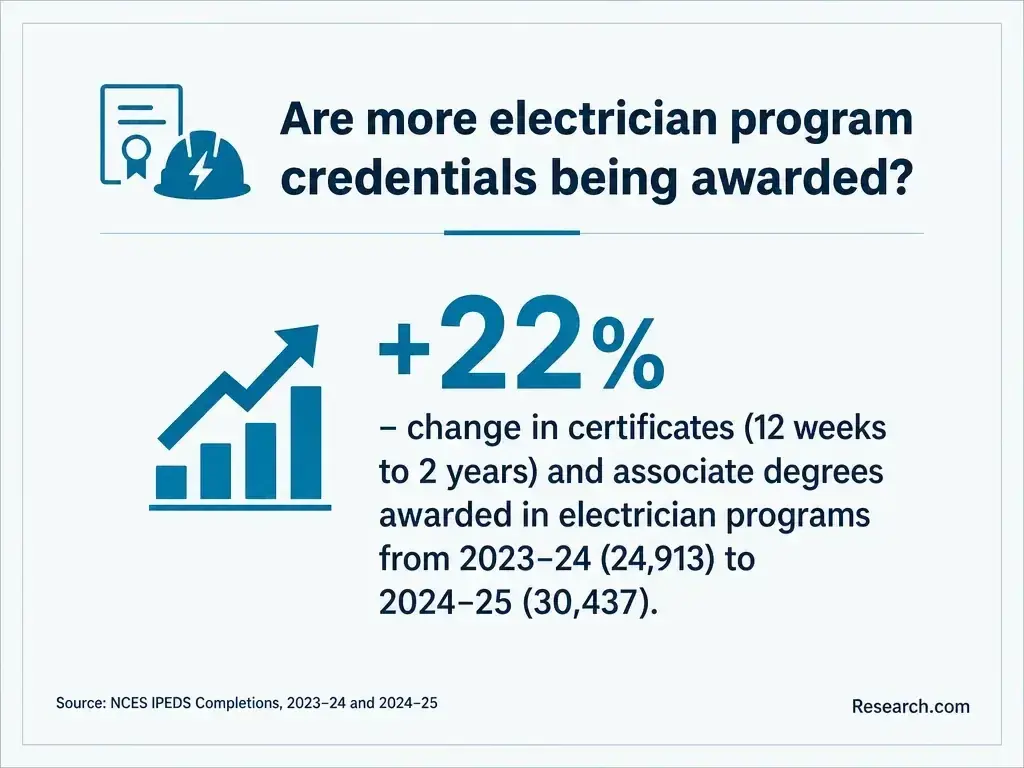
There is no single reliable average that represents Phoenix certificates, associate-degree programs, and paid apprenticeships together: they charge and compensate students differently. Ask each provider for a current, written total rather than comparing advertised tuition alone. This matters especially when a lower-priced course requires you to buy equipment separately or provides no route into paid fieldwork.
Build a job-ready cost estimate from these items, then subtract only aid or wages you can reasonably expect to receive:
Federal aid eligibility depends on the institution and program, not just whether a school advertises electrician training (Federal Student Aid). For broader tuition comparisons, online college low tuition resources can help frame affordability questions, but they are not substitutes for pricing the required hands-on electrical training.
Depending on the provider, you may earn a completion certificate, diploma, associate degree, or pre-apprenticeship credential. A registered apprenticeship awards its own completion credential after the required work and instruction (U.S. Department of Labor). These credentials document different things: a school certificate primarily records coursework, while apprenticeship completion also reflects structured on-the-job training.
Ask whether coursework transfers, earns prior-learning credit, or provides advanced standing with a particular apprenticeship sponsor - and get any agreement in writing. Institutional accreditation, Arizona school authorization, industry recognition, and apprenticeship registration are separate checks. None automatically grants an Arizona contractor license or proves that an employer will credit your training.
Requirements depend on the provider and pathway. Schools set their own admissions standards; apprenticeship sponsors set selection criteria for applicants who will work and study. The U.S. Bureau of Labor Statistics notes that electricians typically enter apprenticeships with a high school diploma or equivalent, but a particular sponsor may also assess math readiness, availability, and ability to perform jobsite tasks.
Before paying an application fee, ask the school or sponsor which documents, assessments, physical job requirements, transportation arrangements, and start dates apply to your intake. If you already have relevant construction experience, ask whether documented prior learning affects placement. Do not assume admission to a school automatically secures an apprenticeship or employer position.
Core instruction generally covers electrical calculations, circuit theory, wiring methods, reading plans, testing, troubleshooting, and safe work practices (U.S. Bureau of Labor Statistics; O*NET). Code study is important, but memorizing rules does not replace correctly installing and diagnosing equipment. For Phoenix applicants, the useful question is whether practice resembles the residential, commercial, or maintenance work they intend to pursue.
Ask to see the shop and a syllabus. Check whether students personally assemble and test circuits, use meters, work with conduit and controls where relevant, and receive feedback on mistakes. Also ask how the provider updates instruction as equipment and applicable electrical codes change. Those details reveal more about job readiness than a credential title alone.
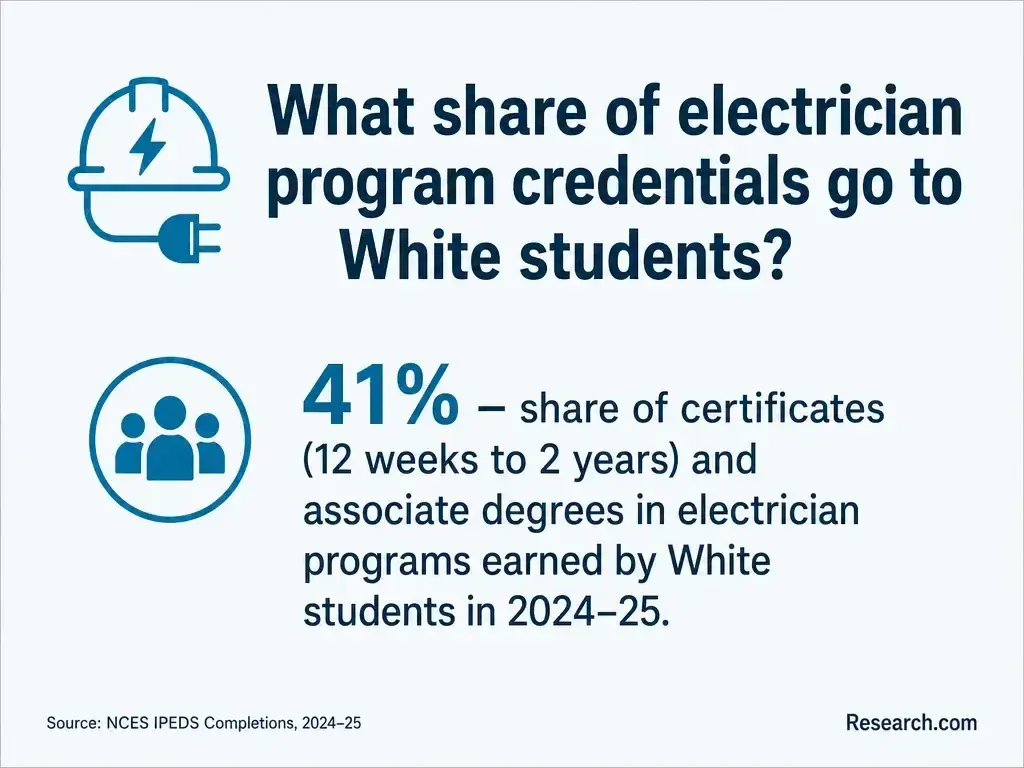
Arizona does not have a general statewide journeyman-electrician license that every employee must obtain before working under an electrical contractor. Contracting independently is different: Arizona electrical contractors must meet the Arizona Registrar of Contractors' applicable licensing requirements, including qualifying-party experience and examinations. A school certificate, optional industry credential, or apprenticeship completion does not itself confer a contractor license (Arizona Registrar of Contractors).
If self-employment is your goal, check the Registrar's current electrical license classification, experience documentation, examination, and application rules before choosing training. If your goal is employment, ask prospective employers what experience and credentials they require for the specific role. Also verify applicable permit and code requirements for the work you expect to perform; do not mistake permission to enroll in training for permission to contract.
Start with your intended first job: helper, apprentice, or worker adding a specific skill. Then compare providers on access to supervised practice and employers, not ranking position alone. A school program may be worth its cost when it fills a genuine skills gap and connects you to the next training step; a paid apprenticeship may be a stronger investment if you can enter one directly.
Use these checks before committing funds. Each resolves a common mismatch between a program's marketing and the work you want to do:
For ROI, compare likely costs and debt with wages during training, your current earnings, completion probability, and plausible post-training earnings over a realistic time horizon; discounting future earnings makes unlike timelines more comparable. Institution type alone cannot settle that calculation. A low cost online universities for job holders comparison may sharpen your questions about flexibility, but it cannot establish whether an electrical program supplies the required shop and field experience.
A common progression is helper or apprentice, then increasingly independent installation or maintenance work as supervised skills develop (U.S. Bureau of Labor Statistics). Experienced workers may specialize in controls, industrial maintenance, or supervision. Running an electrical contracting business is another path, but it brings separate Arizona Registrar of Contractors licensing obligations and business risk.
Choose early training for the next credible step, not the highest-paid role you can imagine years later. If you are comparing long-term earnings across very different careers, a highest paid masters degree comparison illustrates why pay figures must be matched to the time, cost, and experience needed to reach them; it is not an electrician-training alternative.
The U.S. Bureau of Labor Statistics projects 9.2% national employment growth for electricians from 2025 to 2035. That supports considering the occupation, but it is not a Phoenix hiring forecast or a guarantee of an apprenticeship opening. Construction schedules, facility maintenance needs, and employer hiring determine which opportunities are available locally when you finish training.
Use the national projection as a reason to investigate - not to borrow against assumed future income. Compare current local postings with each program's taught skills, and ask apprenticeship sponsors about their next intake and work-placement process. Those checks provide a more useful near-term signal than a national growth rate alone.
Investing in training is a consequential decision, so Research.com compares electrician programs with other programs serving the same occupation and location - not with unrelated schools nationwide. Only programs with completions reported to IPEDS can enter the ranking. That scope makes the comparison more consistent, but it excludes some apprenticeships and employer-sponsored routes; readers should consider those separately.
Best-program rankings assess student outcomes; earnings and return on investment; costs and debt; and quality and recognition. Program-relevant accreditation or industry recognition accounts for 20% of the score, institutional accreditation for 10%, and student support for 10%. The remaining 60% covers outcomes, earnings, and costs, with entropy-based weighting that gives more weight to indicators that distinguish programs. Most-affordable-program rankings instead score tuition, attendance cost, debt, and federal loan default rates using entropy-based weights; accreditation and other quality measures are not part of that affordability score.
To check coverage, outcomes, costs, and recognition, the Research.com team draws on the following sources. Some recognition sources apply to other trades or health programs in the broader ranking system; their inclusion does not mean they accredit electrician training.
These measures help readers narrow their choices, not establish that a program satisfies Arizona contractor-licensing rules or offers a job. Review the ranking alongside each provider's current curriculum, published charges, and apprenticeship connections. More detail on the approach appears in Research.com's methodology.
# 1 position
# 2 position
# 3 position
# 4 position
# 5 position

# 6 position
No single trade-school credential is required for every entry route. An apprenticeship or supervised employer route may be available; compare each option's instruction, work experience, and hiring requirements (U.S. Bureau of Labor Statistics).
Online study can cover theory, but electrical installation and troubleshooting require hands-on practice. Ask where a program assesses those skills and how you will obtain supervised field experience.
No. A certificate documents training, not authority to operate an electrical contracting business. Check Arizona Registrar of Contractors requirements if independent contracting is your goal.
It may be if you can enter one and need wages while learning. School can make sense when you need foundational skills first, but confirm its cost and whether a sponsor recognizes the coursework.
Ask for the exact credential, lab and field hours, itemized total cost, aid eligibility, employer or apprenticeship connections, and program-specific outcomes. Obtain answers in writing before paying.