
Most Affordable Electrical Technician Schools & Training in Pasadena for 2027
Audited and Verified:
Our Editorial and Data Verification Process
Research.com uses government datasets, official education statistics and primary institutional information to support its career and degree guides. Our review process checks factual accuracy, occupational definitions, source dates and the requirements associated with the credentials discussed.
How This Article Was Fact-Checked
Our editorial team verifies salary estimates, employment projections, education requirements and program information against original data providers and official organizations. Salary figures are checked against the relevant occupational definitions and reporting periods. Information about licensure, accreditation and required in-person training is reviewed separately.
Fact-checked and verified on:

Co-Founder and Chief Data Scientist

Reviewed by Karolina Broda
Fact-Checker and Data Verification
Choosing electrician training in Pasadena, Texas, means comparing more than tuition: a short classroom program and a paid apprenticeship can have very different costs and career outcomes. The U.S. Bureau of Labor Statistics projects 9.2% national growth in electrician employment from 2025 to 2035, making the training decision timely. This guide explains costs, credentials, Texas requirements, and local options. It also accompanies the Most Affordable Electrician Trade Schools in Pasadena for 2027 ranking, created by the Research.com team of data scientists to help students identify programs worth considering.
Key findings about electrician degrees in Pasadena
- The least expensive school is not necessarily the least expensive route to becoming an electrician: compare tuition and tools with the wages available through a paid apprenticeship.
- Texas journeyman electrician applicants generally need 8,000 hours of supervised on-the-job experience and must pass an examination; a school certificate alone does not replace that experience (Texas Department of Licensing and Regulation).
- The national median annual wage for electricians was $63,190 in May 2025, not an expected starting wage for a new trainee (U.S. Bureau of Labor Statistics).
Table of Contents
- Most Affordable Electrical Technician Schools & Training in Pasadena for 2027
- What can I expect from an electrician trade school program in Pasadena?
- Where can I work with an electrician trade school training in Pasadena?
What can I expect from an electrician trade school program in Pasadena?
Expect instruction in electrical theory, code reading, circuit calculations, wiring methods, testing, and safe tool use. The decisive question is how much of that instruction you will practice in a lab or on a worksite. A classroom certificate can prepare you to seek supervised work, but it is not the same as accumulating the experience Texas requires for a journeyman license (Texas Department of Licensing and Regulation).
For a Pasadena resident, the main pathways differ in both cash cost and access to paid experience. This comparison shows what each route is designed to provide; confirm the current schedule and credential with the provider.
| Pathway | What you receive | Best fit and main trade-off |
| Community college or career-school program | School credential and classroom or lab training; supervised employment must be arranged or verified separately | Useful for structured preparation before applying for work; compare total charges and job-placement support |
| Registered apprenticeship | Paid supervised work plus related instruction under a registered training plan | Useful if earning while training is a priority; admission and work placement may take time |
| Employer-supported entry | Supervised work, sometimes with employer-provided instruction | Useful if an employer will hire and train you; verify instruction, supervision, and how hours are documented |
San Jacinto Community College is one local school option to investigate. Compare its current electrician-related offerings with registered apprenticeships and employer training before deciding whether a separate school credential adds value to your intended role.
Where can I work with an electrician trade school training in Pasadena?
Potential settings include residential and commercial construction, industrial facilities, building maintenance, and electrical contractors serving the Houston-area labor market. Pasadena's access to industrial worksites makes it worth asking whether a program teaches motor controls, troubleshooting, and industrial safety - not just residential wiring. The worksite determines the skills an employer will expect, while Texas licensing rules determine which electrical work you may perform and under whose supervision (Texas Department of Licensing and Regulation; U.S. Bureau of Labor Statistics).
Ask prospective employers and training sponsors where trainees actually work. A program's general claim of "hands-on training" does not tell you whether its practice matches the setting you want to enter.
The U.S. Bureau of Labor Statistics reports a $63,190 national median annual wage for electricians in May 2025. This is a midpoint for employed electricians across experience levels, not a Pasadena offer or a forecast of an apprentice's pay. Before borrowing for training, compare actual local trainee job postings and apprenticeship wage schedules with the cost of the route you are considering.
Pay can change substantially with experience, overtime, specialty, and employer. For an investment decision, estimate earnings during training as well as after it: a paid route can offset costs that a shorter, unpaid school program cannot.
There is no single program length. A pre-apprenticeship or school certificate may finish well before a worker has the supervised experience required for independent journeyman-level work. Texas generally requires 8,000 hours of on-the-job training under a master electrician for journeyman licensure; qualifying applicants may apply to take the examination after reaching the state's applicable experience threshold (Texas Department of Licensing and Regulation). Ask how a provider helps students obtain, verify, and retain records of qualifying work.
A fast completion date is useful only if the credential advances your actual goal. Even quickest online degree completion programs for working adults are a different decision from completing supervised electrician work hours.
Online instruction can cover theory, calculations, and some code study. Wiring, measurement, fault-finding, equipment handling, and supervised jobsite work require in-person practice. For that reason, judge a hybrid program by its scheduled lab access and worksite arrangements, not just by how conveniently it delivers lectures.
Do not confuse an online academic shortcut, such as the fastest way to get an associate's degree online, with Texas electrician licensing eligibility. Ask an online or hybrid provider which practical activities occur in person, who supervises them, and whether any employment it helps arrange can count toward documented Texas experience (Texas Department of Licensing and Regulation).
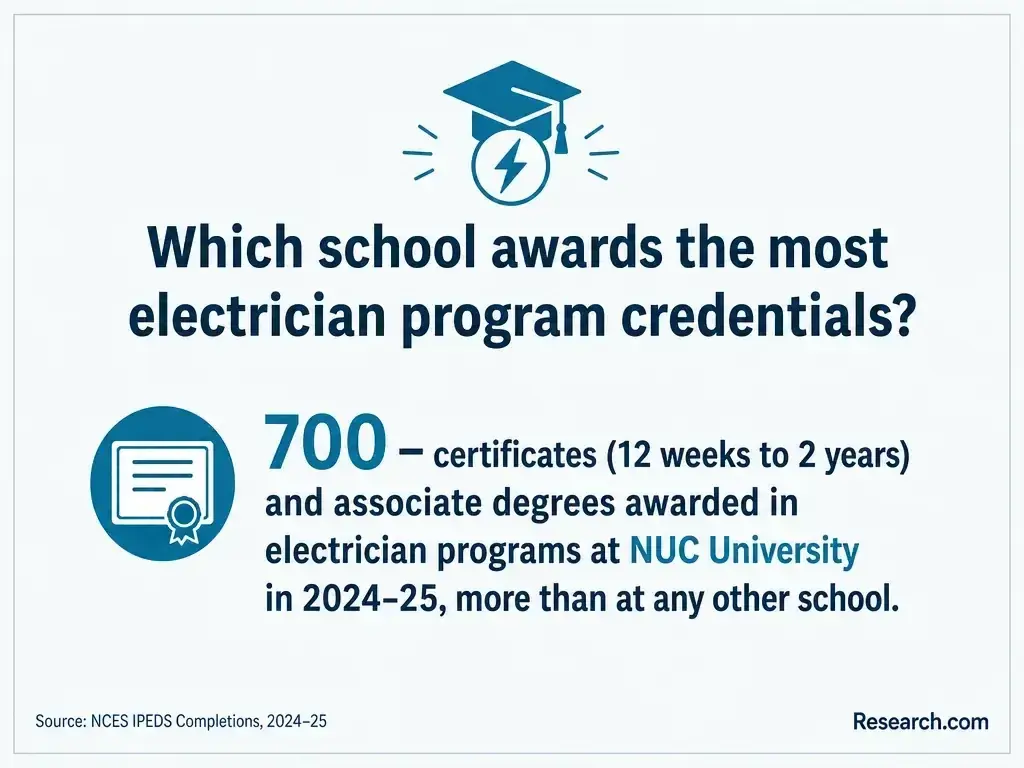
A reliable Pasadena-wide average is not available from the ranking: it covers only programs reporting completions to IPEDS, not every apprenticeship or employer route. Compare each provider's current written cost of attendance instead of treating a posted tuition figure as the price of becoming job-ready.
Request an itemized estimate covering mandatory fees, books, tools, meters, personal protective equipment, consumables, travel to labs or jobsites, and any applicable examination and licensing fees. Then subtract confirmed grants or employer contributions and account for wages earned - or foregone - during training. Federal aid eligibility depends on the institution and program; a registered apprenticeship may instead offer paid training (Federal Student Aid; U.S. Department of Labor).
That depends on the route. A school may award a certificate or associate degree; a registered apprenticeship documents completion of its training program. Neither a school award nor an apprenticeship completion document is itself a Texas electrician license. Confirm the exact credential in writing and ask employers whether they recognize it for the jobs you want (Texas Department of Licensing and Regulation; U.S. Department of Labor).
If you are weighing easiest masters against occupational training, keep the decisions separate: electrician entry depends on practical skills and Texas licensing rules, not on an unrelated academic credential.
School admissions and apprenticeship selection are separate processes. A provider may assess math readiness, require an application, or set its own age and education prerequisites; an employer or apprenticeship sponsor may also assess work readiness and availability for jobsites. Ask each provider for its current written criteria rather than assuming admission to a classroom program secures an apprenticeship position.
Texas also requires people working as electrician apprentices to hold the appropriate state apprentice license and work under the supervision required for that license (Texas Department of Licensing and Regulation). Before paying a deposit, ask who will help you identify a qualifying supervisor and document your hours.
A useful entry program connects electrical theory to work a trainee can perform safely: interpreting plans, installing wiring and raceways, making connections, testing circuits, and diagnosing faults. Safety and code instruction matter throughout, not as an optional final unit. For students targeting industrial work near Pasadena, ask to see the lab equipment and curriculum for controls and troubleshooting as well as basic wiring (U.S. Bureau of Labor Statistics; O*NET).
Compare scheduled hands-on time, lab access, and instructor feedback. Two certificates with the same title can prepare students differently if one offers substantial supervised practice and the other relies mainly on reading or videos.
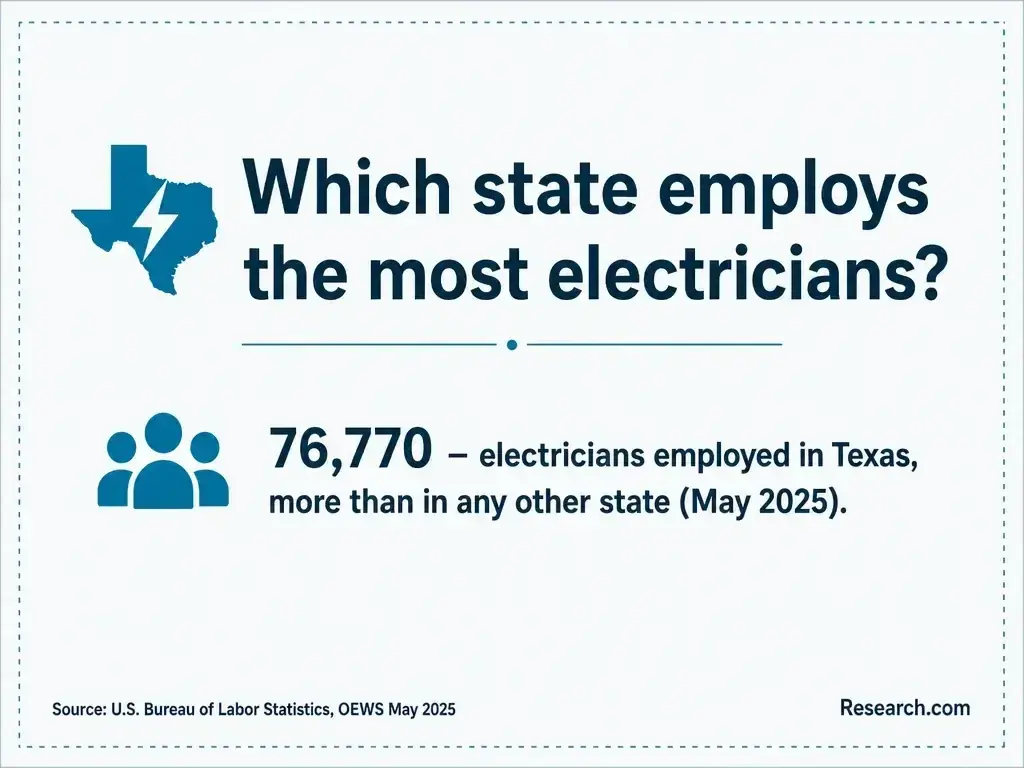
Yes, Texas regulates electrician work. A person entering supervised electrical work generally needs the appropriate apprentice license. Progression to a journeyman electrician license requires qualifying supervised experience and an examination; finishing trade school does not automatically grant either license (Texas Department of Licensing and Regulation).
Keep the distinctions clear when comparing programs: institutional accreditation concerns the school; state school authorization concerns permission to operate; apprenticeship registration concerns a training arrangement; an industry certificate documents specified learning; and an occupational license governs regulated work. Verify each claim with the relevant authority rather than accepting "accredited" as a substitute for Texas licensing eligibility.
Start with the job you want, then compare programs on their ability to get you there. A lower-priced classroom option may be worthwhile if it supplies practical preparation and a credible route into supervised work; a paid apprenticeship may be the better investment if you can secure a place and learn effectively while employed.
Use these checks before enrolling; each addresses a cost or eligibility mistake that a ranking alone cannot catch:
- Request the full credential name, curriculum, lab schedule, completion requirements, and current itemized charges.
- Ask who arranges supervised work, whether placements are paid, and how qualifying Texas experience is recorded.
- Verify institutional accreditation, school authorization, and any claimed apprenticeship registration with the relevant bodies.
- Compare grants, debt, expected earnings during training, completion prospects, and likely earnings after training over the same time horizon.
Do not let a search for phd online 1 year or any other unrelated credential distract from those occupational checks. For electrician work, practical experience and the applicable Texas license are the deciding requirements.
Training can lead first to supervised apprentice work, then - with qualifying experience and examination - to journeyman-level electrical work. Later choices may include residential service, commercial installation, industrial maintenance, controls, supervision, or a business role, subject to the license and experience required for particular work (Texas Department of Licensing and Regulation; U.S. Bureau of Labor Statistics).
Consider your preferred work setting before choosing a program. Someone exploring career options for introverts, for example, should still ask about the teamwork, customer contact, and jobsite communication involved in their intended electrician role rather than choosing solely by a career label.
The U.S. Bureau of Labor Statistics projects 9.2% growth in U.S. electrician employment from 2025 to 2035. That national projection indicates demand for the occupation, but it does not measure Pasadena openings or guarantee a local placement. Compare current Houston-area vacancies, apprenticeship recruitment, commute distances, and the types of work employers advertise before choosing a specialty.
For this market, training that develops demonstrable troubleshooting and safe worksite skills may be more useful than a credential title alone. Ask providers for recent, verifiable placement information specific to electrician roles - not all construction jobs combined.
Most Affordable Electrical Technician Schools & Training in Pasadena for 2027
Investing in electrician training is an important decision. Research.com created the affordability ranking to help readers compare programs against other programs in the same occupation and location, rather than against unrelated schools. Only programs with completions reported to IPEDS are eligible; a registered apprenticeship or other provider absent from IPEDS should not be assumed to be unavailable or inferior.
The most affordable ranking scores tuition, cost of attendance, median student debt, and federal loan default rate. An entropy-based method gives more weight to measures that distinguish programs from one another. Accreditation and other quality indicators are not part of this affordability score. Research.com's separate best-programs methodology also considers outcomes, earnings, student support, and recognition. The team draws on the following sources to check coverage and the relevant measures; several occupation-specific sources in the broader methodology concern other trades or health programs, not electrician approval:
- IPEDS database - reported completions and institutional data.
- National Center for Education Statistics - federal education data and definitions.
- College Scorecard database - available cost, debt, and outcome measures.
- Peterson's database - supplemental institutional information.
- Commission on Accreditation of Allied Health Education Programs - recognition information for relevant allied-health occupations, not electrician licensure.
- Accrediting Bureau of Health Education Schools - recognition information for relevant health-school programs, not electrician licensure.
- Commission on Dental Accreditation - recognition information for relevant dental programs, not electrician licensure.
- Dental Assisting National Board - credential information for relevant dental-assisting programs, not electrician licensure.
- National Center for Construction Education and Research - construction-training credentials where relevant.
- Apprenticeship.gov Partner Finder - apprenticeship options that readers can compare separately with ranked schools.
Use the ranking to narrow your cost comparison, then confirm the current program price, practical training, and Texas licensing pathway directly with each provider. More detail on the ranking process appears in Research.com's methodology.
# 2 position

Frequently asked questions about electrician programs in Pasadena
Is trade school required to become an electrician in Texas?
No single trade-school certificate substitutes for Texas's licensing requirements. Supervised work through an employer or apprenticeship can be an alternative route; verify the license and experience rules for your intended role with the Texas Department of Licensing and Regulation.
Can I become a licensed electrician through an online-only program?
Online theory may help, but it cannot replace required supervised on-the-job experience. Ask any provider how in-person skills and qualifying Texas work hours are obtained and documented (Texas Department of Licensing and Regulation).
Is an apprenticeship cheaper than trade school?
It may reduce upfront school costs and provide wages while you train. Compare the sponsor's fees, required tools, travel, pay progression, and time to entry with a school program's full cost before deciding.
Does an affordable ranking include every Pasadena training option?
No. This ranking includes only programs with completions reported to IPEDS. Compare registered apprenticeships and employer-sponsored options separately.
What should I ask San Jacinto Community College before applying?
Ask which electrician-related credentials are currently offered, what labs and fees are required, and whether the program helps students secure supervised work that can be documented for Texas licensing.
- U.S. Bureau of Labor Statistics - Electricians
Used to verify salary, employment outlook, and typical education requirements.
https://www.bls.gov/ooh/construction-and-extraction/electricians.htm - NCCER - Accredited Training
Used to verify programmatic accreditation or industry recognition of programs.
https://www.nccer.org/ - O*NET OnLine - Electricians
Used to verify common responsibilities, skills, work settings, and education expectations.
https://www.onetonline.org/link/summary/47-2111.00 - San Jacinto Community College - official website
Official school website (programs, tuition, admissions).
https://www.sanjac.edu/