
# 1 position
Most Affordable Electrical Technician Schools & Training in Lake Charles for 2027
Audited and Verified:
Our Editorial and Data Verification Process
Research.com uses government datasets, official education statistics and primary institutional information to support its career and degree guides. Our review process checks factual accuracy, occupational definitions, source dates and the requirements associated with the credentials discussed.
How This Article Was Fact-Checked
Our editorial team verifies salary estimates, employment projections, education requirements and program information against original data providers and official organizations. Salary figures are checked against the relevant occupational definitions and reporting periods. Information about licensure, accreditation and required in-person training is reviewed separately.
Fact-checked and verified on:

Co-Founder and Chief Data Scientist

Reviewed by Karolina Broda
Fact-Checker and Data Verification
Choosing electrician training in Lake Charles means comparing more than tuition: a low-cost classroom credential may not provide the paid experience needed to advance in the trade. The U.S. Bureau of Labor Statistics projects 9.2% national growth in electrician employment from 2025 to 2035. For career starters and workers changing fields, this guide compares costs, practical training, apprenticeships, credentials, and Louisiana rules. It accompanies the Most Affordable Electrician Trade Schools in Lake Charles for 2027 ranking, created by the Research.com team of data scientists to help students make an informed choice about programs worth considering.
Key findings about electrician degrees in Lake Charles
- Compare school with paid training: The affordability ranking includes only programs reporting IPEDS completions; registered apprenticeships and employer training may offer different costs and wages while learning.
- Plan beyond graduation: Electrician apprenticeships commonly combine about 2,000 hours of paid work and 144 hours of related instruction annually, although a sponsor's registered standards control its actual requirements (U.S. Department of Labor).
- Use wages as a benchmark, not a promise: The national electrician median was $63,190 in May 2025; that figure covers experienced workers as well as newer electricians and is not a Lake Charles starting wage (U.S. Bureau of Labor Statistics).
Table of Contents
- Most Affordable Electrical Technician Schools & Training in Lake Charles for 2027
- What can I expect from an electrician trade school program in Lake Charles?
- Where can I work with an electrician trade school training in Lake Charles?
What can I expect from an electrician trade school program in Lake Charles?
Expect a mix of electrical theory and supervised practice: reading plans, using test instruments, installing raceway and wiring, troubleshooting circuits, and working safely around energized systems. A school program provides structured preparation, but its credential alone does not replace the work experience required by an employer, apprenticeship sponsor, or applicable licensing authority.
The main pathways differ in what students earn while training and how much jobsite experience is built in. This comparison helps identify the route that fits your goal:
| Pathway | Training and credential | Best fit and key limitation |
| Technical college certificate or diploma | School coursework and labs; award depends on the program | Useful for learning fundamentals before seeking electrical work; confirm whether graduates receive apprenticeship credit. |
| Registered apprenticeship | Paid supervised work plus related instruction under a sponsor's standards | Strong fit for applicants ready for employment and a longer training commitment; openings and entry requirements vary. |
| Employer-sponsored entry route | Paid helper or trainee work, sometimes paired with formal classes | Can reduce upfront tuition; ask how training is documented and whether it leads to a recognized credential. |
In Lake Charles, industrial facilities and contractors can require skills beyond residential wiring, including motor controls, instrumentation-adjacent work, and strict site safety practices. Ask whether a program's labs reflect the work you want and whether it has documented routes into local jobsites. SOWELA Technical Community College is one school-based option to investigate; confirm its current electrical offerings directly rather than assuming every electrical credential has the same curriculum.
Where can I work with an electrician trade school training in Lake Charles?
Potential workplaces include residential and commercial electrical contractors, industrial maintenance operations, construction projects, and facilities teams. The Lake Charles area's petrochemical and energy-related activity makes industrial work a meaningful option, but a school lab alone may not prepare a new entrant for every plant's equipment, safety procedures, or hiring requirements. Compare program instruction and employer connections with the setting you actually want.
Some trainees begin as helpers or apprentices rather than independent electricians. A contractor may value installation experience; a plant maintenance team may also look for troubleshooting, motor-control knowledge, and shift availability. Ask prospective employers which entry-level roles accept a school credential and which require documented work experience.
A verified, comparable Lake Charles wage figure is not available here, so a local starting salary would be misleading. The national median annual wage for electricians was $63,190 in May 2025 (U.S. Bureau of Labor Statistics). It is a benchmark for the occupation as a whole - not a forecast for a newly trained worker, a particular industrial assignment, or local take-home pay.
For a useful local comparison, request current pay ranges for helper and first-year apprentice positions from contractors and apprenticeship sponsors. Check whether quoted rates include overtime, travel, benefits, or shift premiums; a higher advertised rate may come with irregular hours or a longer commute. Compare likely earnings during training as well as after it when deciding whether tuition-funded school or a paid route makes financial sense.
There is no single Lake Charles program length. A short certificate can introduce electrical fundamentals, while a longer diploma can allow more lab practice; the current catalog and course schedule determine the actual completion time. Part-time attendance may make training workable alongside a job but extends the calendar time before completion.
A registered apprenticeship is a different commitment: programs commonly involve several years of paid work alongside classroom instruction. U.S. Department of Labor guidance describes about 2,000 hours of on-the-job learning and 144 hours of related instruction per year as a common model, not a universal rule. Ask a sponsor for its registered standards and ask a school whether completed courses can count toward related instruction. Never assume a certificate shortens an apprenticeship without written confirmation.
Online instruction can suit electrical calculations, code study, and introductory theory. It cannot, by itself, demonstrate safe installation, instrument use, troubleshooting, or supervised jobsite work. A hybrid program may be practical for a working student if required labs are accessible and scheduled clearly; a fully online course is better treated as a supplement unless its provider can document how practical competencies are assessed.
For students commuting across the Lake Charles area, the useful question is not simply how many classes are online. Ask where labs meet, how often attendance is required, who supplies tools, and whether the instruction is accepted by an intended apprenticeship sponsor or employer. Online completion alone should not be assumed to meet any applicable local licensing or employer requirement.
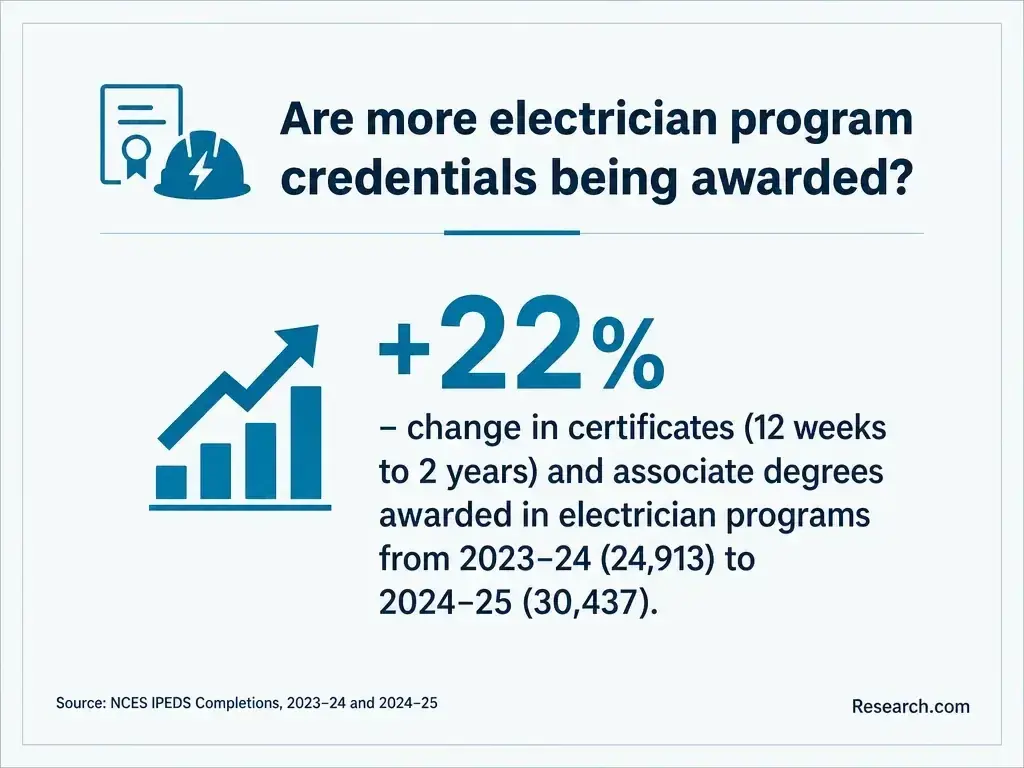
A reliable Lake Charles-wide average is not established here: school programs, paid apprenticeships, and employer training charge and report costs differently. Even among schools, published tuition may exclude fees and supplies. Request a current, itemized estimate for the specific SOWELA Technical Community College program or other training route you are considering, rather than treating a ranking position as a final price.
Your estimate should cover the full cost of becoming ready for entry-level work. These categories expose expenses that a tuition-only comparison can miss:
- School charges: tuition, mandatory fees, books, and any separately billed lab materials.
- Work readiness: required hand tools, testing equipment, protective gear, and any site-specific preparation.
- Access and time: travel to classes or worksites, scheduling constraints, and earnings forgone during unpaid training.
- Offsets: grants or eligible aid, employer-paid supplies, and apprentice wages where available.
Ask the school whether its particular credential is eligible for federal student aid; eligibility does not automatically extend to every short program (Federal Student Aid). Louisiana residents can also check current eligibility for state assistance, including applicable TOPS Tech awards, with the Louisiana Office of Student Financial Assistance. For return on investment, weigh net cost, borrowing, completion prospects, earnings while training, and realistic post-training pay over the time you expect to work - not just the lowest tuition figure.
The award depends on the route. A school may award a certificate or diploma for completing its curriculum; a registered apprenticeship documents completion under its sponsor's approved standards. An employer training record or an industry credential such as NCCER is different again. Ask for the exact award name before enrolling and whether local employers or apprenticeship sponsors recognize it (National Center for Construction Education and Research; U.S. Department of Labor).
Institutional accreditation concerns the school; state authorization concerns permission to operate; industry credentials assess specified skills; and occupational licensing governs work where required. None automatically substitutes for the others. A school credential should be evaluated for its practical skills and documented opportunities for work or apprenticeship credit, not for its title alone.
Requirements vary by school, sponsor, and employer. A school may ask for an application, proof of prior education, placement information, or prerequisites for electrical math. An apprenticeship sponsor may also assess aptitude, work eligibility, and ability to meet jobsite conditions. Check current requirements directly before paying an application fee; admission to a class is not admission to an apprenticeship.
Because electrical work involves ladders, tools, and safety-sensitive tasks, ask about physical demands and any employer-required screening. If you have construction experience or prior technical coursework, request a written evaluation of transfer credit, prior learning, or possible advanced standing. The receiving school or apprenticeship sponsor - not the school you previously attended - decides what it will accept.
Foundational training typically covers electrical theory, circuit calculations, blueprint reading, wiring methods, code use, and safe testing. Lab time matters because students must apply those concepts to equipment, identify faults, and follow procedures rather than merely recognize answers on a screen (U.S. Bureau of Labor Statistics, Occupational Outlook Handbook).
For industrial ambitions in the Lake Charles area, look closely at coverage of motors, controls, troubleshooting, and workplace safety. Ask to see the course sequence and lab descriptions: two programs with similar credential names may devote very different amounts of supervised time to these skills. Instruction in a code standard or safety course is valuable, but it is not the same as documented jobsite experience or authorization to perform regulated work independently.
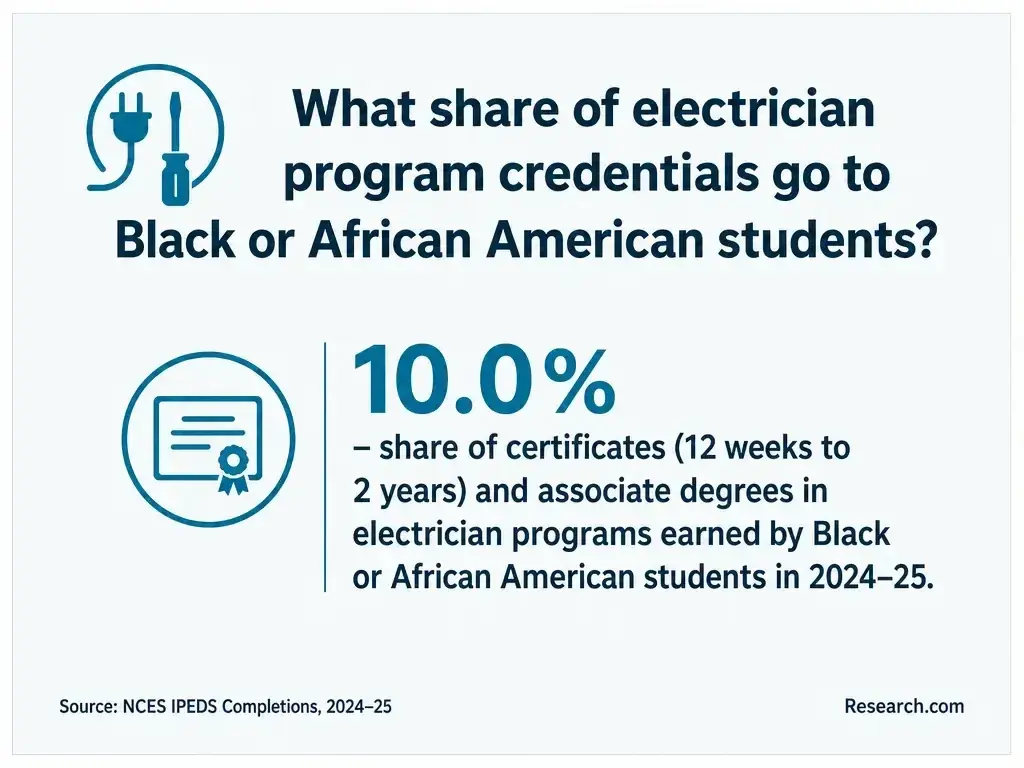
Requirements depend on the work and who is responsible for it. Louisiana regulates applicable electrical contracting through the Louisiana State Licensing Board for Contractors; completing an electrician program does not itself grant an electrical contractor license (Louisiana State Licensing Board for Contractors). Requirements for an individual working under a contractor, and any city or parish permits or trade credentials, must be checked separately with the authority overseeing the intended job.
Before choosing training, ask the Louisiana board and the relevant Lake Charles or Calcasieu Parish permitting office which rules apply to your intended role. Then ask a prospective employer or apprenticeship sponsor what supervised experience it requires. NCCER credentials and safety training may be useful hiring signals, but they do not replace a required contractor license, permit, examination, or documented experience (National Center for Construction Education and Research; Louisiana State Licensing Board for Contractors).
Start with the job you want - residential installation, commercial construction, or industrial maintenance - then compare programs against its practical demands. The least expensive eligible school in a ranking may be a good choice, but only if its schedule, labs, credential, and route into paid work fit your goal. A paid apprenticeship may be the stronger investment for someone ready to enter a jobsite; school-based preparation may suit someone who needs fundamentals before applying.
Use these questions to test claims that a program is "affordable" or "career-ready":
- What is the full current cost, including fees, tools, protective gear, and travel, after aid I actually qualify for?
- How much supervised lab or jobsite practice is included, and what equipment will I use?
- What exact credential will I receive, and will an apprenticeship sponsor give written credit for it?
- Is the institution appropriately accredited or authorized, and which separate occupational requirements will still apply to my intended work?
- What completion and placement information can the provider document for this specific program?
A red flag is an assertion that a short course guarantees electrician pay, independent work, or apprenticeship credit. Verify each claim with the employer, sponsor, or regulator that makes the decision. Also compare training schedules against your ability to finish: low tuition has limited value if attendance or commuting makes completion unlikely.
A common progression is electrical helper or apprentice, then more independent installation or maintenance work as supervised experience grows. With further experience, workers may specialize in commercial systems, industrial controls, or troubleshooting; some move into supervision or contracting. The requirements for taking responsibility for contracted work are distinct from those for an employee working under a contractor (U.S. Bureau of Labor Statistics, Occupational Outlook Handbook; Louisiana State Licensing Board for Contractors).
Choose initial training with that progression in mind. A student targeting industrial maintenance should seek relevant control and diagnostic practice, while someone seeking a contractor career should investigate the board's later experience, examination, and licensing requirements early. An optional industry credential can support a particular skill claim, but it is not a shortcut past supervised experience or applicable regulation.
National electrician employment is projected to grow 9.2% from 2025 to 2035 (U.S. Bureau of Labor Statistics, Employment Projections). That supports investigating the trade, but a national projection does not measure openings in Lake Charles or guarantee a position after training.
Local opportunity will depend on contractor hiring, construction schedules, and maintenance needs at area facilities. Before paying for a program, check current helper and apprentice postings, speak with apprenticeship sponsors, and ask employers which practical skills they expect on day one. This gives a more useful local demand test than relying on a national growth figure alone.
Most Affordable Electrical Technician Schools & Training in Lake Charles for 2027
Investing in electrician training is an important decision, so Research.com designed its affordability ranking to help readers compare programs against other options in the same occupation and location. Only programs with completions reported to the Integrated Postsecondary Education Data System (IPEDS) are eligible. The ranking therefore does not cover every apprenticeship, employer training program, or other provider a Lake Charles applicant might consider.
The most affordable ranking scores costs and debt only: tuition, cost of attendance, median student debt, and federal loan default rate. It distributes weights using an entropy-based method, which assigns more weight to indicators that differ more across programs. Accreditation, student support, and other quality measures are not part of this affordability score. Readers should assess those separately rather than interpreting rank as proof of training quality or licensing eligibility.
For context, Research.com's separate best programs rankings consider student outcomes, earnings and return on investment, costs and debt, and quality and recognition. Their weights assign 20% to relevant programmatic accreditation or industry recognition, 10% to institutional accreditation, 10% to student support, and 60% - distributed by the entropy-based method - to student outcomes, earnings, and costs. The Research.com team uses the following sources to check the quality, credibility, and accuracy of its rankings; some cover occupations other than electrician training:
- IPEDS database - program completions, institutional characteristics, and reported education data.
- National Center for Education Statistics - federal education-data definitions and context.
- College Scorecard database - available cost, debt, and outcome measures.
- Peterson's database - supplemental institutional information.
- Commission on Accreditation of Allied Health Education Programs (CAAHEP) - occupation-specific recognition information where applicable; not an electrician accreditor.
- Accrediting Bureau of Health Education Schools (ABHES) - health-school accreditation information where applicable; not an electrician accreditor.
- Commission on Dental Accreditation (CODA) - dental-program accreditation information where applicable; not an electrician accreditor.
- Dental Assisting National Board (DANB) - dental-assisting credential information where applicable; not an electrician credentialing body.
- National Center for Construction Education and Research (NCCER) - construction-training and industry-credential information relevant to some electrical programs.
- Apprenticeship.gov Partner Finder - registered-apprenticeship pathways to compare with school-based training.
This approach gives readers a starting point for comparing reported school costs, not a complete list of local training routes. Before enrolling, compare the ranked options with paid apprenticeships and verify each program's current price, hands-on instruction, and fit for your intended work. More detail on the ranking process appears on the Research.com methodology page.
Frequently asked questions about electrician programs in Lake Charles
Is trade school required to become an electrician in Lake Charles?
Not necessarily. Paid apprenticeship and employer training can be routes into the trade. Compare their entry requirements and supervised instruction with school programs, and verify the rules for your intended work with the relevant Louisiana and local authorities.
Is a certificate the same as an apprenticeship?
No. A certificate documents completion of a school program; a registered apprenticeship combines paid work and related instruction under a sponsor's standards. Ask the sponsor whether it grants any credit for prior coursework (U.S. Department of Labor).
Can I complete electrician training entirely online?
You can study some theory online, but installation, testing, and supervised jobsite skills require in-person practice. Confirm where and when a hybrid program conducts its labs.
What is the cheapest way to start?
Compare the net cost of an eligible school program with paid apprenticeship or employer-sponsored entry. Include tools, travel, aid, and wages during training; the lowest advertised tuition may not be the lowest total cost.
Does graduating qualify me to work independently?
No. A school award does not automatically satisfy an employer's experience standards or Louisiana contractor-licensing and applicable local requirements. Check the rules for the specific work you plan to do (Louisiana State Licensing Board for Contractors).
- U.S. Bureau of Labor Statistics - Electricians
Used to verify salary, employment outlook, and typical education requirements.
https://www.bls.gov/ooh/construction-and-extraction/electricians.htm - NCCER - Accredited Training
Used to verify programmatic accreditation or industry recognition of programs.
https://www.nccer.org/ - O*NET OnLine - Electricians
Used to verify common responsibilities, skills, work settings, and education expectations.
https://www.onetonline.org/link/summary/47-2111.00 - SOWELA Technical Community College - official website
Official school website (programs, tuition, admissions).
https://www.sowela.edu/