# 1 position
Paul D Camp Community College - Electrician.
certificate or diploma

Audited and Verified:
Our Editorial and Data Verification Process
Research.com uses government datasets, official education statistics and primary institutional information to support its career and degree guides. Our review process checks factual accuracy, occupational definitions, source dates and the requirements associated with the credentials discussed.
How This Article Was Fact-Checked
Our editorial team verifies salary estimates, employment projections, education requirements and program information against original data providers and official organizations. Salary figures are checked against the relevant occupational definitions and reporting periods. Information about licensure, accreditation and required in-person training is reviewed separately.
Fact-checked and verified on:

Co-Founder and Chief Data Scientist

Reviewed by Karolina Broda
Fact-Checker and Data Verification
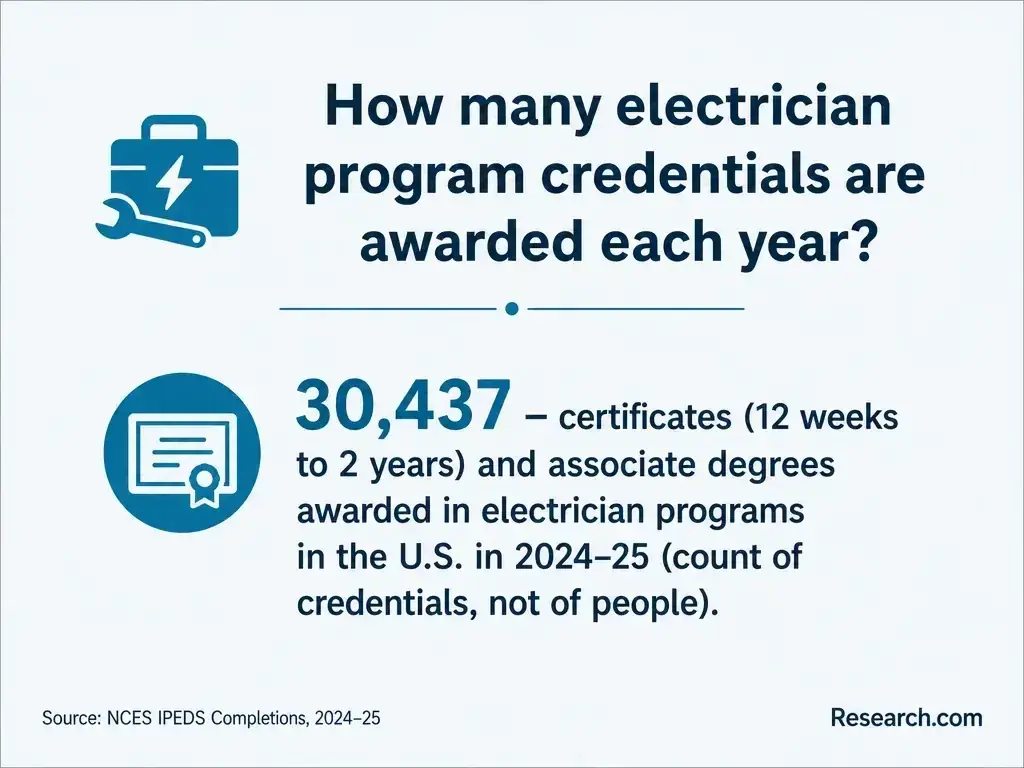
The cheapest electrician program is not necessarily the least expensive route to a Virginia license. You also need supervised experience, practical skills, and a way to pay for training. The U.S. Bureau of Labor Statistics reports a $63,190 national median annual wage for electricians in May 2025, making the choice worth examining carefully. The Research.com team of data scientists created the Most Affordable Electrician Trade Schools in Virginia for 2027 ranking to help students identify programs worth considering. This guide explains the costs, pathways, and licensing questions behind that decision.
Expect a mix of electrical theory and hands-on practice: reading plans, calculating loads, installing circuits, testing equipment, and working safely under applicable electrical codes. A lab can teach those fundamentals, but it does not replace the documented field experience needed for many Virginia licensing routes. Ask how many hours take place in a shop, who supervises the work, and whether the program connects students with employers.
The main pathways serve different starting points. The comparison below separates the credential you may earn from the experience you still need.
| Pathway | What it provides | Best fit and limitation |
| Pre-apprenticeship or short certificate | Introductory instruction and, where offered, lab practice | Useful for testing the trade or qualifying for entry-level interviews; verify whether instruction counts toward a licensing route. |
| Community college certificate or diploma | Structured coursework and practical labs | Fits students who want scheduled instruction before or alongside work; a school award is not a journeyman license. |
| Registered apprenticeship | Paid, supervised work paired with related instruction | Fits students ready to work while learning; entry depends on a sponsor's hiring process, and license eligibility must still be verified. |
Private career schools and employer training can also be options. Compare their documented instruction, work placement arrangements, and total charges on the same basis - not by credential name alone.
Training may lead to supervised work with electrical contractors, building-maintenance teams, manufacturers, utilities, or specialized installers. Northern Virginia's large commercial and data-center market, Hampton Roads' maritime and industrial employers, and construction and maintenance work elsewhere create different travel and specialization demands. An opening labeled "electrician" may require experience or licensure that a new certificate holder does not yet have.
Search for employers willing to hire an apprentice or entry-level electrical worker, and ask whether they provide supervision that can be documented for the Virginia Board for Contractors. If you are comparing electrical work with other hands-on occupations, this guide to careers you can pursue via trade schools offers broader context. The BLS Occupational Outlook Handbook describes electricians' construction, installation, maintenance, and repair duties.
Virginia pay depends on the locality, employer, specialty, and stage of training. The U.S. Bureau of Labor Statistics reports a $63,190 national median annual wage for electricians for May 2025. That is the midpoint for employed electricians across experience levels - not a Virginia apprentice wage or a promised graduate salary. Check the latest BLS state and metropolitan occupational wage estimates for places where you could realistically commute, then compare actual apprentice and entry-level job postings.
For an investment decision, compare likely earnings during training as well as afterward. A lower-tuition program may cost more overall if it delays paid work; an apprenticeship wage may offset training costs but start below the occupation-wide median.
A short introductory certificate can finish well before an apprenticeship, while a more extensive college program takes longer; schedules and clock hours vary by provider. The distinction that matters most is program completion versus license eligibility. The Virginia Board for Contractors identifies a route combining four years of practical experience with 240 hours of formal vocational training for journeyman electrician examination eligibility, alongside other qualifying routes. Confirm the current rules and how a provider documents both components before enrolling.
Be skeptical of a course marketed as a complete shortcut to independent electrical work. Even a fast credential cannot substitute for required supervised experience. A top associate's degree online in 6 months list, for example, should not be used to estimate the time needed for electrician licensing.
Online or hybrid instruction can make code concepts, calculations, and some assignments easier to fit around work. Campus shops and employer worksites provide the physical practice needed to install, troubleshoot, test, and safely handle electrical equipment. For a rural student, a hybrid timetable may reduce classroom trips, but travel to labs and supervised jobs can remain a major expense.
Ask an online provider exactly where practical assessments occur, who supervises them, and what records it supplies for Virginia licensing review. Do not assume remote coursework supplies qualifying field experience or that an online certificate alone meets board requirements.
There is no single reliable price that represents Virginia's mix of short certificates, college programs, private training, and paid apprenticeships. An advertised tuition figure also omits costs that may differ sharply between a nearby campus and a distant worksite. Request a written, program-specific estimate before comparing options.
Build a job-ready budget that includes mandatory fees, books, tools, testing equipment, safety gear, consumables, transportation, and any examination or license-application charges. Then subtract confirmed grants, employer contributions, or apprenticeship earnings. Virginia's G3 and FastForward initiatives may support eligible training, but program and student eligibility differ; verify the current offer with the provider and Virginia Community College System. Federal aid likewise depends on the institution, program, and student - not merely on a school's online availability. A list of online colleges that accept FAFSA does not establish aid eligibility for a particular electrician certificate.
To judge return on investment, account for completion likelihood, debt, earnings forgone during study, likely apprentice wages, later earnings, and how long you expect to work in the trade. Compare those over the same time horizon rather than choosing solely by sticker price.
A school may award a certificate, diploma, or associate degree, depending on its program. A registered apprenticeship documents completion of an approved work-and-instruction program. These are different credentials, and none should be described as a Virginia journeyman or master electrician license. Ask for the exact award name and a transcript or record showing instructional hours; keep records of supervised work separately.
Institutional accreditation concerns the school, while state authorization concerns its permission to operate. Industry recognition, apprenticeship registration, and occupational licensure answer different questions. Verify each claim relevant to your goal rather than accepting "accredited" as proof that a program satisfies Virginia licensing requirements.
Requirements vary. A college or career school may assess reading and math readiness or set prerequisites for a particular course. An apprenticeship sponsor may have its own application, interview, aptitude, driving, and employment requirements. Check the current provider or sponsor notice rather than assuming that admission to one route qualifies you for another.
Before applying, ask whether you need to obtain tools or safety gear, whether classes meet around work hours, and whether the provider helps applicants find supervised employment. If prior electrical work or related instruction may count, ask the provider about advanced standing and the Virginia Board for Contractors about documentation for its eligibility rules. Do not pay for repeated training until you know what can be recognized.
Useful curricula connect electrical math and circuit theory to actual installation and troubleshooting. Look for practice interpreting drawings, selecting materials, using meters, following applicable code, and recognizing shock, arc-flash, and other jobsite hazards. The BLS Occupational Outlook Handbook identifies these installation, testing, repair, and safety tasks as central to electricians' work.
Course titles are less informative than demonstrated practice. Ask to see the lab sequence and assessment methods: Can students build and test circuits, identify faults, and explain safe procedures, or do they only watch demonstrations? For a student targeting industrial maintenance or complex commercial systems, ask whether those applications appear in the curriculum or require later employer training.
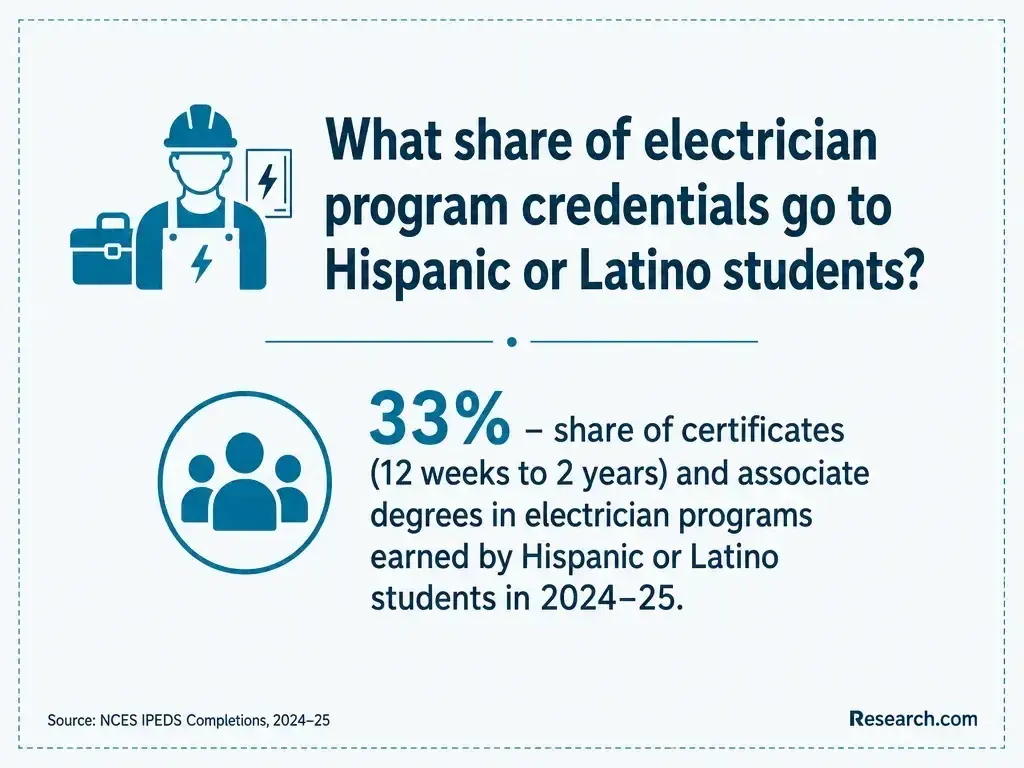
Virginia regulates journeyman and master electrician licensing through its Board for Contractors. A person can enter supervised electrical work without already holding a journeyman license, but should not assume a school certificate authorizes independent, licensed work. The board sets experience and education eligibility routes and examination requirements; verify the current route that matches your documented training before committing to a program (Virginia Department of Professional and Occupational Regulation, Board for Contractors).
Registered apprenticeship status, optional industry certificates, and a state occupational license are not interchangeable. If a provider advertises "license preparation," ask which board requirements its instruction satisfies, who verifies work experience, and whether examination and application costs are included. Licensing rules in another state should not be assumed to apply if you plan to work in Virginia.
Start with the job you want and work backward. A short course may be worthwhile if you need foundational skills before applying to an apprenticeship; it is a poor fit if you expect the course alone to qualify you for a journeyman license. A paid apprenticeship may be financially stronger for someone ready for full-time fieldwork, while a scheduled college program may better suit someone who needs to build skills before approaching employers.
Use the same checks for every shortlisted option:
A low-cost ranking helps identify candidates, not the right credential for every goal. Conversely, material about the easiest bachelors degree describes a different educational route and should not be mistaken for an electrician licensing plan.
A realistic progression is entry-level supervised work, documented experience and instruction, then a journeyman examination and license when eligible. With further qualifying experience and examination, a worker may pursue the master electrician credential (Virginia Board for Contractors). Electrical workers can also build expertise in commercial installations, industrial controls, maintenance, or other employer-specific work. Supervisory duties and operating a contracting business involve additional responsibilities; check applicable Virginia contractor rules before offering services independently.
Choose initial training that matches the first job you can obtain, then ask employers what additional skills their specialty requires. Lists of bachelor's degrees with highest earning potential address a different decision; they do not predict electrician wages or replace this trade's experience and licensing steps.
The U.S. Bureau of Labor Statistics projects 9.2% growth in electrician employment nationally from 2025 to 2035. That indicates a favorable national outlook, not a guarantee of work in a chosen Virginia county. Construction schedules, maintenance hiring, and access to an apprenticeship sponsor matter more to an individual applicant than the national projection alone.
Compare current postings and apprenticeship openings within your commuting range before paying for training. In a smaller labor market, being willing to travel for supervised work may matter as much as finding a nearby classroom. Favor a provider that can show credible local employer relationships over one that cites national growth without explaining how students enter the field.
Education is a significant investment. To make the affordability ranking useful and credible, Research.com compares electrician programs with other programs in the same occupation and location, using reported costs and debt rather than tuition alone. Only programs with completions reported to IPEDS are eligible; a registered apprenticeship or other provider absent from the ranking may still be a valid option.
The most affordable ranking considers tuition, cost of attendance, median student debt, and federal loan default rates. Weights are assigned through an entropy-based method, which gives more weight to measures that vary more across eligible programs. Accreditation, student support, and other quality measures are not part of the affordability score. Readers should check those separately, along with hands-on training and Virginia licensing relevance.
The team used the following data sources in developing its trade-program rankings. Some sources cover occupations other than electrical work; their inclusion here does not make those credentials electrician qualifications.
The ranking can narrow a cost-conscious shortlist, but it cannot establish that a program supplies qualifying experience or leads to a license. See Research.com's methodology for more on how the rankings are created.
# 1 position
# 2 position

# 3 position
# 4 position
# 5 position
# 6 position
Electrician
Delivery mode: On Campus (May Include Online Courses)
82.36
/ 100
Final score
Accreditation
The school is listed by NCCER as a training center for this trade and listed on Apprenticeship.gov as a Registered Apprenticeship partner. Institutional accreditation from Southern Association of Colleges and Schools Commission on Colleges.
Germanna Community College earned a Research.com Affordability Score of 82.36/100, with $5,500 median student debt among the verified supporting factors. The school is listed by NCCER as a training center for this trade and listed on Apprenticeship.gov as a Registered Apprenticeship partner.
# 7 position
# 8 position

# 9 position

# 10 position
# 11 position
# 12 position
# 13 position
# 14 position

# 15 position

# 16 position

# 17 position
# 18 position
Electrician
Delivery mode: On Campus (May Include Online Courses)
39.95
/ 100
Final score
Accreditation
The school is listed by NCCER as a training center for this trade. Institutional accreditation from Southern Association of Colleges and Schools Commission on Colleges.
Mountain Empire Community College received a Research.com Affordability Score of 39.95/100. The school is listed by NCCER as a training center for this trade.
# 19 position

Not necessarily. A registered apprenticeship combines employment with related instruction. A preparatory program can help you build skills, but ask sponsors whether they recognize it before paying for it (Apprenticeship.gov; Virginia Works).
No. Virginia's Board for Contractors evaluates qualifying education, documented experience, and examination requirements for its electrician licenses. A school award is not the license.
Online classes can cover some theory, but electrical installation and supervised work require in-person practice. Ask where practical training occurs and how experience is recorded.
Only if it also provides relevant instruction, practical training, and a workable route into supervised employment. Compare total costs and earnings during training, not tuition alone.
Request the total price, exact credential, instructional and lab hours, employer connections, and written details of how the program relates to your intended Virginia licensing route. Verify claims with the board rather than relying solely on admissions materials.