# 1 position
Refrigeration School Inc - Electrician.
certificate or diploma

Audited and Verified:
Our Editorial and Data Verification Process
Research.com uses government datasets, official education statistics and primary institutional information to support its career and degree guides. Our review process checks factual accuracy, occupational definitions, source dates and the requirements associated with the credentials discussed.
How This Article Was Fact-Checked
Our editorial team verifies salary estimates, employment projections, education requirements and program information against original data providers and official organizations. Salary figures are checked against the relevant occupational definitions and reporting periods. Information about licensure, accreditation and required in-person training is reviewed separately.
Fact-checked and verified on:

Co-Founder and Chief Data Scientist

Reviewed by Karolina Broda
Fact-Checker and Data Verification
Choosing electrician training in Arizona means deciding whether to pay for school, seek a paid apprenticeship, or combine the two. The stakes are real: the U.S. Bureau of Labor Statistics projects 9.2% growth in electrician employment nationally from 2025 to 2035. This guide compares training, costs, credentials, and Arizona's licensing rules. It also accompanies a Best Electrician Trade Schools in Arizona for 2027 ranking created by the Research.com team of data scientists to help students make an informed choice about programs worth considering.
Expect instruction in electrical safety, circuits, blueprint reading, conduit, wiring, testing, and code use, followed by supervised practice on equipment. A classroom-only course may build knowledge, but it cannot replace the jobsite experience needed to become a capable electrician. Ask how many hours are spent wiring, troubleshooting, and testing in a lab or at a worksite - not just how many hours appear on the course schedule.
The pathways below solve different problems. The credential in the middle column is not, by itself, permission to operate an electrical contracting business.
| Pathway | Typical result | Best fit and principal trade-off |
| Pre-apprenticeship | Preparation or completion credential | Helps a newcomer test the trade and seek an apprenticeship; verify whether a sponsor recognizes the training. |
| Career-school or community-college certificate | School certificate | Offers structured fundamentals and lab access; tuition may be due before paid fieldwork begins. |
| Community-college associate program | Associate degree | Adds broader technical coursework; takes longer and should be assessed against the same job-entry goal. |
| Registered apprenticeship | Sponsor-issued completion credential after required training | Combines paid work and instruction; entry may be competitive, and worksite schedules can be demanding. |
| Employer-sponsored entry | Employer training; credential varies | May provide a direct route to paid work; verify the training plan and whether experience is documented. |
In Arizona, compare nearby community-college and career-school programs with union, nonunion, and employer-sponsored apprenticeships. A short certificate makes the most sense when its lab work and employer connections improve access to the next step; it is a weaker investment if it duplicates instruction an apprenticeship would provide while paying you to learn.
Electricians work for electrical contractors on residential and commercial construction, for industrial employers maintaining equipment, and for organizations that maintain buildings and infrastructure. Arizona's Phoenix and Tucson areas offer different mixes of construction, manufacturing, and facilities work; applicants elsewhere should also check how far they must travel to a training center or changing jobsites. A program near home is less useful if its required fieldwork is beyond a manageable commute.
Ask which local employers interview graduates and whether the program places students in supervised electrical work rather than general labor. If you are weighing a trade credential against which majors make the most money, compare the time and cost required to reach each occupation - not an established electrician's wage with a new worker's likely pay.
Arizona pay depends on experience, employer, specialty, location, and whether work is steady or seasonal. For a clearly defined benchmark, the U.S. Bureau of Labor Statistics reports a $63,190 national median annual wage for electricians in May 2025. Half of employed electricians nationally earned more and half earned less; this figure is neither an Arizona wage estimate nor a starting-pay promise.
Before borrowing for training, request recent pay ranges for entry-level electrical helpers or apprentices from local employers and sponsors. Compare those offers with the wages you could earn while training, then consider the later earnings you may reach after accumulating substantial field experience. Overtime can matter, but should not be assumed when calculating whether a program is affordable.
A pre-apprenticeship or school certificate can take substantially less time than an apprenticeship, but duration alone says little about job readiness. Ask schools for the published calendar, total clock or credit hours, lab hours, and whether any work placement extends beyond classes. Part-time attendance may preserve income while delaying completion.
Registered apprenticeships commonly span several years because they combine progressive jobsite experience with related instruction. The U.S. Department of Labor describes a common model of approximately 2,000 on-the-job hours and 144 classroom hours annually; the registered sponsor's standards determine the actual requirements and whether prior experience earns advanced standing. Adults comparing fastest online degree completion programs for working adults should not mistake a shorter classroom calendar for a shortcut through electrical field training.
Online delivery can suit electrical theory, calculations, code study, and scheduled discussions. Wiring, conduit work, instrument use, fault-finding, and supervised jobsite practice require physical equipment and in-person assessment. A hybrid program is worthwhile only if its practical sessions are accessible and substantial enough for your next training or employment step.
Ask where practical sessions occur, how often attendance is required, who supplies equipment, and whether a local apprenticeship sponsor or employer accepts the training. A fully online course may be useful preparation, but do not assume it provides field experience or qualifies you to run an electrical contracting business. Readers exploring top degrees for older adults online should apply a different test here: electrical competence must be demonstrated in person, whatever the learner's age.
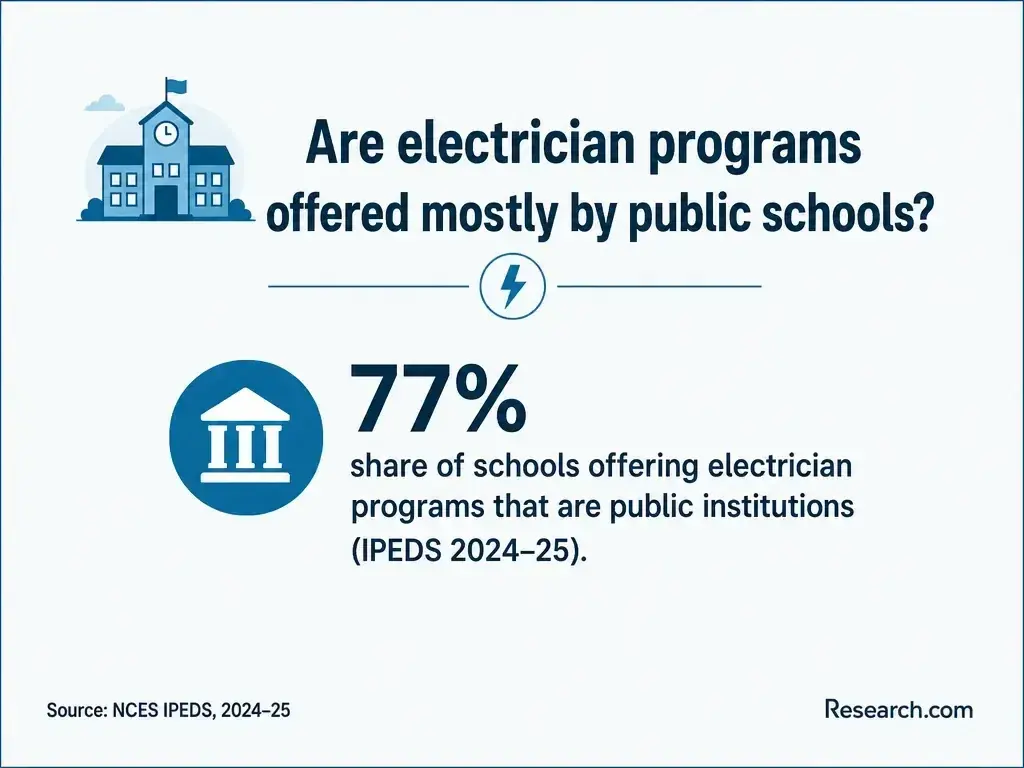
There is no single dependable Arizona-wide price for electrician training: a community-college course, private career-school certificate, and paid apprenticeship have different billing and wage structures. Request a written total cost to become job-ready, not just advertised tuition. Include mandatory fees, books, tools, safety gear, consumables, travel to labs or jobsites, and any required examination or application charges.
Compare the amount you would borrow with expected earnings during training and the chance you will finish. Ask whether a program qualifies for federal aid, Arizona workforce assistance, employer support, or scholarships; eligibility depends on the program and student, not simply on its price. A registered apprenticeship may offset training costs with wages, although commuting and forgone hours at another job still matter. Listings of schools with low tuition programs that accept financial aid are a comparison tool, not proof that a particular electrician course is aid-eligible.
The answer depends on the provider: a short program may award a certificate or diploma; a community college may offer an associate degree; and a registered apprenticeship issues a completion credential after its required work and instruction. Industry credentials, such as relevant NCCER assessments, may document particular skills, but ask local employers whether they recognize them and whether the assessments are included in the price.
These are training credentials, not Arizona contractor licenses. Obtain the credential's exact title in writing and ask whether coursework can count toward another program, whether an apprenticeship sponsor grants advanced standing, and what records of supervised work you will receive. Do not assume credit transfers merely because two programs teach similar topics.
Schools and apprenticeship sponsors set their own entry rules. They may request proof of prior education, placement testing or an assessment of math readiness, age or work-authorization documentation, an interview, and the ability to meet jobsite safety expectations. Some employers or sponsors also require a driver's license, reliable transportation, or screening. Confirm the actual rules before paying an application fee; requirements for a school seat need not match those for a paid apprenticeship opening.
If algebra, reading plans, or transportation is a barrier, ask about preparatory instruction and the location of classes and worksites. An applicant ready to work may prefer a direct helper or apprenticeship application rather than paying for a certificate that the intended sponsor does not require.
Useful instruction connects calculations and electrical principles to safe installation: interpreting drawings, selecting materials, bending conduit, making terminations, measuring circuits, finding faults, and applying the electrical code used by the employer and local authority. Training should also address lockout/tagout, fall and shock hazards, communication with other trades, and accurate documentation. The U.S. Bureau of Labor Statistics identifies installation, maintenance, testing, and repair as core electrician work.
Look beyond a course title such as "electrical technology." Request the equipment list and a demonstration of assessed lab tasks. Someone seeking industrial maintenance should prioritize motors, controls, and troubleshooting exposure; someone targeting construction should ask about installation practice and supervised jobsite access. Similar-sounding certificates are not equivalent if one offers substantially less hands-on practice.
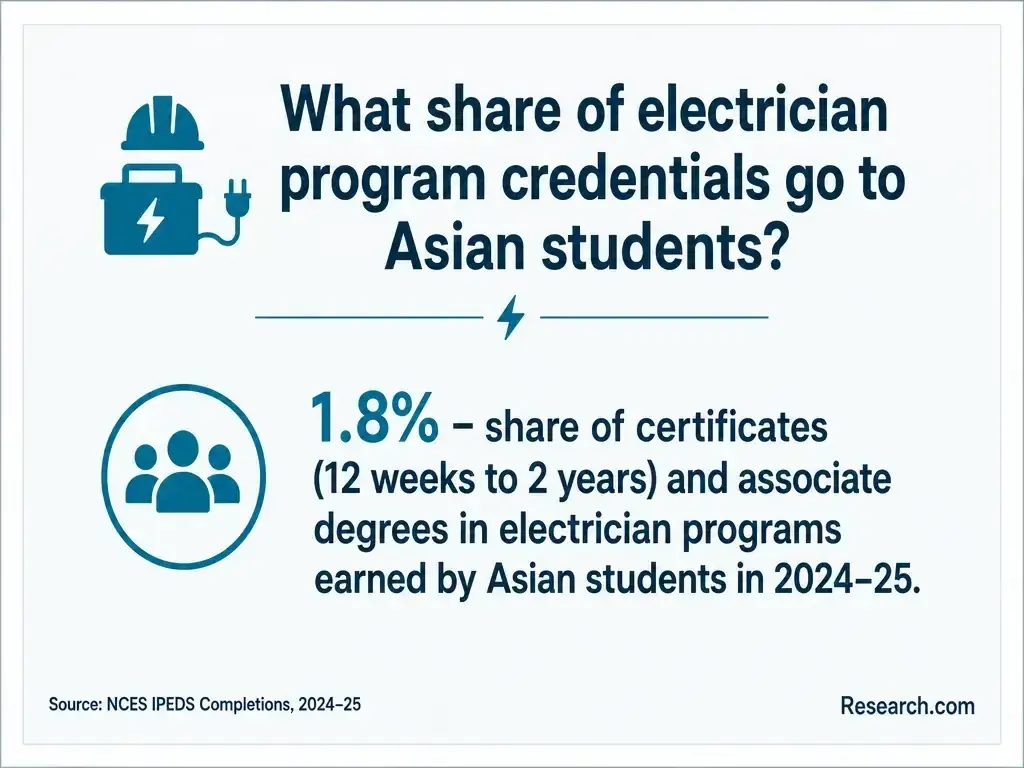
Arizona does not have a statewide journeyman electrician license that every employee must obtain before performing electrical work. It does license electrical contractors through the Arizona Registrar of Contractors. Contractors must meet the applicable classification's experience and examination requirements and other licensing conditions; completing a school program does not automatically satisfy them or authorize independent contracting. Confirm current requirements with the Arizona Registrar of Contractors before choosing training specifically to support a future business.
Keep separate records for school completion, apprenticeship registration and hours, optional industry certifications, and supervised work experience. Institutional accreditation concerns the school; it is not contractor approval. Likewise, a registered apprenticeship is a recognized work-and-instruction pathway, not a substitute for a contractor license when one is required. If you intend to move, check the destination state's rules rather than assuming Arizona experience or credentials transfer automatically.
Start with the role you want and work backward to the training it requires. Rankings can identify programs to investigate, but a paid apprenticeship may be the better investment if you can enter one directly. Conversely, a well-equipped certificate may help if you need foundational practice or stronger access to employers. Comparing an affordable online bachelors degree by tuition alone illustrates the wrong test for this trade: electrical training also requires accessible hands-on work.
Before enrolling, get comparable answers from each school and apprenticeship sponsor:
Red flags include a promise of immediate independent practice, vague claims of "licensing," no documented lab access, or a quote that excludes tools and fees. For a realistic return-on-investment comparison, consider your current earnings, aid, debt, chance of completion, earnings during and after training, and how long it may take for added earnings to repay the investment.
An entrant may begin as an electrical helper or apprentice, then take on more complex installation, service, or maintenance work as supervised experience grows. Experienced electricians can pursue industrial controls, building systems, supervisory work, or electrical contracting. Specialization and management generally require additional practice; running a contracting business also requires meeting the Arizona Registrar of Contractors' applicable licensing rules.
Choose a program for the next reachable step, not a distant job title. If the goal is industrial troubleshooting, seek relevant controls practice and employer exposure; if the goal is construction, prioritize installation labs and a path to supervised work. Broader comparisons of which majors make the most money should not replace checking entry-level electrical openings and paid apprenticeship opportunities where you can actually work.
The U.S. Bureau of Labor Statistics projects 9.2% national electrician employment growth from 2025 to 2035. That signals sustained demand across the occupation, but it is not an Arizona-specific forecast or a guarantee of a local opening. Construction cycles, employer needs, and a candidate's ability to travel to worksites can affect opportunities.
Use the outlook to justify investigating the trade - not to justify any tuition price. Check current openings for helpers and apprentices in the part of Arizona where you can work, and ask sponsors when they next recruit. A program with a credible route to supervised employment may be more valuable than one advertising a faster certificate without worksite connections.
Investing in electrician training is an important decision, and a ranking is most useful when readers understand what it measures. The Research.com team evaluates programs against others in the same occupation and location, using reported outcomes, costs, and quality indicators. Only programs with completions reported to IPEDS are eligible; a missing apprenticeship or training provider is not necessarily a poor option.
For best-program rankings, student outcomes, earnings, and costs collectively account for 60% of the score, with weights distributed according to how much indicators differ across programs. Occupation-relevant programmatic accreditation or industry recognition accounts for 20%, institutional accreditation for 10%, and student support services for 10%. Outcomes include completion and full- and part-time retention; financial measures include earnings one year after completion, earnings relative to attendance cost, tuition, debt - including debt held by students who withdrew - and federal loan default rates. Most-affordable rankings instead score only cost and debt measures using entropy-based weights; accreditation and other quality measures are not part of that score.
The team draws on the following sources to check available institutional, program, and industry information. Some sources cover other trades or health programs and should not be mistaken for electrician-specific approval.
Use the ranking to narrow your search, then confirm each program's current price, hands-on instruction, apprenticeship connections, and suitability for your intended work. More detail appears in Research.com's ranking methodology.
# 1 position
# 2 position
# 3 position
# 4 position
# 5 position

# 6 position
# 7 position

# 8 position

# 9 position

# 10 position
# 11 position
# 12 position
# 13 position
# 14 position
# 15 position
# 16 position
# 17 position
No single trade-school credential is required for every electrical employee. Paid apprenticeship and employer-supervised entry are alternatives; contractors face separate Arizona licensing requirements. Check what your intended employer or sponsor requires.
It depends on access and readiness. An apprenticeship combines paid work with instruction and documented experience; a certificate can provide foundations or help an applicant compete for entry. Ask whether the sponsor credits the certificate before paying for it.
Online courses can cover theory and code study, but electrical installation, testing, and supervised jobsite work require in-person practice. Verify practical-training arrangements before enrolling.
No. The Arizona Registrar of Contractors sets separate experience, examination, and other requirements for the applicable contractor classification. A certificate does not itself authorize contracting.
Request the full cost of fees, books, tools, safety gear, and travel, plus written aid eligibility and refund terms. Compare that amount with the wages and training costs of an available apprenticeship.