# 1 position
Sampson Community College - Electrician.
associate

Audited and Verified:
Our Editorial and Data Verification Process
Research.com uses government datasets, official education statistics and primary institutional information to support its career and degree guides. Our review process checks factual accuracy, occupational definitions, source dates and the requirements associated with the credentials discussed.
How This Article Was Fact-Checked
Our editorial team verifies salary estimates, employment projections, education requirements and program information against original data providers and official organizations. Salary figures are checked against the relevant occupational definitions and reporting periods. Information about licensure, accreditation and required in-person training is reviewed separately.
Fact-checked and verified on:

Co-Founder and Chief Data Scientist

Reviewed by Karolina Broda
Fact-Checker and Data Verification
Choosing electrician training in Clinton, North Carolina, means comparing more than tuition: a short classroom program and a paid apprenticeship offer different routes to the work experience employers need. The U.S. Bureau of Labor Statistics projects electrician employment to grow 9.2% nationally from 2025 to 2035. This guide explains local training options, costs, credentials, and licensing considerations. It also features a Best Electrician Trade Schools in Clinton for 2027 ranking, created by the Research.com team of data scientists to help students make an informed choice about programs worth considering.
Expect instruction in electrical theory, wiring methods, code use, blueprint reading, and safe testing, paired with practice assembling and troubleshooting circuits. In Clinton, Sampson Community College is the local college to check for current electrical offerings, schedules, and shop access. Ask which credential its current catalog awards and how much supervised lab time each option includes; similarly named programs can provide quite different amounts of practice (Sampson Community College).
A certificate or diploma can help someone explore the trade or prepare for entry-level employment, while an electrical associate degree may offer a broader technical curriculum. Neither replaces the experience gained on supervised jobsites. An accelerated associates program is worth considering only if its compressed schedule still leaves enough time for the electrical labs and work experience your goal requires.
A registered apprenticeship is a different pathway: participants work for pay while completing structured on-the-job training and related instruction under an approved sponsor. Union, nonunion, and employer sponsors may offer different entry schedules and selection processes. For someone ready to earn while learning, that can be a stronger fit than paying for school first; for someone who needs introductory skills before applying to employers, a college program may be the better starting point (U.S. Department of Labor; ApprenticeshipNC).
Electrical training can lead to work with electrical contractors on homes and commercial buildings, or to maintenance roles at industrial facilities and other large worksites. The job duties differ: construction crews install and test new systems, while maintenance workers diagnose failures and repair existing equipment (U.S. Bureau of Labor Statistics). A program strong in residential wiring is not automatically the best preparation for industrial controls.
Clinton residents should ask where a provider's students actually complete field training or find employers. A workable opportunity may require travel beyond town limits, so commute time and transportation costs belong in the program comparison. If you want to become an electrical contractor rather than work as an employee, investigate North Carolina licensing separately before choosing a training route (North Carolina State Board of Examiners of Electrical Contractors).
The U.S. Bureau of Labor Statistics reports a $63,190 national median annual wage for electricians in May 2025. That is the midpoint for working electricians nationwide - not a Clinton wage, an apprentice rate, or a forecast of what a new trainee will earn. Local offers can differ with experience, job duties, overtime, and employer.
Before borrowing for training, request starting-pay information from prospective local employers and apprenticeship sponsors, and ask schools what evidence supports any earnings claim. Compare those offers with your current earnings and the time you would spend training. Do not treat an occupational median as proof that a particular program will pay for itself.
There is no single completion time. A short certificate generally covers less material than a diploma or associate degree; part-time attendance extends the calendar, and course sequencing can delay completion even when the total credit requirement stays the same. Ask Sampson Community College for its current catalog's credit or contact-hour requirements, lab schedule, and expected completion time for your intended credential (Sampson Community College).
Registered apprenticeships usually extend over multiple years because classroom instruction accompanies substantial supervised work. The sponsor - not a school brochure - should confirm the required related-instruction and on-the-job hours, wage progression, and completion standard for its specific program (U.S. Department of Labor; ApprenticeshipNC). Finishing a short school program can mean entering the workforce sooner, but it does not eliminate the time needed to develop jobsite competence.
Search results for a 1 year masters degree do not describe an electrician-entry route. For this decision, compare electrical contact hours and the time to supervised employment instead.
Online instruction can suit code reading, calculations, and electrical theory. Wiring, measuring live and de-energized systems safely, using tools, and diagnosing faults require supervised practical work. An entirely online course should not be treated as equivalent to a program with an electrical lab or apprenticeship worksite (U.S. Bureau of Labor Statistics; U.S. Department of Labor).
The comparison below identifies what each format can reasonably offer. For a Clinton student, the deciding detail is where and when practical instruction happens - not merely whether lectures are available from home.
| Format | Potential advantage | Question to resolve |
| On-campus program | Scheduled access to instructors, equipment, and electrical labs | Can you attend the required shop sessions and afford the commute? |
| Hybrid program | Remote theory with some scheduled in-person practice | How many labs are required, and where are they held? |
| Online-only coursework | Flexible study of theory | What separate, supervised route supplies hands-on skills and jobsite experience? |
An online colleges open enrollment search may help identify accessible coursework, but admission convenience says nothing about electrical lab access. Ask any hybrid provider to document its in-person requirements before paying.
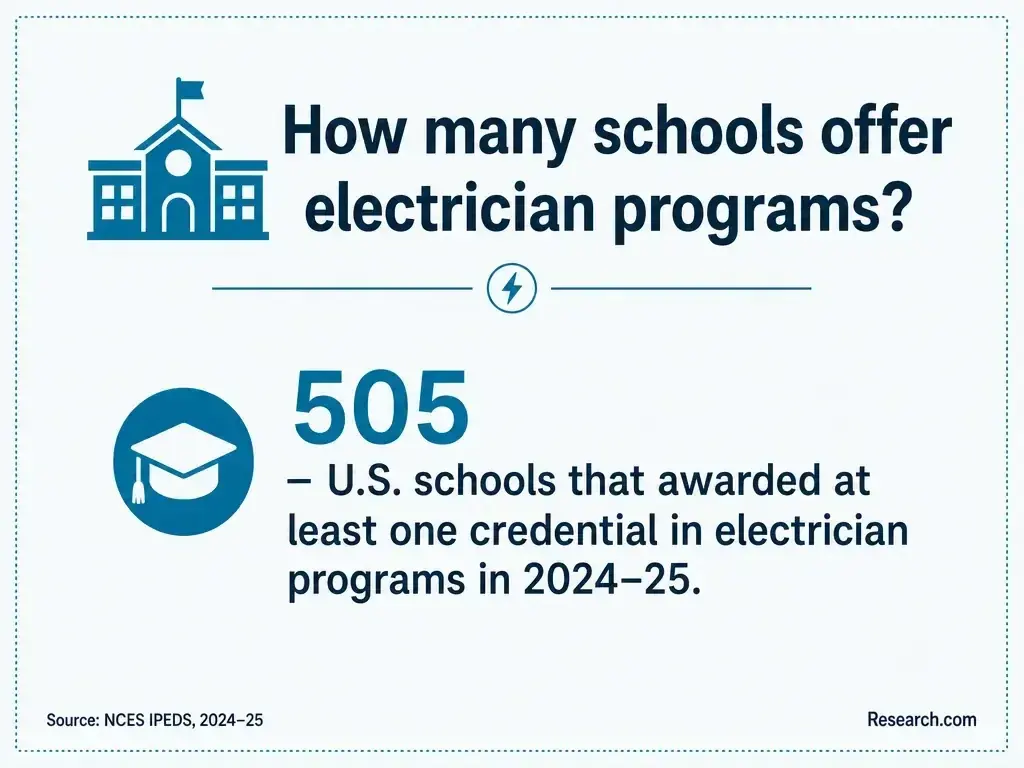
A reliable Clinton-wide average cannot be stated from the available comparable program prices: school credentials and paid apprenticeships have different fee structures, and a tuition figure excludes major job-entry expenses. Request a current, itemized estimate for the exact Sampson Community College program or apprenticeship you are considering rather than using a national trade-school average as a local budget (Sampson Community College; ApprenticeshipNC).
The costs below matter because a lower advertised tuition may not mean a lower cost to become job-ready.
| Cost or offset | Why it changes the comparison |
| Tuition and mandatory fees | Vary by credential, enrollment load, and applicable residency rules. |
| Books, tools, materials, and PPE | May be purchased separately or supplied by a program or employer. |
| Travel and foregone earnings | Depend on lab location, work schedule, and time away from paid employment. |
| Grants, eligible student aid, and paid training | Can reduce out-of-pocket cost; eligibility and apprenticeship wages must be verified individually. |
Check federal-aid eligibility for the specific credential with the school; not every short program qualifies (Federal Student Aid). Ask about North Carolina workforce assistance through local workforce services and whether an apprenticeship pays wages and supplies tools (ApprenticeshipNC). Lists of top accredited non profit online colleges are not substitutes for an itemized electrical-training quote or evidence of hands-on preparation.
The award depends on the pathway: a college program may award a certificate, diploma, or electrical associate degree; a registered apprenticeship awards its own completion credential after the sponsor's required training. An employer may also provide training that does not produce a college credential. Confirm the exact title on the current program record before enrolling (Sampson Community College; U.S. Department of Labor).
Keep four distinctions clear. Institutional accreditation concerns a school; state authorization concerns permission to offer education; apprenticeship registration concerns a structured training program; and an occupational license grants authority for activities regulated by the state. NCCER credentials, where offered, document industry training but do not replace a North Carolina electrical-contractor license (NCCER; North Carolina State Board of Examiners of Electrical Contractors). Ask whether college work can count toward an apprenticeship or whether prior experience earns credit; get the receiving sponsor's answer in writing.
Requirements depend on the provider and pathway. A college may use placement measures or course prerequisites, while an apprenticeship sponsor may assess math preparation, interview applicants, and require eligibility to work and travel to jobsites. Physical ability to perform the work and safety expectations also matter. Check the current Sampson Community College catalog and each sponsor's application notice rather than assuming admission to one route qualifies you for another (Sampson Community College; ApprenticeshipNC).
Before applying, gather the information that determines whether a pathway fits your circumstances:
Core instruction typically connects electrical calculations and circuit theory to reading drawings, selecting wiring methods, installing devices, testing circuits, and applying the electrical code. Safety is not a separate box to check: students need to recognize hazards and use appropriate procedures while working with tools and equipment (U.S. Bureau of Labor Statistics; O*NET).
Curriculum emphasis should match the job you want. If your target is building construction, ask about installation labs and code application. If it is industrial maintenance, ask whether students troubleshoot motors, controls, and equipment faults. Request the course sequence and a demonstration of the lab; a credential name alone will not reveal whether you practice the tasks an employer expects.
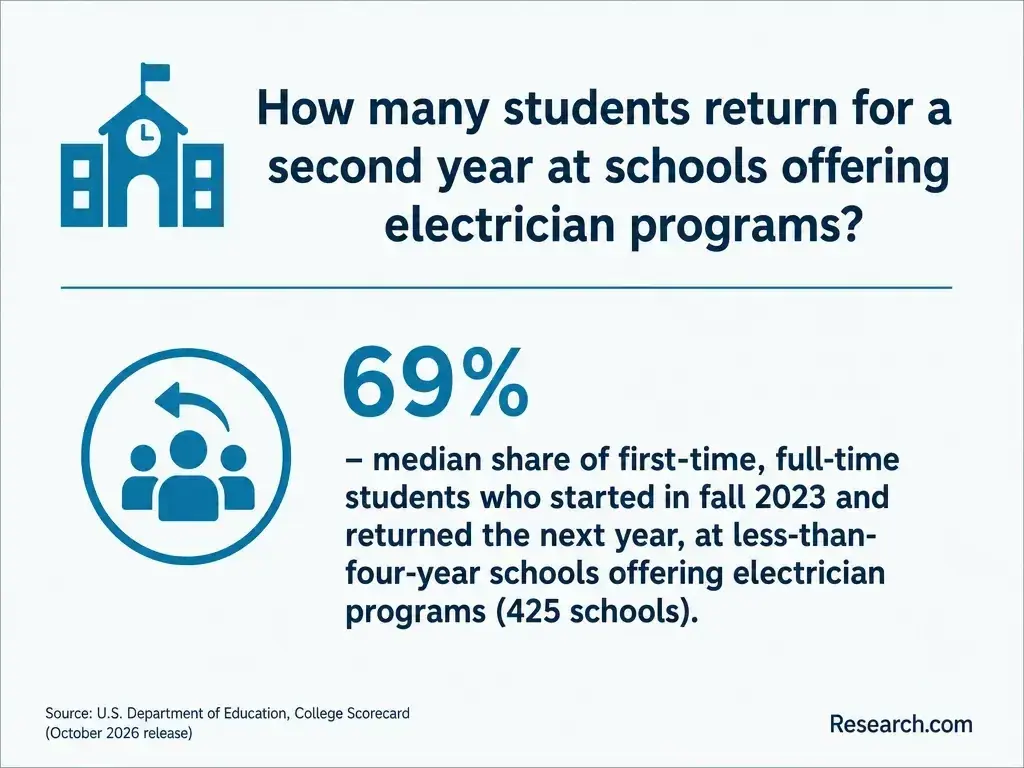
North Carolina licenses electrical contractors through the North Carolina State Board of Examiners of Electrical Contractors. A school certificate, associate degree, apprenticeship completion credential, or optional industry certification is not itself a contractor license. Employees can perform electrical work under the appropriate licensed contractor's responsibility, but someone planning to contract independently must check the board's applicable license classification, experience, examination, and application requirements (North Carolina State Board of Examiners of Electrical Contractors).
Ask a program what, specifically, it prepares you to do upon completion: apply for supervised employment, enter or advance in an apprenticeship, or document experience relevant to a future license application. Verify any claim of licensing eligibility with the board before enrolling. Also ask prospective employers about jobsite safety or other credentials they expect; employer preferences and state licensing requirements are not the same thing.
The best option is the one that gets you from your present skills to your intended electrical job at a cost and pace you can sustain. A ranking can identify programs to investigate, but it cannot tell you whether a particular lab schedule fits your shift or whether an apprenticeship sponsor has an opening.
Use these checks to compare a college program with paid training on the same terms:
Be cautious of promises of automatic licensure, a guaranteed electrician salary, or "fully online" job readiness without supervised practice. For a personal return-on-investment estimate, account for completion probability, your current earnings, expected post-training earnings, aid and debt, the time horizon, and the fact that future earnings are worth less than earnings received now. That makes a short, inexpensive program attractive for some applicants and a paid apprenticeship more practical for others.
Entry-level trainees commonly begin with supervised installation or maintenance tasks and gain responsibility as their skills and experience grow. Further work experience can support specialization in areas such as commercial wiring or industrial troubleshooting; supervisory work or electrical contracting involves additional responsibilities and, for contracting in North Carolina, the appropriate state license (U.S. Bureau of Labor Statistics; North Carolina State Board of Examiners of Electrical Contractors).
If you are comparing electrician work with other top skilled trades jobs, focus on the daily tasks as well as pay. Someone who enjoys tracing faults and working carefully with codes may prefer electrical work; someone seeking an immediate independent business should recognize that introductory training alone is not the final step.
National electrician employment is projected to increase 9.2% from 2025 to 2035 (U.S. Bureau of Labor Statistics, Employment Projections). That supports investigating the trade, but it does not measure vacancies in Clinton or guarantee placement after a particular program.
For a local decision, check current postings and speak with electrical contractors and apprenticeship sponsors about the work they expect to have and the skills they hire for. Ask programs where recent participants found supervised work and whether placements required commuting. Those answers are more useful than applying a national growth rate to one town.
Investing in training is a consequential decision. Research.com created its ranking to help readers compare electrician programs against other programs serving the same occupation and location, rather than against unrelated schools. The team evaluates reported outcomes, costs, and quality indicators; readers should still confirm current program details directly before enrolling.
Only programs with completions reported to IPEDS qualify for the ranking. Best-program scores consider student completion and full-time and part-time retention; earnings one year after completion and earnings relative to annual attendance cost; tuition, attendance cost, debt - including debt held by students who withdrew - and federal loan default rates; and institutional accreditation, relevant programmatic recognition, and student support. Relevant programmatic accreditation or industry recognition accounts for 20% of the score, institutional accreditation for 10%, and support services for 10%. The remaining 60% covers outcomes, earnings, and costs, with weights distributed through an entropy-based method that gives more weight to indicators that vary more across programs.
Most-affordable rankings use only tuition, attendance cost, median debt, and federal loan default rates, weighted through that entropy-based method; accreditation and other quality indicators are not part of that score. Neither ranking establishes that a program meets a particular employer's requirements or North Carolina's electrical-contractor licensing rules. IPEDS and College Scorecard also do not comprehensively cover registered apprenticeships, union training, or employer-sponsored routes, so an unranked option may still be worth considering.
The following data sources informed the ranking. Some accreditation and certification sources cover other trades; their inclusion in the ranking's broader source set does not make them electrician-specific endorsements.
Use the ranking to narrow your options, then compare the actual curriculum, practical training, total price, and route into paid electrical work. More detail about the scoring approach is available on the Research.com methodology page.
# 1 position
# 2 position
No single college credential is the required route. Supervised employment and registered apprenticeship are alternatives; the right choice depends on the training an employer or sponsor requires. North Carolina electrical-contractor licensing is a separate matter (ApprenticeshipNC; North Carolina State Board of Examiners of Electrical Contractors).
Online classes can teach theory, but electrical work also requires practical training. Ask where supervised labs and jobsite experience will happen before treating an online course as career preparation (U.S. Bureau of Labor Statistics).
No. A school certificate does not grant a North Carolina electrical-contractor license. Check the state board's requirements if independent contracting is your goal (North Carolina State Board of Examiners of Electrical Contractors).
It may be if you can secure a place and need wages while training. College can be useful if you need introductory skills or a schedule that fits before entering paid fieldwork. Compare actual admission timing, costs, and supervised hours (ApprenticeshipNC; Sampson Community College).
Ask which electrical credentials are currently offered, how many labs are required, what the full cost includes, whether aid applies, and whether employers or apprenticeship sponsors accept the training toward their requirements (Sampson Community College).