# 1 position
Robeson Community College - Electrician.
associate

Audited and Verified:
Our Editorial and Data Verification Process
Research.com uses government datasets, official education statistics and primary institutional information to support its career and degree guides. Our review process checks factual accuracy, occupational definitions, source dates and the requirements associated with the credentials discussed.
How This Article Was Fact-Checked
Our editorial team verifies salary estimates, employment projections, education requirements and program information against original data providers and official organizations. Salary figures are checked against the relevant occupational definitions and reporting periods. Information about licensure, accreditation and required in-person training is reviewed separately.
Fact-checked and verified on:

Co-Founder and Chief Data Scientist

Reviewed by Karolina Broda
Fact-Checker and Data Verification
Choosing electrician training in Lumberton means deciding whether to pay for classroom preparation, seek a paid apprenticeship, or combine both. The U.S. Bureau of Labor Statistics reports a $63,190 national median annual wage for electricians in May 2025 - but that is not a starting-pay estimate. This guide compares credentials, costs, practical training, and North Carolina licensing rules. It also features a Best Electrician Trade Schools in Lumberton for 2027 ranking created by the Research.com team of data scientists to help students identify programs worth considering.
Expect a choice between school-based preparation and learning primarily through supervised employment. Electrician work involves installing, testing, and repairing wiring and electrical equipment under applicable codes; reading about those tasks is not the same as safely performing them. Ask Robeson Community College which electrical training awards and lab courses it currently offers, then compare them with registered apprenticeships and employer-sponsored routes (Robeson Community College; U.S. Bureau of Labor Statistics; Apprenticeship.gov).
The pathways differ most in when you earn wages and how practical experience is obtained:
| Pathway | Credential or outcome | Best fit and principal trade-off |
| School-based certificate or diploma | School award, if offered | Focused preparation for entry-level applications; confirm lab time and whether employment experience must still be secured separately. |
| Electrical associate program | Associate degree, if offered | Broader technical study; typically requires more time and expense than a short award and does not replace supervised work. |
| Registered apprenticeship | Completion credential under a registered program | Paid, structured work plus related instruction; entry depends on sponsor selection and available openings. |
| Direct employer entry | Employer training; any formal credential depends on the arrangement | Potentially faster access to wages; verify supervision, instruction, and whether experience is documented for later goals. |
Someone exploring different types of college majors should evaluate electrician training differently: the decisive questions are what electrical work they can practice, under whose supervision, and how the training leads to a job - not simply the title of the award.
Potential workplaces include electrical contractors serving homes and commercial buildings, industrial maintenance teams, and facilities that maintain their own electrical systems. Contractors generally offer exposure to installation and service calls; maintenance positions may emphasize troubleshooting operating equipment. These are distinct skill sets, so ask a program whether its labs cover the work you want to pursue (U.S. Bureau of Labor Statistics).
Lumberton applicants should ask employers and apprenticeship sponsors which worksites they serve across Robeson County and whether daily travel is required. A training option that fits your budget may be less practical if its lab, jobsite, or apprenticeship assignments require transportation you cannot reliably provide. School completion alone should not be described as permission to contract independently in North Carolina (North Carolina State Board of Examiners of Electrical Contractors).
The U.S. Bureau of Labor Statistics reports a $63,190 national median annual wage for electricians in May 2025. The median covers workers at different experience levels nationwide; it is not a Lumberton wage or a likely first-year offer. Without a comparable, current local electrician estimate, a precise Lumberton salary claim would be misleading.
For a useful pay comparison, request the starting wage, scheduled raises, benefits, and travel expectations from local employers or apprenticeship sponsors. Compare an apprentice's paid-training income with the wages you would forgo during full-time school. Also ask whether a quoted wage applies to electrical installation, industrial maintenance, or a different job; the title and responsibilities matter as much as the figure.
There is no single Lumberton completion time. A focused school certificate may take less time than a diploma or associate program; part-time attendance can extend the calendar even when required coursework stays the same. A registered apprenticeship is a longer work-and-instruction pathway, but participants earn wages while training. Exact duration, lab/contact hours, related instruction, and required on-the-job experience depend on the current school catalog or sponsor standards (Robeson Community College; Apprenticeship.gov).
Before enrolling, request the written course sequence and ask when required labs meet, whether courses run every term, and how long students typically wait for an apprenticeship or employer placement. If you already have related work or coursework, ask whether the provider assesses prior learning or grants advanced standing; do not assume previously completed hours will transfer or satisfy a sponsor's requirements.
Online instruction can suit electrical theory, calculations, and code-reading assignments. Wiring, meter use, fault diagnosis, and jobsite safety require equipment and supervised practice. A program advertised as online should therefore be evaluated by where its labs occur, who observes practical work, and whether a local employer or apprenticeship supplies the missing experience.
The format choice changes both flexibility and the evidence of competence you can show an employer:
| Format | Possible advantage | Check before enrolling |
| On campus | Scheduled access to instructors and electrical labs | Lab hours, equipment, class schedule, and travel cost |
| Hybrid | Remote theory with scheduled in-person practice | Lab location, attendance requirements, and supervision |
| Fully online coursework | Flexible study of theory | How hands-on skills and supervised work will be obtained elsewhere |
Even when comparing cheap associate programs online, an aspiring electrician should not treat remote coursework as a substitute for electrical labs or documented work experience. Confirm the practical component with the provider and your intended apprenticeship sponsor or employer.
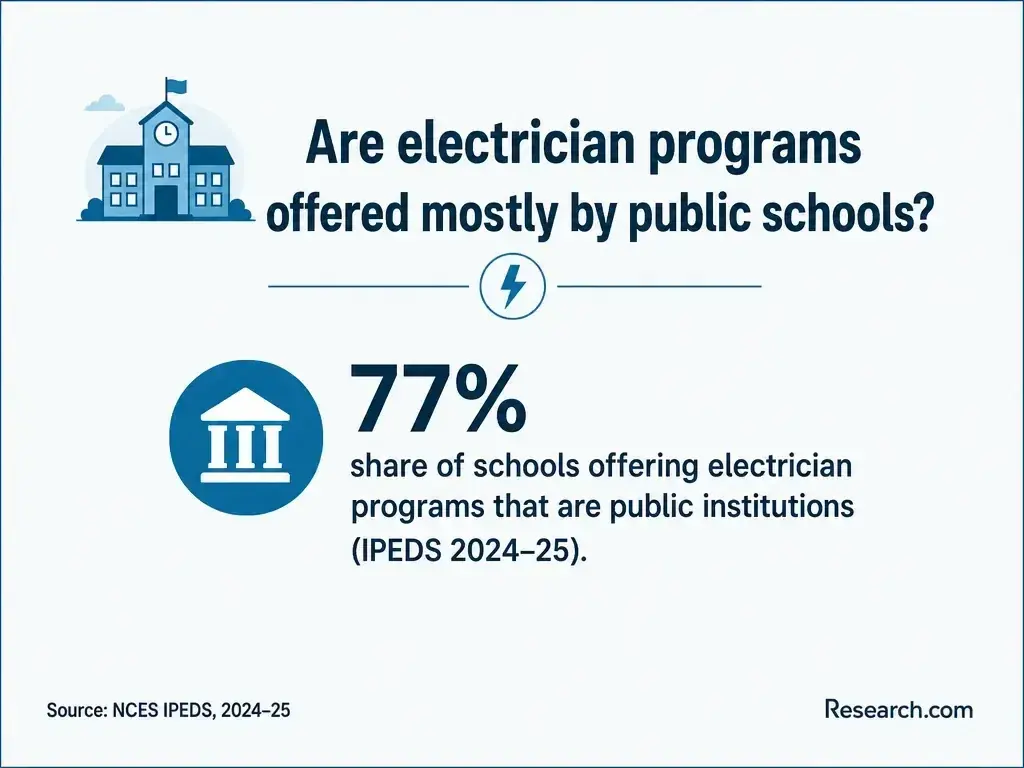
A dependable Lumberton-wide average is not available here: school awards, course loads, and paid apprenticeships have different cost structures. Request a current, written estimate from Robeson Community College for the specific award and attendance schedule you are considering. Compare it with any apprenticeship's required purchases and the wages paid during training, rather than comparing tuition with wages in isolation.
To estimate what it will cost you to become job-ready, collect these items in one budget before accepting an offer:
Check eligibility for federal student aid and North Carolina assistance directly with the school; an apprenticeship or noncredit course may have different aid eligibility from a qualifying college program (Federal Student Aid; North Carolina Community College System). Lists of accredited colleges online with free application options do not establish an electrician program's total cost or practical-training value. For return on investment, weigh debt and aid against completion likelihood, wages during training, expected post-training pay, the time needed to finish, and what you could earn on another route - not institution type alone.
The answer depends on the pathway: a school may award a certificate, diploma, or associate degree; a registered apprenticeship has its own completion credential. An employer's internal training may not award a portable credential. Ask for the exact award name and whether the provider documents completed courses, lab competencies, and supervised work hours (Robeson Community College; Apprenticeship.gov).
Keep four distinctions clear. Institutional accreditation concerns the school; any programmatic recognition concerns a particular program; registered-apprenticeship status concerns the sponsor and its training standards; and occupational licensure is granted under North Carolina's contractor rules. None automatically substitutes for another. Optional industry credentials may help document skills, but check whether local employers value the specific credential before paying for it (U.S. Department of Education; Apprenticeship.gov; North Carolina State Board of Examiners of Electrical Contractors).
A list of quick certifications that pay well may help you explore short training options, but speed alone cannot establish electrical competence or licensing eligibility.
Requirements vary by award and sponsor. Ask Robeson Community College about its current admissions process, any placement or course prerequisites, and whether a proposed course is credit or noncredit. An apprenticeship sponsor may separately assess applicants' readiness, schedule, transportation, and ability to meet worksite conditions; college admission should not be mistaken for apprenticeship acceptance (Robeson Community College; Apprenticeship.gov).
Before applying, ask whether you must purchase tools or safety gear before the first lab or workday, and whether an employer has additional screening requirements. Confirm deadlines and costs with the organization that actually admits you. If you are working, check whether required labs or jobsite hours conflict with your shift before committing to a program.
Useful entry-level instruction connects electrical theory to safe work: circuits and measurements, wiring methods, blueprint interpretation, code use, troubleshooting, and the selection and safe use of tools. The U.S. Bureau of Labor Statistics identifies installation, testing, repair, and reading technical diagrams as central electrician duties. A program should let students demonstrate these skills, not merely recognize terms on a screen.
Ask to see the current lab outline: what will you wire and test, what faults will you diagnose, and how is safe performance assessed? For industrial maintenance goals, look for practice with equipment and controls relevant to that work; for construction, examine installation and code-related exercises. Similarly named credentials need not offer the same practical preparation.
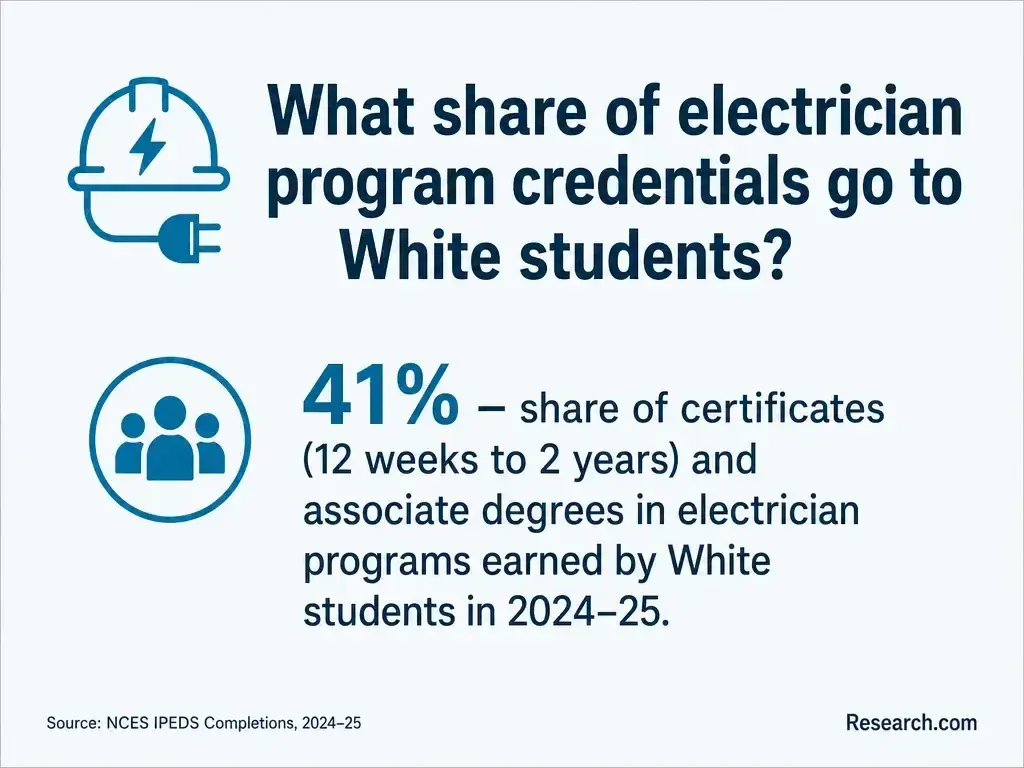
North Carolina regulates electrical contracting through the North Carolina State Board of Examiners of Electrical Contractors. Working as an employee under an appropriately licensed contractor is different from independently offering electrical contracting services. Completing a school program does not grant a contractor license, and an optional industry certificate is not that license (North Carolina State Board of Examiners of Electrical Contractors).
If your goal is eventually to operate a contracting business, check the board's current license classifications, qualifying experience, examination, and application rules before choosing training. Ask how a school or apprenticeship documents your work and who verifies it. If your immediate goal is supervised entry-level employment, focus first on employer requirements and safe practical preparation rather than paying for a credential you do not yet need.
Start with the job you want: construction installation, service, or maintenance. Then compare Robeson Community College's current offerings with registered apprenticeships and employer training available within a commute you can sustain. A lower-priced award is not better value if it lacks required practice; an apprenticeship is not automatically better if you cannot secure a place or meet its work schedule.
Use the same questions for every option so that a ranking does not become your only evidence:
Verify accreditation with the accreditor or U.S. Department of Education, apprenticeship registration with the sponsor or Apprenticeship.gov, and licensing claims with the North Carolina board. Search results for graduate dual degree programs address a different educational decision; they cannot tell you whether electrical training provides the supervised practice your goal requires. Treat promises of guaranteed jobs, immediate independent licensing, or an entirely online route to practical competence as red flags.
Initial training can support applications for supervised electrical installation or maintenance work. With documented experience, a worker may pursue more complex troubleshooting, industrial or commercial work, crew leadership, or - if North Carolina's requirements are met - independent electrical contracting. These are possible progressions, not automatic outcomes of a certificate (U.S. Bureau of Labor Statistics; North Carolina State Board of Examiners of Electrical Contractors).
Choose training backward from the intended role. Someone seeking an entry-level contractor job may prioritize safe wiring labs and an employer connection; someone targeting maintenance should ask about troubleshooting and controls. Someone planning eventual self-employment should preserve records of qualifying experience from the beginning and check the board's applicable classification rules before assuming that school hours count.
National electrician employment is projected to grow 9.2% from 2025 to 2035 (U.S. Bureau of Labor Statistics, Employment Projections). That indicates broader demand for the occupation, not a forecast of Lumberton vacancies or a guarantee of placement after training.
For a local decision, review current electrical-contractor and maintenance openings, ask sponsors whether they are recruiting apprentices, and compare the requested skills with a program's labs. Consider whether you can reach jobs outside the city when evaluating an offer. A training route with documented practice and employer contact may be more useful than one selected on the national projection alone.
Investing in electrician training is a consequential decision. Research.com created its ranking to help readers compare programs with other electrician options in the same location, rather than with unrelated trades. Its team reviews outcomes, costs, recognition, and data quality; a ranking is a starting point, not a substitute for confirming hands-on training and career-entry requirements.
Only programs reporting completions to the Integrated Postsecondary Education Data System (IPEDS) are eligible. Best-program scores consider completion and full-time and part-time retention; earnings one year after completion and earnings relative to annual attendance cost; tuition, attendance cost, debt - including debt held by students who withdrew - and federal loan default rates; and institutional accreditation, occupation-relevant recognition, and student support. Occupation-relevant programmatic accreditation or industry recognition carries 20% of the score, institutional accreditation 10%, and student support 10%. Outcomes, earnings, and costs share the remaining 60% through entropy-based weighting, which gives more weight to indicators that differ more across programs.
Most-affordable-program rankings use only tuition, attendance cost, median debt, and federal loan default rate, with entropy-based weights; accreditation and other quality indicators are not scored. The following sources inform Research.com's broader trade-program ranking work. Health-specific organizations are relevant to other occupations, not evidence that an electrician program has electrical-industry approval.
Because IPEDS does not cover every apprenticeship or employer training route, exclusion from the ranking does not establish that a provider is unavailable or poor quality. Readers can use the ranking to narrow their search, then verify current program details directly. Research.com explains its approach further on its methodology page.
# 1 position
# 2 position
No single school credential is the universal entry route. Registered apprenticeships and supervised employer training are alternatives. Compare each route's instruction, practical experience, and hiring requirements (Apprenticeship.gov; North Carolina State Board of Examiners of Electrical Contractors).
You may study some theory online, but wiring, testing, safety, and supervised jobsite work require in-person practice. Ask where and how a provider assesses those skills.
No. North Carolina contractor licensing is separate from a school award. Confirm the board's current experience, examination, and application requirements before planning to contract independently (North Carolina State Board of Examiners of Electrical Contractors).
It may reduce forgone earnings while providing structured work experience, but admission depends on sponsor openings and requirements. School may be useful preparation if you need foundational skills before seeking an employer or apprenticeship.
Ask which awards are currently available, their complete cost and schedule, required lab hours, and whether staff can document employer connections or apprenticeship opportunities (Robeson Community College).