# 1 position


Audited and Verified:
Our Editorial and Data Verification Process
Research.com uses government datasets, official education statistics and primary institutional information to support its career and degree guides. Our review process checks factual accuracy, occupational definitions, source dates and the requirements associated with the credentials discussed.
How This Article Was Fact-Checked
Our editorial team verifies salary estimates, employment projections, education requirements and program information against original data providers and official organizations. Salary figures are checked against the relevant occupational definitions and reporting periods. Information about licensure, accreditation and required in-person training is reviewed separately.
Fact-checked and verified on:

Co-Founder and Chief Data Scientist

Reviewed by Karolina Broda
Fact-Checker and Data Verification
Choosing electrician training in Wilmington, North Carolina, means deciding whether to pay for school first or earn while learning through an apprenticeship. The choice matters: the U.S. Bureau of Labor Statistics projects electrician employment to grow 9.2% nationally from 2025 to 2035, but a classroom credential alone does not replace jobsite experience. This guide compares local pathways, costs, credentials, and licensing rules. It also accompanies the Best Electrician Trade Schools in Wilmington for 2027 ranking, created by the Research.com team of data scientists to help students identify programs worth considering.
Expect electrical theory, code instruction, and supervised practice - not a license on graduation. In Wilmington, Cape Fear Community College is a school-based option to investigate, while registered apprenticeships and employer-sponsored training offer work-first routes. Ask for the current program outline before comparing credentials: similarly named programs can provide very different amounts of shop and jobsite practice.
The pathway comparison below shows what each route contributes to occupational entry. Availability, admission, and credit for prior training depend on the provider and sponsor.
| Pathway | Training and credential | Best fit and main trade-off |
| College certificate or diploma | Focused coursework and labs; a school-issued credential | Useful for building fundamentals before applying for work; confirm how graduates obtain supervised field experience. |
| Electrical systems associate degree | Broader technical and general coursework; an academic degree | Useful if the additional coursework supports a specific goal; takes longer than a shorter credential and does not itself confer a contractor license. |
| Registered apprenticeship | Paid, supervised work plus related instruction; a completion credential upon meeting program requirements | Strong fit for learners ready to work while training; entry depends on openings and sponsor selection. |
| Employer-sponsored entry training | Worksite instruction that varies by employer | May provide a quicker start; verify whether instruction is documented or connected to a registered apprenticeship. |
A useful question is not whether electrical training resembles the most valuable college majors, but whether its labs, credential, and work connections move you toward the electrical job you want.
Potential work settings include electrical contractors serving residential and commercial construction, industrial facilities, building-maintenance teams, and employers installing or servicing electrical systems. The U.S. Bureau of Labor Statistics describes electricians' work as installing, maintaining, and repairing electrical power, communications, lighting, and control systems. A Wilmington student should ask which local employers actually hire from a program and whether the work is construction, maintenance, or another specialty; those roles teach different skills.
Be precise about the target occupation. Training for an electrician is not automatically training for a utility lineworker, and a school credential is not a substitute for the supervised experience an employer may seek. Unlike a search for the easiest bachelor degree to obtain, this decision turns heavily on practical competence and access to worksites.
A verified Wilmington-specific wage figure is not established here, so the national benchmark is more useful than an unsupported local estimate: the U.S. Bureau of Labor Statistics reports a $63,190 median annual wage for electricians in May 2025. Half of electricians nationally earned less and half earned more. That figure includes experienced workers and should not be treated as an apprentice's or new graduate's expected offer.
For a local pay comparison, request current entry-level offers from prospective employers or apprenticeship sponsors and check occupation-specific North Carolina labor-market figures. Compare wages alongside paid training, benefits, commuting, and the time needed to qualify for higher-responsibility work; a higher eventual wage does not erase training costs or foregone earnings.
Length depends on the credential and the point at which you count training as complete. A short school credential may get someone ready to seek an entry-level role sooner than an associate degree, but neither should be mistaken for the full period of supervised work needed to develop independent competence. Ask Cape Fear Community College for the current catalog's credit hours, course sequence, and part-time schedule rather than assuming every electrical program has the same duration.
A registered apprenticeship is a longer work-and-instruction commitment. U.S. Department of Labor apprenticeship guidance describes a minimum of 2,000 hours of on-the-job learning in a time-based apprenticeship year, with related instruction commonly organized around 144 hours per year; the sponsor's approved standards control the actual schedule. For someone comparing training time, searches for the shortest phd are not a useful model: the relevant endpoint here is demonstrated electrical skill and work experience, not simply the earliest classroom finish date.
Online study can cover theory, calculations, code concepts, and some safety instruction. It cannot by itself demonstrate safe installation, testing, troubleshooting, or work around energized equipment. Campus labs and supervised jobsites provide the practical assessment a prospective employer is more likely to value. Confirm where every required hands-on component takes place before enrolling in a hybrid option.
The comparison below separates delivery convenience from practical training; neither format alone establishes licensing eligibility.
| Format | What can work well | What to verify |
| On-campus | Scheduled access to tools, instructors, and electrical labs | Actual lab time, equipment, schedule, and travel cost |
| Hybrid | Remote theory with scheduled in-person practice | Where labs occur and whether attendance fits work commitments |
| Fully online coursework | Flexible study of concepts | How - and whether - you will obtain supervised practical training separately |
Even if remote coursework resembles a search for a phd online no dissertation, electrician training has a different constraint: physical skills must be learned and evaluated in person. Do not accept a claim that online completion alone qualifies you for electrical contracting work without checking North Carolina's rules.
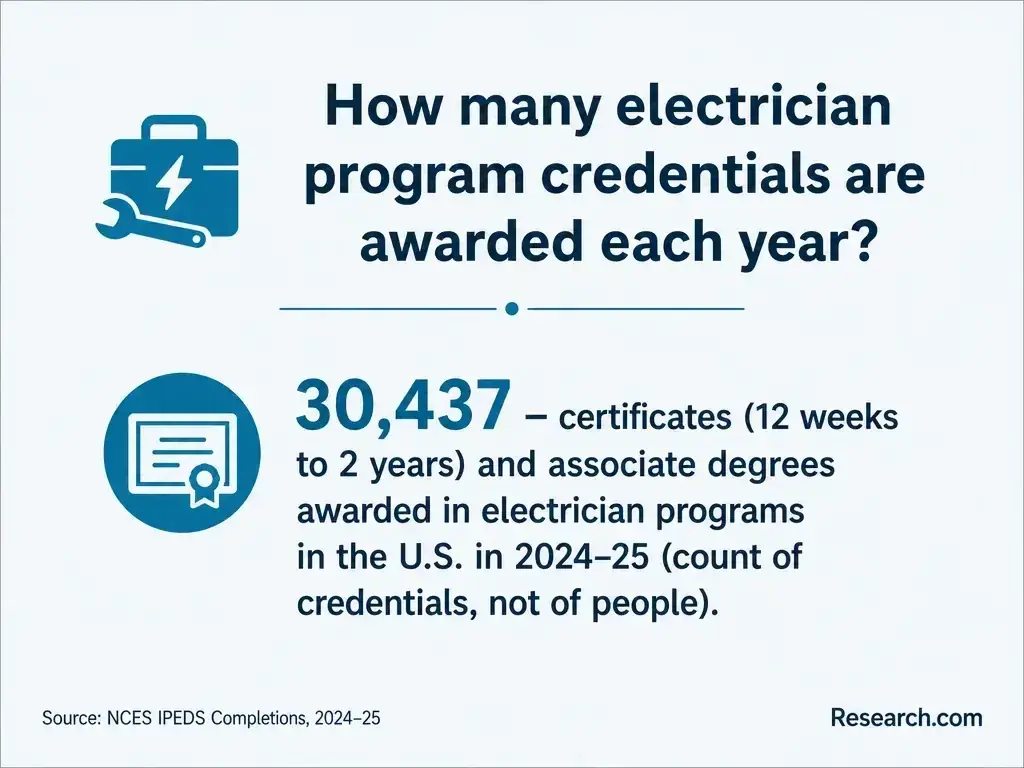
There is no defensible single Wilmington "average" without a defined group of comparable programs and current, complete prices. Obtain a written, program-specific cost of attendance from Cape Fear Community College or any other provider you are considering. For a college route, confirm residency-based tuition and whether financial aid applies to the particular credential. Federal Student Aid notes that eligibility depends on the student and eligible program, not merely the fact that a school offers aid.
Budget beyond tuition: mandatory fees, books or software, tools, boots and other protective equipment, transportation to labs or jobsites, and any applicable examination or application charges. Compare that total with a paid apprenticeship's wages and any required purchases. North Carolina residents should also ask the college about current state aid, including Next NC Scholarship eligibility, and contact local workforce services about training assistance; neither should be assumed available before eligibility is confirmed.
To judge whether training is worth the investment, consider completion likelihood, debt, earnings while training, likely entry pay, and the time needed to move into more skilled work. A cheap program with little practical access may cost more in delayed employment than its tuition suggests.
The credential is whatever the specific pathway awards: a college certificate, diploma, or associate degree; a registered apprenticeship completion credential; or an employer's record of training. These are not interchangeable. A certificate documents completed coursework, while an apprenticeship completion credential documents a sponsor's required combination of instruction and supervised work, according to U.S. Department of Labor apprenticeship guidance.
Ask whether a shorter credential's courses count toward a longer Cape Fear Community College program and whether an apprenticeship sponsor grants advanced standing for prior schoolwork. Get the answer in writing before enrolling. Institutional accreditation concerns the school; industry recognition concerns particular training; apprenticeship registration concerns the sponsor's approved program. None is itself a North Carolina electrical contractor license.
Requirements vary by pathway. A college may require an application, placement or prerequisite coursework, and program-specific enrollment steps; an apprenticeship sponsor may also assess math readiness, interview applicants, and require the ability to reach changing jobsites. Confirm current requirements directly with Cape Fear Community College or the sponsor rather than relying on a general description of "electrician school."
Before applying, request the exact math and reading prerequisites, the next available start date, and the process for recognizing prior electrical work or coursework. If the pathway involves paid work, ask when wages begin and whether selection into the apprenticeship is separate from admission to its classroom instruction.
Core training commonly covers electrical calculations, circuits, wiring methods, blueprints, code use, safety procedures, and testing and troubleshooting. The U.S. Bureau of Labor Statistics identifies reading technical diagrams, using test devices, and following electrical codes as part of electricians' work. Those subjects matter most when students can apply them safely in labs and, later, under supervision on actual installations.
Review the syllabus for hands-on tasks rather than relying on course titles. Ask whether students bend and install raceway, make connections, use meters, diagnose faults, and receive instructor feedback on safe work practices. If you want industrial maintenance rather than building construction, compare the program's controls and troubleshooting content with the tasks local employers advertise.
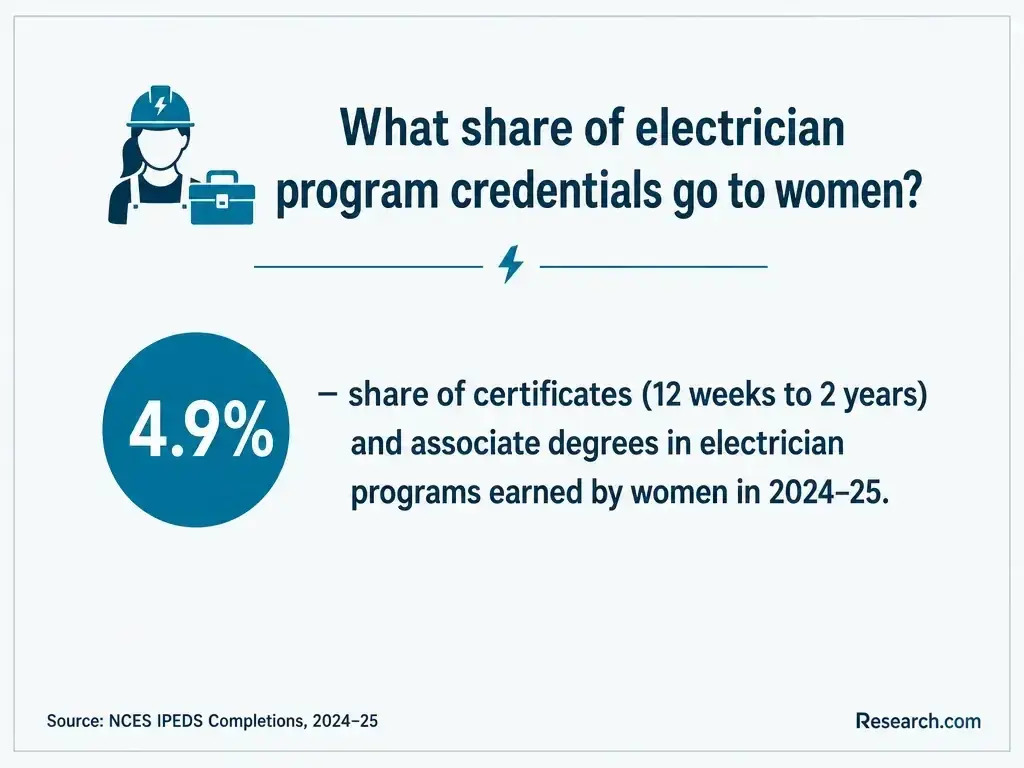
North Carolina regulates electrical contracting through the North Carolina State Board of Examiners of Electrical Contractors. Its contractor licensing system should not be confused with a school certificate or an optional industry credential. Whether a particular employee position requires an individual license is a different question from whether a business or person undertaking electrical contracting must hold the appropriate contractor license; verify the intended role with the board and prospective employer.
Board licensing classifications, examinations, and experience requirements matter especially if your goal is to qualify a contracting business or eventually work independently. Ask the board which experience counts toward your intended classification and how it must be documented. Do not assume classroom hours automatically replace required experience, that an apprenticeship completion automatically grants a license, or that credentials transfer unchanged across state lines.
Start with the job you want, then test each pathway against that goal. A school-based program can make sense if you need structured fundamentals or cannot yet secure an apprenticeship. A paid apprenticeship may make more sense if you can enter one and need income while accumulating supervised experience. Neither choice is best solely because it ranks well, finishes quickly, or has a low advertised tuition.
Use the following questions with admissions staff and apprenticeship coordinators. Written answers make it easier to compare programs on what will actually get you job-ready:
Verify institutional accreditation through the accreditor and current school information, and verify a registered apprenticeship through its sponsor or Apprenticeship.gov. Then check any contractor-license claim with the North Carolina board. This is a more useful investment test than a general comparison of the best skilled trades careers: it connects a specific credential and training experience to your intended work.
A common progression is entry-level helper or apprentice, then more independent installation or maintenance work as skills and supervised experience grow. Possible directions include residential and commercial electrical construction, industrial electrical maintenance, controls work, estimating, supervision, or eventually electrical contracting. Employers and the North Carolina licensing board, not a school credential alone, determine the requirements for particular positions or licensed contracting activity.
Choose electives and worksites with that progression in mind. Someone interested in troubleshooting equipment should seek substantial testing and controls practice; someone aiming to run a contracting business should preserve records of qualifying work and investigate board requirements early. Optional industry training can strengthen a specialty, but it should not be confused with mandatory contractor licensure.
The U.S. Bureau of Labor Statistics projects 9.2% growth in electrician employment nationally from 2025 to 2035. That signals broad demand, not a forecast of Wilmington vacancies or a promise of employment after a particular program. Local opportunities can differ by construction activity, maintenance hiring, employer requirements, and willingness to commute to changing jobsites.
For a realistic local outlook, compare recent electrical job postings with the skills taught, ask apprenticeship sponsors about openings and selection timelines, and ask a provider for documented employer partnerships. Growth makes practical training valuable; it does not make every credential equally effective.
Investing in electrician training is a consequential decision, so the Research.com team evaluates programs against others in the same occupation and location rather than against unrelated schools. The best-programs ranking considers student outcomes; earnings and return on investment; costs and debt; and quality and recognition. Only programs with completions reported to IPEDS are included. That makes the ranking useful for comparing covered programs, but it does not mean an unlisted apprenticeship or employer training route is unavailable or inferior.
Programmatic accreditation or relevant industry recognition accounts for 20% of the best-programs score, institutional accreditation for 10%, and student support for 10%. The remaining 60% covers outcomes, earnings, and costs, with weights distributed by an entropy-based method that gives more weight to indicators that vary more across programs. Most-affordable rankings instead score tuition, attendance cost, median debt, and federal loan default rates; they do not score accreditation or other quality measures. Research.com draws on the following sources, using occupation-relevant information where applicable:
The ranking can narrow a school shortlist, but readers should separately verify current tuition, shop hours, apprenticeship connections, and whether training fits their intended work. More detail about the scoring approach is available in Research.com's methodology.
# 1 position
# 2 position
No. It is a school-based option to investigate, alongside registered apprenticeships and employer-sponsored training. Compare availability, supervised work, costs, and credentials before choosing.
Potentially. An apprenticeship or employer-entry role may let you begin paid work while receiving instruction. Ask the sponsor how classroom training and supervised experience are structured.
No. A school certificate is not an electrical contractor license. Check the North Carolina State Board of Examiners of Electrical Contractors for requirements relevant to the work you intend to perform.
Online coursework can teach theory, but practical electrical skills require in-person training and assessment. Verify how the program supplies labs or supervised work before enrolling.
It depends on fees, tools, aid, travel, and wages earned during training. Request a complete school cost estimate and the apprenticeship's pay and required purchases before comparing them.