
Best Electrical Technician Training Programs & Trade Schools in Savannah for 2027
Audited and Verified:
Our Editorial and Data Verification Process
Research.com uses government datasets, official education statistics and primary institutional information to support its career and degree guides. Our review process checks factual accuracy, occupational definitions, source dates and the requirements associated with the credentials discussed.
How This Article Was Fact-Checked
Our editorial team verifies salary estimates, employment projections, education requirements and program information against original data providers and official organizations. Salary figures are checked against the relevant occupational definitions and reporting periods. Information about licensure, accreditation and required in-person training is reviewed separately.
Fact-checked and verified on:

Co-Founder and Chief Data Scientist

Reviewed by Karolina Broda
Fact-Checker and Data Verification
Choosing electrician training in Savannah means deciding whether to pay for a school program, pursue a paid apprenticeship, or combine the two. The decision matters: the U.S. Bureau of Labor Statistics projects electrician employment to grow 9.2% nationally from 2025 to 2035. This guide explains local training choices, hands-on requirements, costs, wages, and Georgia licensing. It also accompanies the Best Electrician Trade Schools in Savannah for 2027 ranking, created by the Research.com team of data scientists to help students identify programs worth considering.
Key findings about electrician degrees in Savannah
- Savannah applicants should compare a hands-on school credential with a paid apprenticeship: a certificate or diploma alone does not replace supervised work experience or confer a Georgia electrical contractor license.
- The U.S. electrician median wage was $63,190 in May 2025, with 9.2% projected national employment growth for 2025-2035, according to the Bureau of Labor Statistics. Neither figure is a Savannah starting-wage estimate.
- A registered electrician apprenticeship typically lasts four or five years nationally and includes paid work and technical instruction, according to the Bureau of Labor Statistics. Ask schools and sponsors which hours, costs, and credentials apply to their specific pathway.
Table of Contents
- Best Electrical Technician Training Programs & Trade Schools in Savannah for 2027
- What can I expect from an electrician trade school program in Savannah?
- Where can I work with an electrician trade school training in Savannah?
What can I expect from an electrician trade school program in Savannah?
Expect electrical theory paired with physical practice: interpreting plans, measuring and installing circuits, testing equipment, and following electrical-code and safety procedures. Savannah Technical College is a local public-college option to investigate; confirm its currently offered electrical credentials, schedule, and shop hours directly rather than assuming every listed program is accepting students.
A school certificate or diploma can prepare you to seek entry-level electrical work, but it is not the same as a registered apprenticeship. An apprenticeship combines classroom instruction with supervised, paid jobsite work. A short pre-apprenticeship may help someone qualify or compete for an apprenticeship without providing the same experience or completion credential. If you can secure paid training immediately, compare its wages and instruction with the cost and job-placement value of attending school first.
Where can I work with an electrician trade school training in Savannah?
Electrical contractors install and service systems in homes, commercial buildings, and construction projects; maintenance teams troubleshoot equipment in operating facilities. In the Savannah area, that makes construction, port-related facilities, logistics buildings, manufacturing sites, and building maintenance sensible employers to investigate. The work differs: construction offers installation experience, while industrial maintenance may demand more motors, controls, and troubleshooting. Ask a program which local employers host work-based training and whether its labs cover the setting you want to enter.
Entry-level workers generally perform electrical tasks under an employer's supervision. School training can strengthen an application, but an employer may still require substantial jobsite experience before assigning more independent work.
The latest national Bureau of Labor Statistics Occupational Outlook Handbook figure supplied for electricians is a $63,190 median annual wage for May 2025. A median describes workers across experience levels and locations; it is not an offer to a newly trained Savannah applicant. Compare actual local apprentice and entry-level job postings by hourly pay, expected hours, benefits, travel requirements, and scheduled wage increases.
For this trade, a useful earnings comparison is what you can earn during training, not just afterward. A paid apprenticeship may reduce forgone wages, while a school program may help you enter a stronger apprenticeship or job sooner. Broad comparisons of profitable majors answer a different investment question and should not stand in for local electrician pay offers.
Length depends on the credential, course load, and whether work experience is built in. Request each school's current calendar and required contact hours; a short certificate and a more extensive diploma may have substantially different lab time. Part-time study can preserve income but extend the time before completion.
For comparison, electrician apprenticeships typically take four or five years nationally and include roughly 2,000 hours of paid on-the-job training each year, according to the Bureau of Labor Statistics. Those are typical apprenticeship characteristics, not a claim that every Savannah school program or Georgia license requires identical hours. Unlike searches for best 1 year masters programs, the relevant timeline here is how long it takes to gain supervised electrical competence and move toward your intended job.
Online instruction can cover code concepts, calculations, and safety theory. It cannot replace physically wiring circuits, using test instruments, practicing lockout procedures, or receiving supervised jobsite feedback. A hybrid option is credible only if its required labs or work placements are accessible from Savannah and scheduled when you can attend.
Before choosing a remote course, ask how many practical hours it includes, where they occur, who assesses your work, and whether an apprenticeship sponsor recognizes the training. Browsing accredited online universities with zero application fees may be useful for other goals, but online institutional accreditation alone does not establish electrical competency or Georgia contractor-license eligibility.
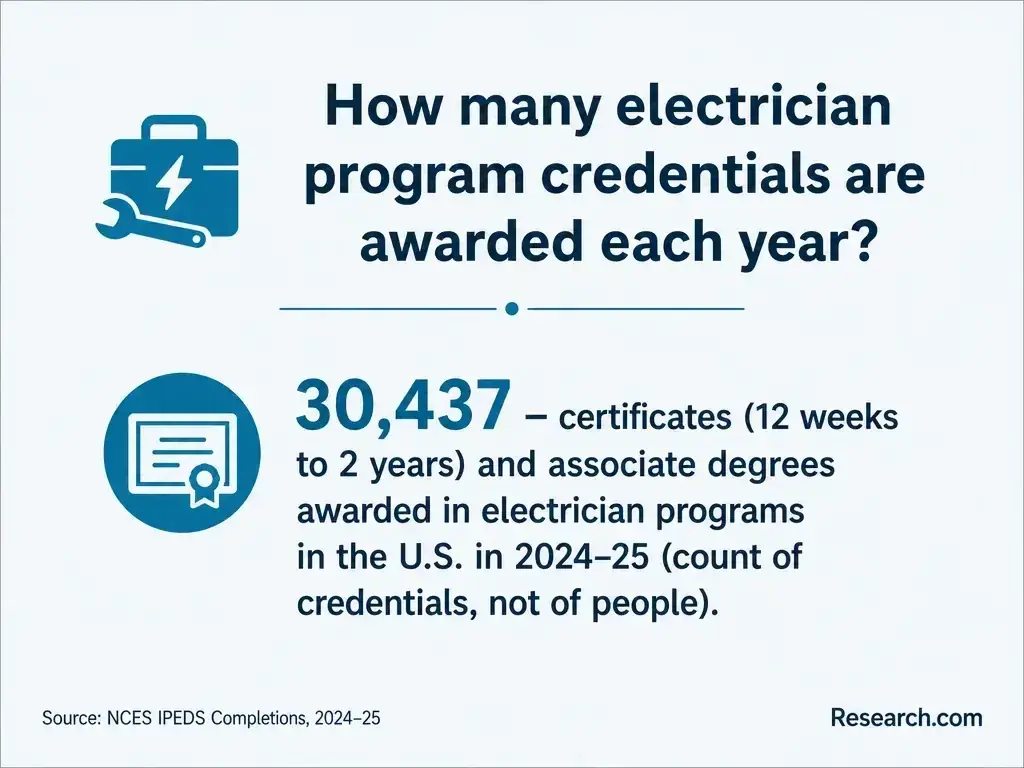
There is no defensible single Savannah average for electrician training: school credentials and paid apprenticeships use different prices and payment structures. Obtain a current, itemized quote from each school or sponsor. The figure that matters is your total cost to become job-ready, not advertised tuition.
Compare these items on the same basis so a lower tuition figure does not hide a higher overall cost:
- Tuition, mandatory fees, books, materials, tools, test equipment, and protective gear.
- Travel to labs and jobsites, any required screening, and examination or license-application fees relevant to your goal.
- Income forgone while studying, minus grants, eligible aid, employer contributions, or wages earned during an apprenticeship.
Ask Savannah Technical College about current charges and aid eligibility, and ask apprenticeship sponsors whether tools, instruction, and wage progression are covered. Federal aid depends on the institution, program, and student; do not assume every short course qualifies. Evaluate return on investment over a realistic working period, allowing for completion risk, borrowing costs, your current earnings, and the timing of future wages.
The credential may be a short occupational certificate, a diploma, or a registered-apprenticeship completion credential. These document different amounts and kinds of training. A school award does not itself establish registered-apprenticeship completion, and neither automatically grants a Georgia electrical contractor license.
Ask whether a school's courses can receive credit toward an apprenticeship, whether prior electrical work can earn advanced standing, and which employers recognize the specific award. Those answers matter more for this occupation than comparisons with dual degree undergraduate programs: the key question is what supervised electrical work the credential helps you access.
Requirements vary by provider. Schools may assess reading and math readiness and set age, education, or placement requirements; apprenticeship sponsors may also require an application, aptitude assessment, interview, and the ability to reach assigned jobsites. Check each provider's current rules rather than assuming a school admission offer also secures an apprenticeship position.
If you need a flexible starting point, distinguish admission flexibility from occupational readiness. Searching online open enrollment colleges does not resolve whether a Savannah electrical program has available labs, appropriate placement support, or an apprenticeship connection. Ask when practical classes meet and how applicants move into supervised work.
Core training commonly covers electrical calculations, wiring methods, drawings and schematics, circuits, tools and test instruments, troubleshooting, and safe work practices, according to the Bureau of Labor Statistics' description of electrician preparation. Compare programs by what students actually build, measure, and diagnose - not just by course titles.
Curriculum should match the work you want. Residential installation emphasizes building wiring; commercial and industrial work can place greater weight on larger systems, motors, and controls. Ask to see the shop equipment and the portion of instruction spent practicing rather than watching demonstrations. Electrical codes and equipment evolve, so the ability to read current requirements and troubleshoot unfamiliar systems matters beyond the first job.
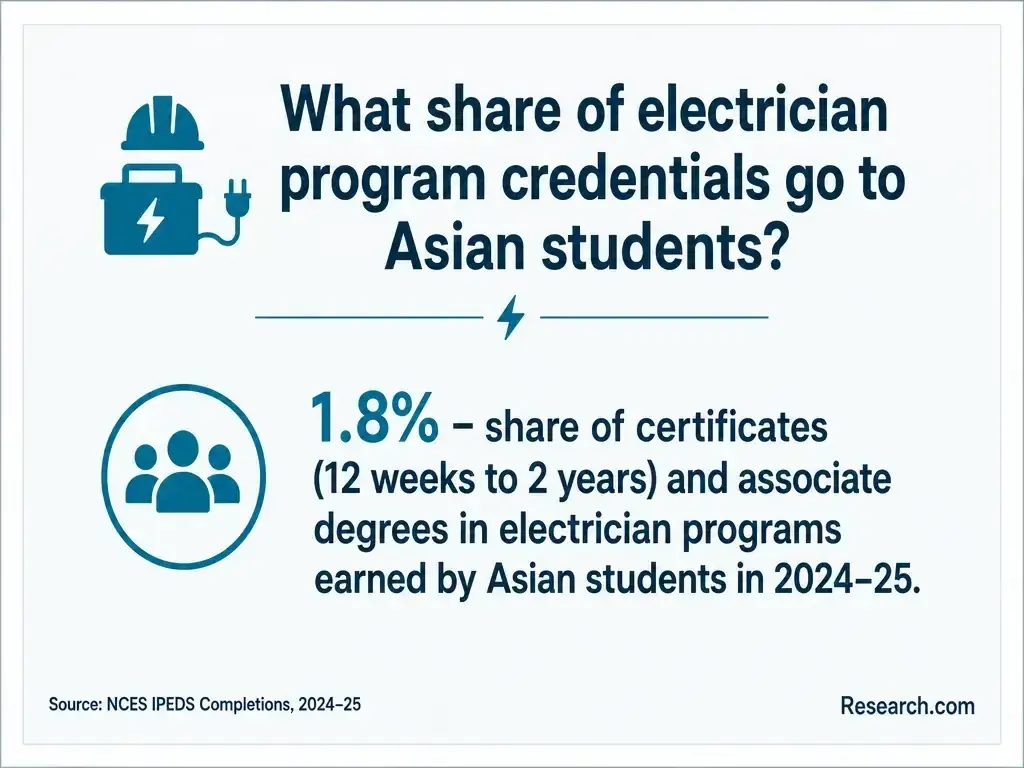
Georgia licenses electrical contractors through the State Construction Industry Licensing Board. Its electrical contractor classifications and application requirements concern those seeking to contract for electrical work; a school credential is not a contractor license. Georgia does not issue a general statewide journeyman electrician license as an automatic next step after trade school, according to the Georgia Secretary of State's licensing information.
If your goal is to run an electrical contracting business, check the board's current experience, examination, and application requirements before selecting training. If your goal is an employed apprentice or electrical worker role, ask the employer or apprenticeship sponsor what supervision and documentation it requires. Institutional accreditation, industry training recognition, registered-apprenticeship status, and occupational licensure answer different questions; none should be presented as interchangeable.
Start with the job you want, then work backward. A hands-on school program can be worthwhile if it provides skills and employer access you cannot obtain as readily through paid training. An apprenticeship may be the better first move if a suitable sponsor will hire you now and provide structured instruction. Neither path is universally faster or cheaper for every applicant.
Use these questions with each school or sponsor before committing:
- Which credential will I receive, and how much supervised lab and jobsite practice is required?
- What is my itemized net cost after aid or paid work, including tools and transportation?
- Do local employers or apprenticeship sponsors recognize this training or award advanced standing for it?
- What completion and employment evidence is available for this specific program, and how is it measured?
- If I eventually want to contract independently, which Georgia board requirements would remain?
Verify institutional accreditation through the institution and its accreditor, and verify apprenticeship registration with the sponsor or Apprenticeship.gov. Treat a promised license, a "fully online electrician" claim without practical assessment, or a tuition quote that omits required equipment as a reason to investigate further. A ranking helps narrow options; these checks determine whether an option fits your goal.
An entry-level installation or maintenance role can lead to more complex troubleshooting, crew leadership, estimating, or specialization as experience grows. Savannah's mix of building projects and operating industrial and logistics facilities makes it useful to ask whether a program prepares students for construction work, ongoing facility maintenance, or both.
Independent electrical contracting is a separate advancement decision: it requires meeting Georgia's applicable licensing rules, not merely finishing school or gaining a voluntary industry certificate. If that is your long-term aim, keep records of supervised work and confirm with the state board what experience it accepts.
The Bureau of Labor Statistics projects 9.2% U.S. electrician employment growth from 2025 to 2035. That national projection indicates potential demand but does not forecast openings in Savannah or guarantee a position after training. For a local decision, compare current area job postings and apprenticeship openings, then check whether they seek residential installation, commercial construction, or industrial maintenance skills.
Job access also depends on when projects hire and whether you can travel to changing worksites. A program with a realistic route into supervised work can be more valuable than one with a convenient schedule but no clear employer connection.
Best Electrical Technician Training Programs & Trade Schools in Savannah for 2027
Education is a consequential investment, so the Research.com team compares electrician programs with other programs in the same occupation and location - not with unrelated trades. Only programs reporting completions to the Integrated Postsecondary Education Data System (IPEDS) qualify for the ranking. That makes the results useful for comparing eligible schools, but it also means a registered apprenticeship or employer training program may be a worthwhile option even if it does not appear.
Best-program scores consider student outcomes, earnings and return on investment, costs and debt, and quality and recognition. Occupation-relevant programmatic accreditation or industry recognition accounts for 20%; institutional accreditation, 10%; and student support, 10%. The remaining 60% covers completion and retention, earnings after completion, earnings relative to annual attendance cost, tuition, attendance cost, debt - including debt held by students who withdrew - and federal loan default rates. An entropy-based method assigns more weight to indicators that differ more across programs. Most-affordable-program rankings use only cost and debt indicators, also weighted through that method; they do not score accreditation or other quality measures.
To check the credibility and accuracy of the ranking, the team uses the following sources across its trade-program research. Some accreditation and certification organizations listed here serve other occupations and should not be interpreted as electrician-program approval:
- IPEDS database - program completions and institutional data.
- National Center for Education Statistics - federal education data and definitions.
- College Scorecard database - available cost, debt, and earnings measures.
- Peterson's database - supplemental institution and program information.
- Commission on Accreditation of Allied Health Education Programs (CAAHEP) - occupation-specific accreditation information where applicable.
- Accrediting Bureau of Health Education Schools (ABHES) - occupation-specific accreditation information where applicable.
- Commission on Dental Accreditation (CODA) - occupation-specific accreditation information where applicable.
- Dental Assisting National Board (DANB) - occupation-specific credential information where applicable.
- National Center for Construction Education and Research (NCCER) - construction-training and industry-recognition information.
- Apprenticeship.gov Partner Finder - registered-apprenticeship pathway information.
The ranking is a starting point, not a substitute for confirming current program availability, lab access, total cost, employer connections, and Georgia licensing rules. Readers can find further details on Research.com's methodology.

Frequently asked questions about electrician programs in Savannah
Is trade school required to become an electrician in Savannah?
No single trade-school credential is the universal entry route. Paid apprenticeship and employer training are alternatives. Compare their admission requirements, instruction, supervised work, and credentials before paying for school.
Can I become an electrician entirely online?
Online lessons can teach theory, but electrical installation, testing, and safe work practices require in-person assessment and supervised practice. Confirm where a hybrid program provides those components.
Does a diploma qualify me for a Georgia electrical contractor license?
No. Georgia's State Construction Industry Licensing Board sets contractor-license requirements separately. Check its current experience, examination, and application rules for the classification you intend to pursue.
Should I choose school or a paid apprenticeship?
Choose based on the offer available to you. Compare school cost and practical training with an apprenticeship's wages, instruction, jobsite experience, entry requirements, and time to completion.
Is the national electrician median a realistic starting salary?
Not necessarily. The Bureau of Labor Statistics' May 2025 national median of $63,190 covers electricians at different career stages. Use local entry-level and apprentice offers to plan your budget.
- U.S. Bureau of Labor Statistics - Electricians
Used to verify salary, employment outlook, and typical education requirements.
https://www.bls.gov/ooh/construction-and-extraction/electricians.htm - NCCER - Accredited Training
Used to verify programmatic accreditation or industry recognition of programs.
https://www.nccer.org/ - O*NET OnLine - Electricians
Used to verify common responsibilities, skills, work settings, and education expectations.
https://www.onetonline.org/link/summary/47-2111.00 - Savannah Technical College - official website
Official school website (programs, tuition, admissions).
https://www.savannahtech.edu/