
# 1 position
Best Electrical Technician Training Programs & Trade Schools in Jacksonville for 2027
Audited and Verified:
Our Editorial and Data Verification Process
Research.com uses government datasets, official education statistics and primary institutional information to support its career and degree guides. Our review process checks factual accuracy, occupational definitions, source dates and the requirements associated with the credentials discussed.
How This Article Was Fact-Checked
Our editorial team verifies salary estimates, employment projections, education requirements and program information against original data providers and official organizations. Salary figures are checked against the relevant occupational definitions and reporting periods. Information about licensure, accreditation and required in-person training is reviewed separately.
Fact-checked and verified on:

Co-Founder and Chief Data Scientist

Reviewed by Karolina Broda
Fact-Checker and Data Verification
Choosing electrician training in Jacksonville means comparing more than schools: a short credential and a paid apprenticeship offer different routes to job-ready skills. The U.S. Bureau of Labor Statistics projects 9.2% national growth in electrician employment from 2025 to 2035. This guide explains local training options, costs, hands-on experience, and Florida licensing rules. It also accompanies the Best Electrician Trade Schools in Jacksonville for 2027 ranking, created by the Research.com team of data scientists to help students make an informed choice about programs worth considering.
Key findings about electrician degrees in Jacksonville
- For a faster introduction to electrical work, compare hands-on school programs with entry-level jobs; for structured paid training, compare registered apprenticeships. A school credential alone does not replace supervised experience.
- The U.S. Bureau of Labor Statistics reports a $63,190 national median annual wage for electricians in May 2025. This is not an expected starting wage in Jacksonville.
- Florida regulates electrical contracting through the Department of Business and Professional Regulation. Before enrolling, ask how a program's labs, work placement, and records support the experience requirements for your intended path.
Table of Contents
- Best Electrical Technician Training Programs & Trade Schools in Jacksonville for 2027
- What can I expect from an electrician trade school program in Jacksonville?
- Where can I work with an electrician trade school training in Jacksonville?
What can I expect from an electrician trade school program in Jacksonville?
Expect instruction in electrical safety, circuit theory, wiring methods, code use, and troubleshooting, followed by practice with tools and equipment. For this occupation, a useful program must do more than explain circuits: students need supervised opportunities to install, test, and diagnose electrical systems. The U.S. Bureau of Labor Statistics (BLS) describes both classroom instruction and on-the-job learning as central to electrician preparation.
Florida State College at Jacksonville and Tulsa Welding School-Jacksonville are examples of institutions a prospective student may investigate. Compare their current, specific electrical offerings rather than assuming that every offering provides the same lab time, credential, or route into employment. A registered apprenticeship is a distinct option: it combines paid work under supervision with related instruction through a sponsor, rather than ending when school classes end (U.S. Department of Labor).
If your goal is to start earning while learning, investigate apprenticeships and employer entry routes before paying for a stand-alone credential. If you need foundational skills or a structured introduction before seeking a sponsor, a lab-based school program may fit better. Broader comparisons of trade-school formats can help you frame questions, but an electrician program's local practical training is decisive.
Where can I work with an electrician trade school training in Jacksonville?
Electrical contractors are a primary destination for trainees. Work may involve new construction, renovations, service calls, or industrial installations; facilities employers may also hire people for electrical maintenance roles. BLS identifies electrical contractors and manufacturing among electrician employers. In Jacksonville, the distinction matters because a contractor's supervised jobsite work and a facility maintenance job may develop different experience and lead toward different responsibilities.
Ask a prospective employer whether the position includes supervised electrical work, who documents that work, and whether related instruction is provided. Do not assume that any job involving electrical equipment will count toward a future Florida contracting credential; confirm experience eligibility with the Florida Department of Business and Professional Regulation (DBPR) before relying on it.
The latest national BLS Occupational Outlook Handbook figure supplied for electricians is a $63,190 median annual wage in May 2025. Half of employed electricians nationally earned more and half earned less. It is a benchmark for an established occupation, not a Jacksonville entry-level offer or a forecast of what a program graduate will make.
For a local decision, compare actual Jacksonville trainee and apprentice offers with tuition and the wages you could earn while training. Ask whether quoted compensation is an apprentice rate, an experienced electrician's rate, or a contractor's business revenue. Those are not interchangeable. Pay can also differ with overtime, specialty, employer, and progression through supervised training.
A school credential can take substantially less time than becoming an experienced electrician. The exact schedule depends on the program's clock hours, attendance pattern, and lab requirements; obtain a current catalog rather than relying on a school-wide graduation timeframe. BLS describes electrician apprenticeships as typically lasting four or five years, with classroom instruction and supervised paid work. A shorter certificate does not compress all of that field experience into its course length.
Before choosing an accelerated schedule, ask how many hours are spent wiring and troubleshooting in person, whether the program arranges work-based learning, and whether its instruction can be credited by a particular apprenticeship sponsor. Get any advanced-standing decision from that sponsor in writing; similar course titles do not guarantee credit.
Online study can cover theory, mathematics, code navigation, and some safety concepts. It cannot by itself demonstrate safe tool use, installation, testing, or troubleshooting on physical systems. An on-campus or hybrid program should specify where those competencies are practiced and assessed; an apprenticeship develops them on supervised jobsites as well as through related instruction (BLS; U.S. Department of Labor).
The comparison below focuses on what each format can actually deliver, not on its marketing label.
| Format | Potential advantage | Point to verify |
| Online coursework | Flexible study of theory and code concepts | Where required practical skills will be learned and assessed |
| Campus or hybrid school program | Access to supervised labs | Lab hours, equipment, and any work-placement arrangement |
| Registered apprenticeship | Paid, supervised jobsite learning with related instruction | Sponsor entry rules, work availability, and class schedule |
For a working adult, scheduling flexibility has value only if it still permits required in-person practice. If comparing accelerated online study options for working adults, keep electrician training's hands-on requirement separate from coursework that can be completed remotely. Do not assume an online credential satisfies a Florida experience or contracting requirement.
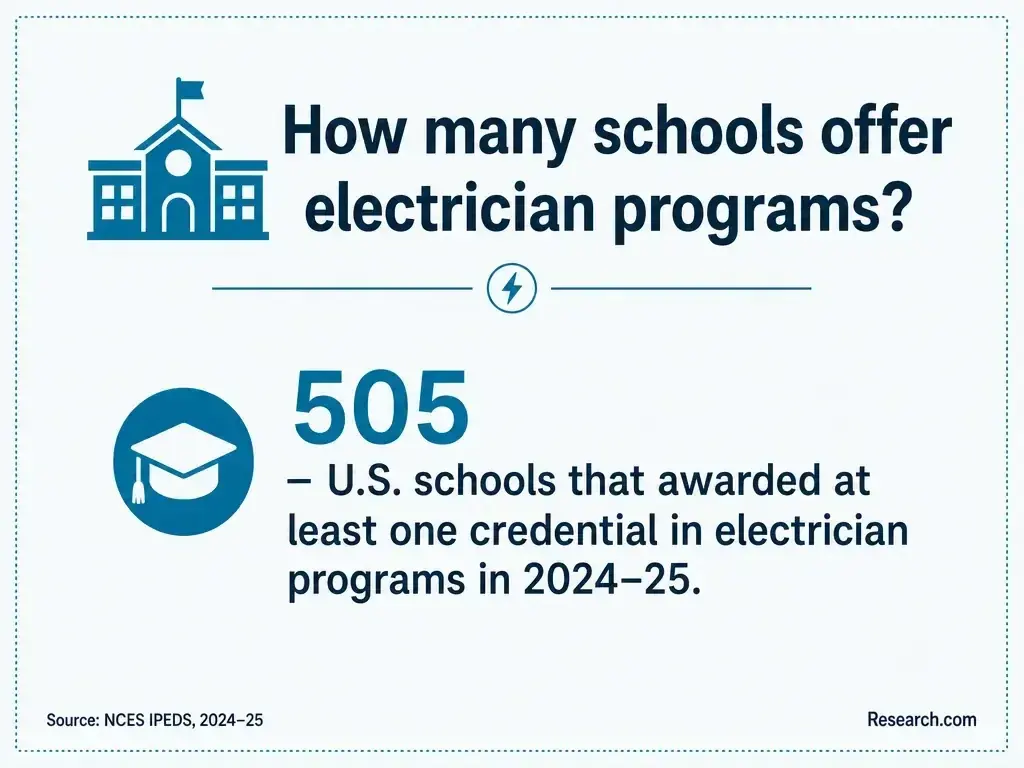
There is no single defensible Jacksonville-wide average for electrician training: school credentials and paid apprenticeships have different prices, lengths, and coverage, and college-oriented datasets do not capture every sponsor. Request a current, itemized estimate for the exact program and compare the cost to become job-ready, not tuition alone.
That estimate should include mandatory fees, books, tools, consumable materials, safety gear, transportation to labs or jobsites, and any relevant application or examination costs. Add earnings you would forgo while attending full time. A paid apprenticeship may offset costs with wages, while an eligible school program may offer federal aid or other assistance; neither benefit should be assumed until the provider confirms it (Federal Student Aid; U.S. Department of Labor).
Compare the final out-of-pocket amount with your likely completion schedule, debt, and realistic trainee pay. Financial return also depends on your current earnings, the chance of completing, future earnings, and how long you expect to work in the trade - not simply the institution's ownership type. Readers considering later-life retraining may find other flexible study comparisons for older adults useful, but should budget separately for electrician labs and field travel.
It depends on the route. A school may award a certificate, diploma, or other occupational credential; a registered apprenticeship has its own completion credential issued through the registered training system (U.S. Department of Labor). Neither should be described simply as an electrician "license." Ask the provider for the exact credential name and which employers or apprenticeship sponsors recognize it.
Also distinguish institutional accreditation, which concerns the institution; state authorization, which permits an institution to operate under applicable rules; industry recognition, which concerns particular training standards; and occupational licensure, which governs regulated work. None automatically substitutes for the others. If a school advertises apprenticeship credit, ask the intended sponsor to confirm its current articulation or advanced-standing policy before paying.
Requirements vary by provider and route. Schools may set education, assessment, age, or safety prerequisites; apprenticeship sponsors make their own entry decisions and may assess math readiness and ability to work safely. A school's admission offer is not an apprenticeship job offer. Check the current program catalog and sponsor notice for documentation, deadlines, required equipment, and any placement or employment steps (institution and apprenticeship sponsor requirements).
If you already have relevant electrical experience, ask whether a school offers prior-learning credit and whether an apprenticeship sponsor independently recognizes previous training. These are separate decisions. Applicants comparing schedules should also confirm whether classes and jobsites are accessible from home: transportation can determine whether an otherwise affordable Jacksonville option is workable.
A useful curriculum connects electrical theory to safe work: reading plans, measuring circuits, selecting materials, installing wiring, interpreting applicable electrical codes, and finding faults. BLS identifies safety practices, code knowledge, testing, and troubleshooting as part of electrician work. Because codes and equipment change, ask which code edition and equipment the current course uses rather than judging a program by its title.
Watch how students practice. Are they building and testing circuits under supervision, identifying unsafe conditions, and correcting mistakes, or mostly watching demonstrations? The answer matters more than whether two programs both call their award an "electrical" certificate. Classroom preparation can make a trainee more capable, but supervised work remains a separate part of developing occupational proficiency.
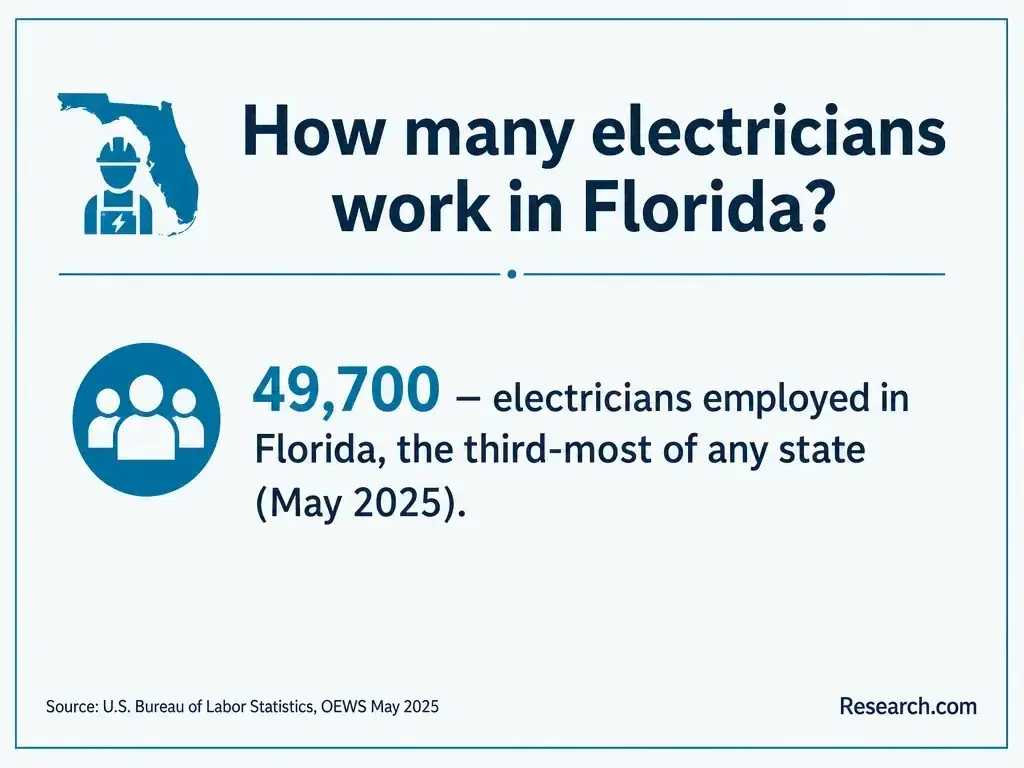
Do not confuse starting supervised electrical work with qualifying to contract for electrical work independently. Florida DBPR regulates electrical contractors, including certified contractors licensed to work statewide and registered contractors whose authority is tied to local registration. Contractor qualification involves applicable experience and examination requirements; finishing a school program alone does not confer a contractor license (Florida DBPR).
Local rules can matter as well. Before paying for training, ask Jacksonville's applicable local building or licensing authority and Florida DBPR which rules govern your intended role - trainee, employee, or contractor - and whether your planned work experience will be recognized. An industry certificate may help demonstrate skills to an employer, but it is not the same as apprenticeship registration or government-issued occupational authority.
Start with the job you want, then compare programs against the experience that job requires. The ranking can narrow your search, but its IPEDS completion requirement means you should separately investigate registered apprenticeships and employer training. A school is a sound investment only when its cost, schedule, practical training, and employer connections fit your route into paid work.
Use these questions with each school and apprenticeship sponsor; request written answers where credit, costs, or work placement affect your decision:
- What exact credential will I receive, and how many supervised lab and worksite hours are included?
- Is work placement arranged or merely suggested, and will a specific sponsor award credit for this training?
- What is the complete cost after required tools, safety gear, travel, fees, and available aid?
- What evidence supports completion and employment claims for this specific electrical program?
- Which Florida or local requirements would still remain before I could perform my intended work?
Be cautious of a program that advertises "licensed electrician" status from online coursework alone, omits hands-on hours, or cannot explain its credential's relationship to an apprenticeship. Institutional accreditation is worth checking, but it does not establish licensing eligibility. Comparisons of accredited online institutions can clarify what institutional accreditation means; verify occupation-specific practical training separately.
Many people begin in supervised installation or service work and progress by building jobsite skills. Later paths can include industrial electrical maintenance, controls-related work, crew supervision, or electrical contracting, depending on experience and applicable qualifications (BLS; Florida DBPR). A short school credential may help someone obtain an entry opportunity; it is not equivalent to the experience behind a senior role or a contractor credential.
Choose training around the work you want to perform. Someone drawn to service calls should ask about diagnostic practice; someone interested in industrial work should look for relevant equipment exposure and employers. For broader earnings comparisons, career-pay information across other fields offers context, but the electrician wage benchmark should still be weighed against paid training, time to proficiency, and the work itself.
BLS projects 9.2% growth in U.S. electrician employment from 2025 to 2035. That indicates national demand for the occupation, not a guaranteed opening for a newly trained worker in Jacksonville. Construction schedules, contractor hiring, and access to supervised positions will shape an individual's prospects.
Use that outlook as a reason to investigate local opportunities, not as a substitute for them. Before enrolling, check current apprentice and trainee openings, ask sponsors when they accept applicants, and compare whether a program's employer relationships match your preferred type of electrical work. A delayed start in paid field experience can change the value of even a short, affordable course.
Best Electrical Technician Training Programs & Trade Schools in Jacksonville for 2027
Investing in electrician training is an important decision. Research.com created its ranking to help readers compare programs against other options in the same occupation and location, rather than against unrelated schools. The team checks multiple education and industry sources to support the ranking's quality, credibility, and accuracy.
Best-program rankings assess student outcomes; earnings and return on investment; costs and debt; and quality and recognition. Programmatic accreditation or relevant industry recognition accounts for 20% of the score, institutional accreditation for 10%, and student support services for 10%. The remaining 60% covers outcomes, earnings, and costs, with weights distributed through an entropy-based method that gives more weight to indicators that vary more across programs. Most-affordable-program rankings score only tuition, attendance costs, debt, and federal loan default rates, using entropy-based weights.
The ranking draws on the following sources. Some cover colleges broadly; others help assess occupation-specific recognition or training pathways:
- IPEDS database
- National Center for Education Statistics
- College Scorecard database
- Peterson's database
- Commission on Accreditation of Allied Health Education Programs (CAAHEP)
- Accrediting Bureau of Health Education Schools (ABHES)
- Commission on Dental Accreditation (CODA)
- Dental Assisting National Board (DANB)
- National Center for Construction Education and Research (NCCER)
- Apprenticeship.gov Partner Finder
Only programs with completions reported to IPEDS are included. That means a registered apprenticeship or employer-run program may be a strong option without appearing in the ranking; absence is not a judgment about its quality or approval. Readers can use the ranking as a shortlist, then verify practical training and apprenticeship connections directly. More detail is available in Research.com's methodology.
# 2 position
Florida State College at Jacksonville - Electrician.
certificate or diploma
Frequently asked questions about electrician programs in Jacksonville
Is trade school required to become an electrician in Jacksonville?
Not necessarily. Registered apprenticeships combine paid supervised work with related instruction, and employer entry routes may also be available. Compare those options with school training based on your skills, access to openings, and the experience your intended role requires (BLS; U.S. Department of Labor).
Will an electrician certificate make me a licensed contractor in Florida?
No. Florida electrical contractor licensing has separate qualification requirements. Check your intended license category and experience with Florida DBPR before assuming coursework will count.
Can I complete electrician training entirely online?
Theory may be studied online, but safe installation, testing, and troubleshooting require in-person practice or supervised work. Ask where and how a program assesses those skills.
Should I choose a school program or a paid apprenticeship?
Choose based on access and fit. A school program may provide foundational lab practice before employment; an apprenticeship combines instruction with paid, supervised experience but has its own entry process. Compare total costs and the time until you can begin fieldwork.
What should I verify before paying a deposit?
Confirm the exact credential, required lab hours, total charges, refund terms, available aid, and any promised apprenticeship credit or placement. Get sponsor recognition and Florida licensing-related claims confirmed by the responsible organization.
- U.S. Bureau of Labor Statistics - Electricians
Used to verify salary, employment outlook, and typical education requirements.
https://www.bls.gov/ooh/construction-and-extraction/electricians.htm - NCCER - Accredited Training
Used to verify programmatic accreditation or industry recognition of programs.
https://www.nccer.org/ - O*NET OnLine - Electricians
Used to verify common responsibilities, skills, work settings, and education expectations.
https://www.onetonline.org/link/summary/47-2111.00 - Tulsa Welding School-Jacksonville - official website
Official school website (programs, tuition, admissions).
https://www.tws.edu/ - Florida State College at Jacksonville - official website
Official school website (programs, tuition, admissions).
https://www.fscj.edu/