
Best Electrical Technician Training Programs & Trade Schools in Leesburg for 2027
Audited and Verified:
Our Editorial and Data Verification Process
Research.com uses government datasets, official education statistics and primary institutional information to support its career and degree guides. Our review process checks factual accuracy, occupational definitions, source dates and the requirements associated with the credentials discussed.
How This Article Was Fact-Checked
Our editorial team verifies salary estimates, employment projections, education requirements and program information against original data providers and official organizations. Salary figures are checked against the relevant occupational definitions and reporting periods. Information about licensure, accreditation and required in-person training is reviewed separately.
Fact-checked and verified on:

Co-Founder and Chief Data Scientist

Reviewed by Karolina Broda
Fact-Checker and Data Verification
Choosing electrician training near Leesburg means deciding whether to pay for classroom instruction, seek a paid apprenticeship, or combine the two. The U.S. Bureau of Labor Statistics projects 9.2% national growth in electrician employment from 2025 to 2035, making the choice timely - not a guarantee of local openings. This guide compares training, costs, credentials, and Florida licensing rules. It also accompanies the Best Electrician Trade Schools in Leesburg for 2027 ranking, created by the Research.com team of data scientists to help students identify programs worth considering.
Key findings about electrician degrees in Leesburg
- For Leesburg, Florida, compare a hands-on school program with a paid apprenticeship before enrolling: a school credential alone does not confer a Florida electrical-contractor license (Florida Department of Business and Professional Regulation).
- The U.S. median annual wage for electricians was $63,190 in May 2025; it describes workers across experience levels and locations, not starting pay in Leesburg (U.S. Bureau of Labor Statistics).
- National electrician employment is projected to grow 9.2% from 2025 to 2035. Before paying tuition, confirm how a program connects classroom learning to supervised work and the credential you seek (U.S. Bureau of Labor Statistics).
Table of Contents
- Best Electrical Technician Training Programs & Trade Schools in Leesburg for 2027
- What can I expect from an electrician trade school program in Leesburg?
- Where can I work with an electrician trade school training in Leesburg?
What can I expect from an electrician trade school program in Leesburg?
Expect instruction in electrical theory, code reading, installation methods, and safety, paired with practice using tools and circuits. The important distinction is where supervised job experience comes from: a school lab develops skills, but it is not automatically a substitute for employment or an apprenticeship.
These pathways lead to different credentials and levels of work experience. Confirm the current offerings and entry terms of any provider, including Lake-Sumter State College, rather than assuming every option is available in every term.
| Pathway | What it generally provides | Best fit |
| Certificate or diploma program | Focused instruction and, if offered, supervised labs; a school-issued credential | Someone seeking fundamentals before applying for electrical work or an apprenticeship |
| Associate degree with electrical coursework | Broader academic study alongside technical instruction; an academic credential | Someone who values broader coursework and has confirmed that the electrical content meets their goal |
| Registered apprenticeship | Paid, supervised employment with related instruction and an apprenticeship completion credential | Someone ready to earn while building substantial documented work experience |
| Employer-sponsored entry | Workplace training that varies by employer; a credential only if the arrangement provides one | Someone with an employer willing to train them and a clear plan for documenting experience |
For hands-on work, ask to see the lab schedule, equipment, instructor-to-student arrangements, and any documented employer placement agreement. A faster classroom credential can be useful, but it should not be advertised or interpreted as equivalent to completing an apprenticeship.
Where can I work with an electrician trade school training in Leesburg?
Potential settings include residential and commercial construction, building maintenance, industrial facilities, and electrical contractors serving Leesburg and the surrounding Lake County area. Duties differ: construction commonly involves installing systems on changing jobsites, while maintenance emphasizes troubleshooting existing equipment (U.S. Bureau of Labor Statistics, Occupational Outlook Handbook).
Ask a provider which employers actually recruit its students and where those jobsites are. A placement across the wider Central Florida area may be attractive, but travel time, transportation, and early-morning site reporting can materially change the value of a program for a Leesburg resident. Initial school training may support an entry-level application; employers determine hiring requirements, and independent contracting is a separate licensing question.
The U.S. Bureau of Labor Statistics reports a $63,190 median annual wage for electricians in May 2025. This national, occupation-wide midpoint is a benchmark - not a verified Leesburg wage or a likely first-year offer. Pay depends on experience, employer, specialty, hours worked, and the location of the jobsite.
For a useful local comparison, ask prospective apprenticeship sponsors and employers for their current starting rates, scheduled increases, benefits, and whether classroom hours are paid. Compare those offers with the cost and time required by a school program. Do not use a national median as projected personal earnings when calculating whether tuition is worthwhile.
There is no single Leesburg-wide program length. A focused certificate may take less time than an associate degree, while an apprenticeship combines related instruction with supervised employment over multiple years. Registered-apprenticeship schedules and required on-the-job and classroom hours depend on the sponsor's approved standards (U.S. Department of Labor, Apprenticeship.gov).
Request the exact clock or credit hours, lab hours, weekly timetable, and expected completion date for the program you are considering. Then ask whether its hours count toward a particular apprenticeship or experience requirement; do not assume that classroom time automatically substitutes for work experience. Part-time study can preserve current earnings but delay completion, while a faster full-time schedule can increase lost wages.
Online delivery can work for electrical theory, calculations, and some code instruction. Wiring, testing, fault-finding, tool use, and jobsite safety require supervised physical practice. A hybrid option is credible only if it specifies where and when students complete those practical components; an entirely online course should not be assumed to supply the experience needed for a particular job or license.
For Leesburg residents comparing travel with flexibility, ask how often attendance at a lab or worksite is mandatory and whether those locations are reachable from home. Search results for an accelerated online bachelor's degree address a different educational goal; they cannot establish whether electrician training includes required hands-on practice.
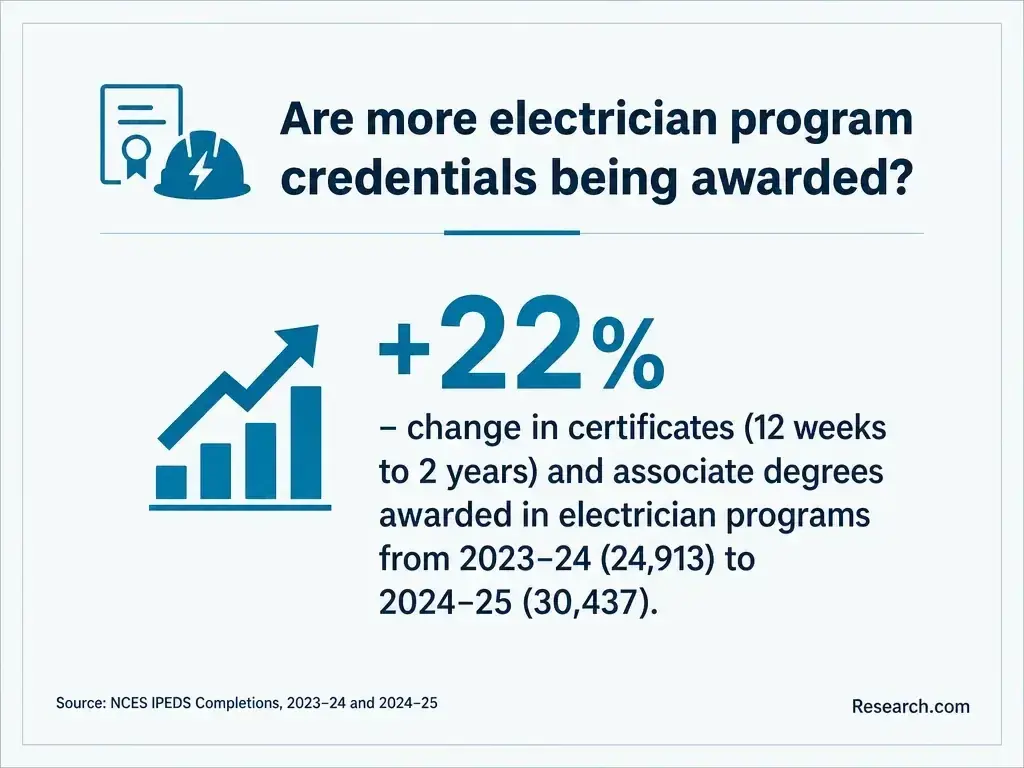
No reliable, uniform Leesburg average applies across certificates, associate degrees, and paid apprenticeships. Published tuition alone is an incomplete price. Ask each provider for a written, current cost-of-attendance estimate and distinguish required purchases from optional ones.
Use the same categories for every option so an apparently inexpensive program does not become the costlier route to job readiness:
- Tuition, mandatory fees, books, software, lab materials, and any separate tool or equipment charges.
- Work boots, other required protective equipment, transportation to labs and jobsites, and examination or application fees where applicable.
- Lost earnings during training, offset by any apprenticeship wages, employer support, grants, scholarships, or aid for which you actually qualify.
Ask Lake-Sumter State College or another provider about current aid eligibility, residency-based pricing if applicable, and payment deadlines; ask apprenticeship sponsors whether instruction or tools are covered. Federal aid depends on both student and program eligibility (Federal Student Aid). When considering longer-term earnings, account for completion probability, debt, your current pay, and how long it would take any earnings increase to offset costs. Lists of best non profit accredited universities do not replace an electrician-specific cost estimate.
The award depends on the pathway: a school may issue a certificate, diploma, or associate degree; a registered apprenticeship leads to its own completion credential. An industry training credential, if offered, is different again. Get the award's exact name in writing and ask employers or apprenticeship sponsors whether they recognize it for your intended role.
Institutional accreditation, school authorization, industry recognition, apprenticeship registration, and occupational licensure are separate matters. None automatically establishes the others. Before enrolling, verify an institution's accreditation with its accreditor, any required school authorization with the appropriate Florida regulator, and apprenticeship registration with the sponsor or apprenticeship agency. A list of universities that accept nationally accredited degrees does not answer whether electrician coursework transfers into an apprenticeship or qualifies for a particular job.
Requirements vary by provider and pathway. A school may ask for proof of prior schooling, placement information, and program-specific paperwork; an apprenticeship sponsor may also assess applicants' readiness for paid electrical work. The authoritative checklist is the current application from the school or sponsor, not a general description of the trade.
Ask whether the program requires particular math preparation, a minimum age, transportation to jobsites, or employer screening before enrollment or placement. Clarify which conditions apply to admission, which apply to employment, and which apply later to a license application. If an apprenticeship has a waiting period, compare the cost of taking introductory classes now with the possibility of entering paid training directly.
Relevant instruction typically covers electrical fundamentals, circuit calculations, blueprint interpretation, wiring methods, testing instruments, electrical-code use, and safe work practices (U.S. Bureau of Labor Statistics, Occupational Outlook Handbook). The decisive question is how students demonstrate those skills: working with a circuit in a supervised lab or jobsite provides different evidence of competence from completing a theory quiz.
Match the curriculum to the work you want. Someone aiming at commercial installations should ask about the systems and drawings used in practical exercises; someone interested in maintenance should ask about troubleshooting and testing. Request a syllabus and the number of supervised practical hours, then check whether local employers recognize the resulting preparation.
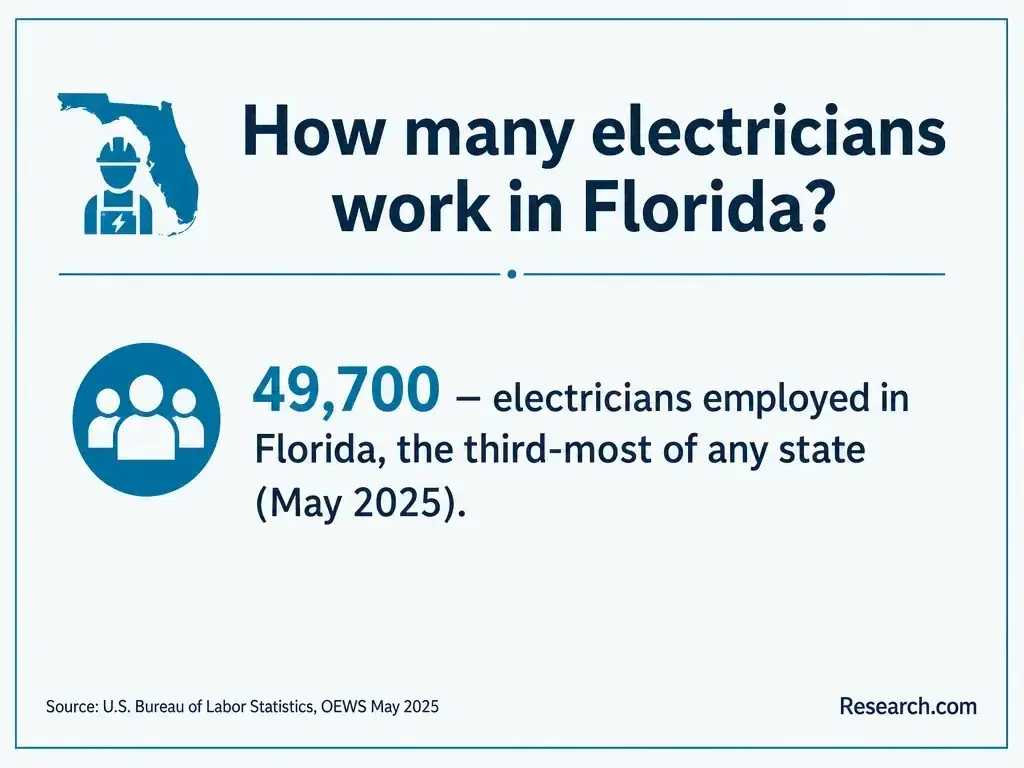
Florida regulates electrical contracting through the Florida Department of Business and Professional Regulation's Electrical Contractors' Licensing Board. State certified and locally registered contractor credentials have different scopes; contractor qualification involves requirements beyond finishing school, including experience and examinations (Florida Department of Business and Professional Regulation). Do not confuse a contractor license with permission to begin supervised electrical work for an employer.
Journeyman-related requirements and recognition can also involve local authorities, so confirm the rules for the jurisdiction where you intend to work - not just where you study. Before paying for training, ask the relevant licensing authority which experience records, instruction, and examinations apply to your intended credential. Optional industry certificates may help demonstrate skills, but they do not replace a required contractor license.
Start with your destination: entry-level employment, a registered apprenticeship, or eventual contractor qualification. A ranking can identify programs to investigate, but the best investment is the one that provides usable practical training and a realistic next step at a manageable total cost.
Work through these checks before committing money or leaving a job:
- Ask for the exact credential, curriculum, supervised lab hours, schedule, completion requirements, and current full price.
- Confirm accreditation and applicable school authorization separately; ask whether the program is itself part of a registered apprenticeship or merely helps applicants seek one.
- Ask sponsors and employers whether coursework earns credit, advanced standing, or recognition - and obtain any agreement in writing.
- Compare aid and debt with paid-training options, commuting costs, likely completion time, and the earnings you would give up while studying.
- Verify licensing claims directly with the relevant Florida or local authority, and request recent occupation-specific placement information with its reporting period.
Red flags include promised licensure on graduation, undisclosed tool charges, no accessible lab, or a placement claim without a defined measure. For someone seeking a trade credential, a page about the fastest online masters degree is not a substitute for checking electrical training and regulatory fit.
A realistic progression starts with supervised entry-level work or apprenticeship, followed by broader responsibility as skills and documented experience grow. Electricians can move toward residential or commercial installation, maintenance and troubleshooting, supervisory work, or - after meeting applicable requirements - electrical contracting (U.S. Bureau of Labor Statistics, Occupational Outlook Handbook; Florida Department of Business and Professional Regulation).
Choose an initial program for the next achievable step, not a distant title. If your goal is independent contracting, map the experience and examination requirements early and keep records of qualifying work. If you want stable maintenance work, weigh troubleshooting practice and employer connections more heavily than a program's speed. Resources about best college courses for seniors online may serve other learning goals, but they do not document electrical jobsite competence.
National electrician employment is projected to grow 9.2% from 2025 to 2035 (U.S. Bureau of Labor Statistics, Employment Projections). That supports considering the trade, but it is not a forecast of vacancies in Leesburg or of your chances of being hired.
Use the national outlook alongside local evidence: ask sponsors about current apprenticeship intake, review nearby employers' requirements, and check whether openings are within a workable commute. Changing equipment and installation needs can affect the skills employers request; a program with current code instruction and substantial supervised practice is better positioned to respond than one that relies on theory alone.
Best Electrical Technician Training Programs & Trade Schools in Leesburg for 2027
Investing in training is a consequential decision. Research.com created the ranking to help readers compare electrician programs with other programs serving the same occupation and location, rather than with unrelated schools. The team evaluates reported outcomes, costs, recognition, and student support; readers should still verify current program details before enrolling.
Only programs with completions reported to IPEDS are eligible. Best-program rankings assess completion and full- and part-time retention; earnings one year after completion and relative to annual attendance cost; tuition, attendance cost, debt - including debt held by students who withdrew - and federal loan default rates; plus institutional accreditation, occupation-relevant recognition, and support services. Relevant programmatic accreditation or industry recognition receives 20% of the score, institutional accreditation 10%, and student support 10%. Outcomes, earnings, and costs account for the remaining 60%, allocated using an entropy-based method that gives more weight to indicators that differ more across programs. Most-affordable rankings instead score only costs and debt, using entropy-based weights; they do not include accreditation or other quality indicators.
The following sources inform the ranking. Some accreditation and certification databases cover other trades or health occupations; their inclusion in the broader research process does not make those credentials electrician qualifications.
- IPEDS database - reported program completions and institutional data.
- National Center for Education Statistics - education data and documentation.
- College Scorecard database - available cost, debt, and earnings information.
- Peterson's database - supplemental institutional and program information.
- Commission on Accreditation of Allied Health Education Programs (CAAHEP) - occupation-specific accreditation checks where applicable, not electrician approval.
- Accrediting Bureau of Health Education Schools (ABHES) - occupation-specific accreditation checks where applicable, not electrician approval.
- Commission on Dental Accreditation (CODA) - occupation-specific accreditation checks where applicable, not electrician approval.
- Dental Assisting National Board (DANB) - certification checks where applicable, not electrician certification.
- National Center for Construction Education and Research (NCCER) - construction-training and industry-recognition information.
- Apprenticeship.gov Partner Finder - registered-apprenticeship pathway information.
IPEDS does not cover every apprenticeship, employer program, or career-training provider. An absent provider is not necessarily unapproved or inferior. Read more about Research.com's ranking methodology, then compare any shortlisted program with the practical requirements for the work you want to do.
# 2 position

Frequently asked questions about electrician programs in Leesburg
Is trade school required to become an electrician in Leesburg?
Not necessarily. A registered apprenticeship or employer-supported supervised work may be an alternative. Compare each route's instruction, documented experience, cost, and employer recognition.
Is an apprenticeship better than a certificate?
It depends on your goal. An apprenticeship combines paid work with instruction; a certificate can help build fundamentals or prepare you to apply. Ask whether certificate coursework receives apprenticeship credit before paying for both.
Can I complete electrician training entirely online?
Online theory is possible, but electrical installation and troubleshooting require hands-on practice. Confirm the location and hours of required labs or supervised work.
Will a school certificate make me a licensed electrical contractor?
No. Florida contractor licensing has separate experience and examination requirements (Florida Department of Business and Professional Regulation). Check the rules for the specific license you intend to pursue.
What should I ask about cost before enrolling?
Request a written total covering tuition, mandatory fees, books, tools, protective equipment, and required travel. Compare that amount with available aid and any wages you could earn in an apprenticeship.
- U.S. Bureau of Labor Statistics - Electricians
Used to verify salary, employment outlook, and typical education requirements.
https://www.bls.gov/ooh/construction-and-extraction/electricians.htm - NCCER - Accredited Training
Used to verify programmatic accreditation or industry recognition of programs.
https://www.nccer.org/ - O*NET OnLine - Electricians
Used to verify common responsibilities, skills, work settings, and education expectations.
https://www.onetonline.org/link/summary/47-2111.00 - Lake-Sumter State College - official website
Official school website (programs, tuition, admissions).
https://www.lssc.edu/