# 1 position

Audited and Verified:
Our Editorial and Data Verification Process
Research.com uses government datasets, official education statistics and primary institutional information to support its career and degree guides. Our review process checks factual accuracy, occupational definitions, source dates and the requirements associated with the credentials discussed.
How This Article Was Fact-Checked
Our editorial team verifies salary estimates, employment projections, education requirements and program information against original data providers and official organizations. Salary figures are checked against the relevant occupational definitions and reporting periods. Information about licensure, accreditation and required in-person training is reviewed separately.
Fact-checked and verified on:

Co-Founder and Chief Data Scientist

Reviewed by Karolina Broda
Fact-Checker and Data Verification
Choosing electrician training in Fort Dodge means comparing more than tuition: a short classroom program and a paid apprenticeship lead to different costs, experience, and licensing steps. The U.S. Bureau of Labor Statistics projects 9.2% national growth in electrician employment from 2025 to 2035. This guide explains local training choices, Iowa requirements, and the costs to check before enrolling. It accompanies the Most Affordable Electrician Trade Schools in Fort Dodge for 2027 ranking, created by the Research.com team of data scientists to help students identify programs worth considering.
Expect a mix of electrical theory, code instruction, and supervised practical work. At a campus program, that may mean wiring labs and troubleshooting exercises; in an apprenticeship, much of the practical learning takes place on paid job sites alongside related classroom instruction. Neither a lab exercise nor an online lesson substitutes for the documented work experience Iowa requires for progression toward independent licensed work.
Iowa Central Community College is the local public-college provider to ask about current electrical offerings, their Fort Dodge location, credential, lab schedule, and connections to employers or apprenticeships. Do not assume that any particular certificate or associate degree is currently offered, or that completing it shortens an apprenticeship: request the current catalog and written confirmation of any advanced standing. Generic accelerated-college guides, including lists of the fastest online associates degree options, do not establish how quickly someone can meet Iowa electrician experience requirements.
For someone who wants to earn while learning and can secure a sponsor, a registered apprenticeship may be the more direct route. A campus program can suit someone who needs structured preparation before applying to employers, but its value depends on the practical hours, employer connections, and credential it actually provides.
Electrical contractors offer routes into residential and commercial construction; industrial facilities and maintenance operations offer work with motors, controls, and equipment. The Fort Dodge area's construction and industrial employers make both directions worth exploring, but openings and apprenticeship sponsorship vary by employer and season. Ask whether a training provider places learners with local contractors or whether you would need to commute to another job site for supervised hours.
Training can also support applications for maintenance roles that include electrical tasks. Those jobs are not automatically equivalent to electrician apprenticeship experience: before accepting one as a licensing pathway, confirm with Iowa's Electrical Examining Board whether the work and supervision can be documented toward your intended license.
The U.S. Bureau of Labor Statistics reports a $63,190 national median annual wage for electricians for May 2025. That figure covers experienced workers as well as newer entrants; it is not a Fort Dodge starting wage or a forecast of what a program graduate will earn.
For a local decision, compare actual apprentice wage schedules and Fort Dodge-area job postings for the work you want - construction, service, or industrial maintenance. Check whether an offer includes benefits, overtime, paid travel, and scheduled wage increases. A paid apprenticeship may improve cash flow during training even if its starting wage is lower than the national occupational median.
A school credential and an apprenticeship run on different clocks. A school's published calendar describes time to its certificate, diploma, or associate degree - not necessarily time to journeyman eligibility. The U.S. Bureau of Labor Statistics describes electrician apprenticeships as typically lasting 4 or 5 years, combining technical instruction with paid on-the-job learning. Confirm the Iowa requirements that apply to the license you intend to pursue rather than assuming a short program replaces those years.
Ask Iowa Central for the current program's credit or contact hours, lab hours, full-time and part-time schedules, and whether classes can be taken while employed. If you hope to use previous training for credit or apprenticeship placement, get the receiving program's decision in writing. An associate degree in 6 months online accredited listing is not evidence that electrician practical work or licensing experience can be completed on that timetable.
Online instruction can cover concepts such as electrical calculations, code reading, and safety theory. It cannot by itself demonstrate safe installation, testing, troubleshooting, or supervised job-site performance. For Fort Dodge residents, the key question is where and when an online or hybrid provider requires in-person labs and how those sessions fit around work and travel.
The formats differ most in how readily a student can practice and document skills:
| Format | Potential benefit | Limit to verify |
| Campus-based | Scheduled access to instructors and wiring labs | Class hours, lab capacity, and travel costs |
| Hybrid | Some theory can fit around employment | Location and frequency of required hands-on sessions |
| Online theory-only | Flexible preparation or continuing study | Whether any practical training or recognized experience is included |
Institutional accreditation is useful to check, but a list of online colleges that are accredited nationally cannot establish whether an electrician program meets Iowa's practical-experience or licensing rules. Request a written explanation of the program's in-person component and its relationship to an Iowa-recognized training path.
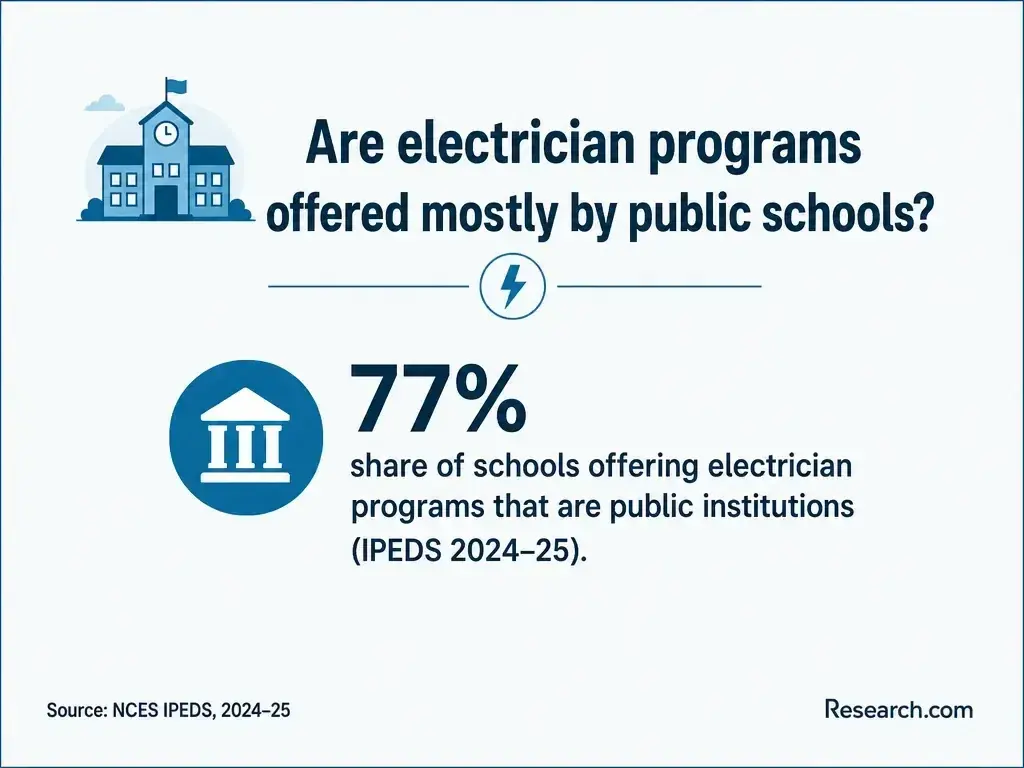
A reliable average for Fort Dodge electrician training is not available from a comparable set of current prices covering college programs and apprenticeships. Public-college tuition, a school's full cost of attendance, and the out-of-pocket cost of a paid apprenticeship measure different things. For a 2027 decision, request a current, itemized quote from each provider instead of relying on a single advertised tuition figure.
The following cost categories show why two programs with similar tuition can have different costs to become job-ready:
| Cost or offset | What to check |
| Instruction | Tuition, mandatory fees, books, materials, and any resident-rate rules |
| Practical training | Tools, meter, protective equipment, and consumable supplies |
| Career entry | Application, examination, and licensing charges where applicable |
| Time and travel | Trips to campus or job sites and earnings given up to attend classes |
| Offsets | Grants, scholarships, eligible aid, employer-paid instruction, and apprentice wages |
Ask Iowa Central which aid applies to the specific credential, not merely to the institution. Federal aid eligibility depends on the student and program, according to Federal Student Aid; workforce assistance may have separate eligibility rules. For return on investment, compare likely debt and completion prospects with paid-training alternatives, expected earnings over time, and the time spent reaching licensure - not tuition alone.
The credential depends on the pathway. A college may award a certificate, diploma, or associate degree if its current catalog lists one; a registered apprenticeship documents completion of its work-based training. None of these is itself an Iowa electrician license. Confirm the precise award and whether an employer or apprenticeship sponsor recognizes it before enrolling.
Likewise, institutional accreditation, state school authorization, an industry training credential, apprenticeship registration, and occupational licensure answer different questions. A program can be legitimate without its classroom hours automatically counting toward every licensing requirement. Broad lists of the best accredited universities online with no application fee do not answer whether a particular electrician credential includes labs or recognized supervised experience.
College admission and apprenticeship selection are separate processes. Ask Iowa Central for its current application, placement, prerequisite, and program-entry requirements. Ask each apprenticeship sponsor about its minimum age, education, math assessment, interview, work-authorization, transportation, and safety requirements; criteria and available places can differ by sponsor. Do not assume admission to a college program also secures an apprenticeship position.
If your goal is paid training, prepare transcripts and a record of relevant work or coursework, then contact sponsors about application windows before paying for preparatory classes. If your goal is college study first, ask whether the schedule allows employment and whether the credential has documented value to local hiring employers.
Useful electrician training connects electrical calculations and blueprint reading to safe installation and diagnosis. Look for instruction in circuits, wiring methods, grounding, overcurrent protection, testing instruments, and the electrical code used in the program, plus lab practice that lets students find and correct faults. The U.S. Bureau of Labor Statistics identifies these technical and troubleshooting tasks as central to electricians' work.
Match the practical component to your intended job. Residential wiring exercises may be a good starting point for construction work; someone targeting industrial maintenance should ask about motors, controls, and equipment troubleshooting. Request a course outline showing actual lab hours and equipment rather than assuming similarly named credentials teach the same skills.
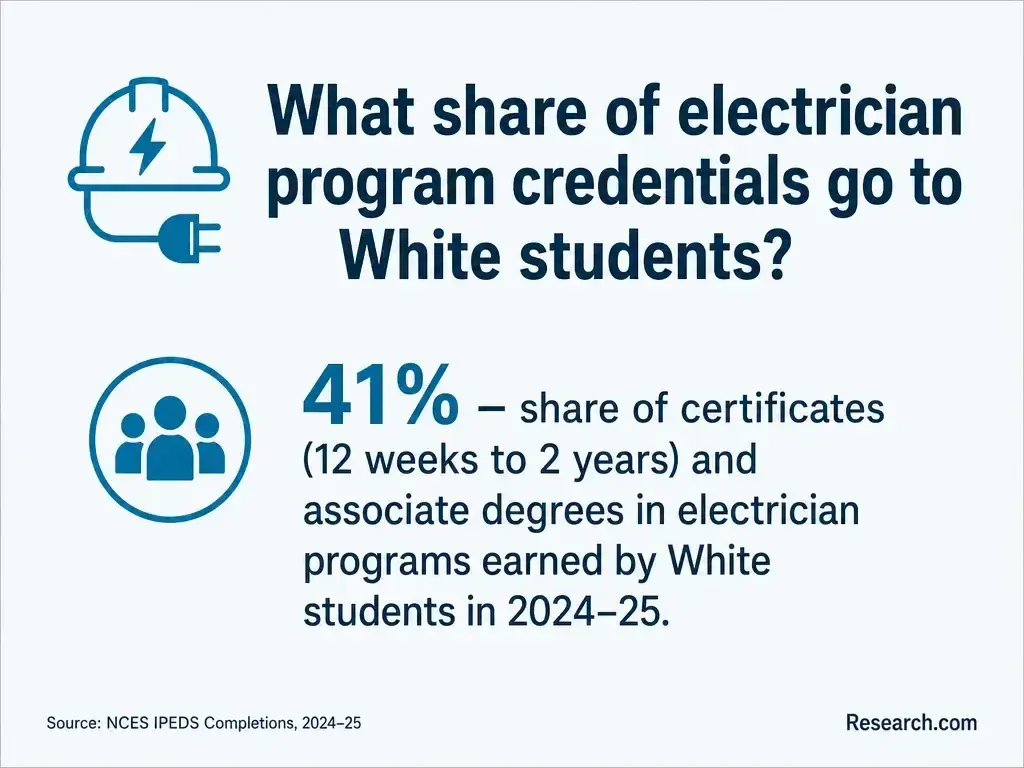
Iowa regulates electrical work through its Electrical Examining Board. The appropriate credential depends on the work and level of responsibility: a person learning under supervision is not in the same position as someone seeking independent journeyman work. Iowa's board sets the applicable licensing, experience, and examination rules; completing trade school does not automatically satisfy them. Check the board's current apprentice registration and journeyman requirements before choosing a program, particularly if you expect school instruction or prior work to count toward eligibility.
A voluntary industry certificate can demonstrate a skill, but it does not replace Iowa occupational licensure. Apprenticeship registration identifies a structured training arrangement; it is not the same as holding a journeyman license. If you may work across state lines, check the destination state's rules rather than assuming an Iowa credential transfers automatically.
Start with the job you want and work backward: identify the Iowa credential and supervised experience needed, then compare programs on how clearly they support that path. An affordable school program may be a sound investment if its labs, schedule, and employer connections address a gap you cannot fill through direct apprenticeship entry. It may be poor value if you can enter a paid apprenticeship now and the school provides no recognized advantage.
Before committing, use these questions to test the claims that matter most:
A common mistake is treating a ranking, accreditation label, or fast completion claim as proof of licensing eligibility. Another is using an unrelated education search - such as easiest masters programs to get into - to judge a skilled-trade pathway. For this decision, documented hands-on training, Iowa regulatory fit, total cost, and a realistic route to paid work are more useful.
An entry-level learner may progress through supervised apprentice work toward journeyman status after meeting Iowa's applicable experience and examination requirements. With experience, electricians may focus on residential service, commercial construction, industrial electrical maintenance, or controls. Supervisory work and operating an electrical contracting business involve additional responsibilities and may require different Iowa credentials; they are not automatic outcomes of a school award.
Choose early training for the work you want to test, not just the broad title "electrician." Someone interested in industrial systems should compare motor and troubleshooting instruction and ask about relevant job-site placements. Someone seeking the quickest paid entry should investigate current apprenticeship openings alongside college study.
The U.S. Bureau of Labor Statistics projects 9.2% growth in electrician employment nationally from 2025 to 2035. That is evidence of broader occupational demand, not a Fort Dodge job-opening forecast or a guarantee of local placement.
In a smaller labor market, the availability of a suitable sponsor or employer can matter more to a student than a national growth rate. Compare current local openings with positions you could reach by commuting, and ask sponsors when they next expect to recruit. Flexibility across construction and industrial work may widen options, provided your training and supervision match the job.
Investing in electrician training is an important decision, particularly when a low advertised tuition may not reflect the full cost of becoming job-ready. Research.com's team built this ranking to help readers compare affordable programs against other options in the same occupation and location. The team uses multiple education and training data sources and checks the measures used in the ranking for credibility and consistency.
Only programs with completions reported to the Integrated Postsecondary Education Data System (IPEDS) are eligible. The most affordable ranking scores costs and debt: tuition, cost of attendance, median student debt, and federal loan default rate. An entropy-based method assigns more weight to indicators that vary more across eligible programs. Accreditation and other quality indicators are not part of this affordability score.
That distinction matters when using the ranking. Research.com's separate best-program rankings also consider student outcomes, earnings and return on investment, and quality and recognition. Those rankings assign 20% to occupation-relevant programmatic accreditation or industry recognition, 10% to institutional accreditation, 10% to student support, and the remaining 60% to outcomes, earnings, and costs using entropy-based weighting.
The following sources inform the ranking and its underlying education and training comparisons:
Some listed sources concern other trades and do not establish electrician-program approval. IPEDS-based eligibility also means the ranking may omit registered apprenticeships, employer training, and providers that do not report completions to IPEDS. Use the ranking to narrow a college-program search, then verify current costs and Iowa licensing fit directly. Read more about Research.com's methodology.
# 1 position
# 2 position
Not necessarily. A registered apprenticeship combines instruction and supervised paid work and may provide a direct route. Check Iowa Electrical Examining Board rules for the credential you seek before choosing either path.
Online lessons can teach theory, but electrical installation and troubleshooting require in-person practice. Do not assume online coursework fulfills Iowa's supervised-experience or licensing requirements.
It can reduce foregone earnings because apprentices are paid, but compare sponsor requirements, tools, travel, and any classroom charges with a college program's full cost after aid.
No. A certificate, diploma, or associate degree is separate from Iowa licensure. Journeyman eligibility depends on the board's applicable experience and examination requirements.
Request the current electrical program's credential, total required cost, lab hours, schedule, and written information on employer connections or apprenticeship credit. Verify licensing implications with Iowa's Electrical Examining Board.