# 1 position


Audited and Verified:
Our Editorial and Data Verification Process
Research.com uses government datasets, official education statistics and primary institutional information to support its career and degree guides. Our review process checks factual accuracy, occupational definitions, source dates and the requirements associated with the credentials discussed.
How This Article Was Fact-Checked
Our editorial team verifies salary estimates, employment projections, education requirements and program information against original data providers and official organizations. Salary figures are checked against the relevant occupational definitions and reporting periods. Information about licensure, accreditation and required in-person training is reviewed separately.
Fact-checked and verified on:

Co-Founder and Chief Data Scientist

Reviewed by Karolina Broda
Fact-Checker and Data Verification
Choosing the cheapest electrician program is not enough if it leaves you without supervised experience or a route to licensure. The U.S. Bureau of Labor Statistics projects 9.2% national electrician employment growth from 2025 to 2035, making training choices consequential now. For prospective apprentices and career changers, this guide compares Omaha-area costs, credentials, practical training, and Nebraska requirements. It accompanies the Most Affordable Electrician Trade Schools in Omaha for 2027 ranking, created by the Research.com team of data scientists to help students make an informed choice about programs worth considering.
Expect instruction in electrical theory, circuits, code interpretation, blueprint reading, testing, and jobsite safety, paired with supervised practice. Wiring a training board is useful, but it is not the same as accumulating verifiable experience on occupied buildings or construction sites. Before enrolling, ask how much work occurs in a lab, who supervises it, and whether the program connects students to employers or registered apprenticeships.
Metropolitan Community College Area is a public-college option to investigate. The alternatives include registered union or nonunion apprenticeships and employer-sponsored training; availability, entry criteria, and schedules can change. A short school program can suit someone who needs foundational skills before seeking an employer. A paid apprenticeship may fit better if the applicant can secure a position and wants classroom learning integrated with supervised work and wages. Neither route makes a student independently licensed upon enrollment or graduation.
Possible settings include residential construction and service, commercial buildings, industrial facilities, and building maintenance. Omaha-area projects may also involve work across the Missouri River in Iowa. That commute matters: the state where the electrical work is performed determines which licensing and supervision rules apply. Nebraska training or registration should not be assumed to authorize work in Iowa.
Employers may value candidates who can read plans, work safely around energized systems, document tasks, and arrive reliably at changing jobsites. A school credential can help demonstrate preparation, but hiring for electrical work also depends on the employer's ability to provide appropriate supervision and a path toward required licensing.
A verified Omaha-specific wage figure is not established here, so the appropriate benchmark is national rather than a claimed local salary. The U.S. Bureau of Labor Statistics reports a $63,190 national median annual wage for electricians in May 2025. A median is the midpoint for employed electricians across experience levels; an apprentice's initial pay can be substantially different.
For an Omaha decision, compare actual local apprenticeship wage schedules and job offers, including scheduled increases, benefits, overtime conditions, and commuting costs. Do not calculate a program's payoff using the national median as though it were a guaranteed first-year wage.
There is no single completion time. A preparatory certificate can be much shorter than an associate degree, while a registered apprenticeship combines related instruction with supervised employment over multiple years. Finishing classroom training and qualifying for independent electrical work are therefore separate milestones.
Ask each provider for its published calendar, weekly attendance, lab hours, and any required work placement. Then ask the Nebraska State Electrical Division how the specific training and documented work experience count toward the license you intend to pursue. An accelerated schedule saves calendar time only if it does not displace the practical experience you still need.
Online delivery can work for electrical theory, code study, and some calculations. Installing conduit, making terminations, using test instruments, and demonstrating safe work practices require supervised, in-person training. A hybrid option can reduce classroom trips, but students still need access to its lab or worksite on the required schedule.
Before paying for a remote course, request its practical-training plan and written explanation of how it supports Nebraska apprenticeship or licensing requirements. An entirely online completion certificate should not be treated as proof of jobsite competence or license eligibility. General resources on best affordable online colleges for working adults may help with study-format questions, but they cannot replace that trade-specific check.
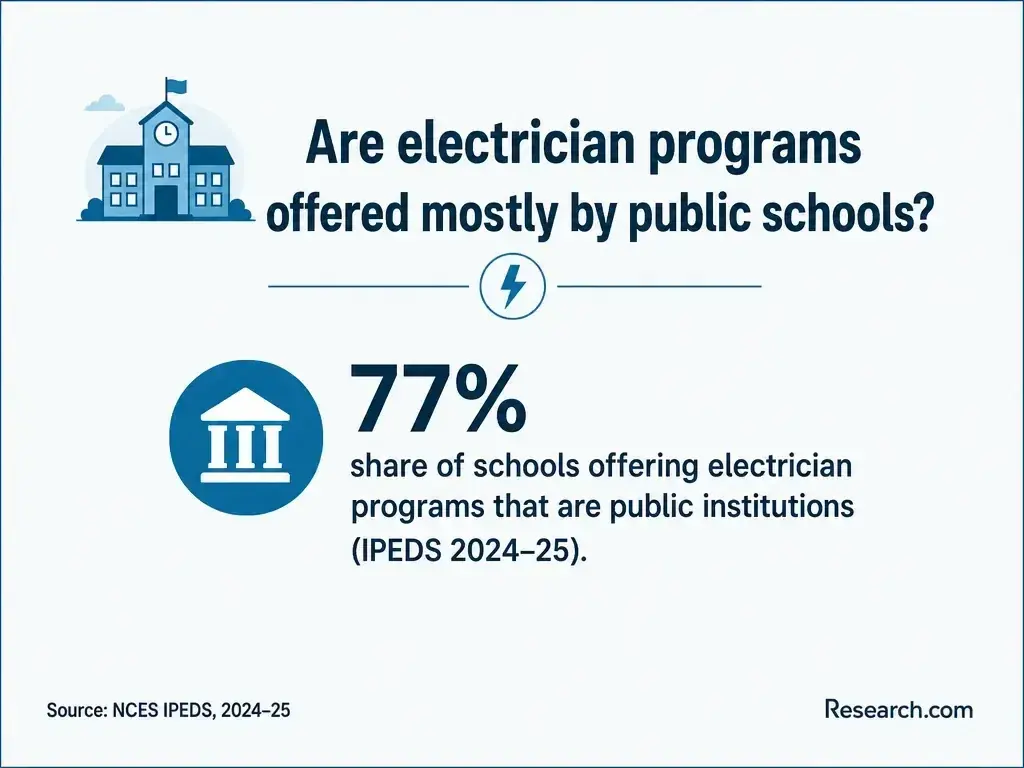
No defensible Omaha-wide average covers college programs, private training, and paid apprenticeships on the same basis. Published tuition alone also misses costs that determine whether an option is affordable. Compare quotes for the entire route to job readiness, not just the first term.
Request an itemized estimate covering tuition, mandatory fees, books or code materials, tools, meters, protective equipment, travel to labs and jobsites, and any applicable exam or licensing charges. Add foregone earnings if attendance reduces your work hours. For an apprenticeship, account for wages and any sponsor-provided equipment, but ask what the apprentice must purchase.
Eligible students should ask the provider about federal aid, grants, and workforce funding; eligibility depends on the student and program, not merely on a school's marketing. A list of universities with low tuition programs that accept fafsa is not evidence that a particular electrician credential qualifies for aid. Confirm the specific program through Federal Student Aid and the provider before counting aid in your budget.
The credential depends on the route: a school may award a certificate, diploma, or associate degree; a registered apprenticeship documents completion of its structured training; and an employer may provide training without an academic award. These credentials are not interchangeable with a Nebraska occupational license.
Ask whether completed coursework can transfer into a longer credential or whether prior trade experience can earn advanced standing. Get any apprenticeship credit or articulation arrangement in writing from the receiving program or sponsor. That matters more than a credential's title if your goal is to avoid repeating training while progressing toward licensure.
Requirements vary by provider and route. A school may assess reading and math readiness, while an apprenticeship sponsor may also require an application, assessment, interview, and eligibility to work in its service area. Employers can impose additional safety or jobsite conditions. Ask for the current written requirements rather than assuming that admission to a class secures an apprenticeship position.
If you have worked in another trade, ask whether documented experience affects placement or course credit. If you need income immediately, compare the time until paid employment - not just the time until the next class starts. General searches for one year degree programs do not answer that electrician-entry question.
Core instruction should connect circuit calculations and electrical theory to installation and troubleshooting. Look for practice reading construction drawings, selecting materials, bending and installing raceway, making connections, testing circuits, and applying the electrical code and safe-work procedures. Ask to see the actual course sequence and lab activities: similarly named programs may devote very different amounts of time to practical work.
Communication and documentation also matter. An apprentice needs to follow a supervisor's directions, explain a fault clearly, and record work accurately. A course designed mainly for general-interest learning - even one listed among top college courses for older adults online - should not be mistaken for supervised occupational training.
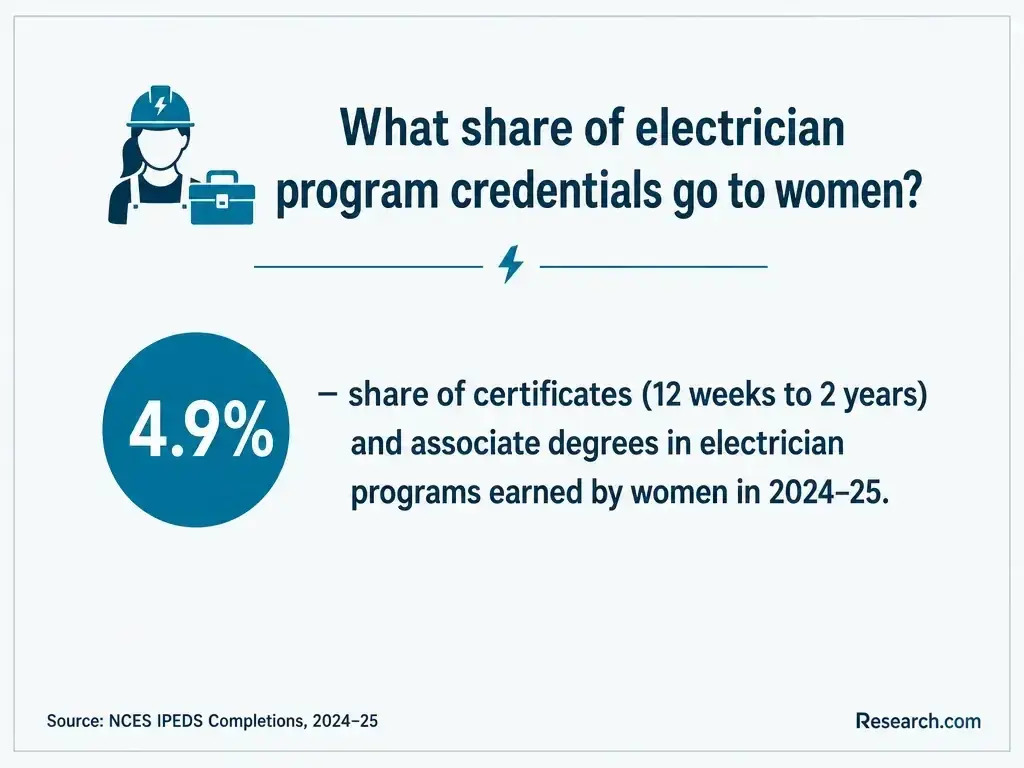
Yes, Nebraska regulates electrical work, but the authorization needed depends on the role and stage of training. The Nebraska State Electrical Division administers electrician licensing and apprentice registration. Its current requirements - not a school's certificate - govern registration, qualifying experience, examinations, and progression to a journeyman or other license. An apprentice works under required supervision rather than independently.
Before choosing a program, ask the Division which experience it accepts for your intended license and what records you must keep. Separately verify any city permitting or contractor requirements relevant to the work you hope to perform. Institutional accreditation concerns a school; industry credentials such as NCCER recognition concern training; registered-apprenticeship status concerns a training arrangement. None automatically grants occupational licensure. If you expect to work in Iowa, verify Iowa's rules separately.
Start with your intended job: apprentice entering construction, worker moving into industrial electrical work, or experienced trainee seeking a formal credential. Then compare programs against that goal, not just against the ranking. The most affordable listed school may be a poor investment if its schedule prevents paid work or its labs do not build the skills an employer expects.
Use these questions with admissions staff and apprenticeship sponsors before committing:
Verify institutional accreditation through a recognized accreditor and check state authorization where applicable, but confirm occupational eligibility separately with the Nebraska State Electrical Division. A red flag is a promise that a brief or fully online course alone makes you a licensed electrician. Broader comparisons of doctorates without dissertation are unrelated to this licensing decision; prioritize documented trade training instead.
A common progression is supervised apprentice work, qualifying experience and examination, then licensed journeyman work. With further experience and the applicable approvals, electricians may pursue supervisory responsibilities, contracting, or specialization in commercial systems, industrial controls, or maintenance. Each step has its own employer and regulatory requirements; a school credential does not automatically advance someone through them.
Choose training that matches the intended setting. Residential installation practice may be a useful start, but someone targeting industrial troubleshooting should examine how much time the program gives to motors, controls, and diagnostic equipment. Conversely, a broad, longer program may not be the quickest route for someone who already has an apprenticeship offer and needs only the sponsor's related instruction.
The U.S. Bureau of Labor Statistics projects 9.2% growth in electrician employment nationally from 2025 to 2035. That indicates national demand over the projection period, not a guaranteed Omaha opening or an individual job offer. Local prospects will depend on construction and maintenance hiring, apprenticeship vacancies, and the applicant's practical experience.
For a local decision, compare current openings and apprenticeship intake with the program's completion date. Ask employers which skills they seek and whether they hire trainees. Those checks are more useful for choosing a start date or specialization than applying a national projection directly to Omaha.
Education is a significant investment. Research.com created this ranking to help readers compare affordable electrician training options against other programs in the same occupation and location, using documented cost and debt measures rather than tuition alone.
For the most affordable ranking, scores consider tuition, cost of attendance, median student debt, and federal loan default rate. Indicator weights are assigned using an entropy-based method, which gives more weight to measures that differ more across programs. Accreditation, student support, and employment outcomes are not part of this affordability score. Only programs with completions reported to IPEDS are eligible; registered apprenticeships and other training providers may therefore be viable local options without appearing in the ranking. A low rank number is not proof of Nebraska licensing eligibility or the lowest cost for every individual.
The Research.com team draws on the following sources in its ranking work and checks source coverage and relevance before interpreting results:
Some sources above support rankings across multiple trades rather than electrician scoring specifically. Readers can use the ranking to narrow a cost-focused shortlist, then verify each program's current price, hands-on instruction, and licensing relevance. More detail on the approach is available in Research.com's methodology.
# 1 position
# 2 position
# 3 position
Not necessarily. Some registered apprenticeships combine paid supervised work with required instruction. Check each sponsor's entry rules before paying for separate preparatory training.
No. Ask the Nebraska State Electrical Division about current registration, experience, examination, and licensing requirements for your intended role.
It can reduce foregone earnings, but compare applicant costs, tools, travel, wages, and the time required to secure a place. A school program may still be worthwhile if it helps you qualify for work.
Online theory study is possible; practical electrical skills require supervised in-person work. Verify a program's lab and worksite arrangements before enrolling.
No. It includes eligible programs with IPEDS-reported completions. Apprenticeships and employer-sponsored routes may not appear, so compare them separately.