# 1 position


Audited and Verified:
Our Editorial and Data Verification Process
Research.com uses government datasets, official education statistics and primary institutional information to support its career and degree guides. Our review process checks factual accuracy, occupational definitions, source dates and the requirements associated with the credentials discussed.
How This Article Was Fact-Checked
Our editorial team verifies salary estimates, employment projections, education requirements and program information against original data providers and official organizations. Salary figures are checked against the relevant occupational definitions and reporting periods. Information about licensure, accreditation and required in-person training is reviewed separately.
Fact-checked and verified on:

Co-Founder and Chief Data Scientist

Reviewed by Karolina Broda
Fact-Checker and Data Verification
Choosing an electrician program in Chicago means comparing more than tuition: a low-cost course may not provide the hands-on experience needed to get hired. The U.S. Bureau of Labor Statistics projects 9.2% national employment growth for electricians from 2025 to 2035. For prospective students and career changers, this guide explains training routes, full costs, paid apprenticeships, and local work requirements. It also accompanies the Most Affordable Electrician Trade Schools in Chicago for 2027 ranking, created by the Research.com team of data scientists to help students identify programs worth considering.
Expect instruction in electrical theory, blueprint reading, circuits, wiring methods, the applicable electrical code, and jobsite safety, paired with shop exercises such as installing devices and testing circuits. A useful program lets you handle materials and troubleshoot faults under supervision; a course made up largely of videos is not equivalent practical preparation. The U.S. Bureau of Labor Statistics describes apprenticeship as the typical route to becoming an electrician, combining technical instruction with paid on-the-job learning.
A school certificate can prepare you to seek entry-level work or an apprenticeship, but it does not automatically make you a journey-level electrician. Before enrolling, ask whether the provider arranges employer interviews, documents lab hours, or has an apprenticeship articulation agreement - and obtain the answer in writing. Chicago-area construction schedules and worksites may require travel across the city and suburbs, so access to both the classroom and field placements matters.
Electricians work for electrical contractors on new construction and renovations, and in building maintenance, manufacturing facilities, and other settings with installed electrical systems, according to the U.S. Bureau of Labor Statistics. In Chicago, a student might pursue commercial construction, residential service, or facilities work; each calls for a somewhat different mix of conduit installation, troubleshooting, and customer or jobsite communication.
A training certificate may help you compete for an apprentice or electrical-helper position, not authorize independent electrical contracting. Ask prospective employers which entry roles accept school training, whether they provide supervised experience, and whether travel to multiple jobsites is required. If you want to work outside the city, check that municipality's rules as well as its employers' hiring practices.
A verified Chicago-specific starting wage is not available from the figures used in this guide. The U.S. Bureau of Labor Statistics reports a $63,190 national median annual wage for electricians in May 2025. A median covers experienced workers as well as newer ones; it should not be used as your expected first-year pay. Request current wage schedules from apprenticeship sponsors and actual offers from Chicago-area employers, noting whether figures include overtime or benefits.
For a return-on-investment comparison, estimate the difference between your likely starting pay and current earnings, then weigh it against fees, debt, time out of work, and the chance of completing training. A paid apprenticeship can change that calculation because wages begin during training. Broader guides about what majors make the most money out of college address a different education choice; they are not evidence of electrician pay.
There is no single Chicago electrician-program length. A pre-apprenticeship or certificate may be shorter than an associate-degree program, while a registered apprenticeship typically combines classroom instruction and supervised, paid work over several years. The U.S. Bureau of Labor Statistics describes electrician apprenticeships as generally lasting four or five years. Ask providers for the actual calendar length, weekly schedule, required classroom and lab hours, and any separate work hours needed to reach your goal.
Speed and occupational readiness are different measures. A short course can be sensible if it builds basic skills and connects you to supervised work; it is a poor substitute if an employer expects substantial field experience. Likewise, guides to an associate degree in 6 months online should not be read as a timetable for acquiring electrician field skills.
Online instruction can cover theory, code concepts, and calculations. Conduit bending, wiring, safe tool use, testing, and troubleshooting require equipment and supervised practice in a shop or at a worksite. A hybrid program can be convenient for a working adult if its in-person sessions are reachable and sufficiently substantial; an entirely online course should not be assumed to satisfy an employer's practical-training expectations or local requirements.
Ask for a schedule showing which competencies are practiced in person, who assesses them, and whether field experience is arranged or left to the student. The best affordable online universities for job holders addresses a different format comparison; electrician training still requires a credible hands-on route.
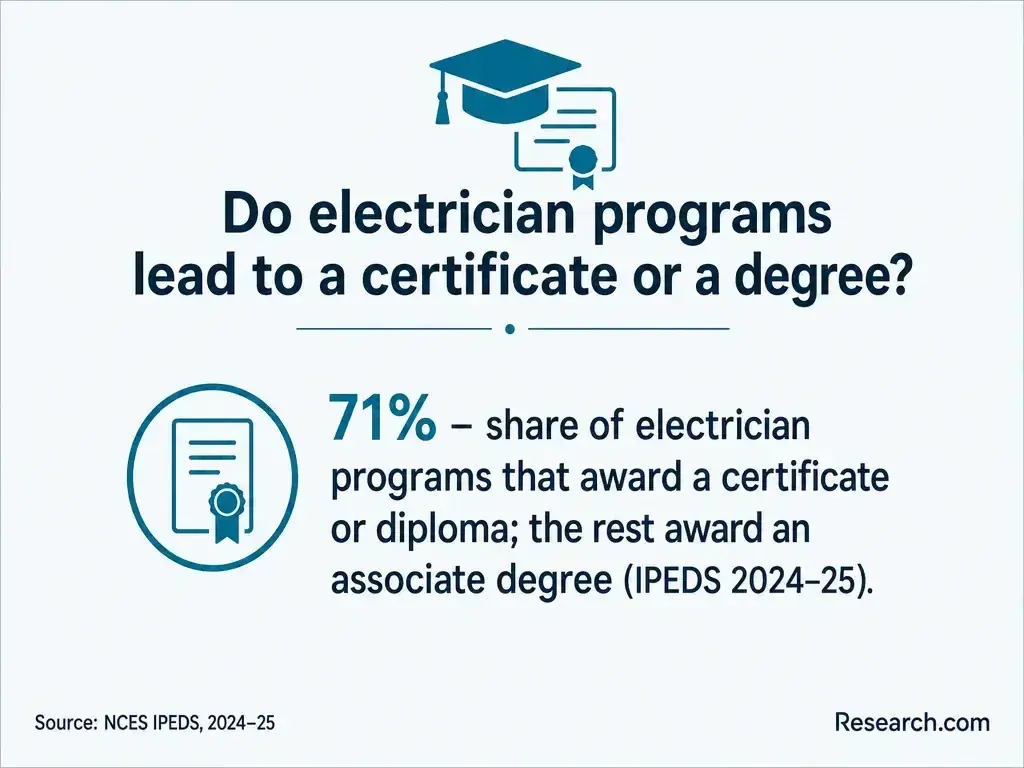
There is no defensible single Chicago average here: certificates, associate-degree programs, private career-school courses, and paid apprenticeships have different prices and coverage, and not all providers report to college databases. Obtain a current, itemized quote from each provider instead of treating the ranking as a final bill. The price comparison below shows which costs to request and why two similarly priced programs may have different job-ready costs.
| Cost component | What to check |
| Tuition and mandatory fees | Full-program price, residency rules, payment timing, and refund terms. |
| Tools and training supplies | Required tools, PPE, books, software, and materials; whether they are supplied or kept after training. |
| Getting to training and work | Travel to shops and jobsites, plus income forgone during unpaid instruction. |
| Funding and earnings | Eligible grants or aid, employer-paid costs, apprenticeship wages, and likely borrowing. |
Financial aid depends on the provider and program, not simply the trade. Check federal-aid eligibility with the school and Federal Student Aid, and ask local workforce agencies about training assistance. Compare the net cost to become job-ready, including any exam or local application charges that actually apply to your intended role. Even when a quick college degrees that pay well comparison emphasizes time, electrician applicants should price the supervised-work stage as well as classroom instruction.
It depends on the pathway: a short program may award a certificate or diploma; a community-college program may award a certificate or associate degree; and a registered apprenticeship leads to its own completion credential after the required training. These are not interchangeable. A school credential documents education, while apprenticeship completion documents a structured combination of instruction and supervised work, according to the U.S. Department of Labor.
Ask whether the credential is awarded by the school or apprenticeship sponsor and whether an employer recognizes it for the position you want. Institutional accreditation concerns the school; industry training recognition, apprenticeship registration, and local permission to perform or contract electrical work are separate questions. Do not assume that a similarly named certificate at two providers includes the same shop practice or field experience.
Requirements vary by provider. Schools may assess math and reading readiness or require a high school credential; apprenticeship sponsors set their own application, eligibility, and selection procedures. Because electrical work involves measurements, diagrams, and safety instructions, check any math preparation requirement early rather than paying for training you cannot yet enter. Confirm current requirements directly with the school or sponsor.
Admission to a school program does not guarantee a subsequent apprenticeship place. If paid field training is your objective, apply to sponsors as well as schools and ask whether prior coursework can count toward instruction or advanced standing. Get any credit decision from the receiving sponsor in writing before relying on it to shorten training.
Core skills include reading plans, applying electrical calculations, choosing and installing wiring methods, testing circuits, identifying faults, and working safely around energized equipment. The U.S. Bureau of Labor Statistics identifies technical instruction and on-the-job practice as parts of electrician apprenticeship. For someone targeting Chicago commercial construction, experience with conduit, larger-building systems, and coordinated jobsites may be especially useful; residential service may place more emphasis on diagnosing existing installations.
Compare curricula by the work students actually perform, not course titles alone. Ask to see the lab equipment, typical projects, safety instruction, and assessment methods. A provider should be able to distinguish simulated shop tasks from supervised work on an employer's site.
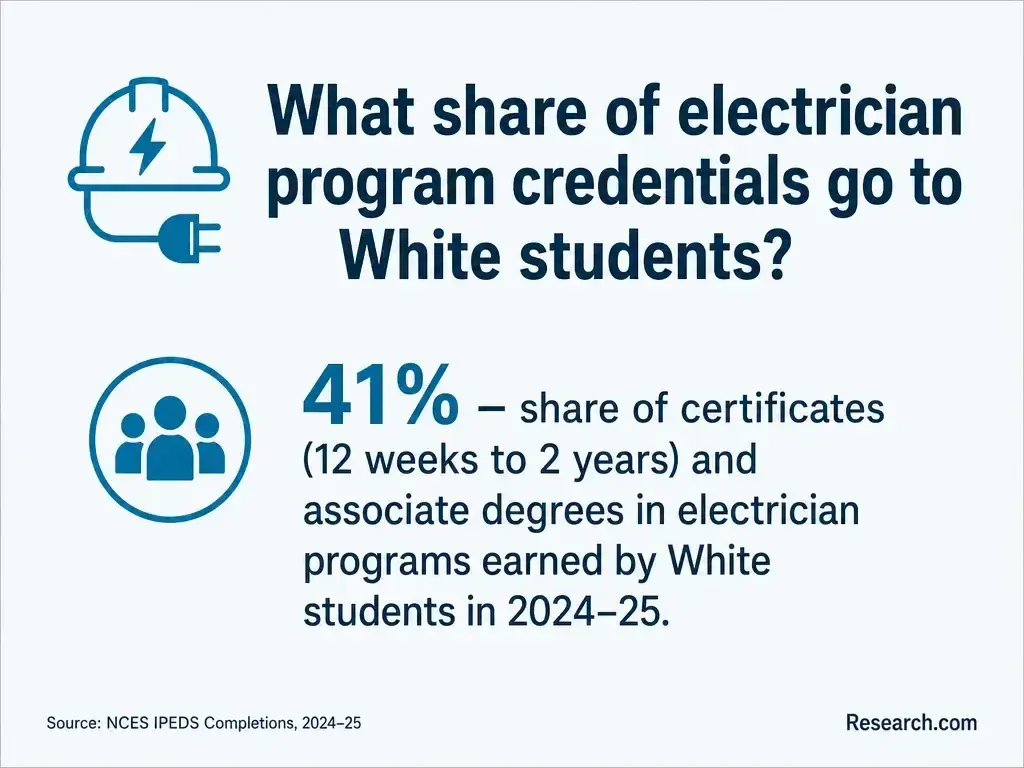
Do not assume one statewide Illinois electrician license answers this question. Illinois does not have a single statewide occupational license for electricians; requirements for electrical work and contracting are set locally, according to the Illinois Department of Financial and Professional Regulation and local authorities. Chicago regulates electrical contracting through its local rules. Before choosing training, confirm the current requirements for your intended role with the City of Chicago Department of Buildings - or with the relevant suburb if that is where you expect to work.
A school certificate, optional industry credential, registered-apprenticeship status, and local authorization are different things. Ask whether you can work under an employer's supervision while training, what experience or examinations apply to the role you eventually want, and whether moving between municipalities changes the requirements. Do not pay for a course on the assumption that graduation alone permits independent work.
Start with the job you want: apprentice, entry-level helper, maintenance worker, or an eventual independent contracting role. Then compare a school program with direct application to a registered apprenticeship. A school can help build foundational skills; an apprenticeship supplies paid, structured work experience, but entry may involve a separate selection process. An affordable program is worth considering only if its training and next step match your goal.
Use these questions when speaking with schools and apprenticeship sponsors so that price and career fit are evaluated together:
Request answers in writing and compare net cost, likely starting pay, completion prospects, and time to supervised employment. Red flags include a guaranteed electrician wage, a promise that online-only study replaces field practice, or a claim that accreditation by itself grants permission to perform electrical work.
An entry-level trainee may progress through supervised apprenticeship work toward more independent installation and troubleshooting responsibilities. With experience, electricians may focus on construction, service, maintenance, or supervision; running an electrical contracting business raises separate local compliance questions. The U.S. Bureau of Labor Statistics describes both construction and maintenance work within the occupation, so choose training that exposes you to the setting you hope to enter.
Extra credentials can support a specialty, but they do not replace sound electrical practice or applicable local rules. Lists of easiest certifications to get that pay well can provide career ideas; they should not be mistaken for a shortcut through electrician apprenticeship or supervised work.
The U.S. Bureau of Labor Statistics projects 9.2% national growth in electrician employment from 2025 to 2035. That indicates a favorable national outlook, not a guaranteed opening in Chicago. Local hiring depends on construction activity, maintenance needs, employer budgets, and the number of available apprenticeship positions.
Use the projection as a reason to investigate the trade, then test the local opportunity before committing money. Compare current apprentice and helper postings, speak with Chicago-area electrical contractors and registered apprenticeship sponsors, and check whether their available work matches the skills taught by your shortlisted program.
Investing in training is an important decision, so Research.com designed this ranking to help readers compare affordable options against other electrician programs in the same location - not against unrelated trades. Only programs with completions reported to the Integrated Postsecondary Education Data System (IPEDS) are eligible. That means a registered apprenticeship or employer program can be a worthwhile option even if it does not appear in the ranking.
The most affordable ranking evaluates tuition, cost of attendance, median student debt, and federal loan default rate. Indicator weights are assigned through an entropy-based method, which gives more weight to measures that differ more across eligible programs. Accreditation and other quality measures are not part of this affordability score. Research.com's separate best-program rankings also examine student outcomes, earnings, support services, and relevant recognition; readers should not mistake those criteria for the affordability formula.
The Research.com team uses the following sources across its trade-program research and ranking process. Some cover other occupations and do not represent electrician-specific approval or accreditation:
Use the ranking to narrow your cost comparison, then confirm each program's current price, practical training, and fit with your intended job directly with the provider. Research.com explains its broader approach on its methodology page.
# 1 position
# 2 position
# 3 position
Compare paid registered apprenticeships with school programs after grants and required expenses. An apprenticeship may let you earn wages while training, but admission and available places vary; a school may offer a useful first step if it provides substantial practice and a clear route to supervised work.
Online coursework can teach theory, but it cannot replace in-person tool use and supervised installation or troubleshooting. Check the hands-on and employer requirements for the role you want before enrolling.
No certificate alone establishes permission to work independently. Confirm the current rules for your intended work with the City of Chicago Department of Buildings, and check separately with any suburb where you plan to work.
Not necessarily. Registered apprenticeships combine instruction and paid work and have their own entry rules. Ask a sponsor whether prior school training helps with admission or earns credit before paying for it primarily for that reason.
Compare mandatory fees, tools and PPE, travel, lost earnings, aid or apprentice wages, hands-on hours, and the credential's value to local employers. The least expensive tuition is not necessarily the lowest-cost route to a job.