# 1 position


Audited and Verified:
Our Editorial and Data Verification Process
Research.com uses government datasets, official education statistics and primary institutional information to support its career and degree guides. Our review process checks factual accuracy, occupational definitions, source dates and the requirements associated with the credentials discussed.
How This Article Was Fact-Checked
Our editorial team verifies salary estimates, employment projections, education requirements and program information against original data providers and official organizations. Salary figures are checked against the relevant occupational definitions and reporting periods. Information about licensure, accreditation and required in-person training is reviewed separately.
Fact-checked and verified on:

Co-Founder and Chief Data Scientist

Reviewed by Karolina Broda
Fact-Checker and Data Verification
In Florence, Kentucky, the cheapest electrician program is not necessarily the least expensive route to a license: a short course may still leave you needing years of supervised work. The U.S. Bureau of Labor Statistics projects electrician employment to grow 9.2% nationally from 2025 to 2035. For prospective students and career changers, this guide compares school-based training with paid apprenticeships, including costs, credentials, and Kentucky requirements. It also features the Most Affordable Electrician Trade Schools in Florence for 2027 ranking, created by the Research.com team of data scientists to help you identify programs worth considering.
Expect electrical theory alongside physical practice: reading plans, installing raceways and conductors, making connections, testing circuits, and working safely under the National Electrical Code. The central question is whether the program also connects you to the supervised work needed for your intended job and eventual Kentucky license.
Florence residents can compare community-college training, other career-school offerings, and employer- or union-sponsored apprenticeships across the northern Kentucky and Cincinnati area. Gateway Community and Technical College is one public-college option to investigate; confirm the current electrical credential, where its labs meet, and whether its coursework is recognized by a prospective apprenticeship sponsor before enrolling. A program that teaches useful skills may still offer no guaranteed apprenticeship placement.
The pathways differ most in how they deliver work experience:
| Pathway | Typical credential or outcome | Best fit and main limitation |
| School certificate or diploma | School-issued occupational credential | Fits someone seeking structured preparation before employment; supervised work and licensure may still be required. |
| Electrical-technology associate degree | Academic associate degree | Fits someone who values broader technical coursework; check its added cost and whether a sponsor credits any courses. |
| Registered apprenticeship | Paid work-based training and a completion credential | Fits someone ready to earn while training; admission and work assignments may be competitive. |
| Employer-sponsored entry route | Experience and any employer-provided training record | Fits someone with a qualifying entry-level opportunity; instruction, documentation, and advancement terms need verification. |
Industry certificates can document a skill, but lists of certifications that make money should not be mistaken for Kentucky electrician licensing requirements. Ask exactly what a provider awards and what an employer or licensing authority will recognize.
Possible settings include residential construction, commercial buildings, industrial facilities, building maintenance, and electrical service contractors. Florence's position in the Cincinnati metropolitan area widens the potential job search, but crossing the Ohio River also means checking the rules for the jurisdiction where the work occurs; a Kentucky credential should not be assumed to authorize every job in Ohio or Indiana.
School training can help an applicant compete for a supervised entry position. Employers may still require a driver's license, reliable travel to changing jobsites, and the ability to work safely at heights or around energized systems. Ask whether a program's employer contacts lead to interviews, documented placements, or simply referrals.
The U.S. Bureau of Labor Statistics reports a $63,190 national median annual wage for electricians in May 2025. Half of employed electricians nationally earned less and half earned more; the figure includes experienced workers and is not a Florence apprentice starting rate. It should be used as a longer-term occupation benchmark, not as the salary to enter into a first-year training budget.
For a local decision, compare written apprentice or entry-level offers from northern Kentucky employers, including the starting hourly rate, scheduled increases, benefits, and expected travel. If comparing a job across state lines, also check the work jurisdiction and commuting costs. The strongest affordability comparison is often net training cost plus wages earned while training, rather than the school's sticker price alone.
A short school credential can be completed sooner than an apprenticeship, but finishing classes and becoming an independently qualified electrician are different milestones. The U.S. Bureau of Labor Statistics describes electrician apprenticeships as typically lasting four to five years and combining technical instruction with paid on-the-job training. School-program lengths vary by credential, schedule, and course availability; request the provider's actual calendar and required lab hours.
Ask an apprenticeship sponsor whether prior electrical coursework can reduce related instruction or provide advanced standing. Get any credit decision in writing: a faster classroom schedule does not automatically replace supervised experience. For working adults comparing schedules, advice aimed at most affordable online universities for working students cannot establish whether an electrician program's in-person labs and work hours fit around a job.
Online delivery can work for code concepts, calculations, and some safety instruction. It cannot by itself demonstrate that a student can install conduit, use test instruments, or complete supervised jobsite work. A hybrid program is only a practical alternative if its required labs are accessible from Florence and its work-based component can be arranged where the student intends to qualify.
When reviewing the most popular online colleges, do not treat an online course listing as evidence of electrician licensing eligibility. Ask where and when hands-on assessments occur, who supervises them, and whether the relevant Kentucky authority or apprenticeship sponsor accepts the training. A fully remote course may be useful preparation without being a complete career-entry route.
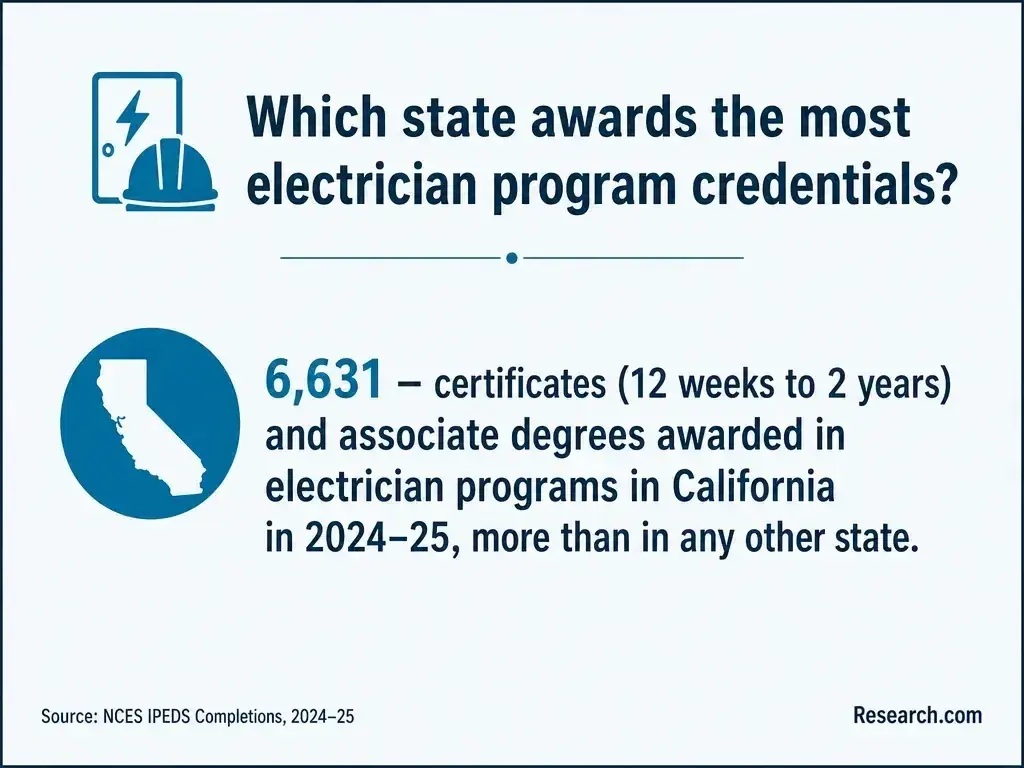
There is no defensible single Florence average that covers school certificates, associate degrees, private training, and paid apprenticeships: they have different price structures, and some work-based routes pay wages rather than charge conventional tuition. A published tuition figure also may not include everything needed to start work. Request a current, itemized estimate from each provider instead of treating an unverified local average as a budget.
The following comparison identifies costs that can change which route is cheapest for you; it does not imply that every program charges every item.
| Cost or offset | What to compare |
| School charges | Tuition, mandatory fees, materials, and any resident-rate eligibility. |
| Job-ready supplies | Tools, meter, work clothing, personal protective equipment, and consumables. |
| Career-entry charges | Any applicable examination or license-application fees. |
| Time and travel | Trips to labs or jobsites and earnings forgone during unpaid training. |
| Offsets | Grants, eligible aid, employer-paid instruction, and apprenticeship wages. |
Federal aid eligibility depends on the institution and program, not merely on its trade-school label, according to Federal Student Aid. Ask about Kentucky workforce assistance and employer reimbursement as well. A general guide to how much does an online associate's degree cost cannot substitute for an electrical program's itemized lab, tool, and travel expenses.
Depending on the pathway, you might earn a school certificate, diploma, electrical-technology associate degree, or registered-apprenticeship completion credential. These document different kinds of learning. None should be described as a Kentucky electrician license unless the Kentucky Department of Housing, Buildings and Construction has actually issued that license.
Ask for the exact credential name on the transcript or completion record, then ask prospective employers and apprenticeship sponsors how they treat it. An associate degree can be useful if its additional coursework serves your goal, but the easiest bachelor's degree is not a shortcut to documented electrical experience or Kentucky licensing eligibility.
Requirements depend on the provider and route. A school may assess math or reading readiness and set prerequisites for lab courses; an apprenticeship sponsor may use an application, aptitude assessment, interview, and employer selection process. Physical job demands and travel between worksites can also matter. Confirm the current criteria with the specific provider rather than assuming admission to a school also secures an apprenticeship.
If you are changing careers, ask whether prior electrical coursework, military training, or documented work qualifies for credit or advanced standing. Obtain the decision from the school or sponsor that would award it. Also ask when you could start paid supervised work: a low-cost course with no clear next step may delay entry more than a competitive apprenticeship application.
Useful curricula connect electrical calculations and code reading to tasks performed in a lab or on a jobsite: interpreting diagrams, choosing materials, installing raceways and wiring, making terminations, using a meter, and diagnosing faults. Safety instruction should address shock, arc, fall, and lockout risks. The U.S. Bureau of Labor Statistics identifies technical instruction and supervised practice as core parts of electrician preparation.
Compare programs by asking how many supervised lab hours they require, what equipment students actually use, and who evaluates practical work. Similar-sounding credentials can represent very different amounts of hands-on preparation. If you want commercial or industrial work, look for training that exposes you to those systems rather than assuming a residential-only course covers them.
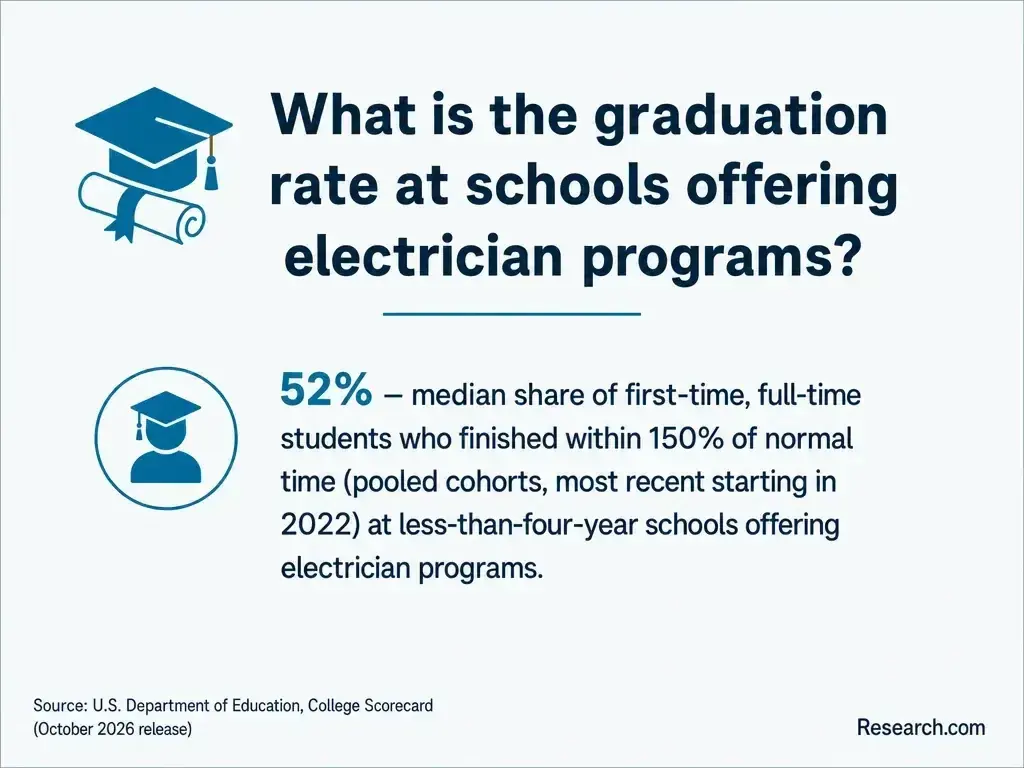
Kentucky regulates electrician licensing. The Kentucky Department of Housing, Buildings and Construction sets the applicable electrician, master electrician, and electrical-contractor licensing rules. Which credential you need depends on the work and your role; supervised entry work, independent electrical work, and contracting should not be treated as interchangeable. Before paying for training, verify the current experience, examination, and application requirements for the specific Kentucky license you intend to pursue.
Keep separate the approvals that are often conflated. Institutional accreditation concerns a school; state authorization concerns its permission to operate; apprenticeship registration concerns a work-based training program; an industry certificate documents particular learning; and an occupational license is issued under Kentucky's rules. None automatically substitutes for another. If your plan includes jobs across the river, verify the applicable Ohio or Indiana requirements separately rather than assuming Kentucky licensure transfers.
Start with the job you want and work backward to its required experience and credential. The most affordable ranked program is worth choosing only if its instruction, practical training, schedule, and likely next step match that goal. To compare a school with an apprenticeship fairly, include wages earned during training as well as tuition and other costs.
Before enrolling, use these checks to turn a promising listing into a decision you can defend:
Red flags include an advertised "license" that is only a course certificate, an online-only practical curriculum, or a tuition quote that omits required equipment. Rankings narrow the search; written answers to these questions should determine whether a program is the right investment.
A common progression is supervised entry work, documented experience and additional instruction, and then the license appropriate to the work and jurisdiction. With experience, electricians may move toward service troubleshooting, commercial construction, industrial maintenance, supervision, or contracting. Those later roles can involve additional licensing or business requirements; they are not automatic outcomes of an entry-level certificate.
Choose early training with your intended work in mind. Someone seeking industrial maintenance should ask about motors, controls, and troubleshooting practice, while a prospective residential electrician should prioritize installation experience and a clear route to supervised employment. In the Florence area, cross-border opportunities make it especially important to check where experience will be documented and which jurisdiction's rules govern the planned work.
The U.S. Bureau of Labor Statistics projects 9.2% national employment growth for electricians from 2025 to 2035. That supports considering the occupation, but it does not forecast a particular number of openings in Florence or guarantee an apprenticeship seat. Construction cycles, maintenance needs, and employers' hiring decisions will shape the opportunities available when you finish training.
Use the national projection alongside current northern Kentucky job postings and conversations with apprenticeship sponsors. Check whether openings seek supervised beginners or already-licensed workers: demand for experienced electricians does not necessarily mean immediate entry-level access. A program with credible employer connections and substantial practical training may therefore offer better value than a cheaper course without a route into paid work.
Investing in electrician training is a consequential decision, especially when a low advertised tuition figure may not reflect the cost of becoming job-ready. Research.com created the accompanying ranking to help readers compare affordable programs against other programs in the same occupation and location. The team evaluates reported data for quality and consistency, but readers should still confirm current prices, course locations, and licensing relevance directly with providers.
The most affordable ranking scores costs and debt only: tuition, cost of attendance, median student debt, and federal loan default rate. Indicator weights are assigned through an entropy-based method, which gives more weight to measures that differ more across programs. Accreditation and other quality indicators are not included in this affordability score. Only programs with completions reported to IPEDS are eligible; a missing apprenticeship or training provider should not be interpreted as low quality or lack of approval.
For context, Research.com's separate best programs rankings consider student outcomes, earnings and return on investment, costs and debt, and quality and recognition. Their weights are 20% for occupation-relevant programmatic accreditation or industry recognition, 10% for institutional accreditation, 10% for student support, and 60% for outcomes, earnings, and costs, with the last group distributed through the entropy-based method. These are not the scoring rules for the affordability ranking.
The ranking draws on the following data sources. Some cover other trades or allied-health occupations in Research.com's broader ranking process; their inclusion does not mean those organizations accredit electrician programs.
The result is a starting point for a cost comparison, not an endorsement of every program's fit for Kentucky licensure. More detail on the ranking approach appears on the Research.com methodology page.
# 1 position
# 2 position
Not necessarily. A registered apprenticeship or qualifying employer-sponsored route may provide the classroom instruction and supervised experience you need. Check the Kentucky licensing rules for your intended role before choosing a route.
It can be, because you earn wages while learning. Compare any sponsor fees, tools, travel, and starting pay with a school's total charges and financial aid; an apprenticeship may also be harder to enter immediately.
Do not assume so. Online coursework cannot replace practical competencies and supervised experience. Confirm any program's relevance to the specific Kentucky license with the licensing authority.
Only if the receiving sponsor accepts it. Ask for a written decision about credit or advanced standing before enrolling for that purpose.
Only after comparing required fees, tools, travel, time without pay, hands-on instruction, and the route into supervised employment. Lower tuition does not necessarily mean lower total cost to become job-ready.