# 1 position


Audited and Verified:
Our Editorial and Data Verification Process
Research.com uses government datasets, official education statistics and primary institutional information to support its career and degree guides. Our review process checks factual accuracy, occupational definitions, source dates and the requirements associated with the credentials discussed.
How This Article Was Fact-Checked
Our editorial team verifies salary estimates, employment projections, education requirements and program information against original data providers and official organizations. Salary figures are checked against the relevant occupational definitions and reporting periods. Information about licensure, accreditation and required in-person training is reviewed separately.
Fact-checked and verified on:

Co-Founder and Chief Data Scientist

Reviewed by Karolina Broda
Fact-Checker and Data Verification
Choosing electrician training in Presque Isle means deciding whether to pay for classroom preparation, seek a paid apprenticeship, or combine both. The stakes are real: U.S. electrician employment is projected to grow 9.2% from 2025 to 2035, according to the U.S. Bureau of Labor Statistics. This guide explains local training options, Maine licensing, costs, and career prospects. It also accompanies the Best Electrician Trade Schools in Presque Isle for 2027 ranking, created by the Research.com team of data scientists to help students make an informed choice about programs worth considering.
Expect instruction in electrical theory, code use, safe installation, troubleshooting, and tool handling - not a license at graduation. Northern Maine Community College is a local provider to investigate; ask it which electrician-related credentials and lab schedules are available for the term you intend to enter. A school-based program may help you qualify for an entry-level position, while supervised work remains central to becoming a licensed electrician in Maine (Maine Electricians' Examining Board).
These pathways serve different needs. Compare the credential with the work experience it actually includes, rather than assuming similarly named programs offer equivalent preparation.
| Pathway | What it provides | Best fit and limitation |
| Certificate or diploma | Focused coursework and, where offered, shop practice | Useful for building entry skills; verify how instruction counts toward licensing. |
| Electrical associate degree | Longer academic and technical study with a college credential | Useful if its added coursework supports your goals; compare its cost and time with a shorter route. |
| Registered apprenticeship | Paid, supervised work paired with related instruction | Strong fit for earning while training; openings, worksites, and travel may constrain access. |
| Employer-sponsored entry | Worksite learning under appropriate supervision | Potentially direct route to experience; confirm registration, instruction, and licensing credit. |
A fast online degree for working adults is not a substitute for electrical shop skills or supervised installation work. Ask any provider to identify its practical training site and the license pathway its curriculum supports.
Training can support applications to electrical contractors and employers maintaining commercial, public, agricultural, or industrial facilities in Aroostook County. Residential wiring, service work, equipment maintenance, and new construction call for overlapping but not identical skills. The U.S. Bureau of Labor Statistics identifies electrical contractors and other construction employers as major sources of electrician work.
Presque Isle's smaller labor market makes the location of a supervised job especially important. Before choosing training, ask where recent trainees found qualifying work and whether you can reliably travel to jobs elsewhere in Aroostook County. A classroom seat does not secure an apprenticeship opening or a nearby employer.
The latest national median annual wage supplied by the U.S. Bureau of Labor Statistics is $63,190 for electricians in May 2025. It describes workers across experience levels and locations, not first-year trainees in Presque Isle. No comparable current Presque Isle wage figure is established here, so using the national median as a local starting-pay estimate would overstate what it can tell you.
When evaluating an offer, request the apprentice or entry-level wage, scheduled increases, benefits, expected hours, and travel expectations. Compare those terms with training debt and the earnings you would give up during full-time study. Lists of majors that make money answer a different question; electrician pay depends substantially on supervised experience, licensing, specialty, and local work.
A focused certificate may take less time than an associate degree, but providers set their own course sequences, lab hours, and part-time schedules. Ask for the current catalog's completion timeline and required contact hours; do not assume that finishing classes means you can immediately work independently.
Maine's journeyman routes involve substantial supervised experience, related instruction, and an examination, with eligibility depending on the route used (Maine Electricians' Examining Board). Before enrolling, ask the board and provider how your specific coursework and documented work hours would be credited. Apprenticeship takes longer than a short classroom program, but its paid work may begin contributing to the experience you need while you train.
Electrical theory, calculations, and some code instruction may be delivered online. Wiring practice, testing, tool use, safety demonstrations, and supervised installation require an appropriate in-person setting. A hybrid program can reduce classroom travel from Presque Isle, but only if its lab location and schedule are workable.
Before selecting remote coursework, get written answers about lab hours, who supervises practical work, and whether the instruction is accepted for your intended Maine licensing route. Lists of easy college classes to take online cannot establish that an online electrical course supplies hands-on competence or licensing credit. An entirely online course should be treated as theory preparation unless the Maine Electricians' Examining Board confirms its role in an eligible pathway.
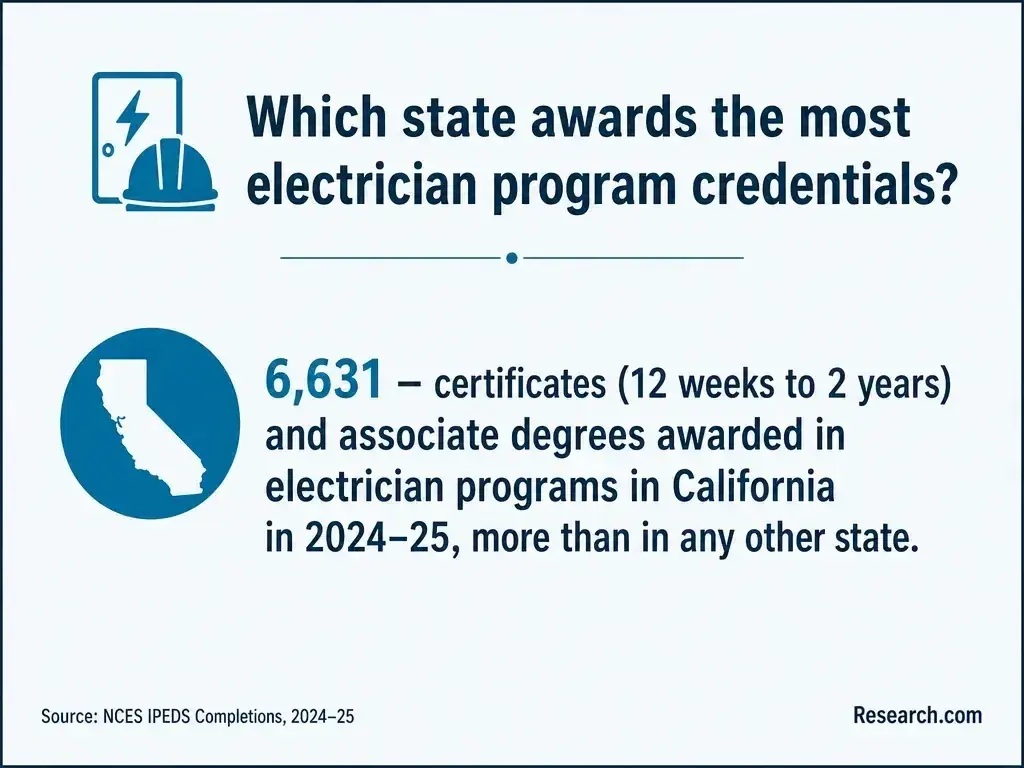
There is no defensible single average for every Presque Isle electrician pathway: a college credential, short course, and paid apprenticeship have different prices and earnings while training. Obtain a current, itemized estimate from Northern Maine Community College or any other provider you are considering rather than relying on a tuition figure alone.
For a realistic comparison, add the following costs and offsets for the full time it will take you to become job-ready:
Federal aid depends on the institution and program's eligibility, not merely its accreditation (Federal Student Aid). Ask about applicable Maine workforce assistance and compare the final out-of-pocket amount. Lists of affordable online degree programs do not capture electrician lab, tool, or supervised-work costs.
The award depends on the pathway: a school may issue a certificate, diploma, or associate degree; a registered apprenticeship has its own completion credential. Request the exact award name and ask whether any coursework can receive prior-learning credit or articulation toward further electrical training. Do not assume that credit transfers between providers or substitutes for documented field hours.
Credentials and permissions are different. Institutional accreditation concerns a school; relevant industry recognition concerns training; apprenticeship registration concerns a structured work-and-instruction program; and Maine occupational licensure authorizes electrical work within the license's scope. Neither a school award nor accreditation automatically grants a journeyman license (Maine Electricians' Examining Board).
School admissions rules and apprenticeship hiring rules are separate. Ask a provider about its current education prerequisite, placement requirements, application deadlines, and ability to accommodate part-time students. An apprenticeship sponsor may also assess readiness for physical work, mathematics, travel, and a specific employer's hiring requirements; confirm its published criteria before applying.
Admission is only the first checkpoint. Ask whether you must obtain a Maine apprentice or helper credential, register with a sponsor, or satisfy another board requirement before performing supervised electrical work. The Maine Electricians' Examining Board, rather than a school admissions office, is the authority on occupational licensing status.
A useful curriculum develops circuit calculations, blueprint reading, code navigation, grounding and bonding, conduit and wiring methods, testing, and troubleshooting. It should teach safe work practices alongside those technical skills. The U.S. Bureau of Labor Statistics describes electricians as installing, maintaining, and repairing electrical systems using testing equipment and technical drawings.
Ask to see the lab syllabus, not just a topic list. Practice wiring and diagnosing faults under supervision provides different evidence of readiness from watching demonstrations. Also ask how instructors document skills, whether code materials are current, and how the program connects students with supervised work; these details matter more than a broad promise of "career-ready" training.
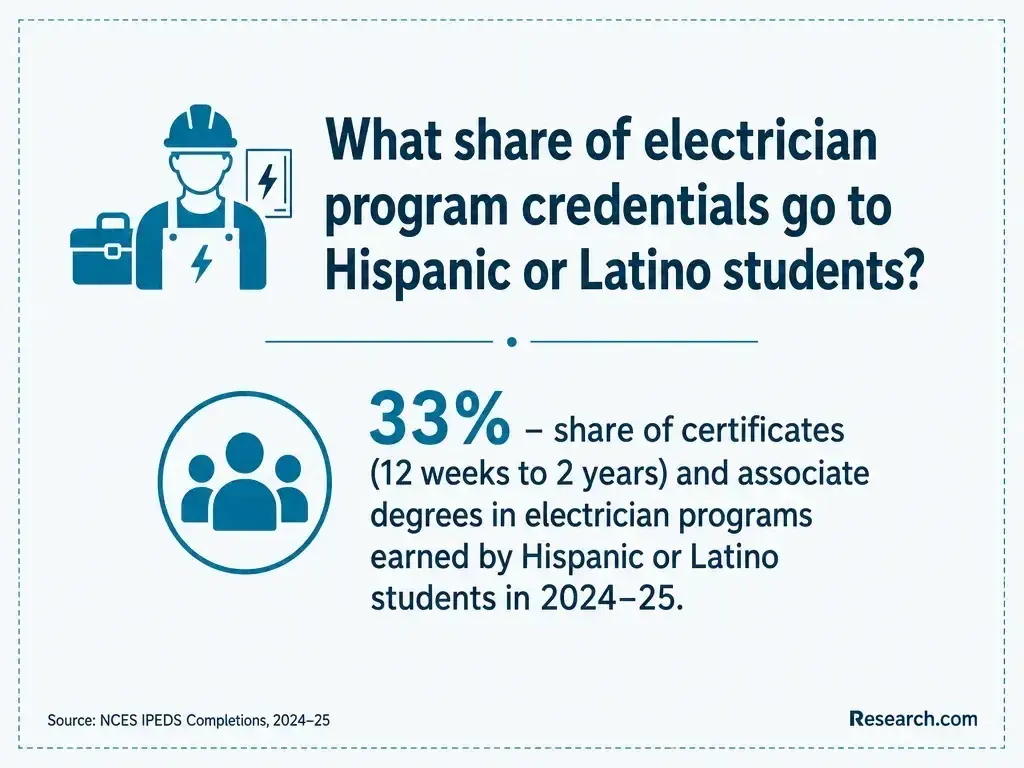
Yes, Maine regulates electrical work. The license or supervised status needed depends on the work you perform and your stage of training; independent journeyman work requires meeting the Maine Electricians' Examining Board's applicable experience, instruction, and examination requirements. School completion alone is not a license. Check the board's current rules before assuming that hours from a particular course or job will count.
Industry training certificates can help demonstrate skills but do not replace state licensure. If you may later work outside Maine, check that state's board separately rather than assuming your Maine training or license transfers automatically.
Choose the route that gets you to documented, qualifying supervised experience at a cost and pace you can sustain. A school program can be worthwhile when its labs and employer connections help you enter the trade; a paid apprenticeship may be the better investment if you can obtain a suitable opening without paying for substantial preliminary coursework. Neither option is automatically best.
Use these checks before committing money or turning down paid work:
A low advertised price is a red flag if required practical training is missing. Likewise, lists of low cost online universities for working students are not a substitute for checking the local worksite and licensing pathway. Judge return on investment across completion likelihood, aid, debt, likely pay progression, and time to qualification - not tuition alone.
Entry-level training can lead to supervised electrical work, followed - once Maine's requirements are met - by journeyman practice. With additional experience and the applicable credentials, electricians may pursue supervisory work, a master-level license, or a business role. Requirements for each licensed scope are set by the Maine Electricians' Examining Board, not by the title of a school program.
Specializing in residential service, commercial systems, or maintenance may change the work you seek, but it does not remove licensing obligations. In a smaller market, ask prospective employers which specialties they actually staff and whether qualifying supervision is available; that is more useful than choosing a specialty based on national wage claims.
The U.S. Bureau of Labor Statistics projects 9.2% national employment growth for electricians from 2025 to 2035. This supports investigating the trade, but a national projection does not count openings in Presque Isle or guarantee a local apprenticeship. Construction schedules, facility maintenance needs, and retirements can affect when employers hire.
For a local decision, check current postings and speak with apprenticeship sponsors and electrical employers about upcoming supervised positions before enrolling. If openings near home are limited, weigh the cost of traveling within Aroostook County against the benefit of entering paid training sooner.
Investing in training is a significant decision, so the Research.com team evaluates programs against others in the same occupation and location rather than treating every trade-school option as interchangeable. The best-programs ranking considers student outcomes; earnings and return on investment; costs and debt; and quality and recognition. Only programs with completions reported to IPEDS are eligible. That limitation matters: an apprenticeship or employer training route can be worthwhile even when it does not appear in a college-based ranking.
Programmatic accreditation or relevant industry recognition accounts for 20% of the best-programs score, institutional accreditation for 10%, and student support for 10%. Outcomes, earnings, and costs make up the remaining 60%, with weights distributed according to how much indicators differ among programs. Most-affordable rankings instead score tuition, attendance cost, debt, and federal loan default rates; they do not score accreditation or other quality indicators. The team uses the following sources to check applicable data, although several occupation-specific sources below do not apply to electrician training:
The ranking can narrow a student's search, but it cannot establish Maine licensing eligibility or replace a current quote from a provider. For more detail on the approach, see Research.com's methodology.
# 1 position
# 2 position
Not necessarily. An eligible supervised-work and instruction pathway may be available without first completing a school credential. Confirm the route with the Maine Electricians' Examining Board.
A certificate alone does not confer a license. The board determines the qualifying instruction, experience, examination, and other requirements for the license you seek.
Online coursework may cover theory, but practical skills and supervised electrical work require in-person participation. Verify whether specific online instruction counts toward your Maine pathway.
Choose school if its labs and preparation solve a genuine entry barrier at an acceptable total cost. Choose an available apprenticeship if paid, qualifying work and related instruction better fit your finances and schedule.
Ask for the exact credential, lab hours, total cost, worksite location, employer connections, and written explanation of how instruction and work hours relate to Maine licensing.