
Best Electrical Technician Training Programs & Trade Schools in Troy for 2027
Audited and Verified:
Our Editorial and Data Verification Process
Research.com uses government datasets, official education statistics and primary institutional information to support its career and degree guides. Our review process checks factual accuracy, occupational definitions, source dates and the requirements associated with the credentials discussed.
How This Article Was Fact-Checked
Our editorial team verifies salary estimates, employment projections, education requirements and program information against original data providers and official organizations. Salary figures are checked against the relevant occupational definitions and reporting periods. Information about licensure, accreditation and required in-person training is reviewed separately.
Fact-checked and verified on:

Co-Founder and Chief Data Scientist

Reviewed by Karolina Broda
Fact-Checker and Data Verification
Choosing electrician training in Troy, New York, means deciding whether to pay for classroom preparation or seek a paid apprenticeship - and whether either route leads to the work you want. The U.S. Bureau of Labor Statistics projects 9.2% national growth in electrician employment from 2025 to 2035, making that choice timely. This guide compares credentials, hands-on training, costs, local requirements, and career prospects. It also accompanies a Best Electrician Trade Schools in Troy for 2027 ranking created by the Research.com team of data scientists to help students identify programs worth considering.
Key findings about electrician degrees in Troy
- Compare routes, not just schools: A certificate or associate degree can build electrical fundamentals, but a paid registered apprenticeship combines instruction with supervised work; neither credential alone establishes eligibility to work independently in Troy.
- Budget for the route to job readiness: Compare tuition, tools, protective equipment, and travel against the wages and work experience available through an apprenticeship - not tuition alone.
- Use wages as context, not a starting-pay promise: The national median for electricians was $63,190 in May 2025, and projected national employment growth is 9.2% for 2025-2035 (U.S. Bureau of Labor Statistics). Local entry-level offers may differ.
Table of Contents
- Best Electrical Technician Training Programs & Trade Schools in Troy for 2027
- What can I expect from an electrician trade school program in Troy?
- Where can I work with an electrician trade school training in Troy?
What can I expect from an electrician trade school program in Troy?
Expect a mix of electrical theory and supervised practice: reading plans, selecting materials, installing circuits, testing equipment, and working safely around energized systems. A school-based program may prepare you to apply for an apprentice position; a registered apprenticeship makes paid work and related instruction part of the training itself. Ask how many hours are spent physically installing and troubleshooting equipment rather than watching demonstrations.
These pathways serve different needs. The comparison focuses on what each route provides at entry and what remains to be completed afterward (U.S. Department of Labor; U.S. Bureau of Labor Statistics).
| Pathway | What you receive | Best fit and key limitation |
| Certificate or diploma | Focused classroom and lab training; a school credential | Useful for testing the trade or strengthening an apprenticeship application; supervised work may still be needed. |
| Associate degree | Electrical coursework, labs, and additional general education; an academic degree | Fits someone seeking broader technical preparation; check whether its extra time and cost advance a specific goal. |
| Registered apprenticeship | Paid, supervised work plus related instruction; an apprenticeship completion credential | Fits someone ready for a longer work-and-learn commitment; entry depends on sponsor openings and selection. |
| Direct employer entry | Employer-provided training and supervised experience, which vary by job | Can be a low-upfront-cost start; confirm how training and experience are documented. |
Hudson Valley Community College is one local institution to check for current electrical training options. Confirm the exact credential, lab access, schedule, and employer or apprenticeship connections before treating any offering as a route into electrician work.
Where can I work with an electrician trade school training in Troy?
Electrical training can support applications to residential and commercial contractors, construction employers, industrial maintenance teams, and employers that service building systems. In the Troy area, the practical question is whether an employer will hire you into a supervised role that develops the experience you need - not whether a school credential by itself permits independent electrical work. Electricians install, maintain, and repair electrical power, communications, lighting, and control systems (U.S. Bureau of Labor Statistics).
Ask programs which employers interview their students and where recent students completed work-based training. A job across the Capital Region may expand your options but also add commuting costs, especially when classroom sessions and early jobsite starts occur in different places.
The U.S. median annual wage for electricians was $63,190 in May 2025 (U.S. Bureau of Labor Statistics). That figure covers workers at different experience levels nationwide; it is neither a Troy wage estimate nor a likely first-year apprentice salary. An apprenticeship offer should be assessed using its actual starting rate, scheduled increases, benefits, and expected work hours.
Local pay can also depend on the type of work, employer, overtime, and whether a position is covered by a collective bargaining agreement or applicable prevailing-wage rules. For an investment decision, request current written pay information from potential employers or apprenticeship sponsors instead of using the national median to project immediate earnings.
A short school program and a registered apprenticeship measure different milestones. A certificate may finish well before a worker has accumulated the supervised experience needed for more independent work; an associate degree includes a broader course sequence. Registered apprenticeships typically span multiple years and combine on-the-job learning with related instruction. The U.S. Department of Labor describes an apprenticeship model with at least 2,000 hours of on-the-job learning per year and recommends at least 144 hours of related instruction annually; a sponsor's registered standards govern its actual schedule.
Ask whether prior electrical coursework can count toward an apprenticeship's related instruction or advanced standing, and get the sponsor's answer in writing. Do not assume that an accelerated school credential shortens required field experience. A fastest associate's degree online comparison addresses academic speed, not the time needed to learn electrical installation on a jobsite.
Online instruction can cover code concepts, electrical calculations, and plan reading. On-campus labs and worksites allow an instructor or supervisor to observe wiring methods, tool use, testing, troubleshooting, and safety habits. A hybrid program can be practical for a working adult if its in-person sessions are accessible; a fully online course should not be treated as a substitute for demonstrated hands-on competence or supervised employment (U.S. Bureau of Labor Statistics; U.S. Department of Labor).
Check the format of each required component, not just the program's marketing label. Broad search results - including those for an online masters degree cheap - do not establish that a remote program prepares someone for electrical trade work. Ask where labs take place, who evaluates practical skills, and whether local employers or apprenticeship sponsors recognize the training.
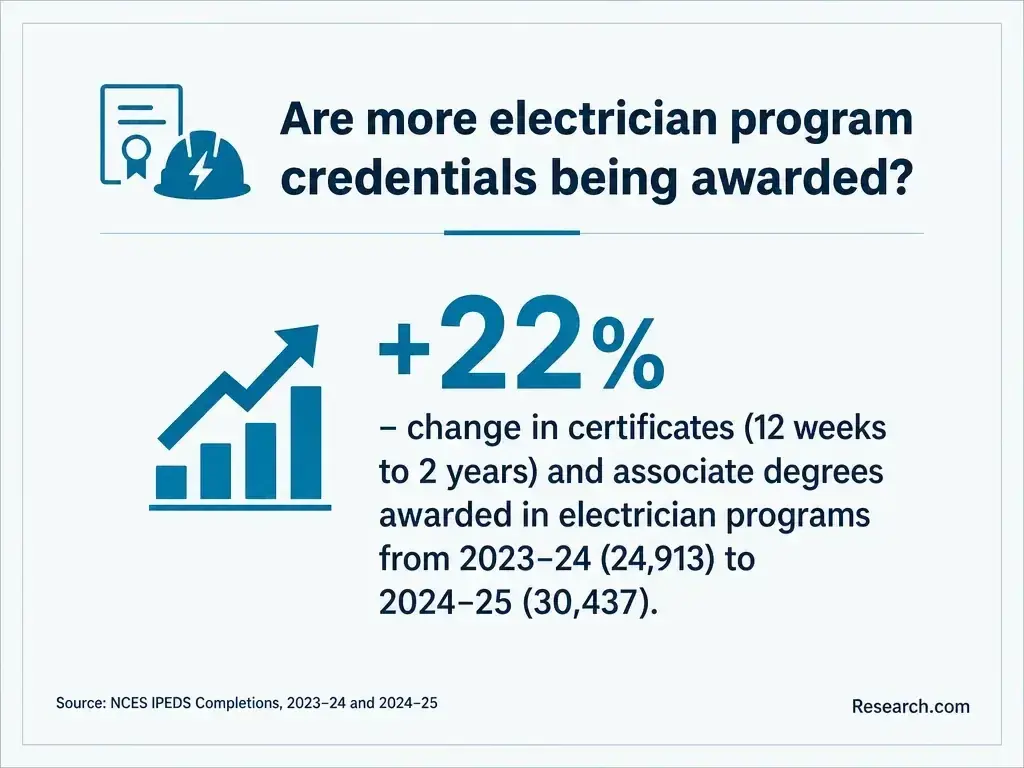
There is no defensible single Troy average without comparable current prices for the specific school programs and apprenticeship routes under consideration. Compare the total cost to become job-ready: tuition and mandatory fees, books, tools, consumable materials, protective equipment, transportation to labs and jobsites, and any applicable application or examination fees. Include earnings forgone while attending classes, then account separately for wages earned during paid training.
Request an itemized cost sheet and ask which tools you must buy immediately, which are supplied, and whether grants, eligible student aid, workforce funding, or an employer will cover any expense. The U.S. Department of Education's Federal Student Aid eligibility rules depend on the school and program; do not assume every trade provider participates. A cheapest online university comparison cannot establish the lowest-cost route to an electrician job because it may omit labs, tools, and supervised work.
The credential depends on the route: a school may award a certificate, diploma, or associate degree, while a registered apprenticeship awards a completion credential under its registered standards (U.S. Department of Labor). Industry training certificates can document particular skills, but they are not interchangeable with an apprenticeship completion credential or permission to perform regulated work.
Ask for the exact credential name and what it enables you to do next. An easiest degree list does not answer whether electrical employers value a credential or whether it includes sufficient practical training. Institutional accreditation, school authorization, industry recognition, apprenticeship registration, and local occupational requirements answer different questions; verify each one that matters to your intended route.
Requirements vary by provider. A school may assess reading and math readiness or set its own enrollment prerequisites. An apprenticeship sponsor may use an application, aptitude assessment, interview, and eligibility checks before offering a place; admission to a school does not guarantee apprenticeship selection (U.S. Department of Labor). Electrical work also calls for reliable attendance, safe tool handling, and comfort with physical jobsite tasks (U.S. Bureau of Labor Statistics).
Before paying a deposit, ask whether a program admits beginners, whether it helps applicants meet sponsor entry requirements, and whether any employer-required screening happens before placement. If you already have construction experience, ask about documented prior-learning credit or advanced standing rather than assuming you must repeat every introductory course.
Core training generally covers electrical principles, circuits, electrical-code use, blueprint reading, wiring methods, motors or controls, testing, troubleshooting, and jobsite safety. Electricians must also communicate with other trades and interpret technical information accurately (U.S. Bureau of Labor Statistics; O*NET). For a prospective student, the deciding detail is how the curriculum turns those topics into supervised practice.
Compare lab tasks with the work you want to do. Someone aiming for building construction should ask about installation and plan-reading exercises; someone interested in industrial maintenance should look for relevant motor, control, and troubleshooting practice. Request a course outline and a description of the equipment students personally use - not only a list of topics covered in lectures.
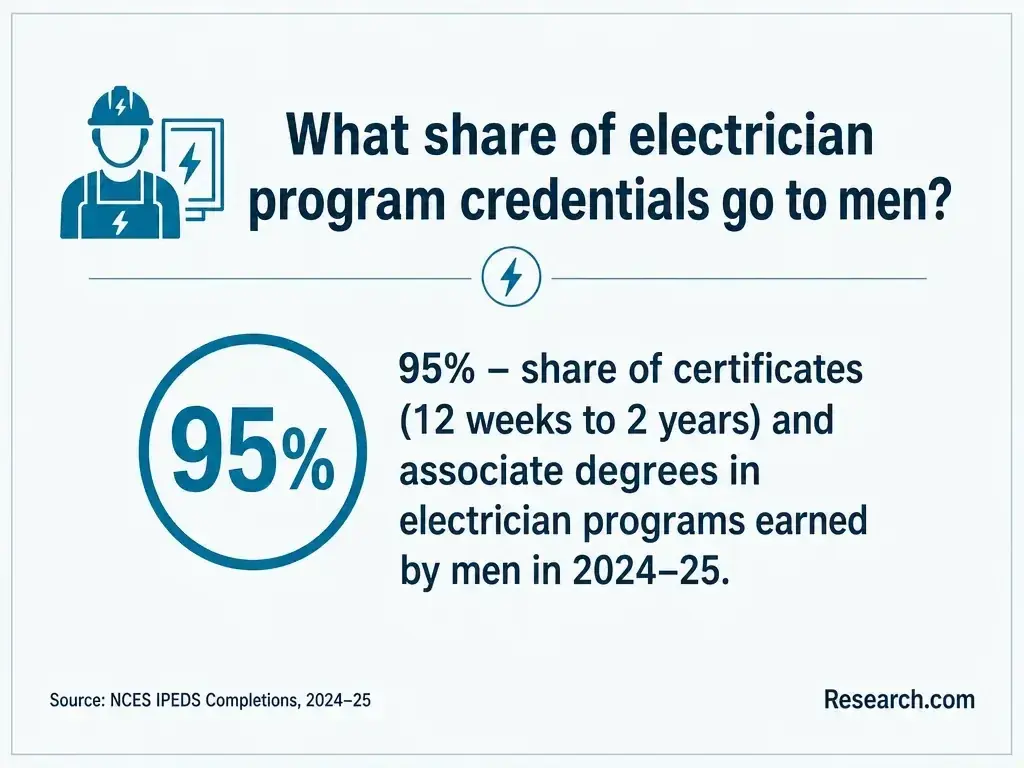
New York does not issue one statewide electrician license that automatically authorizes electrical contracting everywhere in the state; local rules matter (New York State Department of State). Before choosing a program or accepting independent work, confirm the current licensing, registration, supervision, and permit requirements with the City of Troy for work inside city limits. If you expect to work in another municipality, check that jurisdiction separately.
School completion is not the same as occupational permission to work independently. Likewise, institutional accreditation evaluates a school, while registered-apprenticeship status describes a work-and-training arrangement; neither replaces any applicable local requirement. Ask a prospective employer or sponsor how it documents your supervised experience and which examinations or approvals, if any, apply to the role you intend to pursue.
Start with the job you want, then compare the training needed to reach it. A school program may be worthwhile if its labs, schedule, cost, and employer connections improve your chance of entering supervised electrical work. A paid apprenticeship may make more sense if you can secure a place and want to earn while learning. Neither option is automatically the better investment.
Use these checks with each provider and apprenticeship sponsor. They expose costly gaps that a ranking or advertised tuition may not show:
- Identify the exact credential and ask which electrical jobs former students enter under supervision.
- Verify school accreditation or authorization where applicable, and verify a claimed apprenticeship's registration separately.
- Request lab hours, equipment access, instructor feedback methods, and any documented worksite opportunities.
- Get an itemized total-cost estimate, available aid information, and a realistic schedule for completing training while working.
- Ask who accepts prior learning and whether coursework counts toward a sponsor's related instruction.
- Confirm Troy's current rules for your intended work rather than assuming graduation confers a license.
Compare likely costs and earnings over the time you expect to work: include completion probability, debt, wages you would otherwise earn, potential apprentice wages, and the time it takes to reach higher pay. If you need a flexible schedule, a cheapest online schools for working students
Many entrants begin in supervised installation or maintenance roles, build experience through an employer or apprenticeship, and later take on more complex troubleshooting, crew leadership, or specialized work. Possible directions include residential and commercial construction, industrial electrical maintenance, and building controls. The tasks, additional training, and any local requirements differ, so an introductory certificate should not be marketed as preparation for every specialty (U.S. Bureau of Labor Statistics).
If you hope eventually to supervise work or run a contracting business, ask about the experience and local approvals that goal requires before paying extra for an advanced-sounding credential. If your immediate goal is an entry-level position, prioritize safe hands-on practice and a credible route to supervised employment.
The U.S. Bureau of Labor Statistics projects 9.2% growth in electrician employment nationally from 2025 to 2035. That signals a favorable national outlook, not a forecast of Troy vacancies or a guarantee that every applicant will find an apprenticeship place. Hiring locally will depend on contractors' projects, maintenance needs, and sponsor openings.
Use the projection as a reason to investigate the field, then test local demand: ask programs for recent employer connections and ask apprenticeship sponsors about application windows and expected work locations. A training option is more compelling when it connects your skills to reachable jobs, even if a cheaper option looks better on paper.
Best Electrical Technician Training Programs & Trade Schools in Troy for 2027
Education is a substantial investment, so the Research.com team designed the ranking to compare electrician programs with other programs serving the same occupation and location. To support credible, consistent comparisons, the team evaluates reported outcomes, costs, debt, accreditation, relevant industry recognition, and student support. Only programs with completions reported to IPEDS are eligible; a registered apprenticeship or other provider absent from that dataset is not necessarily a poor option.
For best-program rankings, student outcomes include completion and full- and part-time retention. Earnings measures include median earnings one year after completion and earnings relative to annual attendance cost. Cost and debt measures include resident and nonresident tuition, attendance cost, median debt - including for students who withdrew - and federal loan default rates. Programmatic accreditation or relevant industry recognition receives 20% of the score, institutional accreditation 10%, and student support 10%. The remaining 60% covers outcomes, earnings, and costs, with entropy-based weights that give more weight to indicators that vary more across programs. Most-affordable rankings instead score only cost and debt measures using entropy-based weights; they do not include accreditation or other quality measures in the score (Research.com methodology).
The ranking draws on the following sources. Some cover other trades or health programs and should not be mistaken for electrician-specific endorsements:
- IPEDS database
- National Center for Education Statistics
- College Scorecard database
- Peterson's database
- Commission on Accreditation of Allied Health Education Programs (CAAHEP)
- Accrediting Bureau of Health Education Schools (ABHES)
- Commission on Dental Accreditation (CODA)
- Dental Assisting National Board (DANB)
- National Center for Construction Education and Research (NCCER)
- Apprenticeship.gov Partner Finder
Use the ranking to narrow a shortlist, then verify current electrician-specific offerings, practical training, total cost, and apprenticeship connections directly with each provider. More detail about the scoring approach is available in Research.com's methodology.
# 2 position
Frequently asked questions about electrician programs in Troy
Is trade school required to become an electrician in Troy?
Not necessarily. An employer or registered apprenticeship may provide a work-and-learn route. Check the requirements for the specific job and municipality; a school credential alone does not establish permission to work independently.
Is a certificate or an apprenticeship better?
Choose based on access and goals. A certificate can provide initial skills and lab practice; an apprenticeship combines instruction with paid supervised work. Ask whether a certificate earns any credit with the sponsor you want to join.
Can I complete electrician training entirely online?
You can study some theory online, but wiring, testing, safety, and troubleshooting require supervised practical experience. Confirm where and how a hybrid program evaluates those skills.
Does an associate degree replace apprenticeship experience?
Do not assume it does. Ask the relevant employer or apprenticeship sponsor whether specific courses qualify for credit or advanced standing, and obtain the decision in writing.
How should I compare program affordability?
Compare the full cost through job entry, including fees, tools, protective equipment, travel, and lost earnings. Subtract applicable aid and consider wages available through paid training; advertised tuition is only one part of the decision.
What should I verify before enrolling?
Confirm the credential, current cost, hands-on training, employer or apprenticeship connections, and the local rules governing your intended work. Request written answers where a claim affects your cost or career-entry plans.
- U.S. Bureau of Labor Statistics - Electricians
Used to verify salary, employment outlook, and typical education requirements.
https://www.bls.gov/ooh/construction-and-extraction/electricians.htm - NCCER - Accredited Training
Used to verify programmatic accreditation or industry recognition of programs.
https://www.nccer.org/ - O*NET OnLine - Electricians
Used to verify common responsibilities, skills, work settings, and education expectations.
https://www.onetonline.org/link/summary/47-2111.00 - Hudson Valley Community College - official website
Official school website (programs, tuition, admissions).
https://www.hvcc.edu/