# 1 position


Audited and Verified:
Our Editorial and Data Verification Process
Research.com uses government datasets, official education statistics and primary institutional information to support its career and degree guides. Our review process checks factual accuracy, occupational definitions, source dates and the requirements associated with the credentials discussed.
How This Article Was Fact-Checked
Our editorial team verifies salary estimates, employment projections, education requirements and program information against original data providers and official organizations. Salary figures are checked against the relevant occupational definitions and reporting periods. Information about licensure, accreditation and required in-person training is reviewed separately.
Fact-checked and verified on:

Co-Founder and Chief Data Scientist

Reviewed by Karolina Broda
Fact-Checker and Data Verification
Choosing electrician training in Bowling Green means deciding whether to pay for classroom instruction, seek a paid apprenticeship, or combine the two. The U.S. Bureau of Labor Statistics projects 9.2% growth in electrician employment nationally from 2025 to 2035, but getting hired and licensed depends on practical experience, not a school credential alone. This guide explains Kentucky's requirements, training costs, and career prospects. It also accompanies the Best Electrician Trade Schools in Bowling Green for 2027 ranking, created by the Research.com team of data scientists to help students identify programs worth considering.
Expect instruction in electrical theory, code reading, wiring methods, and safe installation, followed by practice with actual equipment. The consequential difference between programs is how much supervised work you perform - not whether two catalogs use the same word, such as "electrician." A lab can prepare you to apply for entry-level work; it does not replace experience Kentucky requires for licensure (Kentucky Department of Housing, Buildings and Construction).
Southcentral Kentucky Community and Technical College is a local public-college option to investigate. Ask its electrical-program staff for the current credential, lab schedule, total program hours, and any arrangement for connecting students with employers. Compare that route with a registered apprenticeship, which combines related instruction with paid, supervised work, and with an employer-sponsored trainee position. Apprenticeship entry may depend on sponsor openings and selection requirements; school entry does not by itself secure a work placement (U.S. Department of Labor; Apprenticeship.gov).
The trade-off is especially important if you need earnings immediately: a paid trainee role may fit better than full-time classes. If you need foundational math or structured lab practice before approaching employers, a school program may be the better first step. An accelerated online bachelor's degree is a different educational route and does not substitute for supervised electrical training.
Potential settings include residential and commercial electrical contractors, construction sites, industrial facilities, and maintenance teams. Bowling Green's manufacturing employers make it useful to distinguish installation work from industrial maintenance: the latter may call for troubleshooting motors, controls, and production equipment as well as wiring. Compare course outlines with the actual job descriptions you intend to pursue rather than assuming any electrical credential prepares you equally for both (U.S. Bureau of Labor Statistics; O*NET).
Ask prospective employers whether they hire trainees, who supervises their electrical work, and how they document experience for Kentucky licensing. Be willing to compare worksites beyond the city if local openings are limited, but include the commute in your calculation of the job's value.
The U.S. Bureau of Labor Statistics reports a $63,190 national median annual wage for electricians in May 2025. That figure describes employed electricians across experience levels and locations; it is neither a Bowling Green wage estimate nor a likely first-year trainee salary. Apprentice pay also varies by sponsor and progression stage. Request current wage steps and benefit information from local employers or apprenticeship sponsors before comparing a paid route with school costs.
A useful return-on-investment comparison starts with your current earnings and asks when each pathway would let you earn while accumulating qualifying experience. Then account for aid, debt, the chance of completing training, later earnings, and how long you expect to work in the field. The national median alone cannot answer whether a particular program will pay off.
Length depends on the credential and schedule: a focused certificate can be shorter than a diploma, while an associate degree adds broader coursework. A registered apprenticeship extends over multiple years because instruction accompanies substantial supervised work (U.S. Department of Labor). Do not confuse time to finish classes with time to qualify for a Kentucky electrician license.
Kentucky's journeyman electrician pathway generally calls for four years of electrical experience, or two years of experience combined with two years of approved education, plus the required examination. Whether a particular course qualifies for the education alternative must be checked with the Kentucky Department of Housing, Buildings and Construction before enrollment. Ask schools for the program's clock or contact hours and the regulator's determination, not just its advertised completion date.
Online delivery can work for code study, electrical calculations, and some theory. Wiring, testing, fault-finding, safe tool use, and supervised jobsite work require access to equipment and in-person oversight. A hybrid label tells you little until the provider specifies where and when those activities happen.
The comparison below separates scheduling convenience from the practical training needed to enter the trade.
| Format | Reason to consider it | Limit to check |
| On-campus | Scheduled access to instructors, tools, and labs | Travel and fixed attendance times |
| Hybrid | Remote theory with scheduled practical sessions | Location, frequency, and cost of required in-person work |
| Online-only | Flexible theory or exam review | Does not, by itself, establish supervised field experience or Kentucky licensing eligibility |
For a working adult comparing online college degrees for seniors with a trade credential, the deciding question is whether the required electrical labs and worksites fit their schedule. Ask the provider who assesses practical skills and how any qualifying experience is documented.
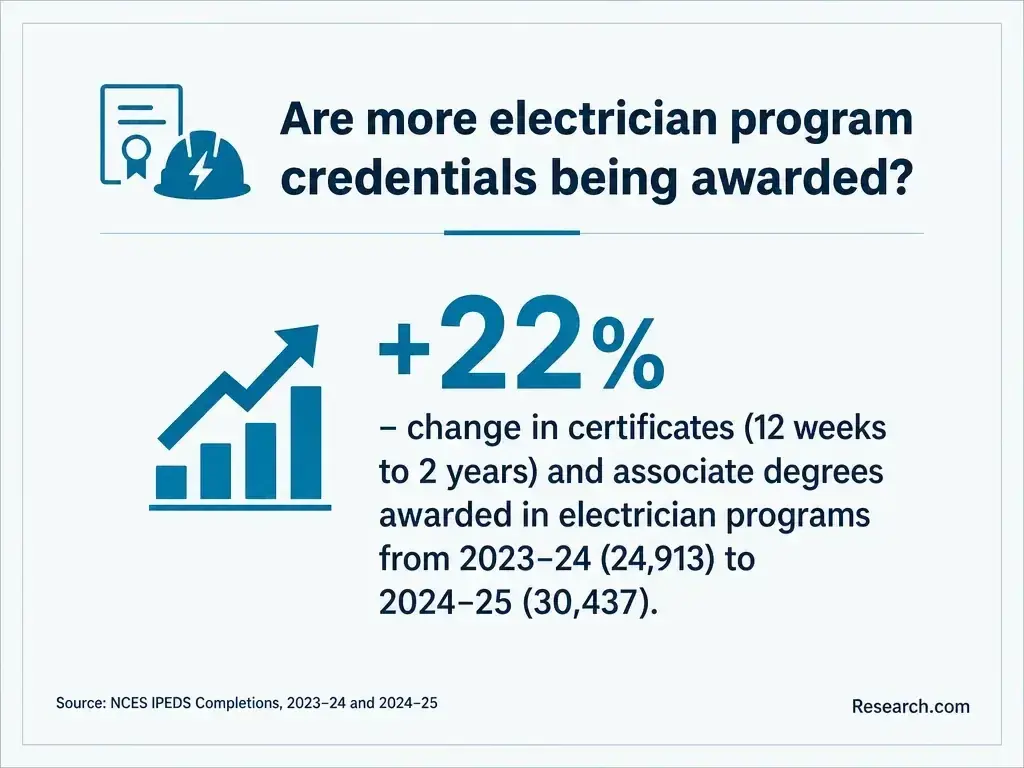
There is no defensible single Bowling Green average that covers college programs, employer training, and paid apprenticeships on comparable terms. Tuition alone also understates the cost of becoming job-ready. Request a written, current price for the specific credential and calculate the amount you would pay before earning, including any aid or wages.
These cost categories matter because the cheaper advertised tuition may leave more required purchases to the student.
| Cost or offset | What to verify |
| Tuition and mandatory fees | Resident rate, program fees, and charges per term |
| Tools, materials, and safety gear | Required purchases, replacement costs, and items supplied by the provider |
| Testing and applications | Exam, licensing, or other charges due later |
| Travel and lost earnings | Lab and worksite commutes; hours unavailable for paid work |
| Aid and paid training | Program-specific aid eligibility, grants, employer support, and apprentice wages |
Federal student aid depends on both institutional and program eligibility, not simply a school's name; ask financial-aid staff to verify the exact offering (Federal Student Aid). Kentucky workforce agencies may also identify funding for eligible jobseekers, subject to local availability and rules. Even the best ranked online schools are not a cost substitute for checking what in-person electrical training and supervised work you would still need.
The award depends on the pathway: a college may offer a certificate, diploma, or associate degree; a registered apprenticeship has its own completion credential; and an employer may document training without awarding a college credential. Ask for the exact award shown on the transcript or completion record and whether its coursework can count toward another credential or the education component of Kentucky's experience rules (Southcentral Kentucky Community and Technical College; Kentucky Department of Housing, Buildings and Construction).
Keep the distinctions clear: institutional accreditation concerns the school; state authorization concerns its permission to operate; an industry credential, such as one tied to NCCER curriculum, recognizes particular training; apprenticeship registration concerns the work-based program; and a Kentucky occupational license authorizes the licensed activity under state rules. None automatically confers the others (U.S. Department of Education; U.S. Department of Labor; Kentucky Department of Housing, Buildings and Construction).
Requirements vary by provider and pathway. A college applicant should confirm its current admission policy and any reading, math, placement, or prerequisite requirements; an apprenticeship applicant should obtain the sponsor's eligibility, selection, and work-availability rules. Employers may impose job-related screening or safety requirements. Do not assume acceptance into classes means acceptance by an apprenticeship sponsor or a future employer (Southcentral Kentucky Community and Technical College; Apprenticeship.gov).
Before applying, ask whether you can visit a lab, what physical tasks trainees perform, and whether the schedule permits travel to worksites. If you already have electrical experience, ask both the provider and Kentucky licensing authority what records could support credit, advanced standing, or a later experience application. Approval by one does not obligate the other to accept the same hours.
A useful entry-level curriculum pairs electrical theory and calculations with reading plans, applying electrical-code provisions, installing circuits, measuring with test instruments, and finding faults safely. Workplace training adds communication, documentation, and coordination with other trades. For industrial work, look specifically for motors, controls, and equipment troubleshooting; for construction work, examine the installation and code-practice labs (U.S. Bureau of Labor Statistics; O*NET).
Ask to see the lab objectives and equipment, not just a course-title list. A program with extensive theory but little assessed wiring or troubleshooting practice may be useful preparation for an apprenticeship, yet a poor stand-alone choice for someone expecting immediate hands-on competence. Code and equipment practices evolve, so confirm which code edition and tools the provider currently teaches.
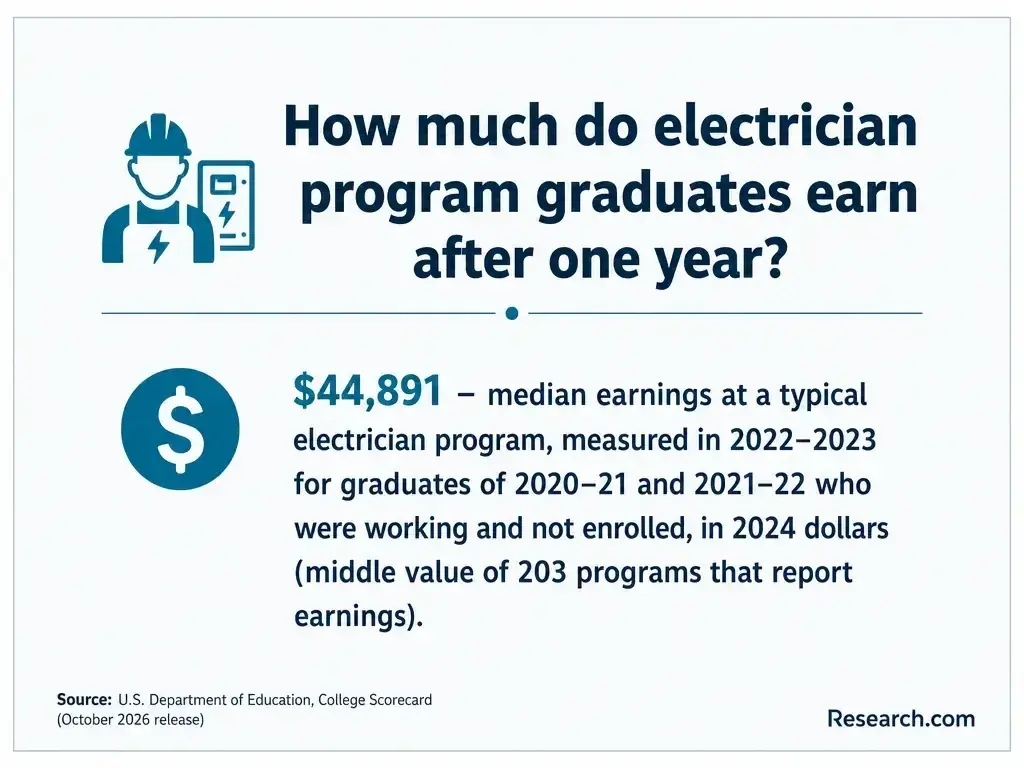
For licensed electrician work in Bowling Green, follow Kentucky's rules. The Kentucky Department of Housing, Buildings and Construction administers electrician licensing, including experience and examination requirements for journeyman and master electrician progression. Entry-level trainees can work under appropriate supervision while building experience, but finishing a school program does not itself grant a journeyman license. Electrical contracting has separate licensing considerations; check the state regulator before offering services independently.
Keep dated records of employers, duties, supervision, and schooling from the start. Confirm with the regulator whether a proposed program qualifies as approved education and how its time applies to your intended license. Optional industry credentials can demonstrate particular skills, but they do not replace a Kentucky occupational license where one is required. If you plan to work across a state line, check that state's rules separately rather than assuming Kentucky credentials transfer automatically (Kentucky Department of Housing, Buildings and Construction).
Start with the job you want, then work backward to its practical skills and Kentucky licensing path. A ranking can identify programs to examine, but it cannot tell you whether a particular lab schedule, apprenticeship opening, or employer connection will work for you. Use the same questions with Southcentral Kentucky Community and Technical College and with any apprenticeship or employer-training sponsor you are considering.
These checks turn a program comparison into a decision about entering the occupation:
Be wary of promises that a short course makes you licensed, that online lessons replace supervised work, or that a national median wage is a graduate starting salary. Combining a school credential with a paid apprenticeship may be worthwhile; choosing best dual degree programs is not a substitute for verifying this trade's hands-on and licensing requirements.
Early roles may include supervised electrical trainee or apprentice positions with contractors or industrial employers. With documented experience and the required examination, a worker may pursue Kentucky journeyman licensure; further experience can support master-level progression. Some electricians specialize in commercial installations, industrial controls, or maintenance, while others move toward supervision or contracting, subject to the applicable license and business requirements (Kentucky Department of Housing, Buildings and Construction; U.S. Bureau of Labor Statistics).
Choose training to match that progression. A construction-focused program may fit someone seeking an installation apprenticeship; substantial motors and controls practice may better suit industrial maintenance. Neither a general classroom credential nor a doctorate degree no dissertation route replaces the documented work and examinations applicable to electrician licensure.
The U.S. Bureau of Labor Statistics projects 9.2% national growth in electrician employment from 2025 to 2035. That supports considering the trade, but it is not a Bowling Green hiring forecast or a promise of an opening when you finish training. Local prospects depend on construction activity, industrial staffing, employers' willingness to hire trainees, and available apprenticeship places.
Before paying for a program, compare current trainee postings with the skills taught and ask sponsors when their next intake occurs. If employers consistently request supervised experience, favor a route that helps you obtain it - even if its classroom credential is less prominent in a ranking.
Education is a substantial investment, so Research.com evaluates electrician programs against other programs serving the same occupation and location. The ranking is intended to help readers compare outcomes, costs, and recognized quality indicators - not to replace a check of Kentucky licensing requirements or a visit to a training site. Only programs with completions reported to IPEDS are eligible; a registered apprenticeship or employer program absent from that database may still be a strong option.
Best-program scores cover student outcomes; earnings and return on investment; costs and debt; and quality and recognition. Relevant programmatic accreditation or industry recognition accounts for 20%, institutional accreditation for 10%, and student support services for 10%. The remaining 60% covers completion and full-time and part-time retention, earnings one year after completion and relative to annual attendance cost, tuition and attendance costs, median debt - including debt held by students who withdrew - and federal loan default rates. An entropy-based method gives more weight to indicators that distinguish programs more clearly. Most-affordable-program rankings instead score only tuition, attendance cost, median debt, and default rate, using entropy-based weights; accreditation and other quality indicators are not part of that affordability score.
The Research.com team uses the following sources to check available institutional, program, and occupation-specific information. A source's inclusion does not mean every accreditor or credentialing body listed applies to electrician training.
These checks help readers narrow their choices, but published outcomes do not show whether a particular applicant will finish, secure an apprenticeship, or qualify for a license. See Research.com's methodology for more information about how the ranking is created.
# 1 position
# 2 position
No single school credential is the only route. Paid supervised training and apprenticeship are alternatives, but the work and education you claim toward a Kentucky license must meet the state's rules (Kentucky Department of Housing, Buildings and Construction).
No. Kentucky licensing involves qualifying experience and an examination; ask the state regulator whether your particular coursework counts toward an education alternative (Kentucky Department of Housing, Buildings and Construction).
You can study some theory remotely, but practical electrical skills and supervised jobsite experience require in-person participation. Do not assume an online certificate satisfies Kentucky licensing requirements.
It may be better if you need income and can secure a suitable place. A college program can help you build fundamentals first. Compare sponsor availability, supervised hours, costs, and the training each route provides.
Ask for the exact credential, full cost, lab hours, employer connections, current program outcomes, and written clarification of how - or whether - the coursework applies to Kentucky licensing.